
Informatyka
Zajrzyj do kategorii Informatyka w księgarni internetowej Ebookpoint. Znajdziesz tutaj bestsellerowe książki, ebooki i kursy video z branży IT. Sięgnij po najlepszą literaturę dla specjalistów i rozwijaj doświadczenie, które już posiadasz, lub rozpocznij swoją przygodę z programowaniem, cyberbezpieczeństwem lub grafiką komputerową. Pogłębiaj swoją wiedzę tak, jak Ci wygodnie - z tradycyjną książką, wygodnym ebookiem lub nowoczesnym videokursem. Sprawdź, jakie tytuły znajdziesz w kategorii Informatyka!
Christopher Pitt, Artemij Fedosejev, Adam Boduch
React 16 Essentials, Second Edition, fully updated for React 16, takes you on a fast-paced journey through building your own maintainable React 16 applications. React experts Artemij Fedosejev and Adam Boduch give you all the essentials you need to know and start working with React 16, in this new edition of the best-selling React.js Essentials title. You'll find the latest React 16 code updates, assessment of React Fiber, new coverage of Redux, and how to work as a modern React developer.The authors offer you their current assessment of React Fiber, and you'll soon be exploring React 16 hands on, creating your own single and multiple user interface elements with React 16. You'll then see how to create stateless and stateful components and make them reactive. You'll also learn to interact between your components and lifecycle methods, and gauge how to effectively integrate your user interface components with other JavaScript libraries. Delve deep into the core elements of the Redux architecture and learn how to manage your application and data persistence. Then go the extra mile with the Jest test framework, and run multiple tests on your applications and find solutions to scale without complexity.Today React is used by Facebook, Instagram, Khan Academy, and Imperial College London, to name a few. Many new users recognize the benefits of React and adopt it in their own projects, forming a fast-growing community. The speed at which React has evolved promises a bright future for anyone who invests in learning it today. Let Artemij and Adam bring you a brand new look at React 16 and React Fiber, and move your web development into the future.
React 16 Tooling. Master essential cutting-edge tools, such as create-react-app, Jest, and Flow
Adam Boduch, Christopher Pitt
React 16 Tooling covers the most important tools, utilities, and libraries that every React developer needs to know — in detail. As React has grown, the amazing toolset around it has also grown, adding features and enhancing the development workflow. Each of these essential tools is presented in a practical manner and in a logical order mirroring the development workflow. These tools will make your development life simpler and happier, enabling you to create better and more performant apps.Adam starts with a hand-picked selection of the best tools for the React 16 ecosystem. For starters, there’s the create-react-app utility that’s officially supported by the React team. Not only does this tool bootstrap your React project for you, it also provides a consistent and stable framework to build upon. The premise is that when you don’t have to think about meta development work, more focus goes into the product itself.Other React tools follow this same approach to automating and improving your development life. Jest makes unit testing quicker. Flow makes catching errors easier. Docker containers make deployment in a stack simpler. Storybook makes developing components straightforward. ESLint makes writing standardized code faster. The React DevTools plugin makes debugging a cinch. React 16 Tooling clears away the barriers so you can focus on developing the good parts. In this book, we’ll look at each of these powerful tools in detail, showing you how to build the perfect React ecosystem to develop your apps within.
Carlos Santana Roldán
Filled with useful React patterns that you can use in your projects straight away, this book will help you save time and build better web applications with ease.React 17 Design Patterns and Best Practices is a hands-on guide for those who want to take their coding skills to a new level. You’ll spend most of your time working your way through the principles of writing maintainable and clean code, but you’ll also gain a deeper insight into the inner workings of React.As you progress through the chapters, you’ll learn how to build components that are reusable across the application, how to structure applications, and create forms that actually work. Then you’ll build on your knowledge by exploring how to style React components and optimize them to make applications faster and more responsive.Once you’ve mastered the rest, you’ll learn how to write tests effectively and how to contribute to React and its ecosystem.By the end of this book, you'll be able to avoid the process of trial and error and developmental headaches. Instead, you’ll be able to use your new skills to efficiently build and deploy real-world React web applications you can be proud of.
Carlos Santana Roldán
JavaScript pozwala na tworzenie znakomitego kodu, ale wymaga od programisty sporych umiejętności. Tworzenie nawet bardzo złożonych aplikacji jest jednak łatwiejsze dzięki dostępnym narzędziom. Szczególnym uznaniem cieszy się React - popularna biblioteka open source służąca do tworzenia dynamicznych aplikacji na bazie niewielkich komponentów wielokrotnego użytku. React jest narzędziem, które w stosunkowo prosty sposób pozwala w pełni skorzystać z możliwości nowoczesnych przeglądarek i urządzeń mobilnych. To książka przeznaczona dla średnio zaawansowanych użytkowników biblioteki React, którzy chcą tworzyć elastyczniejsze i łatwiejsze w utrzymaniu aplikacje. Wyjaśniono tu sposób działania wewnętrznych mechanizmów biblioteki React. Zaprezentowano, jak należy budować komponenty możliwe do wielokrotnego użycia, jak projektować strukturę aplikacji, a także omówiono zasady tworzenia poprawnych formularzy. Opisano też procesy definiowania stylów dla komponentów biblioteki React, jak również ich optymalizowania w celu przyspieszenia aplikacji i zwiększenia ich responsywności. Nie zabrakło szczegółowego omówienia technik tworzenia zestawów efektywnych testów, ponadto znalazły się tutaj informacje na temat korzystania z takich narzędzi jak służący do testowania Enzyme, React Router czy ułatwiający ciągłą integrację CircleCI. Zdobywanie umiejętności niezbędnych do zbudowania działającej aplikacji ułatwiają liczne przykłady, wskazówki i fragmenty kodu. W książce między innymi: składniki biblioteki React, w tym Context API i React hooks tworzenie i optymalizacja komponentów stosowanie języka GraphQL w projektach renderowanie po stronie serwera tworzenie wydajnego zestawu testów techniki optymalizacji komponentów React: nowy wymiar efektywnego programowania aplikacji!
Carlos Santana Roldán
React helps you work smarter, not harder — but to reap the benefits of this popular JavaScript library and its components, you need a straightforward guide that will teach you how to make the most of it.React 18 Design Patterns and Best Practices will help you use React effectively to make your applications more flexible, easier to maintain, and improve their performance, while giving your workflow a huge boost. With a better organization of topics and knowledge about best practices added to your developer toolbox, the updated fourth edition ensures an enhanced learning experience.The book is split into three parts; the first will teach you the fundamentals of React patterns, the second will dive into how React works, and the third will focus on real-world applications. All the code samples are updated to the latest version of React and you’ll also find plenty of new additions that explore React 18 and Node 19’s newest features, alongside MonoRepo Architecture and a dedicated chapter on TypeScript.By the end of this book, you'll be able to efficiently build and deploy real-world React web applications.
Adam Boduch, Roy Derks
React and React Native, Facebook’s innovative User Interface (UI) libraries, are designed to help you build robust cross-platform web and mobile applications. This updated third edition is improved and updated to cover the latest version of React. The book particularly focuses on the latest developments in the React ecosystem, such as modern Hook implementations, code splitting using lazy components and Suspense, user interface framework components using Material-UI, and Apollo. In terms of React Native, the book has been updated to version 0.62 and demonstrates how to apply native UI components for your existing mobile apps using NativeBase.You will begin by learning about the essential building blocks of React components. Next, you’ll progress to working with higher-level functionalities in application development, before putting this knowledge to use by developing user interface components for the web and for native platforms. In the concluding chapters, you’ll learn how to bring your application together with a robust data architecture.By the end of this book, you’ll be able to build React applications for the web and React Native applications for multiple mobile platforms.
Mikhail Sakhniuk, Adam Boduch
Welcome to your big-picture guide to the React ecosystem.If you’re new to React and looking to become a professional React developer, this book is for you. This updated fifth edition reflects the current state of React, including React framework coverage as well as TypeScript.Part 1 introduces you to React. You’ll discover JSX syntax, hooks, functional components, and event handling, learn techniques to fetch data from a server, and tackle the tricky problem of state management. Once you’re comfortable with writing React in JavaScript, you’ll pick up TypeScript development in later chapters.Part 2 transitions you into React Native for mobile development. React Native goes hand-in-hand with React. With your React knowledge behind you, you’ll appreciate where and how React Native differs as you write shared components for Android and iOS apps. You’ll learn how to build responsive layouts, use animations, and implement geolocation.By the end of this book, you’ll have a big-picture view of React and React Native and be able to build applications with both.
Mikhail Sakhniuk, Rodrigo Lobenwein, Adam Boduch
Welcome to your big-picture guide to the React ecosystem.If you’re new to React and looking to become a professional React developer, this book is for you. This updated sixth edition reflects the current state of React, including coverage of React frameworks and TypeScript.Part 1 introduces you to React. You’ll discover JSX syntax, hooks, functional components, and event handling, learn techniques to fetch data from a server, and tackle the tricky problem of state management. Once you’re comfortable with writing React in JavaScript, you’ll pick up TypeScript development in later chapters.Part 2 transitions you into React Native for mobile development. React Native goes hand-in-hand with React. With your React knowledge in place, you’ll appreciate where and how React Native differs as you write shared components for Android and iOS apps. You’ll learn how to build responsive layouts, use animations, and implement geolocation.Finally, a new chapter shows you how to use AI as a learning partner, covering practical workflows for AI-assisted debugging, evaluating AI-generated code, recognizing common pitfalls in React and React Native output, and writing code deliberately to deepen your understanding.By the end of this book, you’ll have a big-picture view of React and React Native, and be able to build applications with both.
Adam Boduch, Roy Derks, Mikhail Sakhniuk
Over the years, React and React Native has proven itself among JavaScript developers as a popular choice for a complete and practical guide to the React ecosystem. This fourth edition comes with the latest features, enhancements, and fixes to align with React 18, while also being compatible with React Native. It includes new chapters covering critical features and concepts in modern cross-platform app development with React.From the basics of React to popular components such as Hooks, GraphQL, and NativeBase, this definitive guide will help you become a professional React developer in a step-by-step manner. You'll begin by learning about the essential building blocks of React components. As you advance through the chapters, you'll work with higher-level functionalities in application development and then put your knowledge to work by developing user interface components for the web and native platforms. In the concluding chapters, you'll learn how to bring your application together with robust data architecture.By the end of this book, you'll be able to build React applications for the web and React Native applications for multiple mobile platforms.
Adam Boduch
para 1: Dive into the world of React and create powerful applications with responsive and streamlined UIs! With React best practices for both Android and iOS, this book demonstrates React and React Native in action, helping you to create intuitive and engaging applications. Para 2: React and React Native allow you to build desktop, mobile and native applications for all major platforms. Combined with Flux and Relay, you?ll be able to create powerful and feature-complete applications from just one code base. Para 3: Discover how to build desktop and mobile applications using Facebook?s innovative UI libraries. You?ll also learn how to craft composable UIs using React, and then apply these concepts to building Native UIs using React Native. Finally, find out how you can create React applications which run on all major platforms, and leverage Relay for feature-complete and data-driven applications. Para 4: What?s Inside ? Craft composable UIs using React & build Native UIs using React Native ? Create React applications for major platforms ? Access APIs ? Leverage Relay for data-driven web & native mobile applications
Juntao Qiu
Take your React development skills to the next level by examining common anti-patterns with expert insights and practical solutions, to refine your codebases into sophisticated and scalable creations. Through this easy-to-follow guide, React Anti-Patterns serves as a roadmap to elevating the efficiency and maintainability of your React projects.You’ll begin by familiarizing yourself with the essential aspects of React before exploring strategies for structuring React applications and creating well-organized, modular, and easy-to-maintain codebases. From identifying and addressing common anti-patterns using refactoring techniques to harnessing the power of test-driven development (TDD), you’ll learn about the tools and techniques necessary to create reliable and robust tests. As you advance, you’ll get to grips with business logic and design patterns that offer solutions to prevalent challenges faced in React development. The book also offers insights into using composition patterns, such as code splitting and multiple entry points, to enhance the flexibility and modularity of your React applications, guiding you through end-to-end project implementation.By the end of this React book, you’ll be able to overcome common challenges and pitfalls to transform your React projects into elegant, efficient, and maintainable codebases.
Alan Alickovic, Anthony Alicea
Building production-grade React applications requires making dozens of architectural decisions, often with little cohesive guidance. This book teaches proven architectural patterns for building scalable, maintainable frontend apps, based on timeless principles and modern best practices.This updated edition features a modern stack: React Router in framework mode, TypeScript, TanStack Query, Zustand, React Hook Form, Zod, Shadcn UI, Vitest, and Playwright. It also adds new chapters on performance, accessibility, and internationalization. You’ll work through a real-world example that brings modern architecture concepts to life.Starting with architectural foundations, you’ll make informed decisions about project structure, enforce code quality, build a well-designed component library, and implement the right rendering strategies. From there, you’ll build robust API layers with types generated from an OpenAPI specification and implement the right state management strategies for each use case. You will also learn about different testing strategies and when to use them, how to secure the application, and how to make it performant so that it remains scalable and maintainable.By the end, you’ll be prepared to design and build scalable React apps from the ground up and lead technical decisions in real-world projects.
Alan Alickovic
Building large-scale applications in production can be overwhelming with the amount of tooling choices and lack of cohesive resources. To address these challenges, this hands-on guide covers best practices and web application development examples to help you build enterprise-ready applications with React in no time.Throughout the book, you’ll work through a real-life practical example that demonstrates all the concepts covered. You’ll learn to build modern frontend applications—built from scratch and ready for production. Starting with an overview of the React ecosystem, the book will guide you in identifying the tools available to solve complex development challenges. You’ll then advance to building APIs, components, and pages to form a complete frontend app. The book will also share best practices for testing, securing, and packaging your app in a structured way before finally deploying your app with scalability in mind.By the end of the book, you’ll be able to efficiently build production-ready applications by following industry practices and expert tips.
React: Building Modern Web Applications. Building Modern Web Applications
Jonathan S Hayward, Artemij Fedosejev, Narayan Prusty,...
ReactJS has helped to transform the web as we know it. Designed by Facebook to help developers build rapid, responsive UI that can deal with data-intensive usage, it’s an essential component in any web developer’s skillset. This ReactJS course, in five connected modules, provides you with a fast, engaging and practical route into ReactJS—so you can build powerful, elegant, and modern web applications.Beginning with the Reactive Programming with JavaScript module, you will learn how to take advantage of a reactive and functional programming paradigm to rethink how you approach your JavaScript code. It’s built to help you understand the concepts, relevant and applicable for any frontend developer.You’ll then dive a little deeper into ReactJS. The second module gives you a rapid look through the fundamentals of ReactJS, showing you how to build a basic application and demonstrating how to implement the Flux architecture.In the third module you will get to grips with ES6—this will make you a more fluent JavaScript developer, giving you control over ReactJS. You can put your old JavaScript hacks aside and instead explore how to create ES6 custom iterators.In the final two modules you’ll learn how to fully master ReactJS, exploring its wider ecosystem of tools that have helped to make it one of the most important tools in web development today. Ending with insights and guidance on React Native, the tool built for today’s demand for native, intuitive user experiences and interfaces, with this course you can be confident in building dynamic and modern apps with React.
React Components. Explore the power of React components for cutting-edge web development
Christopher Pitt
The reader will learn how to use React and its component-based architecture in order to develop modern user interfaces. A new holistic way of thinking about UI development will establish throughout this book and the reader will discover the power of React components with many examples. After reading the book and following the example application, the reader has built a small to a mid-size application with React using a component based UI architecture. The book will take the reader through a journey to discover the benefits of component-based user interfaces over the classical MVC architecture. Throughout the book, the reader will develop a wide range of components and then bring them together to build a component-based UI. By the end of this book, readers would have learned several techniques to build powerful components and how the component-based development is beneficial over regular web development.
React Cookbook. Create dynamic web apps with React using Redux, Webpack, Node.js, and GraphQL
Carlos Santana Roldán
React.js is Facebook's dynamic frontend web development framework. It helps you build efficient, high-performing web applications with an intuitive user interface.With more than 66 practical and self-contained tutorials, this book examines common pain points and best practices for building web applications with React. Each recipe addresses a specific problem and offers a proven solution with insights into how it works, so that you can modify the code and configuration files to suit your requirements.The React Cookbook starts with recipes for installing and setting up the React.js environment with the Create React Apps tool. You’ll understand how to build web components, forms, animations, and handle events. You’ll then delve into Redux for state management and build amazing UI designs. With the help of practical solutions, this book will guide you in testing, debugging, and scaling your web applications, and get to grips with web technologies like WebPack, Node, and Firebase to develop web APIs and implement SSR capabilities in your apps. Before you wrap up, the recipes on React Native and React VR will assist you in exploring mobile development with React.By the end of the book, you will have become familiar with all the essential tools and best practices required to build efficient solutions on the web with React.
Emilio Rodriguez Martinez
React Native helps web and mobile developers to build cross-platform apps that perform at the same level as any other natively developed app. The range of apps that can be built using this library is huge. From e-commerce to games, React Native is a good fit for any mobile project due to its flexibility and extendable nature. This project-based book consists of four standalone projects. Each project will help you gain a sound understanding of the framework and build mobile apps with native user experience. Starting with a simple standalone car booking app, you will progressively move on to building advanced apps by adding connectivity with external APIs, using native features, such as the camera or microphone, in the mobile device, integrating with state management libraries such as Redux or MobX, or leveraging React Native’s performance by building a full-featured game.This book is ideal for developers who want to build amazing cross-platform apps with React Native.This book is embedded with useful assessments that will help you revise the concepts you have learned in this book. This book is repurposed for this specific learning experience from the content of Packt's React Native Blueprints by Emilio Rodriguez Martinez.
Michele Bertoli
Taking a complete journey through the most valuable design patterns in React, this book demonstrates how to apply design patterns and best practices in real-life situations, whether that’s for new or already existing projects. It will help you to make your applications more flexible, perform better, and easier to maintain – giving your workflow a huge boost when it comes to speed without reducing quality. We’ll begin by understanding the internals of React before gradually moving on to writing clean and maintainable code. We’ll build components that are reusable across the application, structure applications, and create forms that actually work.Then we’ll style React components and optimize them to make applications faster and more responsive. Finally, we’ll write tests effectively and you’ll learn how to contribute to React and its ecosystem.By the end of the book, you’ll be saved from a lot of trial and error and developmental headaches, and you will be on the road to becoming a React expert.
Carlos Santana Roldán
React continues to evolve, and so should the way you design, build, and ship applications. This new edition helps you make decisions that work reliably in production, focusing on patterns, real-world insights, and advanced techniques that streamline development and create robust, scalable applications. Along the way, it highlights common anti-patterns that slow teams down and demonstrates practical solutions.The book is organized into three parts, the first of which covers core design principles and modern component architecture. The second moves into an advanced state and data management using tools like Redux Toolkit, Zustand, Server Components, and Drizzle ORM, with a focus on building fast, predictable applications. The third part covers integration and delivery, including testing, CI/CD automation, backend work with Express and PostgreSQL, and deployment strategies that help you ship with confidence.This edition also shows how to bring AI-assisted development into your workflow. You’ll learn how tools like ChatGPT, Claude, and V0 can support tasks such as writing tests, improving documentation, and automating reviews, while still keeping control of quality and intent.By the end, you’ll have a clear understanding of the patterns and practices that shape modern React development and the skills to build future-ready apps.
Carlos Santana Roldán
React is an adaptable JavaScript library for building complex UIs from small, detached bits called components. This book is designed to take you through the most valuable design patterns in React, helping you learn how to apply design patterns and best practices in real-life situations.You’ll get started by understanding the internals of React, in addition to covering Babel 7 and Create React App 2.0, which will help you write clean and maintainable code. To build on your skills, you will focus on concepts such as class components, stateless components, and pure components. You'll learn about new React features, such as the context API and React Hooks that will enable you to build components, which will be reusable across your applications. The book will then provide insights into the techniques of styling React components and optimizing them to make applications faster and more responsive. In the concluding chapters, you’ll discover ways to write tests more effectively and learn how to contribute to React and its ecosystem.By the end of this book, you will be equipped with the skills you need to tackle any developmental setbacks when working with React. You’ll be able to make your applications more flexible, efficient, and easy to maintain, thereby giving your workflow a boost when it comes to speed, without reducing quality.
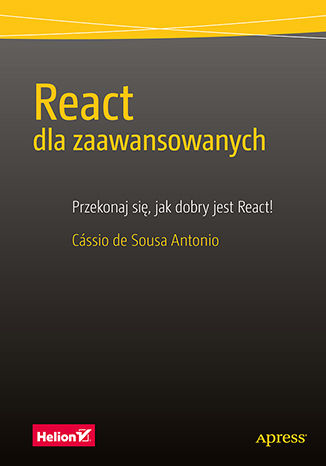
Cassio de Sousa Antonio
React jest biblioteką języka JavaScript, utworzoną i udostępnianą przez Facebook na licencji open source. To narzędzie pozwala na rozwiązywanie częstych, uciążliwych problemów programistycznych w zaskakująco prosty sposób, ponieważ umożliwia tworzenie interfejsów użytkownika z gotowych komponentów. Kiedy tylko się pojawiło, bardzo szybko zyskało szerokie uznanie i skupiło wokół siebie aktywną społeczność. Jeśli posiadasz już pewne doświadczenie jako programista front end i używasz jQuery lub innego komponentu JavaScriptu, z pomocą tej książki możesz stworzyć bardziej ambitne interfejsy użytkownika w swoich aplikacjach. Znajdziesz tu szczegółowy opis biblioteki React i najlepszych metod tworzenia aplikacji z gotowych składników, a także opisy kilku innych narzędzi i bibliotek (takich jak React Router i architektura Flux). Każdy temat został przedstawiony w jasny i zwięzły sposób, a w każdym rozdziale przedstawiono pewne typowe problemy wraz ze sposobami ich rozwiązania. W tej książce omówiono: podstawy konfiguracji biblioteki React i struktury interfejsów tworzonych za jej pomocą metody tworzenia kompletnych aplikacji z komponentów React wykorzystanie zdarzeń React, implementację drzewa DOM, a także właściwości i stany komponentów React bibliotekę React Router i trasowanie wydajność aplikacji i optymalizację kodu React testowanie aplikacji, również w systemie Jest Przekonaj się, jak dobry jest React! Cássio de Sousa Antonio — zaczął programować 20 lat temu na komputerze Sinclair Spectrum. Jest wyjątkowo doświadczonym programistą. Pracował jako kierownik techniczny w różnych firmach w Brazylii i USA nad oprogramowaniem dla takich firm jak Microsoft, Coca-Cola, Unilever czy HSBC. W 2014 roku sprzedał swój startup i dziś jest konsultantem.
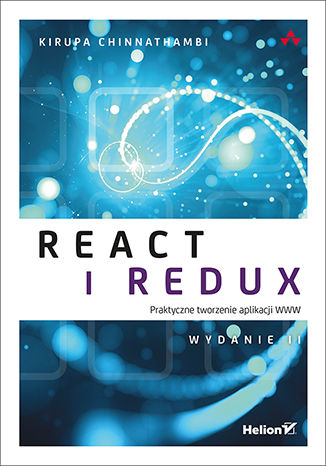
React i Redux. Praktyczne tworzenie aplikacji WWW. Wydanie II
Kirupa Chinnathambi
React służy do budowy złożonych jednostronicowych aplikacji WWW. Jest biblioteką języka JavaScript, utworzoną i udostępnianą przez Facebook na licencji open source. Biblioteka ta oferuje wiele gotowych komponentów i innych przydatnych funkcji. Pozwala rozwiązywać często powtarzające się i uciążliwe problemy programistyczne w zaskakująco prosty sposób. Pierwsze próby programowania przy użyciu biblioteki React mogą jednak sprawiać trudności. Podobnie jak z innymi narzędziami dla profesjonalistów - aby docenić jej zalety, trzeba ją poznać. Ta książka jest jedynym w swoim rodzaju praktycznym przewodnikiem po bibliotece React - przejrzystym i przystępnym. Zawiera wskazówki ułatwiające błyskawiczny start w tworzeniu efektownych i efektywnych aplikacji WWW. Nawet programista, który pierwszy raz ma do czynienia z tym narzędziem, będzie mógł w krótkim czasie napisać i uruchomić swoją aplikację. W książce zamieszczono setki przykładów omawiających krok po kroku zastosowanie poszczególnych funkcji, a złożone pojęcia wyjaśniono za pomocą trafnych ilustracji. W ten sposób można sobie znacznie uprościć tworzenie nawet bardzo skomplikowanych elementów interfejsu aplikacji! W tej książce między innymi: tworzenie aplikacji za pomocą biblioteki React pisanie komponentów definiujących elementy interfejsu użytkownika zarządzanie stanami aplikacji i jej danymi cykl życia komponentów tworzenie wielostronicowych aplikacji Oto React: znakomity efekt w krótkim czasie!
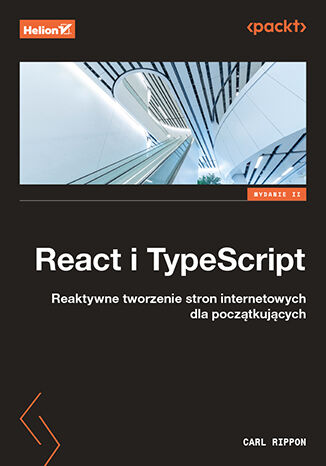
React i TypeScript. Reaktywne tworzenie stron internetowych dla początkujących. Wydanie II
Carl Rippon
React został zaprojektowany specjalnie na potrzeby Facebooka, w celu tworzenia interfejsów graficznych aplikacji internetowych. Dzisiaj jest powszechnie używany do budowania front-endów interaktywnych UI. Z kolei TypeScript, język napisany przez Microsoft, stanowi rozszerzenie JavaScriptu i cechuje się bogatym systemem typów. Ułatwia to wczesne wykrywanie błędów i refaktoryzację kodu. React i TypeScript, używane razem, pozwalają na efektywne tworzenie dużych, zaawansowanych i łatwych w utrzymaniu front-endów. To drugie wydanie przewodnika dla programistów, którzy chcą efektywnie budować atrakcyjne złożone front-endy aplikacji. Uwzględniono tu nowe elementy Reacta 18, w tym hooki, biblioteki do zarządzania stanem, jak również najnowszą wersję języka TypeScript. Dzięki tej książce nauczysz się tworzyć przejrzyste i łatwe w utrzymaniu komponenty React, które mogą być wielokrotnie używane ― dobrze zorganizowane, bazujące na nowoczesnych wzorcach projektowych. Dowiesz się też, jak projektować bezpiecznie typowane komponenty, jak zarządzać złożonymi stanami, a także jak interaktywnie korzystać z web API GraphQL . Poznasz też metody pisania solidnych testów jednostkowych dla komponentów React za pomocą JEST. W książce między innymi: gruntowny wstęp do Reacta i wprowadzenie do TypeScriptu tworzenie komponentów Reacta wielokrotnego użytku stosowanie hooków Reacta czym jest web API REST i GraphQL zarządzanie stanem aplikacji tworzenie automatycznych testów komponentów React: efektywne narzędzie dla najlepszych projektantów!
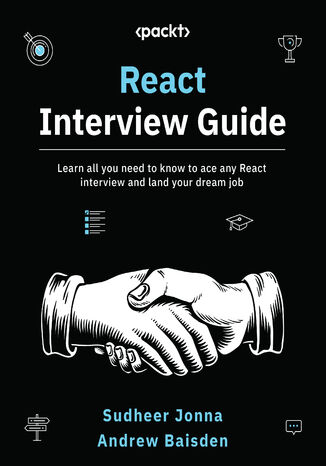
React Interview Guide. Learn all you need to know to ace any React interview and land your dream job
Sudheer Jonna, Andrew Baisden
Are you struggling with React job interviews, feeling hindered by the lack of knowledge or confidence? Look no further than the React Interview Guide. Complete with the latest features of the React library, this comprehensive solution will assist you in taking a definitive step forward in your career as a React developer.This book systematically covers frequently asked questions and common edge cases encountered in React interviews. It goes beyond React to encompass other essential technologies in the React ecosystem, including routing, CSS, testing, and building Next.js apps. You’ll benefit from invaluable expert guidance, enabling you to address a wide range of React ecosystem questions swiftly as this book prioritizes interview readiness, sparing you the need to dwell excessively on individual topics before technical discussions.By the end of this book, you’ll be thoroughly equipped to excel in any React interview, giving you an edge over your peers and significantly increasing your chances of securing your dream job.