
Informatyka
Zajrzyj do kategorii Informatyka w księgarni internetowej Ebookpoint. Znajdziesz tutaj bestsellerowe książki, ebooki i kursy video z branży IT. Sięgnij po najlepszą literaturę dla specjalistów i rozwijaj doświadczenie, które już posiadasz, lub rozpocznij swoją przygodę z programowaniem, cyberbezpieczeństwem lub grafiką komputerową. Pogłębiaj swoją wiedzę tak, jak Ci wygodnie - z tradycyjną książką, wygodnym ebookiem lub nowoczesnym videokursem. Sprawdź, jakie tytuły znajdziesz w kategorii Informatyka!
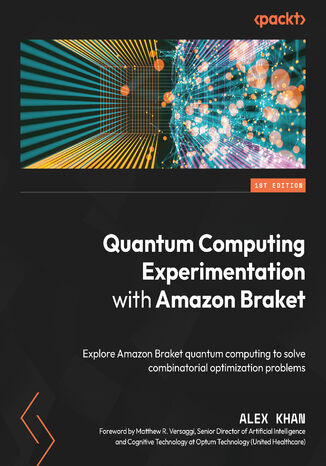
Alex Khan
Amazon Braket is a cloud-based pay-per-use platform for executing quantum algorithms on cutting-edge quantum computers and simulators. It is ideal for developing robust apps with the latest quantum devices.With this book, you'll take a hands-on approach to learning how to take real-world problems and run them on quantum devices. You'll begin with an introduction to the Amazon Braket platform and learn about the devices currently available on the platform, their benefits, and their purpose. Then, you'll review key quantum concepts and algorithms critical to converting real-world problems into a quantum circuit or binary quadratic model based on the appropriate device and its capability. The book also covers various optimization use cases, along with an explanation of the code. Finally, you'll work with a framework using code examples that will help to solve your use cases with quantum and quantum-inspired technologies. Later chapters cover custom-built functions and include almost 200 figures and diagrams to visualize key concepts. You’ll be able to scan the capabilities provided by Amazon Braket and explore the functions to adapt them for specific use cases.By the end of this book, you’ll have the tools to integrate your current business apps and AWS data with Amazon Braket to solve constrained and multi-objective optimization problems.
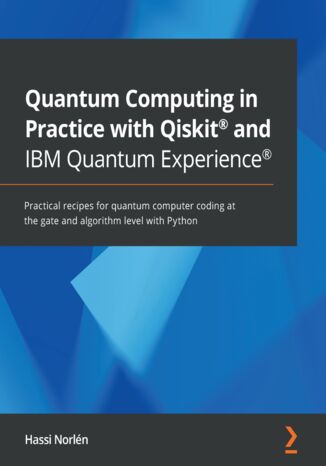
Hassi Norlen
IBM Quantum Experience® is a leading platform for programming quantum computers and implementing quantum solutions directly on the cloud. This book will help you get up to speed with programming quantum computers and provide solutions to the most common problems and challenges.You’ll start with a high-level overview of IBM Quantum Experience® and Qiskit®, where you will perform the installation while writing some basic quantum programs. This introduction puts less emphasis on the theoretical framework and more emphasis on recent developments such as Shor’s algorithm and Grover’s algorithm. Next, you’ll delve into Qiskit®, a quantum information science toolkit, and its constituent packages such as Terra, Aer, Ignis, and Aqua. You’ll cover these packages in detail, exploring their benefits and use cases. Later, you’ll discover various quantum gates that Qiskit® offers and even deconstruct a quantum program with their help, before going on to compare Noisy Intermediate-Scale Quantum (NISQ) and Universal Fault-Tolerant quantum computing using simulators and actual hardware. Finally, you’ll explore quantum algorithms and understand how they differ from classical algorithms, along with learning how to use pre-packaged algorithms in Qiskit® Aqua.By the end of this quantum computing book, you’ll be able to build and execute your own quantum programs using IBM Quantum Experience® and Qiskit® with Python.
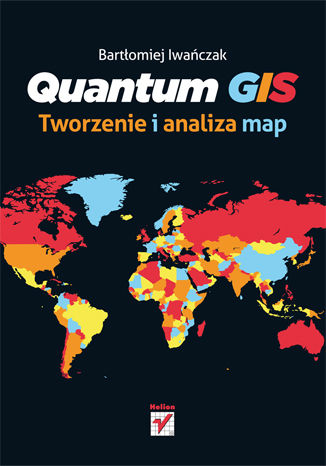
Quantum GIS. Tworzenie i analiza map
Bartłomiej Iwańczak
Twórz mapy i wykorzystuj je do swoich celów! Współczesny świat stawia przed nami wiele wyzwań. Nieustannie się dokształcamy, poznajemy nowe obszary wiedzy. Uczymy się wykorzystywać je do własnych celów. Coraz rzadziej zwracamy się do profesjonalistów z problemami, gdyż dzięki technologii jesteśmy w stanie poradzić sobie sami. Odkrywamy przy tym mnóstwo nowych, inspirujących aspektów życia. Dzięki tej książce można opanować podstawy bardzo przydatnej, choć do tej pory specjalistycznej dziedziny - kartografii i analizy danych przestrzennych. W dodatku bez dodatkowych kosztów - w darmowym, intuicyjnym programie Quantum GIS. Mapy potrzebne są wszystkim, nie tylko geografom! Jeśli pracujesz jako informatyk, logistyk, marketingowiec, dziennikarz, urzędnik czy architekt, prędzej czy później zechcesz przedstawić zgromadzone informacje w sposób wizualny, najlepiej na mapie. Dzięki tej książce bez większego trudu, a nawet z przyjemnością opanujesz zasady rysowania mapy, nanoszenia na nią obiektów według danych zawartych w tabeli, wyświetlania tych informacji, które są Ci potrzebne. Dowiesz się, jak planować trasę przewozu towarów, jak sprytnie policzyć budynki w każdej dzielnicy miasta czy jak najefektywniej rozsyłać ofertę handlową. Nauczysz się dowolnie zmieniać wygląd map, przekształcać je w obrazy i drukować lub umieszczać w Internecie. Nie jest to zwyczajny podręcznik. Wraz z tą książką będziesz krok po kroku zdobywać nowe umiejętności. Towarzyszyć Ci będzie młoda dziewczyna, Ula. Niejeden raz podsunie Ci użyteczną wskazówkę albo podpowie, co warto zapamiętać. Dzięki atrakcyjnej formie graficznej i ponad 300 ilustracjom zawsze zorientujesz się, gdzie w programie można znaleźć odpowiednie narzędzie. Analiza danych przestrzennych nie będzie miała dla Ciebie żadnych tajemnic. Do dzieła! Dzięki tej książce: ogarniesz wzrokiem przestrzeń i stworzysz mapę z Quantum GIS, poznasz serce współczesnej mapy w komputerze, zwiększysz użyteczność działania z pomocą narzędzi analitycznych QGIS. Odkryj dla siebie nową przestrzeń!
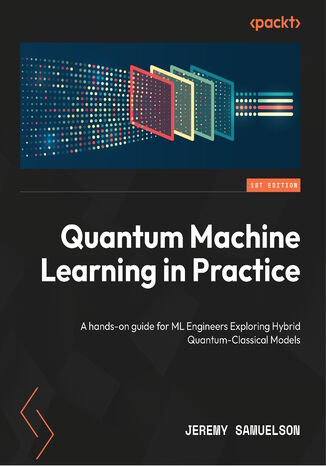
Jeremy Samuelson
Quantum computing is advancing rapidly, yet practical guidance for machine learning engineers remains limited. Most resources emphasize physics or theory, leaving practitioners unsure how quantum methods fit into real-world ML workflows. 'Quantum Machine Learning in Practice' addresses this gap with a hands-on, Python-first approach built for data scientists and ML engineers.Rather than presenting quantum models as replacements for classical ML, this book focuses on disciplined experimentation, hybrid architectures, and rigorous benchmarking. You will learn how classical data is encoded into quantum circuits, how variational models serve as classifiers and regressors, and how to evaluate quantum kernels and generative models responsibly. Concepts are grounded in simulator-based experiments using PennyLane, Qiskit, TensorFlow Quantum, and Cirq. Classical baselines are treated as first-class citizens throughout. You will design fair comparisons, analyze computational tradeoffs, and identify when classical ML remains superior. A complete end-to-end mini project reinforces transferable workflow skills, from problem framing through evaluation and interpretation.By the end, you will be able to design, implement, and critically assess hybrid quantum-classical machine learning systems with clarity and confidence.
Robert Loredo, Matt Broomhall
Prepare for a computing shift that will reshape security, optimization, and competitive advantage across every industry. This book helps you build a clear actionable approach to quantum readiness covering strategy, technology, talent, and risk in one framework.Written by Robert Loredo, Founder and CEO of Entangled Solutions Group, this book draws on 25 years of experience across IBM, academia, and enterprise innovation. As a former IBM Quantum Global Strategist, leader of the IBM Quantum Ambassador program, and holds over 275 patents, he translates this complex technology transition into decisions leaders can act on immediately.This book is organized as a complete strategic operating system for the quantum transition. Part One equips executives with investment frameworks, governance structures, and talent roadmaps. Part Two guides technical leaders through infrastructure assessment, workforce development, and quantum-era data strategy. Part Three delivers a security playbook covering post-quantum cryptography and adaptive architecture. Part Four maps the full quantum ecosystem and partnerships that will determine which institutions lead commercially.By the end, you’ll be able to define a quantum strategy, build the right capabilities, and lead your organization through quantum-driven change with clarity and control.
Quick Start Kubernetes. A Beginner's Guide to Container Orchestration in the Cloud - Third Edition
Nigel Poulton
This book is the backbone of modern cloud-native application deployment, but its complexity can be daunting for beginners. This book provides a practical and approachable guide to mastering Kubernetes, starting with fundamental concepts like microservices, orchestration, and cloud-native development. Readers will explore Kubernetes architecture, including control planes, worker nodes, and hosted solutions.Step-by-step instructions guide readers through setting up Kubernetes clusters on local and cloud platforms, containerizing applications, and pushing images to registries. Learn how to deploy containerized applications, connect them via services, and enable self-healing to ensure resilience.As you advance, discover how to scale applications dynamically, perform rolling updates for zero-downtime deployments, and troubleshoot real-world issues. The book concludes with resources for further learning, empowering readers to confidently manage Kubernetes environments in DevOps or cloud-native roles. Perfect for beginners, this hands-on guide simplifies Kubernetes for practical use.
R: Data Analysis and Visualization. Master the art of building analytical models using R
Tony Fischetti, Brett Lantz, Hrishi V. Mittal,...
The R learning path created for you has five connected modules, which are a mini-course in their own right. As you complete each one, you'll have gained key skills and be ready for the material in the next module!This course begins by looking at the Data Analysis with R module. This will help you navigate the R environment. You'll gain a thorough understanding of statistical reasoning and sampling. Finally, you'll be able to put best practices into effect to make your job easier and facilitate reproducibility.The second place to explore is R Graphs, which will help you leverage powerful default R graphics and utilize advanced graphics systems such as lattice and ggplot2, the grammar of graphics. You'll learn how to produce, customize, and publish advanced visualizations using this popular and powerful framework.With the third module, Learning Data Mining with R, you will learn how to manipulate data with R using code snippets and be introduced to mining frequent patterns, association, and correlations while working with R programs.The Mastering R for Quantitative Finance module pragmatically introduces both the quantitative finance concepts and their modeling in R, enabling you to build a tailor-made trading system on your own. By the end of the module, you will be well-versed with various financial techniques using R and will be able to place good bets while making financial decisions.Finally, we'll look at the Machine Learning with R module. With this module, you'll discover all the analytical tools you need to gain insights from complex data and learn how to choose the correct algorithm for your specific needs. You'll also learn to apply machine learning methods to deal with common tasks, including classification, prediction, forecasting, and so on.
R Data Mining. Implement data mining techniques through practical use cases and real-world datasets
Enrico Pegoraro, Andrea Cirillo
R is widely used to leverage data mining techniques across many different industries, including finance, medicine, scientific research, and more. This book will empower you to produce and present impressive analyses from data, by selecting and implementing the appropriate data mining techniques in R.It will let you gain these powerful skills while immersing in a one of a kind data mining crime case, where you will be requested to help resolving a real fraud case affecting a commercial company, by the mean of both basic and advanced data mining techniques. While moving along the plot of the story you will effectively learn and practice on real data the various R packages commonly employed for this kind of tasks. You will also get the chance of apply some of the most popular and effective data mining models and algos, from the basic multiple linear regression to the most advanced Support Vector Machines. Unlike other data mining learning instruments, this book will effectively expose you the theory behind these models, their relevant assumptions and when they can be applied to the data you are facing. By the end of the book you will hold a new and powerful toolbox of instruments, exactly knowing when and how to employ each of them to solve your data mining problems and get the most out of your data.Finally, to let you maximize the exposure to the concepts described and the learning process, the book comes packed with a reproducible bundle of commented R scripts and a practical set of data mining models cheat sheets.
R Deep Learning Cookbook. Solve complex neural net problems with TensorFlow, H2O and MXNet
PKS Prakash, Achyutuni Sri Krishna Rao
Deep Learning is the next big thing. It is a part of machine learning. It's favorable results in applications with huge and complex data is remarkable. Simultaneously, R programming language is very popular amongst the data miners and statisticians. This book will help you to get through the problems that you face during the execution of different tasks and Understand hacks in deep learning, neural networks, and advanced machine learning techniques. It will also take you through complex deep learning algorithms and various deep learning packages and libraries in R. It will be starting with different packages in Deep Learning to neural networks and structures. You will also encounter the applications in text mining and processing along with a comparison between CPU and GPU performance.By the end of the book, you will have a logical understanding of Deep learning and different deep learning packages to have the most appropriate solutions for your problems.
Prabhanjan Narayanachar Tattar, Yu-Wei, Chiu (David Chiu)
This cookbook offers a range of data analysis samples in simple and straightforward R code, providing step-by-step resources and time-saving methods to help you solve data problems efficiently.The first section deals with how to create R functions to avoid the unnecessary duplication of code. You will learn how to prepare, process, and perform sophisticated ETL for heterogeneous data sources with R packages. An example of data manipulation is provided, illustrating how to use the “dplyr” and “data.table” packages to efficiently process larger data structures. We also focus on “ggplot2” and show you how to create advanced figures for data exploration.In addition, you will learn how to build an interactive report using the “ggvis” package. Later chapters offer insight into time series analysis on financial data, while there is detailed information on the hot topic of machine learning, including data classification, regression, clustering, association rule mining, and dimension reduction.By the end of this book, you will understand how to resolve issues and will be able to comfortably offer solutions to problems encountered while performing data analysis.
Aloysius Shao Qin Lim, Tjhi W Chandra
This book is for programmers and developers who want to improve the performance of their R programs by making them run faster with large data sets or who are trying to solve a pesky performance problem.
Raghav Bali
Data science and machine learning are some of the top buzzwords in the technical world today. From retail stores to Fortune 500 companies, everyone is working hard to making machine learning give them data-driven insights to grow their business. With powerful data manipulation features, machine learning packages, and an active developer community, R empowers users to build sophisticated machine learning systems to solve real-world data problems.This book takes you on a data-driven journey that starts with the very basics of R and machine learning and gradually builds upon the concepts to work on projects that tackle real-world problems.You’ll begin by getting an understanding of the core concepts and definitions required to appreciate machine learning algorithms and concepts. Building upon the basics, you will then work on three different projects to apply the concepts of machine learning, following current trends and cover major algorithms as well as popular R packages in detail. These projects have been neatly divided into six different chapters covering the worlds of e-commerce, finance, and social-media, which are at the very core of this data-driven revolution. Each of the projects will help you to understand, explore, visualize, and derive insights depending upon the domain and algorithms.Through this book, you will learn to apply the concepts of machine learning to deal with data-related problems and solve them using the powerful yet simple language, R.
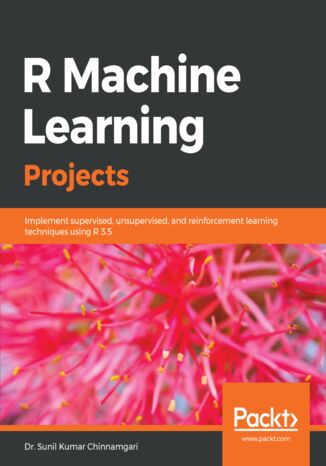
Dr. Sunil Kumar Chinnamgari
R is one of the most popular languages when it comes to performing computational statistics (statistical computing) easily and exploring the mathematical side of machine learning. With this book, you will leverage the R ecosystem to build efficient machine learning applications that carry out intelligent tasks within your organization.This book will help you test your knowledge and skills, guiding you on how to build easily through to complex machine learning projects. You will first learn how to build powerful machine learning models with ensembles to predict employee attrition. Next, you’ll implement a joke recommendation engine and learn how to perform sentiment analysis on Amazon reviews. You’ll also explore different clustering techniques to segment customers using wholesale data. In addition to this, the book will get you acquainted with credit card fraud detection using autoencoders, and reinforcement learning to make predictions and win on a casino slot machine.By the end of the book, you will be equipped to confidently perform complex tasks to build research and commercial projects for automated operations.
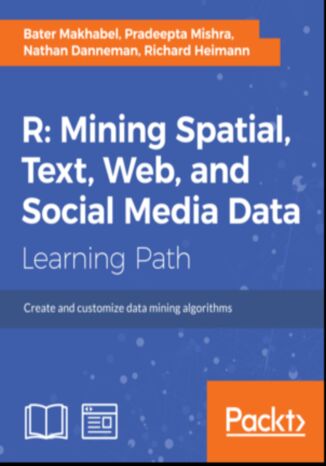
R: Mining spatial, text, web, and social media data. Create and customize data mining algorithms
Richard Heimann, Nathan H. Danneman, Pradeepta Mishra,...
Data mining is the first step to understanding data and making sense of heaps of data. Properly mined data forms the basis of all data analysis and computing performed on it. This learning path will take you from the very basics of data mining to advanced data mining techniques, and will end up with a specialized branch of data mining—social media mining.You will learn how to manipulate data with R using code snippets and how to mine frequent patterns, association, and correlation while working with R programs. You will discover how to write code for various predication models, stream data, and time-series data. You will also be introduced to solutions written in R based on R Hadoop projects. Now that you are comfortable with data mining with R, you will move on to implementing your knowledge with the help of end-to-end data mining projects. You will learn how to apply different mining concepts to various statistical and data applications in a wide range of fields. At this stage, you will be able to complete complex data mining cases and handle any issues you might encounter during projects.After this, you will gain hands-on experience of generating insights from social media data. You will get detailed instructions on how to obtain, process, and analyze a variety of socially-generated data while providing a theoretical background to accurately interpret your findings. You will be shown R code and examples of data that can be used as a springboard as you get the chance to undertake your own analyses of business, social, or political data.This Learning Path combines some of the best that Packt has to offer in one complete, curated package. It includes content from the following Packt products:? Learning Data Mining with R by Bater Makhabel ? R Data Mining Blueprints by Pradeepta Mishra? Social Media Mining with R by Nathan Danneman and Richard Heimann
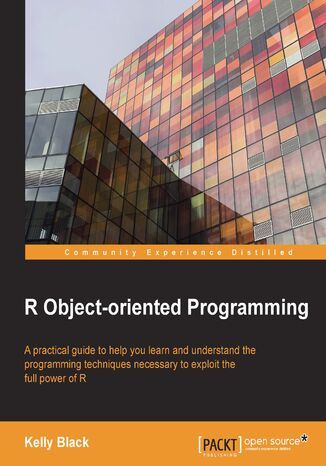
Kelly Black
This book is designed for people with some experience in basic programming practices. It is also assumed that they have some basic experience using R and are familiar using the command line in an R environment. Our primary goal is to raise a beginner to a more advanced level to make him/her more comfortable creating programs and extending R to solve common problems.
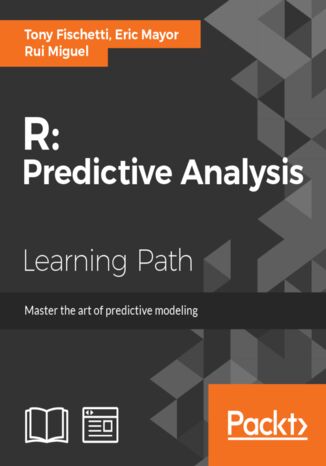
R: Predictive Analysis. Master the art of predictive modeling
Tony Fischetti, Eric Mayor
Predictive analytics is a field that uses data to build models that predict a future outcome of interest. It can be applied to a range of business strategies and has been a key player in search advertising and recommendation engines.The power and domain-specificity of R allows the user to express complex analytics easily, quickly, and succinctly. R offers a free and open source environment that is perfect for both learning and deploying predictive modeling solutions in the real world. This Learning Path will provide you with all the steps you need to master the art of predictive modeling with R. We start with an introduction to data analysis with R, and then gradually you’ll get your feet wet with predictive modeling. You will get to grips with the fundamentals of applied statistics and build on this knowledge to perform sophisticated and powerful analytics. You will be able to solve the difficulties relating to performing data analysis in practice and find solutions to working with “messy data”, large data, communicating results, and facilitating reproducibility. You will then perform key predictive analytics tasks using R, such as train and test predictive models for classification and regression tasks, score new data sets and so on. By the end of this Learning Path, you will have explored and tested the most popular modeling techniques in use on real-world data sets and mastered a diverse range of techniques in predictive analytics.This Learning Path combines some of the best that Packt has to offer in one complete, curated package. It includes content from the following Packt products:• Data Analysis with R, Tony Fischetti• Learning Predictive Analytics with R, Eric Mayor• Mastering Predictive Analytics with R, Rui Miguel Forte
R Programming By Example. Practical, hands-on projects to help you get started with R
Omar Trejo Navarro
R is a high-level statistical language and is widely used among statisticians and data miners to develop analytical applications. Often, data analysis people with great analytical skills lack solid programming knowledge and are unfamiliar with the correct ways to use R. Based on the version 3.4, this book will help you develop strong fundamentals when working with R by taking you through a series of full representative examples, giving you a holistic view of R.We begin with the basic installation and configuration of the R environment. As you progress through the exercises, you'll become thoroughly acquainted with R's features and its packages. With this book, you will learn about the basic concepts of R programming, work efficiently with graphs, create publication-ready and interactive 3D graphs, and gain a better understanding of the data at hand. The detailed step-by-step instructions will enable you to get a clean set of data, produce good visualizations, and create reports for the results. It also teaches you various methods to perform code profiling and performance enhancement with good programming practices, delegation, and parallelization.By the end of this book, you will know how to efficiently work with data, create quality visualizations and reports, and develop code that is modular, expressive, and maintainable.
Yu-Wei, Chiu (David Chiu), Atmajitsinh Gohil, Shanthi...
The R language is a powerful, open source, functional programming language. At its core, R is a statistical programming language that provides impressive tools to analyze data and create high-level graphics. This Learning Path is chock-full of recipes. Literally! It aims to excite you with awesome projects focused on analysis, visualization, and machine learning. We’ll start off with data analysis – this will show you ways to use R to generate professional analysis reports. We’ll then move on to visualizing our data – this provides you with all the guidance needed to get comfortable with data visualization with R. Finally, we’ll move into the world of machine learning – this introduces you to data classification, regression, clustering, association rule mining, and dimension reduction.This Learning Path combines some of the best that Packt has to offer in one complete, curated package. It includes content from the following Packt products:• R Data Analysis Cookbook by Viswa Viswanathan and Shanthi Viswanathan• R Data Visualization Cookbook by Atmajitsinh Gohil• Machine Learning with R Cookbook by Yu-Wei, Chiu (David Chiu)
R Web Scraping Quick Start Guide. Techniques and tools to crawl and scrape data from websites
Olgun Aydin
Web scraping is a technique to extract data from websites. It simulates the behavior of a website user to turn the website itself into a web service to retrieve or introduce new data. This book gives you all you need to get started with scraping web pages using R programming.You will learn about the rules of RegEx and Xpath, key components for scraping website data. We will show you web scraping techniques, methodologies, and frameworks. With this book's guidance, you will become comfortable with the tools to write and test RegEx and XPath rules. We will focus on examples of dynamic websites for scraping data and how to implement the techniques learned. You will learn how to collect URLs and then create XPath rules for your first web scraping script using rvest library. From the data you collect, you will be able to calculate the statistics and create R plots to visualize them. Finally, you will discover how to use Selenium drivers with R for more sophisticated scraping. You will create AWS instances and use R to connect a PostgreSQL database hosted on AWS. By the end of the book, you will be sufficiently confident to create end-to-end web scraping systems using R.
David Dossot
This book is a quick and concise introduction to RabbitMQ. Follow the unique case study of Clever Coney Media as they progressively discover how to fully utilize RabbitMQ, containing clever examples and detailed explanations. Whether you are someone who develops enterprise messaging products professionally or a hobbyist who is already familiar with open source Message Queuing software and you are looking for a new challenge, then this is the book for you. Although you should be familiar with Java, Ruby, and Python to get the most out of the examples, RabbitMQ Essentials will give you the push you need to get started that no other RabbitMQ tutorial can provide you with.
Rachunek macierzowy. Podręcznik dla studentów studiów licencjackich i inżynierskich
Marta Jarocka, Justyna Kozłowska, Beata Madras-Kobus, Anna...
Niniejszy podręcznik powstał z myślą o studentach Wydziału Inżynierii Zarządzania Politechniki Białostockiej kształcących się na kierunkach: logistyka, zarządzanie, zarządzanie i inżynieria produkcji, zarządzanie i inżynieria usług oraz inżynieria meblarstwa. Może on również służyć innym młodym adeptom matematyki – studentom studiów licencjackich i inżynierskich, którzy poznają tajniki rachunku macierzowego. Książka zawiera bowiem podstawowe treści, które są zgodne z obowiązującym programem przedmiotu matematyka na wielu kierunkach studiów.
Beata Madras-Kobus, Marta Jarocka, Anna Małgorzata Olszewska
Pojęcie funkcji znane jest z nauki matematyki w szkole. Ale czy potrafimy obliczyć pochodne funkcji jednej zmiennej? Czy wiemy jak wykorzystać pochodne do badania przebiegu zmienności i narysowania wykresu funkcji? Jakie zastosowania mają pochodne w naukach ekonomicznych czy w fizyce? Odpowiedzi na te i wiele innych pytań dotyczących rachunku różniczkowego funkcji jednej zmiennej można znaleźć w podręczniku napisanym przez wykładowców z Międzynarodowej Katedry Logistyki i Inżynierii Usług Wydziału Inżynierii Zarządzania - dr Beatę Madras-Kobus, dr Martę Jarocką, prof. PB oraz dr inż. Annę M. Olszewską, prof. PB zatytułowanym Rachunek różniczkowy funkcji jednej zmiennej. Podręcznik dla studentów studiów licencjackich i inżynierskich. Podręcznik powstał z myślą o studentach Wydziału Inżynierii Zarządzania Politechniki Białostockiej kształcących się na kierunkach: logistyka, zarządzanie, zarządzanie i inżynieria produkcji, zarządzanie i inżynieria usług oraz zarządzanie finansami i rachunkowość.
Jia Huang
Most developers can spin up a RAG pipeline in an afternoon using LangChain or LlamaIndex. Far fewer understand why retrieval fails or how to fix it. This book is for those who want to go deeper.'RAG From First Principles' dismantles the retrieval-augmented generation stack layer by layer, how documents are ingested and parsed, why chunking strategy directly impacts answer quality, how embedding models encode meaning, what happens inside a vector database, and how sparse and dense retrieval interact in a hybrid system. Written by Jia Huang, a research engineer and bestselling AI author, it brings research depth and production experience to one of AI's most critical engineering disciplines.Structured as a progressive dialogue between a seasoned engineer and two students, the book surfaces the questions practitioners actually ask. Each chapter builds on the last, from data import and chunking through embedding selection, index design, hybrid search, and post-retrieval processing, into response generation, evaluation, and advanced paradigms including GraphRAG, Agentic RAG, and Modular RAG.By the end, you'll have the architectural understanding to optimize, debug, and extend your RAG systems with confidence.
Denis Rothman
Stop moving your data to the AI. This second edition defines a revolutionary architectural shift: bringing the AI to the data. By using Oracle Database 23ai as a converged engine in this book, you will architect Sovereign AI systems that eliminate the fragmentation, latency, and massive security risks inherent in traditional data extraction.You’ll work with DualRAG, synchronizing unstructured vector semantics with the deterministic truth of structured SQL, Graph, and Spatial retrieval. This allows your systems to reason over verified corporate data rather than probabilistic guesses, reducing hallucinations at the source. Moving beyond simple pipelines, you’ll also build MAS-RAG (multi-agent systems for RAG), where autonomous agents coordinate across hybrid retrieval workflows, multimodal video pipelines, and graph-based knowledge structures.Designed for developers and architects, these blueprints transform disconnected data silos into a unified engine to architect autonomous enterprise intelligence that scales with RLHF and model fine-tuning. By the end of the book, you’ll be able to design and deploy enterprise AI systems that combine retrieval, reasoning, and structured data to build reliable generative AI applications.*Email sign-up and proof of purchase required