
Informatyka
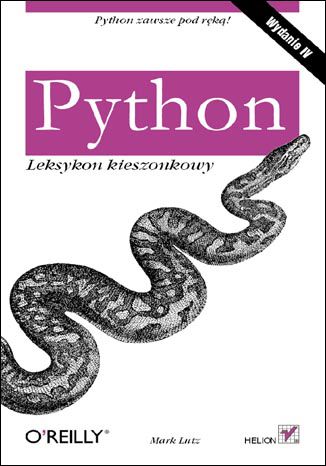
Python. Leksykon kieszonkowy. Wydanie IV
Mark Lutz
Jakie możliwości kryją standardowe moduły biblioteczne? Jak wykonywać operacje na plikach? Jak stworzyć graficzny interfejs użytkownika? Python to wyjątkowo praktyczny język programowania, idealnie nadający się do szybkiego rozwiązywania niecodziennych problemów, z którymi często borykają się koderzy. Nie wymusza on stosowania jednego stylu programowania, co pozwala na dużo większą elastyczność w trakcie pisania kodu. Umożliwia programowanie obiektowe, strukturalne i funkcyjne, a ponadto udostępnia zaawansowane mechanizmy zarządzania pamięcią, zapewnia dynamiczne sprawdzanie typów oraz czytelną składnię. Te wszystkie zalety powodują, że Python ma grupę swoich wiernych fanów. Niniejsza książka należy do popularnej serii "Leksykon kieszonkowy", dzięki której zawsze i wszędzie możesz przypomnieć sobie wybrane zagadnienia, związane z różną tematyką. Pozycja, którą właśnie trzymasz w rękach, została poświęcona językowi Python. W trakcie jej lektury zapoznasz się z takimi zagadnieniami, jak sterowanie przepływem programu, wykorzystanie pętli, list, słowników oraz operacje na plikach. Ponadto w każdej chwili będziesz mógł sprawdzić składnię oraz sposoby wykorzystania funkcji i wyjątków wbudowanych. Książka stanowi znakomite kompendium wiedzy na temat języka Python. Sprawdzi się ona w rękach początkującego użytkownika - jako przewodnik, a w rękach zaawansowanego programisty - jako pomocnik. Wbudowane typy i operatory Działania na liczbach Operacje na łańcuchach znaków Wykorzystanie Unicode w Pythonie Obsługa list oraz słowników Operacje na zbiorach i plikach Sterowanie przepływem programu Konwersja typów Obsługa wyjątków Wykorzystanie przestrzeni nazw Zasięgi zmiennych Przeciążanie operatorów Standardowe moduły biblioteczne Zastosowanie wyrażeń regularnych Tworzenie graficznego interfejsu użytkownika Wyciśnij jeszcze więcej z języka Python!
Alexander Combs, Saurabh Chhajed, Michael Roman
Machine learning is transforming the way we understand and interact with the world around us. This book is the perfect guide for you to put your knowledge and skills into practice and use the Python ecosystem to cover key domains in machine learning. This second edition covers a range of libraries from the Python ecosystem, including TensorFlow and Keras, to help you implement real-world machine learning projects.The book begins by giving you an overview of machine learning with Python. With the help of complex datasets and optimized techniques, you’ll go on to understand how to apply advanced concepts and popular machine learning algorithms to real-world projects. Next, you’ll cover projects from domains such as predictive analytics to analyze the stock market and recommendation systems for GitHub repositories. In addition to this, you’ll also work on projects from the NLP domain to create a custom news feed using frameworks such as scikit-learn, TensorFlow, and Keras. Following this, you’ll learn how to build an advanced chatbot, and scale things up using PySpark. In the concluding chapters, you can look forward to exciting insights into deep learning and you'll even create an application using computer vision and neural networks.By the end of this book, you’ll be able to analyze data seamlessly and make a powerful impact through your projects.
Yuxi (Hayden) Liu
The surge in interest in machine learning (ML) is due to the fact that it revolutionizes automation by learning patterns in data and using them to make predictions and decisions. If you’re interested in ML, this book will serve as your entry point to ML.Python Machine Learning By Example begins with an introduction to important ML concepts and implementations using Python libraries. Each chapter of the book walks you through an industry adopted application. You’ll implement ML techniques in areas such as exploratory data analysis, feature engineering, and natural language processing (NLP) in a clear and easy-to-follow way.With the help of this extended and updated edition, you’ll understand how to tackle data-driven problems and implement your solutions with the powerful yet simple Python language and popular Python packages and tools such as TensorFlow, scikit-learn, gensim, and Keras. To aid your understanding of popular ML algorithms, the book covers interesting and easy-to-follow examples such as news topic modeling and classification, spam email detection, stock price forecasting, and more.By the end of the book, you’ll have put together a broad picture of the ML ecosystem and will be well-versed with the best practices of applying ML techniques to make the most out of new opportunities.
Python Machine Learning By Example. The easiest way to get into machine learning
Yuxi (Hayden) Liu, Ivan Idris
Data science and machine learning are some of the top buzzwords in the technical world today. A resurging interest in machine learning is due to the same factors that have made data mining and Bayesian analysis more popular than ever. This book is your entry point to machine learning. This book starts with an introduction to machine learning and the Python language and shows you how to complete the setup. Moving ahead, you will learn all the important concepts such as, exploratory data analysis, data preprocessing, feature extraction, data visualization and clustering, classification, regression and model performance evaluation. With the help of various projects included, you will find it intriguing to acquire the mechanics of several important machine learning algorithms – they are no more obscure as they thought. Also, you will be guided step by step to build your own models from scratch. Toward the end, you will gather a broad picture of the machine learning ecosystem and best practices of applying machine learning techniques. Through this book, you will learn to tackle data-driven problems and implement your solutions with the powerful yet simple language, Python. Interesting and easy-to-follow examples, to name some, news topic classification, spam email detection, online ad click-through prediction, stock prices forecast, will keep you glued till you reach your goal.
Prateek Joshi, Vahid Mirjalili
Machine learning is becoming increasingly pervasive in the modern data-driven world. It is used extensively across many fields such as search engines, robotics, self-driving cars, and more. With this book, you will learn how to perform various machine learning tasks in different environments. We’ll start by exploring a range of real-life scenarios where machine learning can be used, and look at various building blocks. Throughout the book, you’ll use a wide variety of machine learning algorithms to solve real-world problems and use Python to implement these algorithms. You’ll discover how to deal with various types of data and explore the differences between machine learning paradigms such as supervised and unsupervised learning. We also cover a range of regression techniques, classification algorithms, predictive modeling, data visualization techniques, recommendation engines, and more with the help of real-world examples.
Sebastian Raschka, Jared Huffman, Vahid Mirjalili, Ryan...
Publisher's Note: This edition from 2017 is outdated and is not compatible with TensorFlow 2 or any of the most recent updates to Python libraries. A new third edition, updated for 2020 and featuring TensorFlow 2 and the latest in scikit-learn, reinforcement learning, and GANs, has now been published.Machine learning is eating the software world, and now deep learning is extending machine learning. Understand and work at the cutting edge of machine learning, neural networks, and deep learning with this second edition of Sebastian Raschka’s bestselling book, Python Machine Learning. Using Python's open source libraries, this book offers the practical knowledge and techniques you need to create and contribute to machine learning, deep learning, and modern data analysis.Fully extended and modernized, Python Machine Learning Second Edition now includes the popular TensorFlow 1.x deep learning library. The scikit-learn code has also been fully updated to v0.18.1 to include improvements and additions to this versatile machine learning library. Sebastian Raschka and Vahid Mirjalili’s unique insight and expertise introduce you to machine learning and deep learning algorithms from scratch, and show you how to apply them to practical industry challenges using realistic and interesting examples. By the end of the book, you’ll be ready to meet the new data analysis opportunities.If you’ve read the first edition of this book, you’ll be delighted to find a balance of classical ideas and modern insights into machine learning. Every chapter has been critically updated, and there are new chapters on key technologies. You’ll be able to learn and work with TensorFlow 1.x more deeply than ever before, and get essential coverage of the Keras neural network library, along with updates to scikit-learn 0.18.1.
Python Made Easy. A First Course in Computer Programming Using Python
Kevin Wilson
Python Made Easy is designed to transform beginners into proficient Python programmers. The journey begins with an introduction to Python, covering basic concepts and syntax that lay the foundation for your coding skills. As you progress, you'll dive into essential programming constructs like data structures, functions, and file handling.In the second phase of the course, you'll explore more complex topics such as object-oriented programming, modules, and libraries. These sections will give you the tools to write efficient, reusable, and modular code. You'll also learn how to handle exceptions, ensuring your programs are robust and error-resistant. Special attention is given to graphical user interfaces (GUIs) and game development, making your Python skills applicable to a wide range of projects.The final part of the course covers advanced topics like debugging, testing, and deploying Python applications. You'll also delve into web development, where you'll learn to build and deploy web applications using Python. The course concludes with valuable video resources to reinforce your learning and provide additional insights. By the end of this course, you'll have a solid understanding of Python and be ready to tackle real-world programming challenges.
Python Microservices Development. Build, test, deploy, and scale microservices in Python
Tarek Ziadé
We often deploy our web applications into the cloud, and our code needs to interact with many third-party services. An efficient way to build applications to do this is through microservices architecture. But, in practice, it's hard to get this right due to the complexity of all the pieces interacting with each other.This book will teach you how to overcome these issues and craft applications that are built as small standard units, using all the proven best practices and avoiding the usual traps. It's a practical book: you’ll build everything using Python 3 and its amazing tooling ecosystem. You will understand the principles of TDD and apply them. You will use Flask, Tox, and other tools to build your services using best practices. You will learn how to secure connections between services, and how to script Nginx using Lua to build web application firewall features such as rate limiting. You will also familiarize yourself with Docker’s role in microservices, and use Docker containers, CoreOS, and Amazon Web Services to deploy your services.This book will take you on a journey, ending with the creation of a complete Python application based on microservices. By the end of the book, you will be well versed with the fundamentals of building, designing, testing, and deploying your Python microservices.
Python Microservices with FastAPI. Design production-ready, AI-enabled microservices with Python
Giunio De Luca, Igor Benav
This book shows you how to turn an idea into a reliable product.This is a playbook for practical progress. Choose what to ship now, what to delay, and how to avoid risky changes. Keep services tidy, naming clear, and tests small but useful. You will build a realistic end-to-end system step by step, following the evolution of a babysitting marketplace platform with sign-up, search, booking, messaging, and payments delivered in steady increments.When it is time to add intelligence, you learn practical ways to use AI for customer support, recommendations, and operational insights. The focus stays on measurable value, not hype, while keeping performance, costs, and reliability predictable in production.Your guides are Giunio De Luca, PhD, author of Packt’s FastAPI Cookbook and an architect who has shipped systems across research, sports, and energy, and Igor “Benav” Magalhães, founder of Benav Labs and maintainer of widely used open-source tools. They share patterns they rely on when deadlines are real and reliability matters.By the end, you will not just know FastAPI. You will think like a senior engineer, plan delivery with confidence, avoid common traps, measure what matters, and run a backend platform that users trust and teams enjoy maintaining.
Ninad Sathaye
Multimedia applications are used by a range of industries to enhance the visual appeal of a product. This book will teach the reader how to perform multimedia processing using Python.This step-by-step guide gives you hands-on experience for developing exciting multimedia applications using Python. This book will help you to build applications for processing images, creating 2D animations and processing audio and video.Writing applications that work with images, videos, and other sensory effects is great. Not every application gets to make full use of audio/visual effects, but a certain amount of multimedia makes any application a lot more appealing. There are numerous multimedia libraries for which Python bindings are available. These libraries enable working with different kinds of media, such as images, audio, video, games, and so on. This book introduces the reader to the most widely used open source libraries through several exciting, real world projects. Popular multimedia frameworks and libraries such as GStreamer,Pyglet, QT Phonon, and Python Imaging library are used to develop various multimedia applications.
Python na maturze. Rozwiązania i analiza wybranych zadań programistycznych
Roland Zimek
Matura z Pythonem to nic trudnego! Ucz się! Analizuj! Programuj! Nauka programowania na dobre zadomowiła się w szkołach, a umiejętności informatyczne są od lat sprawdzane na egzaminach maturalnych. Jej adepci zapewne zdają sobie sprawę, jakim wzięciem na rynku cieszą się osoby, które mogą się pochwalić znajomością Pythona. To język, który dzięki swoim możliwościom i wszechstronności znajduje zastosowanie w najróżniejszych dziedzinach nauki, przemysłu i biznesu. Książka Python na maturze. Rozwiązania i analiza wybranych zadań programistycznych pozwoli Ci zapoznać się z prawdziwymi zadaniami maturalnymi z kilku ostatnich lat. Będziesz mógł je przeanalizować, a także opracować prawidłowe rozwiązania w języku Python. W efekcie nie tylko zdobędziesz i utrwalisz umiejętności programistyczne, lecz również - co nie mniej ważne - rozwiniesz zdolności w zakresie analizy problemów i wyboru właściwych rozwiązań. Treść zadań maturalnych Analiza problemów Praktyczne rozwiązania Uzasadnienie wybranych technik Typowe pułapki w zadaniach Składnia i instrukcje Pythona Zastosowanie języka w praktyce Naucz się Pythona i zdaj maturę jak prymus!
Python na start! Programowanie dla nastolatków
Michał Wiszniewski
Zacznij od skryptów, a skończysz na szczycie! Pierwsze kroki, czyli od czego zacząć przygodę z Pythonem Niezbędne gadżety, czyli z czego i jak budować programy w Pythonie Wędrówka przez style, czyli jak programować strukturalnie, obiektowo i funkcyjnie Czy kiedykolwiek zastanawiałeś się nad tym, dlaczego na świecie istnieje aż tyle języków programowania i czym różnią się one od siebie? I których z tych języków warto się nauczyć? Na pewno co najmniej kilku, ale na Twojej krótkiej liście nie może zabraknąć Pythona! Ten język ma dwie potężne zalety: po pierwsze, jest znacznie łatwiejszy w nauce i bardziej intuicyjny niż choćby C czy C++, a po drugie, umożliwia tworzenie skryptów, czyli funkcjonalnych programów, przydających się na co dzień programistom wszelkiej maści, administratorom sieci i wielu innym ludziom. Python to także fantastyczne narzędzie do tworzenia rozbudowanych projektów. Zresztą, możesz się o tym szybko przekonać. W tej książce znadziesz omówienie wszystkich najważniejszych funkcji i możliwości Pythona. Zobaczysz, jak pracować w środowisku tego języka, jak używać zmiennych, instrukcji warunkowych, funkcji i typów danych. Zobaczysz, w jakich sytuacjach warto wykorzystywać pętle i moduły, jak wykonywać operacje na plikach i jak obsługiwać wyjątki. Sprawdzisz, do czego przydaje się programowanie strukturalne, a do czego obiektowe, i zobaczysz, jak łatwo połączyć je w Pythonie! Krótko mówiąc, zanim się obejrzysz, zaczniesz samodzielnie pisać zaawansowane skrypty. Sprawdź, programuj i baw się dobrze! Pierwszy program, czyli jak zostałem programistą Zmienne są niezbędne... a zmienne znakowe jeszcze bardziej Operacje wejścia – przekaż skryptowi dowolne informacje Instrukcje warunkowe – początek prawdziwego programowania Funkcje – to jest to! Zasięg zmiennych i nieco więcej o instrukcjach warunkowych – trzeba uważać Pętle – czyli jak ułatwić sobie życie Zaawansowane typy danych – to tylko groźnie brzmi! Operacje na plikach – w końcu ciekawy rozdział! Moduły – one są wspaniałe! Wyjątki – czyli błędy w języku Python Obiekty, klasy i metody – czyli programowanie obiektowe Zaklinaj węża, czyli programuj w Pythonie!
Python Network Programming. Conquer all your networking challenges with the powerful Python language
Abhishek Ratan, Eric Chou, Pradeeban Kathiravelu, Dr....
This Learning Path highlights major aspects of Python network programming such as writing simple networking clients, creating and deploying SDN and NFV systems, and extending your network with Mininet. You’ll also learn how to automate legacy and the latest network devices. As you progress through the chapters, you’ll use Python for DevOps and open source tools to test, secure, and analyze your network. Toward the end, you'll develop client-side applications, such as web API clients, email clients, SSH, and FTP, using socket programming.By the end of this Learning Path, you will have learned how to analyze a network's security vulnerabilities using advanced network packet capture and analysis techniques. This Learning Path includes content from the following Packt products:• Practical Network Automation by Abhishek Ratan • Mastering Python Networking by Eric Chou • Python Network Programming Cookbook, Second Edition by Pradeeban Kathiravelu, Dr. M. O. Faruque Sarker
Pradeeban Kathiravelu, Dr. M. O. Faruque Sarker
Python Network Programming Cookbook - Second Edition highlights the major aspects of network programming in Python, starting from writing simple networking clients to developing and deploying complex Software-Defined Networking (SDN) and Network Functions Virtualization (NFV) systems. It creates the building blocks for many practical web and networking applications that rely on various networking protocols. It presents the power and beauty of Python to solve numerous real-world tasks in the area of network programming, network and system administration, network monitoring, and web-application development.In this edition, you will also be introduced to network modelling to build your own cloud network. You will learn about the concepts and fundamentals of SDN and then extend your network with Mininet. Next, you’ll find recipes on Authentication, Authorization, and Accounting (AAA) and open and proprietary SDN approaches and frameworks. You will also learn to configure the Linux Foundation networking ecosystem and deploy and automate your networks with Python in the cloud and the Internet scale.By the end of this book, you will be able to analyze your network security vulnerabilities using advanced network packet capture and analysis techniques.
Steven F. Lott, Dusty Phillips
Learn to write effective, maintainable, and scalable Python applications by mastering object-oriented programming with this updated fifth edition. Whether you’re transitioning from scripting to structured development or refining your OOP skills, this book offers a clear, practical path forward.You’ll explore Python’s approach to OOP, from class creation and inheritance to polymorphism and abstraction, while discovering how to make smarter decisions about when and how to use these tools. You’ll apply what you learn through hands-on examples and exercises.Updated for Python 3.13, this edition simplifies complex topics such as abstract base classes, testing with unittest and pytest, and async programming with asyncio. It introduces a new chapter on Python’s type hinting ecosystem—crucial for modern Python development.Written by long-time Python experts Steven Lott and Dusty Phillips, this edition emphasizes clarity, testability, and professional software engineering practices. It helps you move beyond scripting to building well-structured, production-ready Python systems.By the end of this book, you’ll be confident in applying OOP principles, design patterns, type hints, and concurrency tools to create robust and maintainable Python applications.
Python Penetration Testing Essentials. Employ the power of Python to get the best out of pentesting
Mohit Raj
If you are a Python programmer or a security researcher who has basic knowledge of Python programming and want to learn about penetration testing with the help of Python, this book is ideal for you. Even if you are new to the field of ethical hacking, this book can help you find the vulnerabilities in your system so that you are ready to tackle any kind of attack or intrusion.
Christopher Duffy, Mohit Raj, Cameron Buchanan, Andrew...
Cybercriminals are always one step ahead, when it comes to tools and techniques. This means you need to use the same tools and adopt the same mindset to properly secure your software. This course shows you how to do just that, demonstrating how effective Python can be for powerful pentesting that keeps your software safe. Comprising of three key modules, follow each one to push your Python and security skills to the next level.In the first module, we’ll show you how to get to grips with the fundamentals. This means you’ll quickly find out how to tackle some of the common challenges facing pentesters using custom Python tools designed specifically for your needs. You’ll also learn what tools to use and when, giving you complete confidence when deploying your pentester tools to combat any potential threat.In the next module you’ll begin hacking into the application layer. Covering everything from parameter tampering, DDoS, XXS and SQL injection, it will build on the knowledge and skills you learned in the first module to make you an even more fluent security expert.Finally in the third module, you’ll find more than 60 Python pentesting recipes. We think this will soon become your trusted resource for any pentesting situation.This Learning Path combines some of the best that Packt has to offer in one complete, curated package. It includes content from the following Packt products:? Learning Penetration Testing with Python by Christopher Duffy? Python Penetration Testing Essentials by Mohit? Python Web Penetration Testing Cookbook by Cameron Buchanan,Terry Ip, Andrew Mabbitt, Benjamin May and Dave Mound
Srihari Yamanoor, Sai Yamanoor
Raspberry Pi Zero is a super-small and super-affordable product from Raspberry Pi that is packed with a plethora of features and has grabbed the notice of programmers, especially those who use Python. This step-by-step guide will get you developing practical applications in Python using a Raspberry Pi Zero. It will become a valuable resource as you learn the essential details of interfacing sensors and actuators to a Raspberry Pi, as well as acquiring and displaying data. You will get started by writing a Python program that blinks an LED at 1-second intervals. Then you will learn to write simple logic to execute tasks based upon sensor data (for example, to control a motor) and retrieve data from the web (such as to check e-mails to provide a visual alert). Finally, you will learn to build a home automation system with Python where different appliances are controlled using the Raspberry Pi. The examples discussed in each chapter of this book culminate in a project that help improve the quality of people’s lives.
Python. Programuj szybko i wydajnie
Micha Gorelick, Ian Ozsvald
Wydajne aplikacje w języku Python! Python to skryptowy język programowania istniejący na rynku od wielu lat — jego pierwsza wersja pojawiła się w 1991 roku. Przejrzystość kodu źródłowego była jednym z głównych celów Guida van Rossuma, twórcy tego języka. Dziś Python cieszy się dużą popularnością, co z jednej strony świadczy o jego przydatności, a z drugiej gwarantuje użytkownikom szerokie wsparcie społeczności programistów języka. Python jest elastyczny, dopuszcza różne style programowania, a dzięki temu znajduje zastosowanie w wielu miejscach świata IT. Jeżeli chcesz w pełni wykorzystać możliwości Pythona i tworzyć wydajne rozwiązania, to koniecznie zaopatrz się w tę książkę! Dzięki niej dowiesz się, jak wykorzystać profilowanie do lokalizowania „wąskich gardeł”, oraz poznasz efektywne techniki wyszukiwania danych na listach, w słownikach i zbiorach. Ponadto zdobędziesz wiedzę na temat obliczeń macierzowych i wektorowych oraz zobaczysz, jak kompilacja do postaci kodu C wpływa na wydajność Twojego rozwiązania. Osobne rozdziały zostały poświęcone współbieżności oraz modułowi multiprocessing. Opanowanie tych zagadnień pozwoli Ci ogromnie przyspieszyć działanie Twojej aplikacji. Na sam koniec nauczysz się tworzyć klastry i kolejki zadań oraz optymalizować zużycie pamięci RAM. Rozdział dwunasty to gratka dla wszystkich — zawiera najlepsze porady specjalistów z branży! Książka ta jest obowiązkową lekturą dla wszystkich programistów chcących tworzyć wydajne rozwiązania w języku Python. Poznaj lepiej narzędzia numpy i Cython, a także narzędzia profilujące Dowiedz się, jak w języku Python dokonywana jest abstrakcja bazowej architektury komputera. Użyj profilowania do znajdowania „wąskich gardeł” związanych z wykorzystaniem czasu procesora i pamięci. Utwórz wydajne programy, wybierając odpowiednie struktury danych. Przyspiesz obliczenia oparte na macierzach i wektorach. Zastosuj narzędzia do kompilacji kodu Python do postaci kodu maszynowego. Zarządzaj jednocześnie wieloma operacjami obliczeniowymi i operacjami wejścia-wyjścia. Przekształć kod przetwarzania współbieżnego w celu uruchomienia go w klastrze lokalnym lub zdalnym. Rozwiąż duże problemy, używając mniej pamięci RAM. Wyciśnij z Pythona siódme poty!
Python: Real World Machine Learning. Take your Python Machine learning skills to the next level
Prateek Joshi, Bastiaan Sjardin, Luca Massaron, Alberto...
Machine learning is increasingly spreading in the modern data-driven world. It is used extensively across many fields such as search engines, robotics, self-driving cars, and more. Machine learning is transforming the way we understand and interact with the world around us.In the first module, Python Machine Learning Cookbook, you will learn how to perform various machine learning tasks using a wide variety of machine learning algorithms to solve real-world problems and use Python to implement these algorithms.The second module, Advanced Machine Learning with Python, is designed to take you on a guided tour of the most relevant and powerful machine learning techniques and you’ll acquire a broad set of powerful skills in the area of feature selection and feature engineering.The third module in this learning path, Large Scale Machine Learning with Python, dives into scalable machine learning and the three forms of scalability. It covers the most effective machine learning techniques on a map reduce framework in Hadoop and Spark in Python.This Learning Path will teach you Python machine learning for the real world. The machine learning techniques covered in this Learning Path are at the forefront of commercial practice.This Learning Path combines some of the best that Packt has to offer in one complete, curated package. It includes content from the following Packt products:? Python Machine Learning Cookbook by Prateek Joshi? Advanced Machine Learning with Python by John Hearty? Large Scale Machine Learning with Python by Bastiaan Sjardin, Alberto Boschetti, Luca Massaron
Python Real-World Projects. Craft your Python portfolio with deployable applications
Steven F. Lott
In today's competitive job market, a project portfolio often outshines a traditional resume. Python Real-World Projects empowers you to get to grips with crucial Python concepts while building complete modules and applications. With two dozen meticulously designed projects to explore, this book will help you showcase your Python mastery and refine your skills. Tailored for beginners with a foundational understanding of class definitions, module creation, and Python's inherent data structures, this book is your gateway to programming excellence. You’ll learn how to harness the potential of the standard library and key external projects like JupyterLab, Pydantic, pytest, and requests. You’ll also gain experience with enterprise-oriented methodologies, including unit and acceptance testing, and an agile development approach. Additionally, you’ll dive into the software development lifecycle, starting with a minimum viable product and seamlessly expanding it to add innovative features. By the end of this book, you’ll be armed with a myriad of practical Python projects and all set to accelerate your career as a Python programmer.
Python. Receptury. Wydanie III
David Beazley, Brian K. Jones
Python to język programowania z ponad 20-letnią historią. Opracowany na początku lat 90. ubiegłego wieku, błyskawicznie zdobył sympatię programistów. Jest używany zarówno do pisania przydatnych skryptów czy małych narzędzi, jak i do pracy nad dużymi projektami. Korzysta z automatycznego zarządzania pamięcią oraz pozwala na podejście obiektowe i funkcyjne do tworzonego programu. Wokół języka Python skupiona jest bardzo silna społeczność programistów. Ta książka to sprawdzone źródło informacji na temat Pythona i jego najczęstszych zastosowań. Należy ona do cenionej serii „Receptury”, w której znajdziesz najlepsze sposoby rozwiązywania problemów. Przekonaj się, jak wydajnie operować na strukturach danych, łańcuchach znaków, tekście i liczbach. Zobacz, jak korzystać z iteratorów i generatorów. Ponadto naucz się tworzyć własne klasy i funkcje oraz sprawdź, jak uzyskać dostęp do plików i sieci. Te i dziesiątki innych receptur opisano w tej książce. To obowiązkowa pozycja na półce każdego programisty pracującego z językiem Python. Dzięki tej książce: rozwiążesz w optymalny sposób najczęstsze problemy napiszesz program korzystający z puli wątków będziesz lepszym programistą Pythona! Najlepsze rozwiązania typowych problemów!
Sean Saito, Yang Wenzhuo , Rajalingappaa Shanmugamani
Reinforcement learning is one of the most exciting and rapidly growing fields in machine learning. This is due to the many novel algorithms developed and incredible results published in recent years.In this book, you will learn about the core concepts of RL including Q-learning, policy gradients, Monte Carlo processes, and several deep reinforcement learning algorithms. As you make your way through the book, you'll work on projects with datasets of various modalities including image, text, and video. You will gain experience in several domains, including gaming, image processing, and physical simulations. You'll explore technologies such as TensorFlow and OpenAI Gym to implement deep learning reinforcement learning algorithms that also predict stock prices, generate natural language, and even build other neural networks.By the end of this book, you will have hands-on experience with eight reinforcement learning projects, each addressing different topics and/or algorithms. We hope these practical exercises will provide you with better intuition and insight about the field of reinforcement learning and how to apply its algorithms to various problems in real life.
Python Robotics Projects. Build smart and collaborative robots using Python
Prof. Diwakar Vaish
Robotics is a fast-growing industry. Multiple surveys state that investment in the field has increased tenfold in the last 6 years, and is set to become a $100-billion sector by 2020. Robots are prevalent throughout all industries, and they are all set to be a part of our domestic lives. This book starts with the installation and basic steps in configuring a robotic controller. You'll then move on to setting up your environment to use Python with the robotic controller. You'll dive deep into building simple robotic projects, such as a pet-feeding robot, and more complicated projects, such as machine learning enabled home automation system (Jarvis), vision processing based robots and a self-driven robotic vehicle using Python.By the end of this book, you'll know how to build smart robots using Python.