
Informatyka
Zajrzyj do kategorii Informatyka w księgarni internetowej Ebookpoint. Znajdziesz tutaj bestsellerowe książki, ebooki i kursy video z branży IT. Sięgnij po najlepszą literaturę dla specjalistów i rozwijaj doświadczenie, które już posiadasz, lub rozpocznij swoją przygodę z programowaniem, cyberbezpieczeństwem lub grafiką komputerową. Pogłębiaj swoją wiedzę tak, jak Ci wygodnie - z tradycyjną książką, wygodnym ebookiem lub nowoczesnym videokursem. Sprawdź, jakie tytuły znajdziesz w kategorii Informatyka!
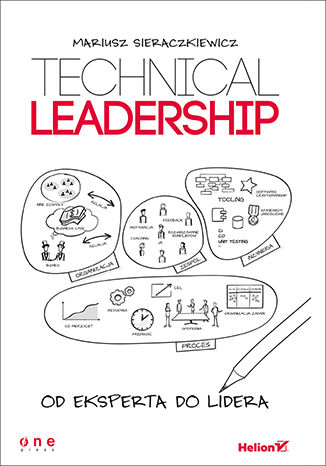
Technical Leadership. Od eksperta do lidera
Mariusz Sieraczkiewicz
Programista na stanowisku Ścieżka kariery ambitnego specjalisty w branży IT wygląda zwykle tak: junior–senior–lider. Kierownictwo firmy wychodzi ze słusznego skądinąd założenia, że szefować zespołowi programistów powinien także programista, tyle że bardziej doświadczony. Takie myślenie przeważnie sprawdza się w zakresie zagadnień technicznych, ale już niekoniecznie w kwestii kontaktów międzyludzkich; to, że ktoś jest świetnym fachowcem, nie oznacza automatycznie, że ma także naturalne predyspozycje do zarządzania pracą kolegów. Na szczęście można się tego nauczyć — najlepiej od ludzi, którzy mają spore doświadczenie na stanowisku lidera technicznego i postanowili się nim podzielić. Podczas pisania tej książki Mariusz Sieraczkiewicz czerpał z wielu źródeł: literatury o przywództwie, 11 lat osobistych doświadczeń (w tym 6-letniej pracy konsultanta i trenera zespołów programistycznych), wielu przeprowadzonych szkoleń tematycznych oraz wystąpień na konferencjach. Przede wszystkim jednak opierał się na pracy nad rozwojem liderów w takich firmach, jak ING, Tieto, YDP, Opera, Samsung, Cybercom Poland Sp. z o. o., Trapeze Poland Sp. z o. o., Apator S.A., LSI Software S.A., SAS Institute Sp. z o.o., Compensa Towarzystwo Ubezpieczeń SA, PRUFTECHNIK Technology Sp. z o. o. Ten podręcznik łączy w sobie najlepsze wzorce biznesowego przywództwa ze specyfiką przewodzenia zespołom programistycznym — wszystko z uwzględnieniem specyfiki naszego rynku.
Technical Leadership. Od eksperta do lidera. Wydanie II poszerzone
Mariusz Sieraczkiewicz
"Dotąd nie było takiej książki na rynku" (z recenzji pierwszego wydania) Wybitne umiejętności techniczne i naturalny talent do zarządzania ludźmi nie zawsze idą w parze. A szkoda, bo losem świetnego programisty zatrudnionego na etacie jest, prędzej czy później, awans: z juniora na seniora, z seniora na lidera... I tu zaczyna się problem. Człowieka, który doskonale zna swój koderski fach, stawia się nagle przed koniecznością częściowego bądź całkowitego porzucenia go na rzecz zarządzania zespołem innych koderów - do tej pory kolegów z pracy, a teraz nagle podwładnych. Skąd czerpać wiedzę i inspiracje? W jaki sposób twarde umiejętności, które ma programista, uzupełnić o niezbędne na nowym stanowisku umiejętności miękkie? Czy każdy musi sam i w bólach przejść tę trudną drogę "od eksperta do menedżera", czy też można liczyć na wsparcie i podpowiedzi bardziej doświadczonych technicznych liderów? Otóż można, a nawet należy, tyle tylko, że trzeba dobrze wybrać mentora. Proponujemy, by Twoim "mistrzem" stał się ten podręcznik. Jego autor od kilkunastu lat współpracuje z zespołami programistycznymi jako trener i konsultant, zna więc specyfikę branży, z którą związałeś się zawodowo, i jest świadom tego, jakie problemy stoją przed nowo mianowanym liderem technicznym. Co więcej, wie, co zrobić, by te problemy szybko i skutecznie rozwiązać. W tym podręczniku mówi o roli, jaką odgrywa lider techniczny, o różnicach między ekspertem a liderem, o tym, jak skutecznie pracować ze swoim zespołem oraz jak budować relacje z biznesem. Wskazuje, skąd czerpać motywację - dla siebie i powierzonych sobie ludzi, jak z nimi rozmawiać, by chcieli słuchać, i jak ich słuchać, by wyciągać budujące wnioski. Drugie wydanie książki wzbogacone zostało o rozdział poświęcony wdrażaniu zmian, czyli temu, co jest chlebem powszednim każdego lidera.
Joshua Alan Teter
The role of the Technical Program Manager (TPM) is crucial in the tech industry, bridging the gap between technical expertise and business acumen. The second edition of the Technical Program Manager’s Handbook offers a comprehensive guide to excelling in this role. Building on the foundational concepts from the first edition, this updated version introduces new chapters that explore the integration of AI and Emotional Intelligence (EI) in program management. These crucial additions complement the broader focus of the book on bridging business and technology but don’t overshadow it. You'll learn how to apply AI-driven tools to enhance project planning, risk management, and stakeholder communication, as well as how to leverage EI to build strong team relationships and improve leadership effectiveness.This book provides practical tools, methodologies, and case studies, offering insights from industry leaders to help both aspiring and practicing TPMs apply advanced concepts and strategies effectively. It also explores the unique aspects of the TPM role in major tech companies, helping you to navigate and thrive in your career.By the end of this book, you'll have a clear understanding of the TPM role, along with a breakdown of the necessary technical and program management skills, to develop a clear roadmap for your career.*Email sign-up and proof of purchase required
Chris Chinchilla
Effective documentation is key to the success of products in remote software development teams, facilitating clear instructions that benefit the entire development team. Technical Writing for Software Developers lays a solid foundation of essential grammar, providing language tips and explaining how precise writing enhances documentation, and walks you through the fundamental types and styles of documentation.Starting with an exploration of the current state of the tech writing industry and its significance in both the software and hardware realms, you’ll master the building blocks of technical writing, exploring tooling choices and style guides, and create dynamic multimedia-laden documentation. This book equips you with valuable insights into the writing and feedback process to ensure continuous improvement. Additionally, you’ll take a peek at the emerging trends and technologies, including AI tools, shaping the future of technical writing.By the end of this technical writing book, you’ll have developed the expertise you need to tackle documentation requests effectively, armed with the knowledge of the best approach for documenting any topic, encompassing text, media elements, structure, and appropriate tools. The skills acquired will enable you to achieve seamless teamwork, enhanced project efficiency, and successful software development.
Technologia w e-commerce. Teoria i praktyka. Poradnik menedżera
Piotr Karwatka, Tomasz Ejtminowicz, Marcin Engelmann, Przemysław...
Dowiedz się więcej o Autorach E-handel w pytaniach i odpowiedziach Nadzór nad procesem tworzenia i utrzymaniem sklepu internetowego lub dowolnej innej formy obecności firmy na rynku e-commerce jest naprawdę trudnym zadaniem. Wymaga ogromnej wiedzy i ogromnego doświadczenia w kwestiach biznesowych i prawnych, a przede wszystkim technicznych. Do pracy nad tą książką Piotr Karwatka zaprosił grono uznanych ekspertów: dyrektorów IT oraz niezależnych konsultantów, którzy zajmują się m.in. wdrożeniami, audytami oraz utrzymaniem produkcyjnym zaawansowanych sklepów internetowych. Znajdziesz tutaj odpowiedzi na kluczowe pytania, dotykające całego spektrum technicznych zagadnień związanych z handlem w internecie. Technologia w e-commerce… wypełnia ważną niszę na rynku wydawniczym, ponieważ proponuje kompleksowe podejście do zagadnień, które do tej pory omawiane były osobno w ramach literatury informatycznej i biznesowej. Większość dostępnych dziś książek skupia się albo na technicznych aspektach e-handlu (sposoby korzystania z baz danych, języków programowania i frameworków), albo na ujęciu biznesowym. Autorzy niniejszej publikacji starali się połączyć te dwa światy i stworzyć swoiste FAQ e-biznesu. Jeśli wciąż masz wątpliwości, czy dobrze prowadzisz swój e-biznes, sięgnij po tę pozycję. Tak cennej wiedzy nie znajdziesz nigdzie indziej! Z tej książki dowiesz się między innymi: jak dokonać dobrego wyboru platformy sklepowej i na jakie aspekty zwrócić uwagę w jaki sposób zintegrować się z systemami ERP, stworzyć szynę wymiany danych oraz umiejscowić system w obecnym środowisku informatycznym jak poradzić sobie z dużym obciążeniem i wykorzystać skalowalność oraz jakich narzędzi użyć jak zapewnić bezpieczeństwo danych i nie narazić się GIODO jak stworzyć procedury w zespole wdrożeniowym i przestrzegać tych procedur jak dbać o jakość projektów od etapu analitycznego po wdrożenie i utrzymanie jak zapewnić wysoką dostępność aplikacji, SLA oraz wydajny hosting i wirtualizację Kompendium wiedzy menedżerskiej w jednym podręczniku! Masz pytanie o e-commerce? Sięgnij po niezbędnik menedżera! PATRONAT MEDIALNY:
Technologie cyfrowe w przemyśle. Możliwości i wyzwania
Paweł Gepner, Jerzy Krawiec
Publikacja kompleksowo ujmuje implementację technologii cyfrowych w przemyśle w obliczu koncepcji Przemysłu 4.0/5.0/6.0. Szybko postępująca rewolucja technologiczna wprowadza pojęcia, które stały się podstawowymi terminami w dyskusji o przyszłości produkcji i technologii. Chociaż te koncepcje przemysłowe są ze sobą powiązane, znacznie różnią się pod względem podejścia do technologii i roli człowieka w procesie produkcyjnym. Ogólnie rzecz ujmując, Przemysł 4.0, znany również jako czwarta rewolucja przemysłowa, to era, w której dominuje automatyzacja i cyfryzacja procesów przemysłowych. Charakteryzuje się wzajemnym połączeniem systemów, takich jak chmura obliczeniowa, internet rzeczy (IoT), a właściwie przemysłowy internet rzeczy (IIoT) z wykorzystaniem danych do podejmowania decyzji oraz podniesienia wydajności. Jest to etap, w którym technologia i maszyny zaczęły odgrywać kluczową rolę w produkcji, minimalizując udział czynnika ludzkiego w rutynowych procesach.
Ahilan Ponnusamy, Andreas Spanner
Cloud goals, such as faster time to market, lower total cost of ownership (TCO), capex reduction, self-service enablement, and complexity reduction are important, but organizations often struggle to achieve the desired outcomes. With edge computing gaining momentum across industries and making it possible to move workloads seamlessly between cloud and edge locations, organizations need working recipes to find ways of extracting the most value out of their cloud and edge estate.This book provides a practical way to build a strategy-aligned operating model while considering various related factors such as culture, leadership, team structures, metrics, intrinsic motivators, team incentives, tenant experience, platform engineering, operations, open source, and technology choices. Throughout the chapters, you’ll discover how single, hybrid, or multicloud architectures, security models, automation, application development, workload deployments, and application modernization can be reutilized for edge workloads to help you build a secure yet flexible technology operating model. The book also includes a case study which will walk you through the operating model build process in a step-by-step way.By the end of this book, you’ll be able to build your own fit-for-purpose distributed technology operating model for your organization in an open culture way.
Ten Steps to ITSM Success. A Practitioner's Guide to Enterprise IT Transformation
IT Governance Publishing, Angelo Esposito, Timothy Rogers
This book provides a strategic framework for ITSM implementation, focusing on structured planning, role definition, process standardization, and ongoing performance assessments. With each chapter focusing on a critical aspect of ITSM, readers will gain the tools and knowledge needed to optimize service management practices and achieve long-term success. By the end of the book, IT leaders will understand how to build a robust ITSM program that aligns with business goals and drives continuous improvement.The book begins by setting the stage for ITSM implementation, helping readers assess the current state of services and plan their next steps. As the journey progresses, the book delves deeper into organizational changes, process development, and defining roles, ensuring that all stakeholders are aligned with the ITSM strategy.In the final chapters, the book focuses on deployment, continual improvement, and the importance of using metrics such as the balanced scorecard to ensure the ITSM framework is sustainable and continuously evolving. Readers will also learn how to handle operational sustainment and improve service delivery over time.
TensorFlow. 13 praktycznych projektów wykorzystujących uczenie maszynowe
Ankit Jain, Armando Fandango, Amita Kapoor
TensorFlow służy do projektowania i wdrażania zaawansowanych architektur głębokiego uczenia. Jego zaletami są prostota, wydajność i elastyczność. Umożliwia budowanie złożonych rozwiązań na bazie różnorodnych zbiorów danych. Co więcej, pozwala na stosowanie różnych technik uczenia nadzorowanego, nienadzorowanego oraz uczenia przez wzmacnianie. TensorFlow zmienił sposób postrzegania uczenia maszynowego. Dzięki temu środowisku każdy, kto chce uczynić z dużych zbiorów danych wiarygodne źródło wiedzy, może ten cel osiągnąć - niezależnie od tego, czy jest analitykiem danych, naukowcem, projektantem, czy pasjonatem metod sztucznej inteligencji. To książka przeznaczona dla osób, które chcą nauczyć się tworzyć całościowe rozwiązania z wykorzystaniem uczenia maszynowego. Poszczególne zagadnienia zilustrowano trzynastoma praktycznymi projektami, w których wykorzystano między innymi analizy sentymentów, przetwarzanie języka naturalnego, systemy rekomendacyjne, generatywne sieci kontradyktoryjne czy sieci kapsułowe. Pokazano, w jaki sposób używać TensorFlow z interfejsem APO Spark i wspomagać obliczenia układami GPU. Przedstawiono zastosowanie rozkładu macierzy (SVD++), modeli rankingowych i odmian splotowej sieci neuronowej. Nie zabrakło prezentacji nowych rozwiązań o dużym potencjale, takich jak sieci DiscoGAN. Dołączony do książki kod źródłowy, liczne wskazówki i porady pozwolą na płynne rozpoczęcie pracy z TensorFlow oraz innymi narzędziami do budowy sieci neuronowych. W tej książce między innymi: podstawy pracy z TensorFlow wykorzystanie TensorFlow do wizualizacji sieci neuronowych zastosowanie procesu gaussowskiego do prognozowania cen akcji wykrywanie oszukańczych transakcji za pomocą TensorFlow i Keras implementacja sieci kapsułowych w TensorFlow techniki uczenia przez wzmacnianie TensorFlow: prostota, wydajność i imponujący potencjał!
Antonio Gulli, Amita Kapoor
Deep neural networks (DNNs) have achieved a lot of success in the field of computer vision, speech recognition, and natural language processing. This exciting recipe-based guide will take you from the realm of DNN theory to implementing them practically to solve real-life problems in the artificial intelligence domain.In this book, you will learn how to efficiently use TensorFlow, Google’s open source framework for deep learning. You will implement different deep learning networks, such as Convolutional Neural Networks (CNNs), Recurrent Neural Networks (RNNs), Deep Q-learning Networks (DQNs), and Generative Adversarial Networks (GANs), with easy-to-follow standalone recipes. You will learn how to use TensorFlow with Keras as the backend. You will learn how different DNNs perform onsome popularly used datasets, such as MNIST, CIFAR-10, and Youtube8m. You will not only learn about the different mobile and embedded platforms supported by TensorFlow, but also how to set up cloud platforms for deep learning applications. You will also get a sneak peek at TPU architecture and how it will affect the future of DNNs.By using crisp, no-nonsense recipes, you will become an expert in implementing deep learning techniques in growing real-world applications and research areas such as reinforcement learning,GANs, and autoencoders.
Alexey Grigorev, Srinivas Kulkarni, Rajalingappaa Shanmugamani
TensorFlow is one of the most popular frameworks used for machine learning and, more recently, deep learning. It provides a fast and efficient framework for training different kinds of deep learning models, with very high accuracy. This book is your guide to master deep learning with TensorFlow with the help of 10 real-world projects.TensorFlow Deep Learning Projects starts with setting up the right TensorFlow environment for deep learning. You'll learn how to train different types of deep learning models using TensorFlow, including Convolutional Neural Networks, Recurrent Neural Networks, LSTMs, and Generative Adversarial Networks. While doing this, you will build end-to-end deep learning solutions to tackle different real-world problems in image processing, recommendation systems, stock prediction, and building chatbots, to name a few. You will also develop systems that perform machine translation and use reinforcement learning techniques to play games.By the end of this book, you will have mastered all the concepts of deep learning and their implementation with TensorFlow, and will be able to build and train your own deep learning models with TensorFlow confidently.
Nick McClure
TensorFlow is an open source software library for Machine Intelligence. The independent recipes in this book will teach you how to use TensorFlow for complex data computations and will let you dig deeper and gain more insights into your data than ever before. You’ll work through recipes on training models, model evaluation, sentiment analysis, regression analysis, clustering analysis, artificial neural networks, and deep learning – each using Google’s machine learning library TensorFlow.This guide starts with the fundamentals of the TensorFlow library which includes variables, matrices, and various data sources. Moving ahead, you will get hands-on experience with Linear Regression techniques with TensorFlow. The next chapters cover important high-level concepts such as neural networks, CNN, RNN, and NLP. Once you are familiar and comfortable with the TensorFlow ecosystem, the last chapter will show you how to take it to production.
Nick McClure
TensorFlow is an open source software library for Machine Intelligence. The independent recipes in this book will teach you how to use TensorFlow for complex data computations and allow you to dig deeper and gain more insights into your data than ever before. With the help of this book, you will work with recipes for training models, model evaluation, sentiment analysis, regression analysis, clustering analysis, artificial neural networks, and more. You will explore RNNs, CNNs, GANs, reinforcement learning, and capsule networks, each using Google's machine learning library, TensorFlow. Through real-world examples, you will get hands-on experience with linear regression techniques with TensorFlow. Once you are familiar and comfortable with the TensorFlow ecosystem, you will be shown how to take it to production.By the end of the book, you will be proficient in the field of machine intelligence using TensorFlow. You will also have good insight into deep learning and be capable of implementing machine learning algorithms in real-world scenarios.
Ankit Jain, Dr. Amita Kapoor
TensorFlow has transformed the way machine learning is perceived. TensorFlow Machine Learning Projects teaches you how to exploit the benefits—simplicity, efficiency, and flexibility—of using TensorFlow in various real-world projects. With the help of this book, you’ll not only learn how to build advanced projects using different datasets but also be able to tackle common challenges using a range of libraries from the TensorFlow ecosystem.To start with, you’ll get to grips with using TensorFlow for machine learning projects; you’ll explore a wide range of projects using TensorForest and TensorBoard for detecting exoplanets, TensorFlow.js for sentiment analysis, and TensorFlow Lite for digit classification.As you make your way through the book, you’ll build projects in various real-world domains, incorporating natural language processing (NLP), the Gaussian process, autoencoders, recommender systems, and Bayesian neural networks, along with trending areas such as Generative Adversarial Networks (GANs), capsule networks, and reinforcement learning. You’ll learn how to use the TensorFlow on Spark API and GPU-accelerated computing with TensorFlow to detect objects, followed by how to train and develop a recurrent neural network (RNN) model to generate book scripts.By the end of this book, you’ll have gained the required expertise to build full-fledged machine learning projects at work.
Md. Rezaul Karim
Predictive analytics discovers hidden patterns from structured and unstructured data for automated decision making in business intelligence. Predictive decisions are becoming a huge trend worldwide, catering to wide industry sectors by predicting which decisions are more likely to give maximum results. TensorFlow, Google’s brainchild, is immensely popular and extensively used for predictive analysis.This book is a quick learning guide on all the three types of machine learning, that is, supervised, unsupervised, and reinforcement learning with TensorFlow. This book will teach you predictive analytics for high-dimensional and sequence data. In particular, you will learn the linear regression model for regression analysis. You will also learn how to use regression for predicting continuous values. You will learn supervised learning algorithms for predictive analytics. You will explore unsupervised learning and clustering using K-meansYou will then learn how to predict neighborhoods using K-means, and then, see another example of clustering audio clips based on their audio features. This book is ideal for developers, data analysts, machine learning practitioners, and deep learning enthusiasts who want to build powerful, robust, and accurate predictive models with the power of TensorFlow. This book is embedded with useful assessments that will help you revise the concepts you have learned in this book. This book is repurposed for this specific learning experience from material from Packt's Predictive Analytics with TensorFlow by Md. Rezaul Karim.
Kaushik Balakrishnan
Advances in reinforcement learning algorithms have made it possible to use them for optimal control in several different industrial applications. With this book, you will apply Reinforcement Learning to a range of problems, from computer games to autonomous driving.The book starts by introducing you to essential Reinforcement Learning concepts such as agents, environments, rewards, and advantage functions. You will also master the distinctions between on-policy and off-policy algorithms, as well as model-free and model-based algorithms. You will also learn about several Reinforcement Learning algorithms, such as SARSA, Deep Q-Networks (DQN), Deep Deterministic Policy Gradients (DDPG), Asynchronous Advantage Actor-Critic (A3C), Trust Region Policy Optimization (TRPO), and Proximal Policy Optimization (PPO). The book will also show you how to code these algorithms in TensorFlow and Python and apply them to solve computer games from OpenAI Gym. Finally, you will also learn how to train a car to drive autonomously in the Torcs racing car simulator.By the end of the book, you will be able to design, build, train, and evaluate feed-forward neural networks and convolutional neural networks. You will also have mastered coding state-of-the-art algorithms and also training agents for various control problems.
Mieczysław Kula, Andrzej Sładek
Podstawy teorii ciał uporządkowanych stworzone zostały przez Emila Artina i Ottona Schreiera w 1927 roku, w odpowiedzi na problem znany jako 17. problem Hilberta. Z biegiem czasu teoria ta stała się katalizatorem rozwoju kilku działów matematyki. Powstaje rzeczywista geometria algebraiczna, teoria form kwadratowych uzyskuje nowe narzędzia badań, a ciała uporządkowane pojawiają się w teorii modeli. Niniejszy podręcznik zapoznaje Czytelnika z podstawami oraz głównymi, w tym również najnowszymi, zastosowaniami teorii ciał uporządkowanych. Materiał w nim zawarty pozwala głębiej zrozumieć te zagadnienia matematyczne, które odwołują się do własności uporządkowanego ciała liczb rzeczywistych. W polskiej literaturze matematycznej dotychczas nie było opracowania o takim charakterze. Dziesięć głównych rozdziałów uzupełnionych zostało dwoma dodatkami, aby prezentowany materiał był kompletny i spójny. Każdy rozdział kończy się zadaniami, które pozwolą Czytelnikowi sprawdzić i pogłębić zrozumienie przeczytanego materiału. Podręcznik przeznaczony jest dla studentów kierunków ścisłych, doktorantów oraz pracowników naukowych pragnących zapoznać się z podstawami algebry rzeczywistej.
Teoria węzłów i związanych z nimi struktur dystrybutywnych
Józef H. Przytycki
Jest to drugie wydanie książki z 2012 roku, rozszerzone o dwanaście nowych wykładów, wygłoszonych przez autora w Instytucie Matematyki Uniwersytetu Gdańskiego w latach 2012–2015. Wykłady poprzedza krótki rys historyczny teorii węzłów. Pierwsze cztery wykłady dotyczą klasycznej teorii węzłów, są omówione węzły kratowe, ruchy Reidemeistera, relacje Taita pomiędzy grafami i splotami, kolorowanie Foxa i kolorowanie kwandlami, wielomian Jonesa i nawias Kauffmana węzłów, wielomian HOMFLYPT i wielomian Kauffmana dwóch zmiennych. Wykłady V–XIII dotyczą w szczególności homologii struktur dystrybutywnych, mających swe korzenie w idei wraka oraz kwandla. Są one szybko się rozwijającym narzędziem w teorii topologii położenia, w tym w klasycznej i wyżej wymiarowej teorii węzłów. Ostatnie osiągnięcia w teorii homologii kwandli i innych struktur rozdzielnych są ważnym składnikiem nowoczesnej teorii węzłów. Nowe wykłady, XIV–XXV, są ściśle związane z poprzednimi, rozszerzają je, ale nie powtarzają. Szczególnie warto zwrócić uwagę na wykład XXII, jako że dotyczy on nowych, choć elementarnych, wyników, które autor otrzymał w marcu 2014: konstrukcji q-wielomianu drzewa z korzeniem, ściśle związanego z nawiasem Kauffmana dla splotów. W dodatkach omówiono homologię krat rozdzielnych oraz zagadnienia związane z wieloczłonowymi homologiami struktur rozdzielnych (np. algebr Boole'a).
Teradata Cookbook. Over 85 recipes to implement efficient data warehousing solutions
Abhinav Khandelwal, Rajsekhar Bhamidipati
Teradata is an enterprise software company that develops and sells its eponymous relational database management system (RDBMS), which is considered to be a leading data warehousing solutions and provides data management solutions for analytics. This book will help you get all the practical information you need for the creation and implementation of your data warehousing solution using Teradata.The book begins with recipes on quickly setting up a development environment so you can work with different types of data structuring and manipulation function. You will tackle all problems related to efficient querying, stored procedure searching, and navigation techniques. Additionally, you’ll master various administrative tasks such as user and security management, workload management, high availability, performance tuning, and monitoring.This book is designed to take you through the best practices of performing the real daily tasks of a Teradata DBA, and will help you tackle any problem you might encounter in the process.
Michael Pauken
W prostocie tkwi siła Dowiedz się, jak: zrozumieć koncepcje i zasady termodynamiki nabyć umiejętności rozwiązywania problemów wykorzystywane przez profesjonalistów zabłysnąć na zajęciach z termodynamiki Termodynamika nie jest aż tak skomplikowana Sama myśl o termodynamice sprawia, że zaczynasz się pocić? Niepotrzebnie! Dzięki temu praktycznemu przewodnikowi zabłyśniesz na zajęciach ze statystyki za sprawą łatwych do zrozumienia i opisanych przystępnym językiem wyjaśnień sposobów wykorzystywania energii w takich urządzeniach, jak samochody, samoloty, klimatyzatory i elektrownie. Podstawy termodynamiki — przyjrzyj się przykładom zarówno naturalnych, jak i stworzonych przez człowieka układów termodynamicznych i poznaj zasady wykorzystywania energii do wykonywania pracy. Podkręć ogrzewanie — dowiedz się, w jaki sposób należy wykorzystywać pierwszą i drugą zasadę termodynamiki do określania efektywności różnorodnych urządzeń (i jej poprawiania). Zachowuj się! — poznaj zasady zachowania i wzajemne oddziaływania gazów doskonałych i rzeczywistych w różnych sytuacjach. Zapłoń z pożądania — dowiedz się wszystkiego o zachowaniu masy i energii w procesach spalania. W książce znajdziesz: zasady termodynamiki istotne parametry i ich relacje informacje o substancjach stałych, cieczach i gazach zasady współdziałania pracy i ciepła cykle zasilające procesy termodynamiczne związki i reakcje chemiczne pionierów termodynamiki rzeczywiste zastosowania zasad i koncepcji termodynamicznych Dr Michael Pauken jest głównym inżynierem mechanikiem w Laboratorium Napędu Odrzutowego NASA, wydziale Kalifornijskiego Instytutu Technologicznego, gdzie prowadzi także zajęcia z zakresu termodynamiki i transferu ciepła.
Mattias Fjellström
Terraform has revolutionized infrastructure as code, becoming an essential tool for IT professionals. With the Terraform Authoring and Operations Professional certification, you can validate your expertise and stand out in the competitive tech landscape. This guide not only deep dives into the core concepts of Terraform but also highlights practical examples, tips, and best practices to help you master the tool and secure your certification.This study guide covers all six exam objectives in detail, ensuring you are ready to tackle the exam with confidence. The book also covers practical tips to help you with the exam experience.This study guide assumes you have basic knowledge of Terraform workflows and the HCL language. Preferably, you are also familiar with network and compute resources on AWS. If you are willing to put in the extra work, even a novice Terraform and AWS user will benefit from this book.
Bernd Nordhausen
Google Cloud has adopted Terraform as the standard Infrastructure as Code tool. This necessitates a solid understanding of Terraform for any cloud architect or engineer working on Google Cloud. Yet no specific resources are available that focus on how to use Terraform on Google Cloud.This is the first book that teaches Terraform specifically for Google Cloud. You will take a journey from the basic concepts through to deploying complex architectures using Terraform. Using extensive code examples, you will receive guidance on how to authenticate Terraform in Google Cloud. As you advance, you’ll get to grips with all the essential concepts of the Terraform language as applied to Google Cloud and deploy complete working architectures at the push of a button. Finally, you’ll also be able to improve your Terraform workflow using Google Cloud native and third-party tools.By the end of this Terraform book, you will have gained a thorough understanding of Terraform and how to use it on Google Cloud, and be able to develop effective Terraform code, build reusable code, and utilize public domain Terraform modules to deploy on Google Cloud faster and more securely.
Terraform. Krótkie wprowadzenie. Tworzenie infrastruktury za pomocą kodu. Wydanie II
Yevgeniy Brikman
Terraform jest narzędziem open source służącym do tworzenia i wdrażania kodu infrastruktury licznych platform wizualizacji i chmury, takich jak Amazon Web Services, Google Cloud, Azure, oraz zarządzania tym kodem. Migracja korporacyjnych systemów IT do chmury jest niezwykle obiecującą możliwością i wielu menedżerów wysokiego szczebla dostrzega zalety technologii chmurowych. Terraform znakomicie ułatwia wdrażanie rozwiązań opartych na chmurze, jest też narzędziem szczególnie predysponowanym do pracy zgodnej z metodyką DevOps, dzięki której współdziałanie ludzi, procesów i technologii pozwala na zapewnienie wysokiej jakości i niezawodności produktu. Ta książka jest drugim, wzbogaconym i uzupełnionym wydaniem praktycznego samouczka, dzięki któremu rozpoczęcie pracy z Terraform stanie się bardzo łatwe. Zapoznasz się z językiem programowania Terraform i zasadami tworzenia kodu. Szybko zaczniesz go wdrażać i zarządzać infrastrukturą za pomocą zaledwie kilku poleceń. Istotną częścią publikacji jest ukazanie metodologii DevOps w działaniu oraz wyjaśnienie zasad kodowania infrastruktury. Dziesiątki jasnych przykładów kodu, które można samodzielnie wypróbować w akcji, ułatwią zrozumienie podstaw. Niezależnie od tego, czy jesteś początkującym programistą, weteranem DevOps lub doświadczonym administratorem systemów, szybko przejdziesz od podstaw Terraform do przygotowania pełnego stosu, który zapewni obsługę ogromnego ruchu sieciowego i dużych zespołów programistów. W książce między innymi: wprowadzenie do Terraform wraz ze zmianami w kolejnych wydaniach tworzenie wysokiej jakości modułów Terraform testy ręczne i zautomatyzowane kodu wdrażanie klastrów serwerów, mechanizmy równoważenia obciążenia i bazy danych zarządzanie informacjami o stanie infrastruktury zaawansowana składnia Terraform Infrastruktura: koduj, wdrażaj i zarządzaj!
Terraform. Tworzenie infrastruktury za pomocą kodu. Wydanie III
Yevgeniy Brikman
Jeszcze do niedawna praca administratora systemu polegała na ręcznym przygotowywaniu infrastruktury do działania. Mozolne konfigurowanie serwerów, baz danych i elementów sieci niosło za sobą ryzyko przestojów środowiska produkcyjnego i wprowadzenia błędnych ustawień, a wdrożenia przebiegały powoli i łączyły się z nieuchronnym poszukiwaniem błędów. Dziś do tego rodzaju prac służy Terraform, narzędzie open source przeznaczone do tworzenia i wdrażania kodu infrastruktury, a także zarządzania nim; rozwiązanie stosowane w takich platformach jak Amazon Web Services, Google Cloud, Azure i wiele innych. To trzecie, wzbogacone i uzupełnione wydanie praktycznego samouczka, dzięki któremu błyskawicznie rozpoczniesz pracę z Terraform. Zapoznasz się z językiem programowania Terraform i zasadami tworzenia kodu. Szybko zaczniesz wdrażać infrastrukturę i zarządzać nią za pomocą zaledwie kilku poleceń. Istotną częścią książki jest pokazanie metodologii DevOps w działaniu, a także wyjaśnienie zasad kodowania infrastruktury. Dziesiątki jasnych przykładów kodu, które można samodzielnie wypróbować w akcji, ułatwią zrozumienie podstaw. Nie musisz być weteranem DevOps ani doświadczonym administratorem systemów - z tym podręcznikiem nawet początkujący programiści sprawnie przygotują pełny stos, który zapewni obsługę ogromnego ruchu sieciowego w rzeczywistych środowiskach produkcyjnych. Dzięki książce: zrozumiesz, kiedy używać Terraform, a kiedy innych narzędzi wdrożysz klastry serwerów, mechanizmy równoważenia obciążenia i bazy danych nauczysz się tworzyć infrastrukturę Terraform przetestujesz moduły Terraform wieloma metodami skonfigurujesz potoki CI/CD i zaczniesz się posługiwać zaawansowaną składnią Terraform nauczysz się pracować w środowiskach chmurowych Infrastruktura jako kod: od sukcesu dzieli Cię kilka poleceń!