
Informatyka
Web Application Development with MEAN. Click here to enter text
Amos Q. Haviv, Adrian Mejia, Robert Onodi
The MEAN stack is a collection of the most popular modern tools for web development. This course will help you to build a custom e-commerce app along with several other applications. You will progress to creating several applications with MEAN. The first module in this course will provide you with the skills you need to successfully create, maintain, and test a MEAN application. Starting with MEAN core frameworks, this course will explain each framework key concepts of MongoDB, Express, AngularJS, and Node.js. We will walk through the different tools and frameworks that will help expedite your daily development cycles.After this, the next module will show you how to create your own e-commerce application using the MEAN stack. It takes you step by step through the parallel process of learning and building to develop a production-ready, high-quality e-commerce site from scratch. It also shows you how to manage user authentication and authorization, check multiple payment platforms, add a product search and navigation feature, deploy a production-ready e-commerce site, and finally add your own high-quality feature to the site.The final step in this course will enable you to build a better foundation for your AngularJS apps. You’ll learn how to build complex real-life applications with the MEAN stack and a few more advanced projects. You will become familiar with WebSockets, build real-time web applications, create auto-destructing entities, and see how to work with monetary data in Mongo. You will also find out how to a build real-time e-commerce application.This learning path combines some of the best that Packt has to offer in one complete, curated package. It includes content from the following Packt products:? MEAN Web Development by Amos Haviv? Building an E-Commerce Application with MEAN by Adrian Mejia? MEAN Blueprints by Robert Onodi

Mercury Learning and Information, Brian Ding
Web Applications with ASP.NET Core Blazor is a comprehensive guide to building modern web applications using the Blazor framework. It begins with an introduction to WebAssembly, detailing its purpose, history, and integration with JavaScript, followed by an exploration of Blazor's various hosting models, including Blazor Server, Blazor WebAssembly, and Blazor Hybrid.The book covers essential Blazor components like Razor, directives, data binding, and event handling, and delves into advanced component techniques such as CSS isolation and component templating. Readers will also learn about file uploading, serving, and securing files within Blazor applications.The text provides thorough insights into user input collection through forms, navigation in Blazor apps, and interop between .NET and JavaScript. Additionally, it explores HTTP communication, data persistence using EF Core, and security measures with Identity.Finally, the book concludes with a deep dive into deploying Blazor applications using Docker and Kubernetes, including practical guidance on containerization and deploying on Azure. Designed for web developers and tech enthusiasts, this book equips readers with the knowledge to build robust, interactive web applications with ASP.NET Core Blazor.
Web Content Management with Documentum. Setup, Design, Develop, and Deploy Documentum Applications
Gaurav Kathuria
One of the world leaders in Enterprise Content Management, the EMC Documentum family of applications helps you manage all types of content across multiple departments within a single repository. With the Web Content Management suite of applications, you can efficiently manage content and underlying processes for your Web properties, and ensures that they are responsive to business needs.To fully realize the power of this system can seem daunting, but this book will help you achieve that. With easy to follow examples, this book will take you the simplest and most straightforward route to success. Along the way, you will learn insights that only a seasoned professional would know.Packed with practical examples, you will get hands-on with the powerful features of Documentum to grow your skills and confidence. You will see tips and tricks to handle complexities of the system, and avoid the common errors that waste your time.From installing and getting started with Documentum, you will see how to design and develop Documentum applications, before rounding off with deployment.
Benjamin LaGrone
The book delivers simple instructions on how to design and build modern Web using the latest trends in web development. You will learn how to design responsive websites, created with modern Flat User Interface design patterns, build deep-scrolling websites with parallax 3D effects, and roll-your-own single-page applications. Finally, you'll work through an awesome chapter that combines them all. Each chapter features actual lines of code that you can apply right away.
Mark J. Price, Stephen Wood
Web Dev with an AI Sidekick is a beginner-friendly guide that turns learning into a conversation. Instead of passively reading lessons, you actively work with an AI that explains concepts, generates examples, answers your questions, and helps you fix mistakes as you go. It feels like having a personal tutor available whenever you need support. You start from the very basics and build real skills step by step. Learn how web pages are structured with HTML, styled with CSS, and then made interactive with JavaScript and TypeScript. Understand how data is stored and queried with SQL, how backend logic works with Python, and how full websites are built using Django. You also explore simple command-line tasks with Bash to strengthen your development workflow. As your confidence grows, you bring everything together by building a complete survey creation app with analytics. You design surveys, collect responses, display results in tables and charts, and understand how testing, debugging, and deployment work in practice. Throughout the journey, you also learn how to use AI responsibly by writing clear prompts, reviewing results carefully, and verifying outputs with documentation. By the end, you will have a deployed website and the confidence to continue learning on your own.
Joshua Johanan, Talha Khan, Ricardo Zea
This comprehensive reference guide takes you through each topic in web development and highlights the most popular and important elements of each area. Starting with HTML, you will learn key elements and attributes and how they relate to each other. Next, you will explore CSS pseudo-classes and pseudo-elements, followed by CSS properties and functions. This will introduce you to many powerful and new selectors. You will then move on to JavaScript. This section will not just introduce functions, but will provide you with an entire reference for the language and paradigms. You will discover more about three of the most popular frameworks today—Bootstrap, which builds on CSS, jQuery which builds on JavaScript, and AngularJS, which also builds on JavaScript. Finally, you will take a walk-through Node.js, which is a server-side framework that allows you to write programs in JavaScript.

Frank W. Zammetti
The world of web development can seem daunting when you’re a beginner and don’t know where to get started. If you’re passionate about web development and want to learn the art of creating captivating websites, then this book is for you.Web Development Career Master Plan will take you on a learning journey, starting from the foundations and progressing through advanced concepts and career development strategies. You'll learn the core pillars of web development, including HTML, CSS, and JavaScript. As you go deeper, you'll explore the landscape of frameworks, libraries, and toolkits. This book also provides valuable insights into containerization, version control, Linux, and IDEs. Additionally, you’ll find expert advice on interview tactics and career growth strategies to secure your first job in web development. But the journey doesn’t end there. While you navigate the twists and turns of web development, you’ll also get a glimpse of what it means to be a web developer, the day-to-day aspects of the job, and the technologies you'll be working with.By the end of this web development book, you'll be well-equipped with the knowledge and tools you need to kick-start your journey and succeed in this dynamic field.
Ekene Eze
Written by a former member of Netlify’s Developer Experience team, Web Development on Netlify is the ultimate companion for anyone looking to build, deploy, optimize, and scale frontend web applications on the platform. From setting up your account, and configuring settings and options, to deploying and optimizing web applications, this book offers comprehensive guidance through Netlify’s extensive capabilities, supported by step-by-step instructions and real-world examples.Focused on best practices and scalability, this invaluable resource is for both beginners and experienced developers, covering essential aspects such as performance optimization, A/B testing, webhooks, continuous deployment, and scaling considerations. Whether you want to get started with Netlify or expand your knowledge of the platform, this book has everything you need to take your web applications to the next level. Ekene’s clear and concise style makes it easy to understand even for readers with little to no Netlify experience.By the end of this book, you’ll be equipped with the expertise to revolutionize your workflow and take your web projects to new heights with Netlify, adhering to industry best practices every step of the way.
Jimmy Engström, Steve Sanderson
Web Development with Blazor is your essential guide to building and deploying interactive web applications in C# – without relying on JavaScript.Written by an early Blazor adopter and updated for .NET 8, this book takes you through the end-to-end development of an example app, helping you to overcome common challenges along the way. You’ll pick up both Blazor Server and Blazor WebAssembly and discover cutting-edge tools to enrich your development experience.Responding to evolving needs, this edition introduces flexible hosting models, allowing you to mix and match hosting approaches to create flexible and scalable Blazor applications. It also presents the new Blazor templates, which provide ready-made solutions to simplify and expedite development. You'll learn about the game-changing server-side rendering (SSR), a hybrid hosting model blending the strengths of Blazor Server and Blazor WebAssembly, as well as streaming rendering, a new technique that boosts the performance and user experience of Blazor apps.By the end of this book, you'll have the confidence you need to create and deploy production-ready Blazor applications using best practices, along with a big-picture view of the Blazor landscape.
Chris Guest, Mark Walker, Ben Shaw, Saurabh...
Tired of spending hours on boilerplate code when you should be building features? Django 6 transforms your workflow with major improvements to the Python web ecosystem—from expanded async support to improved form rendering, stronger security, and modern template and ORM capabilities. This book shows you how to take full advantage of these upgrades to build reliable, secure, and high-performance web applications in a structured, hands-on way.You’ll discover Django 6’s power by building an end-to-end case study of developing a website called Bookr, a repository for book reviews that mirrors real development workflows. Through guided practical exercises, you'll learn how to serve static files, implement forms using Django 6’s improved rendering system, handle async views and ORM operations, and manage sessions to create a seamless user experience. You’ll also tackle essential tasks such as authentication, security best practices, and integrating modern front-end tools.By the end of this Django book, you’ll be ready to build and deploy your own scalable, modern Python web applications using Django 6.
Ben Shaw, Saurabh Badhwar, Chris Guest, Bharath...
Do you want to develop reliable and secure applications that stand out from the crowd without spending hours on boilerplate code? You’ve made the right choice trusting the Django framework, and this book will tell you why. Often referred to as a “batteries included” web development framework, Django comes with all the core features needed to build a standalone application. Web Development with Django will take you through all the essential concepts and help you explore its power to build real-world applications using Python.Throughout the book, you’ll get the grips with the major features of Django by building a website called Bookr – a repository for book reviews. This end-to-end case study is split into a series of bitesize projects presented as exercises and activities, allowing you to challenge yourself in an enjoyable and attainable way. As you advance, you'll acquire various practical skills, including how to serve static files to add CSS, JavaScript, and images to your application, how to implement forms to accept user input, and how to manage sessions to ensure a reliable user experience. You’ll cover everyday tasks that are part of the development cycle of a real-world web application.By the end of this Django book, you'll have the skills and confidence to creatively develop and deploy your own projects.
Aidas Bendoraitis
Django is a web framework that was designed to strike a balance between rapid web development and high performance. It has the capacity to handle applications with high levels of user traffic and interaction, and can integrate with massive databases on the backend, constantly collecting and processing data in real time.Through this book, you'll discover that collecting data from different sources and providing it to others in different formats isn't as difficult as you thought. It follows a task-based approach to guide you through all the web development processes using the Django framework. We’ll start by setting up the virtual environment for a Django project and configuring it. Then you’ll learn to write reusable pieces of code for your models and find out how to manage database schema changes using South migrations. After that, we’ll take you through working with forms and views to enter and list data. With practical examples on using templates and JavaScript together, you will discover how to create the best user experience. In the final chapters, you'll be introduced to some programming and debugging tricks and finally, you will be shown how to test and deploy the project to a remote dedicated server.By the end of this book, you will have a good understanding of the new features added to Django 1.8 and be an expert at web development processes.
Sean Lang
This is a step-by step, tutorial-based book which will enable web developers to explore the functionalities of Jade and learn how to use it to write certain functions and processes for web development. This book is for web developers with at least a basic understanding of HTML and JavaScript. It will enable you to write an easier form of language that then compiles into HTML.
Juned Ahmed Ansari
Kali Linux 2.0 is the new generation of the industry-leading BackTrack Linux penetration testing and security auditing Linux distribution. It contains several hundred tools aimed at various information security tasks such as penetration testing, forensics, and reverse engineering.At the beginning of the book, you will be introduced to the concepts of hacking and penetration testing and will get to know about the tools used in Kali Linux 2.0 that relate to web application hacking. Then, you will gain a deep understanding of SQL and command injection flaws and ways to exploit the flaws. Moving on, you will get to know more about scripting and input validation flaws, AJAX, and the security issues related to AJAX.At the end of the book, you will use an automated technique called fuzzing to be able to identify flaws in a web application. Finally, you will understand the web application vulnerabilities and the ways in which they can be exploited using the tools in Kali Linux 2.0.
Webflow by Example. Design, build, and publish modern websites without writing code
Ali Rushdan Tariq
Webflow is a modern no-code website-builder that enables you to rapidly design and build production-scale responsive websites. Webflow by Example is a practical, project-based, and beginner-friendly guide to understanding and using Webflow to efficiently build and launch responsive websites from scratch.Complete with hands-on tutorials, projects, and self-assessment questions, this easy-to-follow guide will take you through modern web development principles and help you to apply them efficiently using Webflow. You’ll also get to grips with modern responsive web development and understand how to take advantage of the power and flexibility of Webflow. The book will guide you through a real-life project where you will build a fully responsive and dynamic website from scratch. You will learn how to add animations and interactions, customize experiences for users, and more. Finally, the book covers important steps and best practices for making your website ready for production, including SEO optimization and how to publish and package the website.By the end of this Webflow book, you will have gained the skills you need to build modern responsive websites from scratch without any code.
Diego Cantor, Brandon Jones
WebGL is a new web technology that brings hardware-accelerated 3D graphics to the browser without installing additional software. As WebGL is based on OpenGL and brings in a new concept of 3D graphics programming to web development, it may seem unfamiliar to even experienced Web developers.Packed with many examples, this book shows how WebGL can be easy to learn despite its unfriendly appearance. Each chapter addresses one of the important aspects of 3D graphics programming and presents different alternatives for its implementation. The topics are always associated with exercises that will allow the reader to put the concepts to the test in an immediate manner.WebGL Beginner's Guide presents a clear road map to learning WebGL. Each chapter starts with a summary of the learning goals for the chapter, followed by a detailed description of each topic. The book offers example-rich, up-to-date introductions to a wide range of essential WebGL topics, including drawing, color, texture, transformations, framebuffers, light, surfaces, geometry, and more. With each chapter, you will level upù your 3D graphics programming skills. This book will become your trustworthy companion filled with the information required to develop cool-looking 3D web applications with WebGL and JavaScript.
WebGL Hotshot. Create interactive 3D content for web pages and mobile devices
Mitch Williams
Every chapter starts with a 'mission briefing' section that describes what is to be achieved by the end of the chapter. This is followed with the decisions and steps required to accomplish the mission objective with challenges to take the project further. The scope for the book thus mimics the real-life requirements of a developer and gets you ready to successfully build your own project. If you are a web designer looking to expand your knowledge of 3D graphics concepts and broaden your existing skill set, then this book is for you. Those looking for an introduction to 3D graphics will benefit from WebGL Hotshot as it is a perfect guide to master 3D concepts, helping you build and deploy 3D worlds much quicker. The book assumes a basic knowledge of HTML, though it can be learned concurrently while reading this book. Basic programming knowledge is useful; however, the graphical nature of web 3D content allows you to learn programming through experimentation.
Altanai Bisht
This book is for programmers who want to learn about real-time communication and utilize the full potential of WebRTC. It is assumed that you have working knowledge of setting up a basic telecom infrastructure as well as basic programming and scripting knowledge.
Varun Chopra
This book is for web developers who want to learn and implement WebSocket to create interesting apps for modern browsers, leveraging the capabilities of HTML5 with WebSockets.
Steve Robinson
As an administrator you need a secure, scalable, resilient application infrastructure to support the developers building and managing J2EE applications and Service Oriented Architecture services. WebSphere application server, a product from IBM, is optimized to ease administration and improve runtime performance. It helps you run applications and services in a reliable, secure, and high-performance environment to ensure business opportunities are not lost due to application downtime.It's easy to get started and tame this powerful application server when you've got this book to hand. This administration guide will help you provide an innovative, performance-based foundation to build, run, and manage J2EE applications and SOA services, offering the highest level of reliability, security, and scalability.This book will take you through the different methods for installing WebSphere application server and demonstrate how to configure and prepare WebSphere resources for your application deployments. During configuration you will be shown how to administer your WebSphere server standalone or using the new administrative agent, which provides the ability to administer multiple installations of WebSphere application server using one single administration console. WebSphere security is covered in detail showing the various methods of implanting federated user and group repositories. The facets of data-aware and message-aware applications are explained and demonstrated giving the reader real-world examples of manual and automated deployments. Key administration features and tools are introduced, which will help a WebSphere administrator manage and tune their WebSphere implementation and application for success.

Webwriting. Profesjonalne tworzenie tekstów dla Internetu
Joanna Wrycza-Bekier
Sprawdź drugie i rozszerzone wydanie książki >> W sieci słów, zdań i stron WWW Skuteczne teksty użytkowe dla Internetu 30 ćwiczeń z zakresu tworzenia treści internetowych Dziennikarstwo internetowe, e-mail marketing, googlewriting i e-PR Kluczowe umiejętności webwritera "Słowa, słowa, słowa" — odpowiada Hamlet na pytanie Poloniusza o to, cóż młody książę jest łaskaw czytać. Podobnie zareaguje dzisiejszy internauta, gdyby przeegzaminować go ze stopnia zapamiętania treści znalezionych w sieci. Co zrobić, by teksty na Twojej witrynie oraz Twoje e-maile przykuwały uwagę odbiorcy? Kiedy zadbać o to, by zarówno ludzki wzrok, jak i oko mechanizmów pozycjonujących spojrzały łaskawie na Twoją stronę? Jak ująć w słowa Internet i schwytać uwagę czytelnika? Internet wykorzystuje siłę słowa, podobnie jak prasa czy książki. Jednak badania dowodzą, że treści internetowe czytane są zupełnie inaczej. Internauta to nie czytelnik, a raczej "niecierpliwy przeglądacz" i "zaawansowany klikacz". Jaki wniosek płynie z tego dla Ciebie? Ano taki, że skoro chcesz zatrzymać internautę na dłużej na Twojej stronie, wywrzeć na niego wpływ czy stworzyć skuteczny przekaz reklamowy, musisz nauczyć się webwritingu. Zapoznanie się z tą dziedziną jest niezbędne, jeśli chcesz pisać dobre teksty dla Internetu — czyli inaczej teksty użytkowe: zwięzłe, rzeczowe, przejrzyste, czytelne, hipertekstowe i konwersacyjne. Konkretne rady i praktyczne ćwiczenia: Jak samodzielnie przeprowadzić badania eye tracking? Czym powinny charakteryzować się dobre teksty internetowe? W jaki sposób wzbogacać treść o linki uzupełniające i rekomendujące oraz elementy multimedialne? Kiedy e-mail perswazyjny jest naprawdę skuteczny? Jak pisać teksty dziennikarskie dla Internetu: flash, news agencyjny, news prasowy? Jakie teksty reklamowe są odpowiednie dla Google’a? blog autorki: poradnikpisania.wordpress.com
Webwriting. Profesjonalne tworzenie tekstów dla Internetu. Wydanie 3
Joanna Wrycza-Bekier
Twórz teksty blogowe jak profesjonalny autor Od czasu, gdy powstał jako osobna gałąź copywritingu i dziennikarstwa, webwriting przeszedł prawdziwą ewolucję. Kilkanaście lat temu autorów tekstów blogowych uczulało się przede wszystkim na to, by uwzględniali możliwości botów wyszukiwarki, które sczytują słowa klucze i na podstawie tego, jak wiele razy i w jaki sposób zostały użyte, pozycjonują stronę internetową. Odkąd zostały ustalone główne zasady webwritingu, internet niesamowicie się rozwinął, udoskonalono boty eksplorujące sieć, a rynek pisania do internetu z jednej strony się sprofesjonalizował, z drugiej - wyszedł poza wirtualny świat. Treści drukowane bowiem coraz mocniej przypominają artykuły, które czytamy w sieci. Dzieje się tak, ponieważ, przyzwyczajeni do stylu postów blogowych, oczekujemy podobnego w tekstach drukowanych. Dlatego też, jeśli piszesz artykuły dla jakiegokolwiek medium, koniecznie musisz się zapoznać z zasadami współczesnego webwritingu. Dzięki zastosowaniu jego zasad Twoje teksty będą lepiej pozycjonowane, a czytelnicy - bardziej usatysfakcjonowani treścią, jaką chcesz im przekazać. W książce znajdziesz wszystko, czego potrzebujesz, aby zaplanować, napisać i zoptymalizować perfekcyjny artykuł poradnikowy, który zostanie doceniony zarówno przez czytelnika, jak i wyszukiwarkę.
Webwriting. Profesjonalne tworzenie tekstów dla Internetu. Wydanie II zaktualizowane i poszerzone
Joanna Wrycza-Bekier
Zwięźle. Rzeczowo. Konkretnie. Książka i blog. Szpalta gazety i strona WWW. Notka prasowa i tweet. Tu słowa i tu słowa. Tu tekst i tu tekst. Jednak tekst internetowy czyta się inaczej niż drukowany. Internauta ledwie skanuje go wzrokiem, podświadomie szuka miejsc przyciągających wzrok, czasami ogranicza się jedynie do pierwszego akapitu, a nawet samego tytułu! Jeśli zatem chcesz, by Twój przekaz dotarł do internauty, musisz nauczyć się pisać tak, by go zadowolić. Nadszedł czas, by stać się webwriterem. Zacznij od poznania zasad funkcjonalności stron internetowych. Dzięki temu łatwiej Ci będzie zrozumieć, jak tworzyć funkcjonalne teksty. Następnie zapoznaj się z najważniejszymi zasadami rządzącymi webwritingiem. Później przejdź do szczegółów: opanuj zasady pisania internetowych tekstów dziennikarskich i perswazyjnych e-maili. Dowiedz się, jak sprawić, by Google pokochało Twoje teksty, i jak tworzyć perfekcyjne tweety. Wszak tweet to jedynie 140 znaków - sama esencja, istota treści tworzonych dla internetu. Spróbuj przekazać to, co chcesz powiedzieć, w 140 znakach… Dodatkowo autorka przygotowała dla Ciebie prawie 30 praktycznych ćwiczeń, w których wykorzystała autentyczne teksty, zaczerpnięte ze stron internetowych.
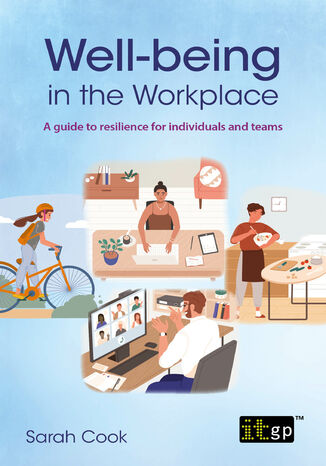
Well-being in the workplace. A guide to resilience for individuals and teams
IT Governance Publishing, Sarah Cook
This book explores the critical role of resilience in workplace well-being, offering practical tools to enhance physical, emotional, mental, and social health. It begins by defining resilience and its importance, especially in the wake of the pandemic, and explains how it impacts both individuals and teams. Early chapters focus on self-assessment, helping readers gauge their resilience and stress levels, while providing actionable steps for improvement.The book then dives into specific areas of well-being, such as physical health, emotional management, and mental strategies like positive thinking and mindfulness. It emphasizes the significance of social connections and offers practical advice for building support networks in a virtual world. For managers, there are strategies to foster resilience in their teams, from regular communication to promoting well-being initiatives.Each chapter is filled with case studies, self-assessment tools, and reflection points, ensuring readers can apply concepts directly to their work environment. The final section ties everything together with tips on making new resilience habits stick, reinforcing long-term well-being in the workplace.