
Informatyka
Zajrzyj do kategorii Informatyka w księgarni internetowej Ebookpoint. Znajdziesz tutaj bestsellerowe książki, ebooki i kursy video z branży IT. Sięgnij po najlepszą literaturę dla specjalistów i rozwijaj doświadczenie, które już posiadasz, lub rozpocznij swoją przygodę z programowaniem, cyberbezpieczeństwem lub grafiką komputerową. Pogłębiaj swoją wiedzę tak, jak Ci wygodnie - z tradycyjną książką, wygodnym ebookiem lub nowoczesnym videokursem. Sprawdź, jakie tytuły znajdziesz w kategorii Informatyka!

Alberto Paro
Elasticsearch is a Lucene-based distributed search engine at the heart of the Elastic Stack that allows you to index and search unstructured content with petabytes of data. With this updated fifth edition, you'll cover comprehensive recipes relating to what's new in Elasticsearch 8.x and see how to create and run complex queries and analytics.The recipes will guide you through performing index mapping, aggregation, working with queries, and scripting using Elasticsearch. You'll focus on numerous solutions and quick techniques for performing both common and uncommon tasks such as deploying Elasticsearch nodes, using the ingest module, working with X-Pack, and creating different visualizations. As you advance, you'll learn how to manage various clusters, restore data, and install Kibana to monitor a cluster and extend it using a variety of plugins. Furthermore, you'll understand how to integrate your Java, Scala, Python, and big data applications such as Apache Spark and Pig with Elasticsearch and create efficient data applications powered by enhanced functionalities and custom plugins.By the end of this Elasticsearch cookbook, you'll have gained in-depth knowledge of implementing the Elasticsearch architecture and be able to manage, search, and store data efficiently and effectively using Elasticsearch.
Vineeth Mohan
If you are a data enthusiast and would like to explore and specialize on search technologies based on Elasticsearch, this is the right book for you. A compelling case-to-case mapping of features and implementation of Elasticsearch to solve many real-world use cases makes this book the right choice to start and specialize on Elasticsearch.
Alberto Paro
If you are a developer who implements ElasticSearch in your web applications and want to sharpen your understanding of the core elements and applications, this is the book for you. It is assumed that you’ve got working knowledge of JSON and, if you want to extend ElasticSearch, of Java and related technologies.
Bahaaldine Azarmi, Alexis Charveriat, Stephen Brown, Farbod...
Built to simplify high-scale data analytics in Elasticsearch, this practical guide will take you from foundational concepts to advanced applications across search, observability, and security. It will help you overcome common challenges such as efficiently querying large datasets, applying advanced analytics without deep prior knowledge, and resolving for a unique and consolidated query language.Written by senior experts at Elastic with extensive field experience, this book delivers actionable guidance rooted in solving today’s data challenges at scale. After introducing ESQL and its architecture, the chapters explore real-world applications across various domains, including analytics, raw log analysis, observability, and cybersecurity. Advanced topics such as scaling, optimization, and future developments are also covered to help you maximize your ESQL capabilities.By the end of this book, you’ll be able to leverage ESQL for comprehensive data management and analysis, optimizing your workflows and enhancing your productivity with Elasticsearch.
Rafal Kuc, Marek Rogozinski
ElasticSearch is an open source search server built on Apache Lucene. It was built to provide a scalable search solution with built-in support for near real-time search and multi-tenancy.Jumping into the world of ElasticSearch by setting up your own custom cluster, this book will show you how to create a fast, scalable, and flexible search solution. By learning the ins-and-outs of data indexing and analysis, ElasticSearch Server will start you on your journey to mastering the powerful capabilities of ElasticSearch. With practical chapters covering how to search data, extend your search, and go deep into cluster administration and search analysis, this book is perfect for those new and experienced with search servers.In ElasticSearch Server you will learn how to revolutionize your website or application with faster, more accurate, and flexible search functionality. Starting with chapters on setting up your own ElasticSearch cluster and searching and extending your search parameters you will quickly be able to create a fast, scalable, and completely custom search solution.Building on your knowledge further you will learn about ElasticSearch's query API and become confident using powerful filtering and faceting capabilities. You will develop practical knowledge on how to make use of ElasticSearch's near real-time capabilities and support for multi-tenancy.Your journey then concludes with chapters that help you monitor and tune your ElasticSearch cluster as well as advanced topics such as shard allocation, gateway configuration, and the discovery module.
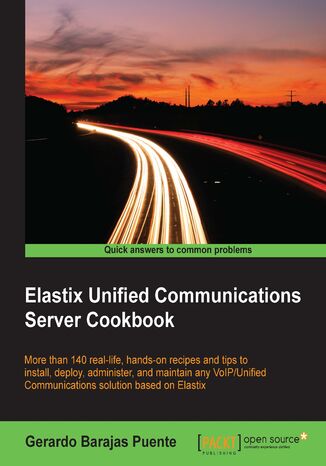
Gerardo Barajas Puente
This book is aimed at those who want to learn how to set up an Elastix Unified Communications Server without losing ground on Unified Communications and Voice over IP.
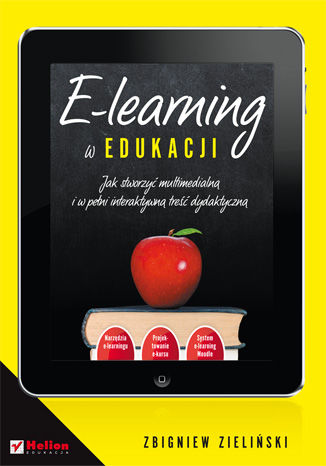
E-learning w edukacji. Jak stworzyć multimedialną i w pełni interaktywną treść dydaktyczną
Zbigniew Zieliński
Książka ma wysoki poziom merytoryczny, zawiera aktualną i potrzebną wiedzę, która może być pomocna w edukacji na każdym szczeblu. Konkretne wskazówki, przykłady i analizy wykorzystania nowych technologii w edukacji pozwalają Czytelnikowi w prosty i skuteczny sposób przygotować własne multimedialne materiały edukacyjne oraz wdrażać autorskie kursy e-learningowe. Zaletą książki są odpowiednio dobrane i interesująco przedstawione przykłady wraz z ilustracjami, które dodatkowo wzmacniają atrakcyjny przekaz. prof. dr hab. nauk ekonomicznych Tadeusz Grabiński E-kstra e-fektywna e-dukacja Na naukę nigdy nie jest za późno. Nie powinno także być do niej za daleko albo zbyt niewygodnie - szczególnie teraz, kiedy dostęp do zdobyczy techniki, komputerów i internetu pozwala na pogłębianie wiedzy, dokształcanie się, a nawet kończenie studiów wyższych praktycznie bez wychodzenia z domu. Zdalne kształcenie, czyli e-learning, to świetna opcja dla osób, które nie mogą pozwolić sobie na dzienny czy nawet zaoczny tryb kształcenia. Jeśli interesuje Cię możliwość nauki na odległość lub myślisz o projektowaniu własnych modułów i kursów e-learningowych, sięgnij po tradycyjne nośniki wiedzy, zanim siądziesz przed komputerem. W pierwszej części tej książki znajdziesz zarys teoretyczny całości zagadnień związanych ze zdalną edukacją. Natomiast z rozdziałów praktycznych szybko dowiesz się, jak tworzyć multimedialną i w pełni interaktywną treść dydaktyczną, którą można wykorzystać w procesie nauczania na każdym poziomie ? od szkoły podstawowej po szkolenia dla osób dorosłych. Dodatkowo poznasz szerokie zastosowanie narzędzi teleinformatycznych, systemów e-learningowych i aplikacji do tworzenia multimedialnych treści wspomagających proces uczenia. Bliskie kształcenie na odległość Sposób na dokształcanie i podnoszenie kompetencji zgodnie z paradygmatem uczenia się przez całe życie Oszczędność czasu, zarówno zawodowego, jak i prywatnego Stałe doskonalenie programu szkoleniowego Nowoczesne sposoby i metody nauczania Krucjata przeciw analfabetyzmowi cyfrowemu Możliwość zdobycia dotacji unijnych w zakresie świadczenia e-usług

Elektrochemiczne metody skaningowe i ich zastosowanie w inżynierii korozyjnej
Julian Kubisztal
Podręcznik omawia elektrochemiczne metody skaningowe i ich zastosowanie w badaniach lokalnych procesów korozyjnych zachodzących na niejednorodnych pod względem chemicznym i fizycznym materiałach. Prezentuje metodę pomiaru lokalnego napięcia kontaktowego sondą Kelvina, metodę pomiaru lokalnego prądu jonowego sondą drgającą, metodę lokalnej elektrochemicznej spektroskopii impedancyjnej oraz metodę elektrochemicznej mikroskopii skaningowej. Charakteryzuje zjawisko powstawania napięcia kontaktowego, różnicy potencjałów na granicy faz metal – roztwór elektrolitu, prądu jonowego nad elektrochemicznie aktywnymi obszarami elektrody, mechanizmy transportu jonów w roztworze elektrolitu, impedancję granicy faz oraz makro- i mikroelektrody. Przedstawia również praktyczne aspekty zastosowania elektrochemicznych metod skaningowych w badaniach lokalnych zjawisk korozyjnych. Zebrane w niniejszym podręczniku informacje będą pomocne w pogłębianiu wiedzy o materiałach i ich właściwościach zarówno przez studentów i doktorantów kierunków technicznych, jak i osoby, które na co dzień zajmują się zagadnieniem korozji elektrochemicznej oraz metodami jej badania.