
Informatyka
Zajrzyj do kategorii Informatyka w księgarni internetowej Ebookpoint. Znajdziesz tutaj bestsellerowe książki, ebooki i kursy video z branży IT. Sięgnij po najlepszą literaturę dla specjalistów i rozwijaj doświadczenie, które już posiadasz, lub rozpocznij swoją przygodę z programowaniem, cyberbezpieczeństwem lub grafiką komputerową. Pogłębiaj swoją wiedzę tak, jak Ci wygodnie - z tradycyjną książką, wygodnym ebookiem lub nowoczesnym videokursem. Sprawdź, jakie tytuły znajdziesz w kategorii Informatyka!
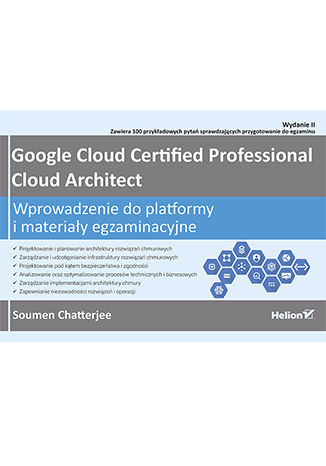
Soumen Chatterjee
Chmura obliczeniowa jest rozwiązaniem niezawodnym i zapewniającym wysoki poziom bezpieczeństwa systemu. Nowoczesne rozwiązania tego rodzaju charakteryzują się dużą elastycznością i skalowalnością, pozwalają na budowę i rozbudowę aplikacji, monitorowanie ich pracy oraz zarządzanie nimi, jak również bazami danych i innymi usługami w sposób globalny. Spośród chmur obliczeniowych jedne z najciekawszych i najbardziej innowacyjnych rozwiązań oferuje Google. Aby jednak optymalnie wykorzystać potencjał chmury Google, trzeba dysponować odpowiednią wiedzą i umiejętnościami. Certyfikat Google nadawany profesjonalistom gwarantuje odpowiedni poziom kompetencji. Ta książka pomoże Ci w uzyskaniu certyfikatu profesjonalisty Google (GCP) w specjalności architekta chmury Google. Znajdziesz tu wszystkie niezbędne materiały, dzięki którym przygotujesz się do egzaminu. Swoją wiedzę będziesz mógł skontrolować za pomocą stu przykładowych pytań sprawdzających. Jeśli nie planujesz zdobycia GCP, zyskasz głęboką wiedzę dotyczącą platformy Google Cloud. Nauczysz się projektować rozwiązania chmurowe, wdrażać je i zarządzać nimi w sposób zapewniający wysoką niezawodność i bezpieczeństwo systemu. Znajdziesz tu również informacje dotyczące maszyn wirtualnych, przechowywania, transferu i migracji danych, a także narzędzi niezbędnych do zarządzania internetem rzeczy (IoT), uczenia maszynowego i budowania aplikacji do specyficznych zastosowań biznesowych. W tej książce między innymi: wprowadzenie do platformy Google Cloud projektowanie i wdrażanie architektury rozwiązań chmurowych zarządzanie bezpieczeństwem i tożsamością w chmurze Google analiza i optymalizacja procesów technicznych i biznesowych przyszłość platformy Google Cloud Chmura Google: nowy paradygmat architektury najlepszych systemów IT!
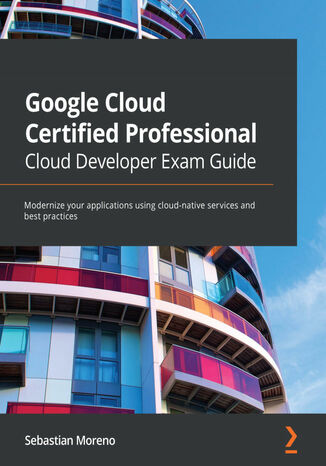
Sebastian Moreno
Google Cloud Platform is one of the three major cloud providers in the industry, exhibiting great leadership in application modernization and data management. This book provides a comprehensive introduction for those who are new to cloud development and shows you how to use the tools to create cloud-native applications by integrating the technologies used by Google.The book starts by taking you through the basic programming concepts and security fundamentals necessary for developing in Google Cloud. You'll then discover best practices for developing and deploying applications in the cloud using different components offered by Google Cloud Platform such as Cloud Functions, Google App Engine, Cloud Run, and other GCP technologies. As you advance, you'll learn the basics of cloud storage and choosing the best options for storing different kinds of data as well as understand what site reliability engineers do. In the last part, you'll work on a sample case study of Hip Local, a community application designed to facilitate communication between people nearby, created by the Google Cloud team.By the end of this guide, you'll have learned how to design, develop, and deploy an end-to-end application on the Google Cloud Platform.
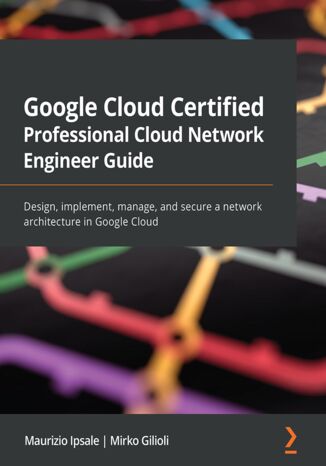
Maurizio Ipsale, Mirko Gilioli
Google Cloud, the public cloud platform from Google, has a variety of networking options, which are instrumental in managing a networking architecture. This book will give you hands-on experience of implementing and securing networks in Google Cloud Platform (GCP).You will understand the basics of Google Cloud infrastructure and learn to design, plan, and prototype a network on GCP. After implementing a Virtual Private Cloud (VPC), you will configure network services and implement hybrid connectivity. Later, the book focuses on security, which forms an important aspect of a network. You will also get to grips with network security and learn to manage and monitor network operations in GCP. Finally, you will learn to optimize network resources and delve into advanced networking. The book also helps you to reinforce your knowledge with the help of mock tests featuring exam-like questions.By the end of this book, you will have gained a complete understanding of networking in Google Cloud and learned everything you need to pass the certification exam.
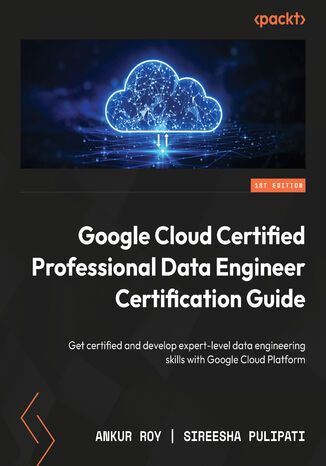
Sireesha Pulipati, Juan Carlos Escalante Soto
The GCP Professional Data Engineer certification validates the fundamental knowledge required to perform data engineering tasks and use GCP services to enhance data engineering processes and further your career in the data engineering/architecting field. This book is a best-in-class study guide that fully covers the GCP Professional Data Engineer exam objectives and helps you pass the exam first time.Complete with clear explanations, chapter review questions, realistic mock exams, and pragmatic solutions, this guide will help you master the core exam concepts and build the understanding you need to go into the exam with the skills and confidence to get the best result you can. With the help of relevant examples, you'll learn fundamental data engineering concepts such as data warehousing and data security. As you progress, you'll delve into the important domains of the exam, including data pipelining, data migration, and data processing.Unlike other study guides, this book contains logical reasoning behind the choice of correct answers based in scenarios and provide you with excellent tips regarding the optimal use of each service, and gives you everything you need to pass the exam and enhance your prospects in the data engineering field.
Bruno Beraldo Rodrigues
To thrive in today's world, leaders and technologists must understand how technology shapes businesses. As organizations shift from self-hosted to cloud-native solutions, embracing serverless systems, strategizing data use, and defining monetization becomes imperative. The Google Cloud Digital Leader Certification Guide lays a solid foundation of industry knowledge, focused on the Google Cloud platform and the innovative ways in which customers leverage its technologies.The book starts by helping you grasp the essence of digital transformation within the Google Cloud context. You’ll then cover core components of the platform, such as infrastructure and application modernization, data innovation, and best practices for environment management and security. With a series of practice exam questions included, this book ensures that you build comprehensive knowledge and prepare to certify as a Google Cloud Digital Leader. Going beyond the exam essentials, you’ll also explore how companies are modernizing infrastructure, data ecosystems, and teams in order to capitalize on new market opportunities through platform expertise, best practices, and real-world scenarios.By the end of this book, you'll have learned everything you need to pass the Google Cloud Digital Leader certification exam and have a reference guide for future requirements.
Google Cloud for Developers. Write, migrate, and extend your code by leveraging Google Cloud
Hector Parra Martinez, Isaac Hernández Vargas
As more organizations embrace cloud computing, developers new to the cloud often feel overwhelmed by cloud migration and code running directly on the cloud. Google Cloud for Developers comes packed with practical tips and expert advice to accelerate your application development journey and help you unlock the full potential of cloud computing.You’ll begin by understanding and comparing all the available options to run your code. You’ll write, deploy, monitor, and troubleshoot your code without leaving the Google Cloud IDE while selecting the best option – serverless or GKE containers – for each use case. After that, you’ll get to grips with the basic Google Cloud infrastructure services and connect your code with public APIs. This will help you add features to your application, such as language translation and object detection in images or videos. Furthermore, you’ll explore a comprehensive list of tips and best practices to make your migration smooth. You’ll also gain the necessary knowledge to write code from scratch, by employing the basics of hybrid cloud applications and build services that can run virtually anywhere.By the end of this book, you’ll be well equipped to carry out the application development process and successfully move your code to Google Cloud.
Sandeep Madamanchi
DevOps is a set of practices that help remove barriers between developers and system administrators, and is implemented by Google through site reliability engineering (SRE).With the help of this book, you'll explore the evolution of DevOps and SRE, before delving into SRE technical practices such as SLA, SLO, SLI, and error budgets that are critical to building reliable software faster and balance new feature deployment with system reliability. You'll then explore SRE cultural practices such as incident management and being on-call, and learn the building blocks to form SRE teams. The second part of the book focuses on Google Cloud services to implement DevOps via continuous integration and continuous delivery (CI/CD). You'll learn how to add source code via Cloud Source Repositories, build code to create deployment artifacts via Cloud Build, and push it to Container Registry. Moving on, you'll understand the need for container orchestration via Kubernetes, comprehend Kubernetes essentials, apply via Google Kubernetes Engine (GKE), and secure the GKE cluster. Finally, you'll explore Cloud Operations to monitor, alert, debug, trace, and profile deployed applications.By the end of this SRE book, you'll be well-versed with the key concepts necessary for gaining Professional Cloud DevOps Engineer certification with the help of mock tests.
Ranjit Singh Thakurratan
On-premise data centers are costly to manage. If you need a data center but don’t want to deal with a physical one, Google Cloud Platform (GCP) is the solution. With GCP, you can build, test, and deploy applications on Google’s infrastructure. Google Cloud Platform Administration begins with GCP fundamentals, with the help of which you will deploy your first app and gain an understanding of Google Cloud architecture and services. Furthermore, you will learn how to manage Compute, networking, and storage resources. As you make your way through the book, you will learn how to track and manage GCP’s usage, monitoring, and billing access control. You will also be able to manage your GCP's access and permissions. In the concluding chapters, you will explore a list of different developer tools for managing and interacting with the GCP platform. By the end of this book, you will have learned how to effectively deploy workloads on GCP.