
Informatyka
Andrew Siemer
Each chapter starts by showing the user experience we are going to create in the chapter. It then has a section discussing the major design decisions we face in building these features, and finally presents the 'solution' – including the overall architecture and highlighting the most important code elements. The book presents a lot of real-world code, with comprehensive explanation and discussion. The full social network application is available for download from the Packt website, for you to examine, study, and modify. This book is written for ASP.NET and C# developers who want to build an enterprise-grade Social Network, either for their own business purposes or as a contract job for another company. The book assumes you have prior experience of developing web applications using ASP.NET 3.5, C# 3.0, SQL Server 2005/2008, and Visual Studio .NET 2008; it focuses on topics that will be of interest to existing developers – not on providing step-by-step examples for each detail.
ASP.NET 3.5. Tworzenie portali internetowych w nurcie Web 2.0
Omar AL Zabir
Poznaj sekrety zaawansowanych technologii budowy portali internetowych Web 2.0 Jak zaprojektować witrynę dla platformy ASP.NET i ASP.NET AJAX? Jak rozbudować serwis zgodnie z zasadami ergonomii? Jak zwiększyć wydajność serwera? Portale sieciowe Web 2.0, opierające się na technologii AJAX, umożliwiają użytkownikom personalizowanie stron, a także agregowanie danych z różnych źródeł. Wszystko to sprawia, że są doskonałymi serwisami korporacyjnymi i należą do najefektywniejszych aplikacji sieciowych. Zastosowanie mechanizmów AJAX pozwala na udostępnienie interaktywnego i rozbudowanego interfejsu, działającego znacznie szybciej i bardziej wydajnie niż w tradycyjnych serwisach. Natomiast wykorzystanie widżetów (komponentów typu plag-and-play) zapewnia przejrzystość architektury portalu i łatwość jego rozbudowy, ponieważ są one opracowywane niezależnie od warstwy rdzeniowej systemu. Książka "ASP.NET 3.5. Tworzenie portali internetowych w nurcie Web 2.0" zawiera opis najnowszych metod i technologii projektowania oraz budowy portali z wykorzystaniem platformy ASP.NET i środowiska ASP.NET AJAX. W podręczniku przedstawiono także praktyczne rozwiązania problemów związanych z projektowaniem, wdrażaniem, utrzymaniem, a także skalowaniem i usprawnianiem serwisu. Dzięki tej pozycji poznasz poszczególne fazy budowy prototypowego portalu, zaawansowane techniki technologii AJAX oraz sposoby optymalizacji kodu. Nauczysz się m. in. przygotowywać widżety klienckie za pomocą kodu JavaScript, tworzyć własne mechanizmy obsługi wywołań, zwiększać wydajność serwera i skalowalność usług sieciowych. Zdobędziesz zatem całą potrzebną Ci wiedzę i umiejętności, które pozwolą zbudować stabilny, nowoczesny i bezpieczny portal internetowy. Wprowadzenie do budowy portali internetowych Architektura portali i widżetów Projekt warstwy sieciowej w środowisku ASP. NET AJAX Projekt warstwy danych i warstwy biznesowej na platformie NET 3.5 Widżety klienckie Optymalizacja pracy środowiska ASP.NET AJAX Tworzenie asynchronicznych i transakcyjnych usług sieciowych z uwzględnieniem buforowania danych Skalowalność usług sieciowych Zwiększenie wydajności serwera i klienckiej części aplikacji Zarządzanie witryną Zaprojektuj bardzo wydajną i supernowoczesną witrynę internetową
Jonathan R. Danylko
As .NET 8 emerges as a long-term support (LTS) release designed to assist developers in migrating legacy applications to ASP.NET, this best practices book becomes your go-to guide for exploring the intricacies of ASP.NET and advancing your skills as a software engineer, full-stack developer, or web architect.This book will lead you through project structure and layout, setting up robust source control, and employing pipelines for automated project building. You’ll focus on ASP.NET components and gain insights into their commonalities. As you advance, you’ll cover middleware best practices, learning how to handle frontend tasks involving JavaScript, CSS, and image files. You’ll examine the best approach for working with Blazor applications and familiarize yourself with controllers and Razor Pages. Additionally, you’ll discover how to leverage Entity Framework Core and exception handling in your application. In the later chapters, you’ll master components that enhance project organization, extensibility, security, and performance.By the end of this book, you’ll have acquired a comprehensive understanding of industry-proven concepts and best practices to build real-world ASP.NET 8.0 websites confidently.
ASP.NET AJAX. Programowanie w nurcie Web 2.0
Christian Wenz
Wykorzystaj najlepsze rozwiązania technologii AJAX i stwórz interaktywną stronę internetową Jak wykorzystywać dane serwerowe? Jak tworzyć i udostępniać własne kontrolki? Jak aktualizować część strony w regularnych odstępach czasu? Zastanawiałeś się, dlaczego interaktywne witryny cieszą się dziś taką popularnością? Dzieje się tak głównie dlatego, że wymagają one od użytkowników współuczestnictwa w tworzeniu i rozwoju serwisu, a tym samym powodują, że abonenci mają duży wpływ na jego ostateczny kształt. Dzięki temu każdy odbiorca korzysta z atrakcyjnej witryny idealnie dopasowanej do swoich potrzeb. To właśnie ASP.NET AJAX umożliwia projektowanie profesjonalnych, interaktywnych stron WWW w duchu Web 2.0. Znawcy tematu zapewniają, że AJAX jest rozwiązaniem przyszłościowym w dziedzinie projektowania serwisów internetowych. O tym, jak za pomocą tej technologii wdrożyć w swoim serwisie rozwiązania zgodne z filozofią Web 2.0, dowiesz się właśnie z tego podręcznika. W książce "ASP.NET AJAX. Programowanie w nurcie Web 2.0" zamieszczono, oprócz teoretycznych wiadomości, mnóstwo przykładów demonstrujących działanie najważniejszych mechanizmów środowiska ASP.NET AJAX. Przedstawione rozwiązania mają bardzo ogólny charakter, a zatem możesz szybko dostosować je do potrzeb własnej aplikacji. Korzystając z tego podręcznika, nauczysz się m.in. projektować własne kontrolki i udostępniać je w serwisie Toolkit, poznasz zasady korzystania ze standardowych bibliotek AJAX-a w innych środowiskach (np. PHP). Będziesz umiał zbudować profesjonalną, dynamiczną stronę internetową, bazującą na platformie ASP.NET AJAX. Struktura i architektura środowiska ASP.NET AJAX JavaScript Rozszerzenia ASP.NET AJAX Usługi sieciowe Odświeżanie części strony -- obiekt UpdatePanel Lokalizacja i globalizacja aplikacji ASP.NET Control Toolkit Animacja na stronie WWW Wiązanie i walidacja danych Zachowania i komponenty Dokumentacja klasy XMLHttpRequest i modelu DOM Płyń z nurtem nowoczesności -- twórz elektryzujące, interaktywne strony WWW!
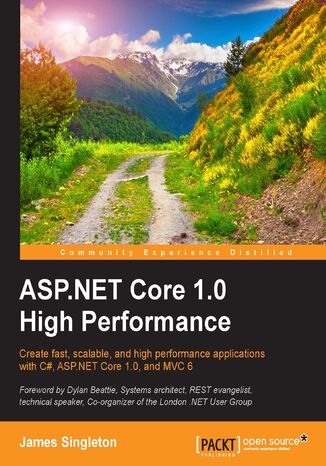
James Singleton
ASP.NET Core is the new, open source, and cross-platform, web-application framework from Microsoft. It's a stripped down version of ASP.NET that's lightweight and fast. This book will show you how to make your web apps deliver high performance when using it.We'll address many performance improvement techniques from both a general web standpoint and from a C#, ASP.NET Core, and .NET Core perspective. This includes delving into the latest frameworks and demonstrating software design patterns that improve performance.We will highlight common performance pitfalls, which can often occur unnoticed on developer workstations, along with strategies to detect and resolve these issues early. By understanding and addressing challenges upfront, you can avoid nasty surprises when it comes to deployment time.We will introduce performance improvements along with the trade-offs that they entail. We will strike a balance between premature optimization and inefficient code by taking a scientific- and evidence-based approach. We'll remain pragmatic by focusing on the big problems.By reading this book, you'll learn what problems can occur when web applications are deployed at scale and know how to avoid or mitigate these issues. You'll gain experience of how to write high-performance applications without having to learn about issues the hard way.You'll see what's new in ASP.NET Core, why it's been rebuilt from the ground up, and what this means for performance. You will understand how you can now develop on and deploy to Windows, Mac OS X, and Linux using cross-platform tools, such as Visual Studio Code.
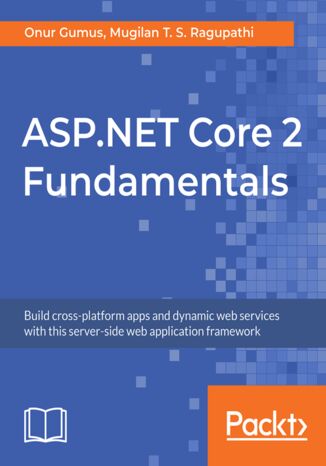
Onur Gumus, Mugilan T. S. Ragupathi
The book sets the stage with an introduction to web applications and helps you build an understanding of the tried-and-true MVC architecture. You learn all about views, from what is the Razor view engine to tagging helpers. You gain insight into what models are, how to bind them, and how to migrate database using the correct model. As you get comfortable with the world of ASP.NET, you learn about validation and routing. You also learn the advanced concepts, such as designing Rest Buy (a RESTful shopping cart application), creating entities for it, and creating EF context and migrations. By the time you are done reading the book, you will be able to optimally use ASP.NET to develop, unit test, and deploy applications like a pro.
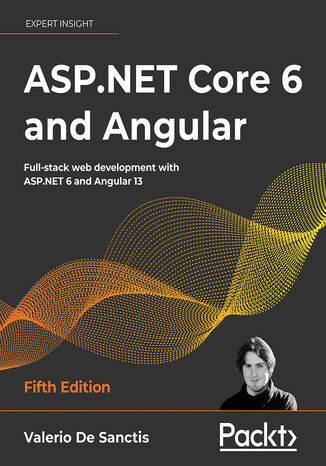
ASP.NET Core 6 and Angular. Full-stack web development with ASP.NET 6 and Angular 13 - Fifth Edition
Valerio De Sanctis
Every full-stack ninja needs the tools to operate on front-end and back-end application development. This web app development book takes a hands-on, project-based approach to provide you with all the tools and techniques that web developers need to create, debug, and deploy efficient web applications using ASP.NET Core and Angular.The fifth edition has been updated to cover advanced topics such as Minimal APIs, Web APIs with GraphQL, real-time updates with SignalR, and new features in .NET 6 and Angular 13.You begin by building a data model with Entity Framework Core, alongside utilizing the Entity Core Fluent API and EntityTypeConfiguration class. You'll learn how to fetch and display data and handle user input with Angular reactive forms and front-end and back-end validators for maximum effect.Later, you will perform advanced debugging and explore the unit testing features provided by xUnit.net (.NET 6) and Jasmine, as well as Karma for Angular. After adding authentication and authorization to your apps, you will explore progressive web applications, learning about their technical requirements, testing processes, and how to convert a standard web application to a PWA.By the end of this web development book, you will understand how to tie together the front-end and back-end to build and deploy secure and robust web applications.
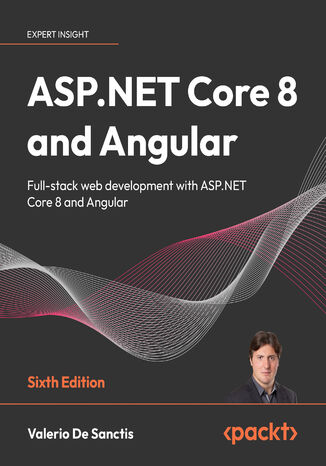
Valerio De Sanctis
If you want to learn how to use ASP.NET Core with Angular effectively, this hands-on guide is for you.Improve the way you create, debug, and deploy web applications while keeping up to date with the latest developments in .NET 8 and modern Angular, including .NET Minimal APIs and the new Angular standalone API defaults.You’ll begin by setting up SQL Server 2022 and building a data model with Entity Framework Core. You’ll progress to fetching and displaying data, handling user input with Angular reactive forms, and implementing front-end and back-end validators for maximum effect. After that, you will perform advanced debugging and explore unit testing features with xUnit for .NET, and Jasmine and Karma for Angular. You’ll use Identity API endpoints in ASP.NET Core and functional route guards in Angular to add authentication and authorization to your apps. Finally, you’ll learn how to deploy to Windows, Linux, and Azure.By the end of this book, you will understand how to tie together the front-end and back-end to build and deploy secure and robust web applications.