
Informatyka
Zajrzyj do kategorii Informatyka w księgarni internetowej Ebookpoint. Znajdziesz tutaj bestsellerowe książki, ebooki i kursy video z branży IT. Sięgnij po najlepszą literaturę dla specjalistów i rozwijaj doświadczenie, które już posiadasz, lub rozpocznij swoją przygodę z programowaniem, cyberbezpieczeństwem lub grafiką komputerową. Pogłębiaj swoją wiedzę tak, jak Ci wygodnie - z tradycyjną książką, wygodnym ebookiem lub nowoczesnym videokursem. Sprawdź, jakie tytuły znajdziesz w kategorii Informatyka!
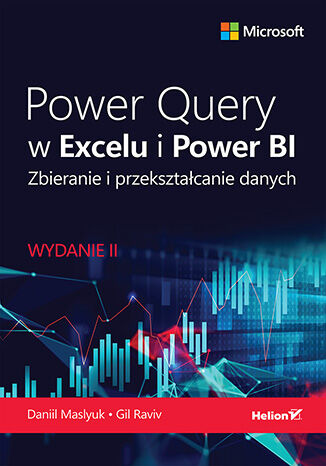
Power Query w Excelu i Power BI. Zbieranie i przekształcanie danych. Wydanie II
Daniil Maslyuk, Gil Raviv
Czy chcesz dokonywać cudów z danymi, unikać powtarzalnej pracy i oszczędzać nawet 80 procent czasu? Zautomatyzować kopiowanie i żmudne oczyszczanie danych, aby doprowadzić je do odpowiedniego stanu? A może chcesz ze spokojem podchodzić do podejmowania racjonalnych decyzji opartych na ogromnych ilościach niejednorodnych danych? Teraz możesz łatwo sprostać takim wyzwaniom i uzyskiwać niezwykłe rezultaty. Wystarczy, że skorzystasz z narzędzi dostępnych w Excelu ― i z tej książki. To zaktualizowane wydanie praktycznego przewodnika po Power Query. Pozwoli Ci opanować umiejętność efektywnego przetwarzania danych i wydobywania z nich wartościowych informacji. Dowiesz się, jak wykonywać złożone prace analityczne i jak używać procedur w języku M. Znajdziesz tu ponad 70 ćwiczeń i 200 plików, dzięki którym nauczysz się importować bezładne, rozdzielone tabele danych i automatycznie przekształcać je w ustrukturyzowane zbiory gotowe do analizy. Większość opisanych technik z łatwością zapamiętasz i użyjesz do swoich potrzeb. W książce między innymi: solidne podstawy pracy z narzędziem Power Query proste i zaawansowane techniki dekompozycji tabel tworzenie elastycznych procedur w języku M pozyskiwanie informacji z danych tekstowych i sieci społecznościowych profilowanie danych i poprawianie wydajności zapytań Power Query i Power BI: więcej i lepiej w krótszym czasie!
Philip Brandon Sellers
If you are a virtualization professional who wants to unleash the power of automation and combat the complexity of sprawling virtual environments, this book is ideal for you. This book will enhance your skills of administering VMware vSphere and vCloud Director with PowerCLI.
PowerCLI Essentials. Simplify and automate server administration tasks with PowerCLI
Chris Halverson
Have you ever wished you could automatically get a report with all the relevant information about your VMware environments in exactly the format you want? Or that you could automate a crucial task that needs to be performed on a regular basis? Powerful Command Line Interface (PowerCLI) scripts do all these things and much more for VMware environments. PowerCLI is a command-line interface tool used to automate VMware vSphere environments. It is used to handle complicated administration tasks through use of various cmdlets and scripts, which are designed to handle certain aspects of VSphere servers and to help you manage them. This book will show you the intricacies of PowerCLI through real-life examples so that you can discover the art of PowerCLI scripting. At the start, you will be taught to download and install PowerCLI and will learn about the different versions of it. Moving further, you will be introduced to the GUI of PowerCLI and will find out how to develop single line scripts to duplicate running tasks, produce simple reports, and simplify administration. Next, you will learn about the methods available to get information remotely. Towards the end, you will be taught to set up orchestrator and build workflows in PowerShell with update manager and SRM scripts.
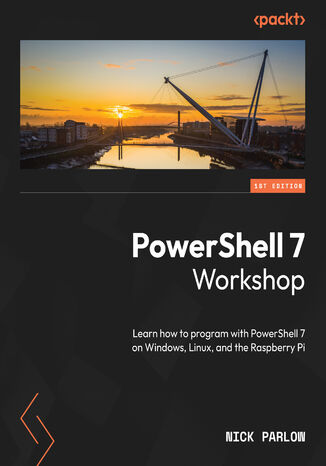
Nick Parlow
Discover the capabilities of PowerShell 7 for your everyday tasks with this carefully paced tutorial that will help you master this versatile programming language.The first set of chapters will show you where to find and how to install the latest version of PowerShell, providing insights into the distinctive features that set PowerShell apart from other languages. You’ll then learn essential programming concepts such as variables and control flow, progressing to their applications. As you advance, you’ll work with files and APIs, writing scripts, functions, and modules. You’ll also gain proficiency in securing your PowerShell environment before venturing into different operating systems.Enriched with detailed practical examples tailored for Windows, Linux, macOS, and Raspberry Pi, each chapter weaves real-world scenarios to ignite your imagination and cement the principles you learn. You’ll be able to reinforce your understanding through self-assessment questions and delve deeper into the principles using comprehensive reading lists.By the end of this book, you’ll have the confidence to use PowerShell for physical computing and writing scripts for Windows administration.
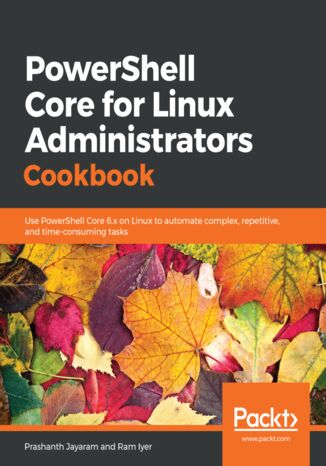
Prashanth Jayaram , Ram Iyer
PowerShell Core, the open source, cross-platform that is based on the open source, cross-platform .NET Core, is not a shell that came out by accident; it was intentionally created to be versatile and easy to learn at the same time. PowerShell Core enables automation on systems ranging from the Raspberry Pi to the cloud.PowerShell Core for Linux Administrators Cookbook uses simple, real-world examples that teach you how to use PowerShell to effectively administer your environment. As you make your way through the book, you will cover interesting recipes on how PowerShell Core can be used to quickly automate complex, repetitive, and time-consuming tasks. In the concluding chapters, you will learn how to develop scripts to automate tasks that involve systems and enterprise management.By the end of this book, you will have learned about the automation capabilities of PowerShell Core, including remote management using OpenSSH, cross-platform enterprise management, working with Docker containers, and managing SQL databases.
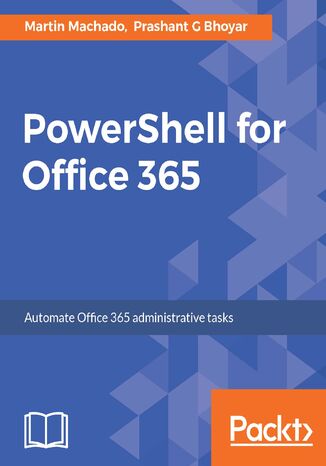
PowerShell for Office 365. Automate Office 365 administrative tasks
Martin Machado
While most common administrative tasks are available via the Office 365 admin center, many IT professionals are unaware of the real power that is available to them below the surface. This book aims to educate readers on how learning PowerShell for Offi ce 365 can simplify repetitive and complex administrative tasks, and enable greater control than is available on the surface.The book starts by teaching readers how to access Offi ce 365 through PowerShell andthen explains the PowerShell fundamentals required for automating Offi ce 365 tasks.You will then walk through common administrative cmdlets to manage accounts, licensing, and other scenarios such as automating the importing of multiple users,assigning licenses in Office 365, distribution groups, passwords, and so on.Using practical examples, you will learn to enhance your current functionalityby working with Exchange Online, and SharePoint Online using PowerShell. Finally,the book will help you effectively manage complex and repetitive tasks (such aslicense and account management) and build productive reports.By the end of the book, you will have automated major repetitive tasks in Office365 using PowerShell.
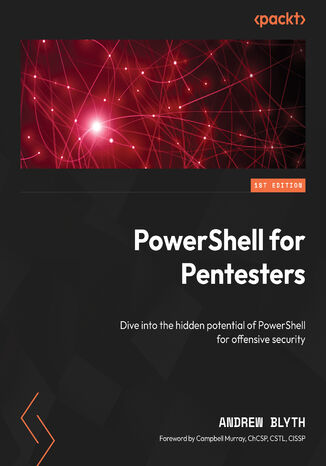
Dr. Andrew Blyth, Campbell Murray
PowerShell for Penetration Testing is a comprehensive guide designed to equip you with the essential skills you need for conducting effective penetration tests using PowerShell.You'll start by laying a solid foundation by familiarizing yourself with the core concepts of penetration testing and PowerShell scripting. In this part, you'll get up to speed with the fundamental scripting principles and their applications across various platforms. You’ll then explore network enumeration, port scanning, exploitation of web services, databases, and more using PowerShell tools. Hands-on exercises throughout the book will solidify your understanding of concepts and techniques. Extending the scope to cloud computing environments, particularly MS Azure and AWS, this book will guide you through conducting penetration tests in cloud settings, covering governance, reconnaissance, and networking intricacies. In the final part, post-exploitation techniques, including command-and-control structures and privilege escalation using PowerShell, will be explored. This section encompasses post-exploitation activities on both Microsoft Windows and Linux systems.By the end of this book, you’ll have covered concise explanations, real-world examples, and exercises that will help you seamlessly perform penetration testing techniques using PowerShell.