
Informatyka
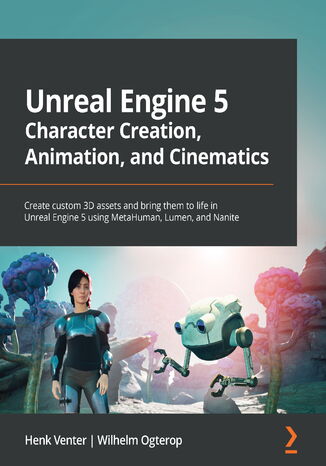
Henk Venter, Wilhelm Ogterop
Unreal Engine 5 (UE5) offers beginners and seasoned professionals the ability to create detailed movie scenes with realistic human characters using MetaHuman and combine it with custom props and environments. It also comes with built-in industry standard animation tools to develop such scenes in a fraction of the time compared to old methods. This book takes you through the entire 3D movie production pipeline using free (open - source) software.By following the step-by-step, beginner-friendly tutorials in this book, you'll learn how to create your own custom 3D assets in Blender and texture these 3D assets in Quixel Mixer. Next, you'll take these completed 3D assets into Unreal Engine 5 and use them to build a virtual 3D movie set for your 3D movie. You'll also populate your 3D movie set by using Quixel MegaScans assets and create and customize your own photorealistic human character using MetaHuman Creator and UE5. As you advance, you'll discover how to rig, skin, and animate these 3D assets and characters using Blender and UE5's new Control Rig. Finally, you'll explore the process of setting up your movie cameras and animation sequences and rendering your 3D movie using UE5's Sequencer.By the end of this Unreal Engine book, you'll have learned how to combine different elements in UE5 to make your own movies and cinematics.
Zhenyu George Li, Charles Shih-I Yeh, Michael...
Unreal Engine 5 for Beginners is a hands-on guide designed for aspiring developers, students, and hobbyists with little or no prior experience. Instead of overwhelming technical jargon, it takes a clear, step-by-step approach that helps readers quickly get comfortable with Unreal’s powerful tools.You’ll begin by installing Unreal Engine, setting up your first project, and exploring the editor to build and light simple levels. As you progress, you’ll learn how to script gameplay with Blueprints, create characters with animations, and set up player inputs for smooth control. Later chapters introduce AI-driven enemies, gameplay rules, and mission objectives that bring your world to life.The book also covers building user interfaces with UMG, producing cinematic cutscenes using Sequencer, and adding polish with visual and audio effects. Finally, you’ll learn optimization techniques and packaging workflows to prepare your game for distribution.By the end of this book, you’ll have built a fully playable third-person game and gained a solid foundation in Unreal Engine 5. Whether you want to create interactive 3D experiences, prepare for more advanced projects, or take the first step toward a career in game development, this guide gives you the confidence and skills to begin your journey.
Brais Brenlla Ramos, Kenneth Pimentel
Unreal Engine is here to stay! Since the launch of the first edition of this book, based on the Unreal Engine 5 technology, real-time rendering has only grown in popularity. The demand for expertise in this area has grown exponentially across various fields over the last few years, and Unreal Engine 5 builds upon that foundation and continues to push the boundaries of what is achievable in an interactive format.Against this backdrop, the second edition of this book takes a leap forward and explores the new opportunities offered by the latest version of the engine, including Lumen, ray tracing, and Nanite. The book also revisits previously covered techniques and updates them to current standards, shining new light on topics such as the PBR workflow and the different lighting solutions that were present in the first edition. Throughout the chapters, you’ll be able to focus on two key principles that you need to consider when dealing with real-time graphics: optimization and efficiency.By the end of this book, you’ll have explored the many rendering possibilities that Unreal Engine 5 has to offer to become the master of your own creations!
Hussin Khan
Real-time VFX is now a common part of film, animation, and virtual production, but getting effects to behave well in a shot can be tricky. This cookbook is written for intermediate Unreal Engine users who already know the basics and want dependable, shot-ready Niagara effects.You’ll start by setting up a simple cinematic workflow: reusable control parameters, reliable timing in Sequencer, and practical checks for Movie Render Queue so your effects don’t break on the first frame. From there, each chapter delivers focused recipes you can drop into real scenes: cinematic smoke (wisps, plumes, impact puffs, haze), dust (bursts, trails, motes, aftermath), rain and snow (hero and wide-shot setups, wind control, splashes, swirls), lightning and electrical hits, and wind-driven leaves for extra life in the frame.The final chapter adds Chaos for cinematic work, covering controlled wall, road, and building destruction, plus Chaos Cloth for flags and curtains. Every recipe stays short, uses plain English, and includes small variations and troubleshooting tips so you can adapt the effect to different shots and looks.
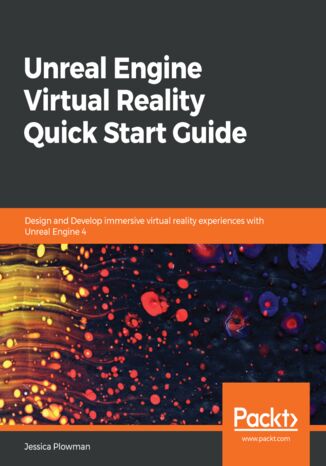
Jessica Plowman
With the ability to put players directly in the game, virtual reality gives users the chance to experience digital worlds directly. Nevertheless, many designers are unsure where to start when working with this amazing technology.With this book, you will learn user experience design processes and create immersive gameplay experiences designed for entertainment and player comfort. Using the power of Unreal Engine 4’s Blueprint visual scripting language, you will build player interaction and locomotion systems from scratch and use these flexible systems to create a sample game, as well as develop functional 2D and 3D user interfaces for players to interact with. And also learn the best practices for creating game art for virtual reality. Finally, you will learn how to test your application with your target audience and finalize your game for distribution.By the end of this book, you will have the knowledge to be able to make the leap from traditional game development to creating immersive virtual reality experiences using Unreal Engine 4.
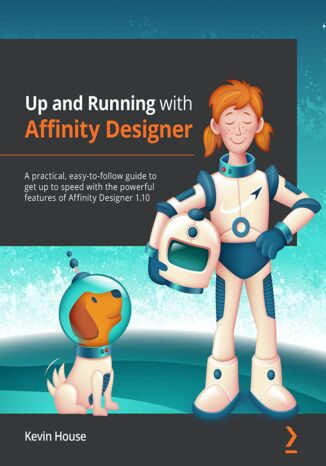
Kevin House
Affinity Designer is a widely adopted creative application, and in a reasonably short space of time, it has become a leading design and illustration application. Affinity Designer, along with Affinity Photo and Affinity Publisher, is part of a suite of award-winning creative software applications developed by Serif Europe. Built on the latest technologies, which make it fast and smooth, Affinity Designer is quickly becoming the go-to professional creative application for vector drawing and pixel-based painting.Up and Running with Affinity Designer is a comprehensive hands-on guide to the Affinity Designer software. Whether you're new to the creative industry, a seasoned professional looking for a proven alternative, or an enthusiastic hobbyist, this book will help you get up to speed in no time. You’ll learn how to create documents and explore workflow best practices while working through practical exercises using the knowledge and skills developed in each chapter to solidify your understanding of the fundamentals. Finally, you’ll bring it all together with real-world practical applications by building a fun logo and professional illustration, forming a base for in-depth exploration in your own projects.By the end of this Affinity Designer book, you'll have gained the knowledge and confidence to use Affinity Designer as part of your creative toolset.
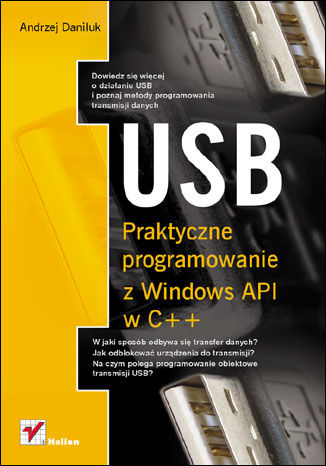
USB. Praktyczne programowanie z Windows API w C++
Andrzej Daniluk
Dowiedz się więcej o działaniu USB i poznaj metody programowania transmisji danych W jaki sposób odbywa się transfer danych? Jak odblokować urządzenia do transmisji? Na czym polega programowanie obiektowe transmisji USB? USB (skrót od ang. Universal Serial Bus -- uniwersalna magistrala szeregowa) to rodzaj bardzo praktycznego portu komunikacyjnego, dzięki któremu możliwe jest podłączanie do komputera wielu różnych urządzeń, takich jak mysz, kamera, aparat fotograficzny, telefon komórkowy, modem, skaner, przenośna pamięć. Podłączone w ten sposób urządzenia są od razu wykrywane i rozpoznawane przez system, dzięki czemu instalacja sterowników i konfiguracja sprzętu odbywają się zwykle automatycznie. Książka "USB. Praktyczne programowanie z Windows API w C++" w zwięzły sposób przedstawia wszelkie zagadnienia, dotyczące użytkowania i programowania transmisji USB. Korzystając z tego podręcznika, poznasz nie tylko teoretyczne podstawy działania USB, ale także zdobędziesz praktyczne umiejętności w tym zakresie. Książka zawiera bowiem zarówno konkretne przykłady, jak i ćwiczenia do samodzielnego wykonania dla wszystkich, którzy chcą zyskać wiedzę na zaawansowanym poziomie. Dowiesz się między innymi, jakie są rodzaje transferów danych i transakcji USB, za co odpowiadają komponenty i jak wykorzystać wzorce projektowe. Zrozumiesz także metody projektowania obiektowego oraz implementacji oprogramowania sterującego łączem USB. Środowisko fizyczne i sygnałowe USB Klasy instalacji urządzeń Rejestr systemowy Transmisja danych Struktura systemu USB Detekcja i identyfikacja urządzeń Odczyt i zapis danych w formie raportu Programowanie obiektowe transmisji USB Wewnętrzne struktury danych Programy wielowątkowe Konwertery USB Tu znajdziesz wszystko o działaniu USB i możliwościach jego wykorzystania!
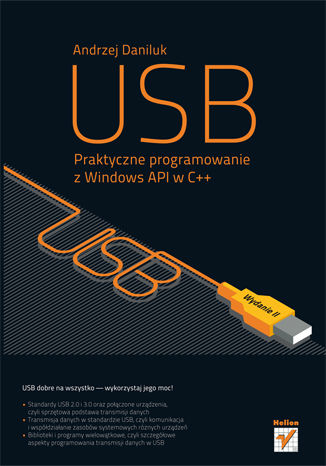
USB. Praktyczne programowanie z Windows API w C++. Wydanie II
Andrzej Daniluk
USB dobre na wszystko — wykorzystaj jego moc! Standardy USB 2.0 i 3.0 oraz połączone urządzenia, czyli sprzętowa podstawa transmisji danych Transmisja danych w standardzie USB, czyli komunikacja i współdziałanie zasobów systemowych różnych urządzeń Biblioteki i programy wielowątkowe, czyli szczegółowe aspekty programowania transmisji danych w USB Mniej więcej pod koniec lat 90. standard USB utrwalił się w świadomości użytkowników komputerów na całym świecie i stał się dla nich jednym z najwygodniejszych narzędzi zapewniających komunikację oraz wymianę danych między urządzeniami. Liczba gniazd USB, do których można podłączyć dosłownie wszystko — mysz, pendrive’a, dysk zewnętrzny czy kartę sieciową — stała się jednym z ważnych kryteriów przy zakupie nowego komputera, a czołowi wytwórcy ani myślą zastępować go czymkolwiek innym. Jednak USB ma także swoje wady. Zalicza się do nich konieczność używania bardziej złożonego sprzętu i oprogramowania w porównaniu ze starszymi protokołami transmisji danych. Te kłopoty pomoże Ci rozwiązać niniejsza książka, o ile nieobcy jest Ci język C/C++ w zakresie programowania strukturalnego i proceduralnego. Pokaże Ci ona całą architekturę standardu USB oraz implikacje jego stosowania dla różnych urządzeń. Dzięki niej poznasz także podstawy zasad programowania transmisji USB z wykorzystaniem zasobów systemów operacyjnych Windows oraz współistniejących bibliotek programistycznych. W dodatku autor tego wyczerpującego podręcznika nie poprzestaje na suchym wyliczeniu typów danych czy funkcji, lecz zamieszcza mnóstwo wskazówek dotyczących konkretnych, działających aplikacji. Jeśli myślisz o programowaniu transmisji danych w USB, nie znajdziesz nic lepszego! Standardy bazowe USB 2.0 oraz 3.0 Informacje o urządzeniach Wstęp do transmisji danych Urządzenia klasy HID Detekcja i identyfikacja różnych klas urządzeń dołączonych do magistrali USB Odblokowanie urządzenia do transmisji Odczyt i zapis danych Biblioteki WinUSB oraz LibUSB Podstawy programowania obiektowego transmisji USB Wewnętrzne struktury danych Podstawy programowania wielowątkowego transmisji USB Adaptery USB Poznaj jeden z najpopularniejszych standardów wszech czasów!