
Informatyka
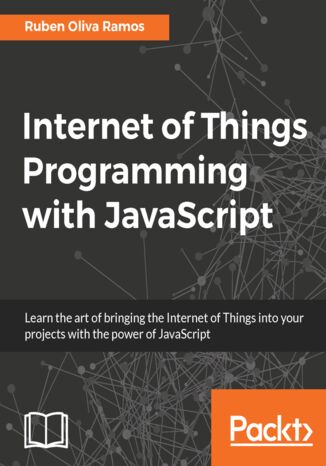
Ruben Oliva Ramos, Jacqueline Wilson
The Internet of Things is taking the tech world by storm, and JavaScript is at its helm. This book will get you to grips with this exciting new technology. Where do Node.js, HTML5 and Windows 10 IoT Core come in with JavaScript and IoT? Why Raspberry Pi Zero rather than Arduino? How do you configure and build an IoT network from scratch? All your IoT JavaScript questions are answered in this book.
Ruben Oliva Ramos, Jacqueline Wilson
The Internet of Things is taking the tech world by storm, and JavaScript is at its helm. This book will get you to grips with this exciting new technology. Where do Node.js, HTML5 and Windows 10 IoT Core come in with JavaScript and IoT? Why Raspberry Pi Zero rather than Arduino? How do you configure and build an IoT network from scratch? All your IoT JavaScript questions are answered in this book.
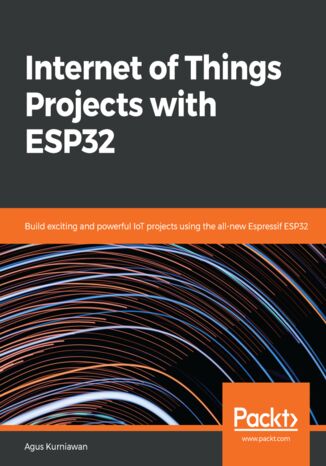
Agus Kurniawan
ESP32 is a low-cost MCU with integrated Wi-Fi and BLE. Various modules and development boards-based on ESP32 are available for building IoT applications easily. Wi-Fi and BLE are a common network stack in the Internet of Things application. These network modules can leverage your business and projects needs for cost-effective benefits.This book will serve as a fundamental guide for developing an ESP32 program. We will start with GPIO programming involving some sensor devices. Then we will study ESP32 development by building a number of IoT projects, such as weather stations, sensor loggers, smart homes, Wi-Fi cams and Wi-Fi wardriving. Lastly, we will enable ESP32 boards to execute interactions with mobile applications and cloud servers such as AWS.By the end of this book, you will be up and running with various IoT project-based ESP32 chip.
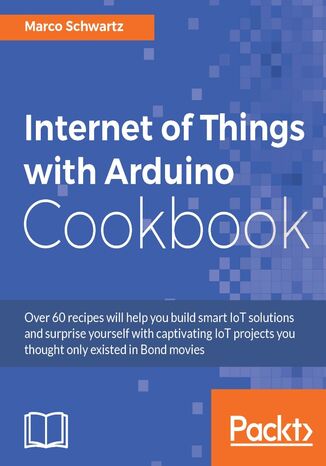
Internet of Things with Arduino Cookbook. Build exciting IoT projects using the Arduino platform
Marco Schwartz
Arduino is a powerful and very versatile platform used by millions of people around the world to create DIY electronics projects. It can be connected to a wide variety of sensors and other components, making it the ideal platform to build amazing Internet of Things (IoT) projects on—the next wave in the era of computing.This book takes a recipe-based approach, giving you precise examples on how to build IoT projects of all types using the Arduino platform. You will come across projects from several fields, including the popular robotics and home automation domains. Along with being introduced to several forms of interactions within IoT, including projects that directly interact with well-known web services such as Twitter, Facebook, and Dropbox we will also focus on Machine-to-Machine (M2M) interactions, where Arduino projects interact without any human intervention. You will learn to build a few quick and easy-to-make fun projects that will really expand your horizons in the world of IoT and Arduino. Each chapter ends with a troubleshooting recipe that will help you overcome any problems faced while building these projects.By the end of this book, you will not only know how to build these projects, but also have the skills necessary to build your own IoT projects in the future.
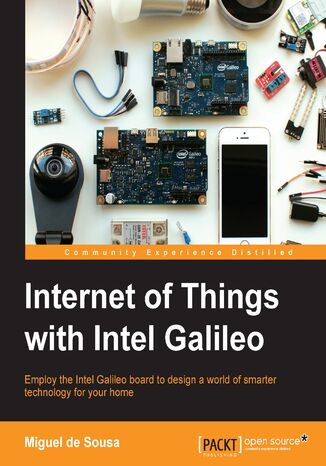
Miguel de Sousa
This book employs an incremental, step-by-step approach to get you familiarized with everything from the basic terms, board components, and development environments to developing real projects. Each project will demonstrate how to use specific board components and tools. Both Galileo and Galileo Gen 2 are covered in this book.
Internet of Things with Python. Create exciting IoT solutions
Gastón C. Hillar
Internet of Things (IoT) is revolutionizing the way devices/things interact with each other. And when you have IoT with Python on your side, you'll be able to build interactive objects and design them. This book lets you stay at the forefront of cutting-edge research on IoT. We'll open up the possibilities using tools that enable you to interact with the world, such as Intel Galileo Gen 2, sensors, and other hardware. You will learn how to read, write, and convert digital values to generate analog output by programming Pulse Width Modulation (PWM) in Python. You will get familiar with the complex communication system included in the board, so you can interact with any shield, actuator, or sensor. Later on, you will not only see how to work with data received from the sensors, but also perform actions by sending them to a specific shield. You'll be able to connect your IoT device to the entire world, by integrating WiFi, Bluetooth, and Internet settings. With everything ready, you will see how to work in real time on your IoT device using the MQTT protocol in python.By the end of the book, you will be able to develop IoT prototypes with Python, libraries, and tools.
Maneesh Rao
This book is designed to introduce you to IoT and Raspberry Pi 3. It will help you create interesting projects, such as setting up a weather station and measuring temperature and humidity using sensors; it will also show you how to send sensor data to cloud for visualization in real-time. Then we shift our focus to leveraging IoT for accomplishing complex tasks, such as facial recognition using the Raspberry Pi camera module, AWS Rekognition, and the AWS S3 service. Furthermore, you will master security aspects by building a security surveillance system to protect your premises from intruders using Raspberry Pi, a camera, motion sensors, and AWS Cloud. We'll also create a real-world project by building a Wi-Fi – controlled robot car with Raspberry Pi using a motor driver circuit, DC motor, and a web application.This book is a must-have as it provides a practical overview of IoT’s existing architectures, communication protocols, and security threats at the software and hardware levels—security being the most important aspect of IoT.
Maneesh Rao
This book is designed to introduce you to IoT and Raspberry Pi 3. It will help you create interesting projects, such as setting up a weather station and measuring temperature and humidity using sensors; it will also show you how to send sensor data to cloud for visualization in real-time. Then we shift our focus to leveraging IoT for accomplishing complex tasks, such as facial recognition using the Raspberry Pi camera module, AWS Rekognition, and the AWS S3 service. Furthermore, you will master security aspects by building a security surveillance system to protect your premises from intruders using Raspberry Pi, a camera, motion sensors, and AWS Cloud. We'll also create a real-world project by building a Wi-Fi – controlled robot car with Raspberry Pi using a motor driver circuit, DC motor, and a web application.This book is a must-have as it provides a practical overview of IoT’s existing architectures, communication protocols, and security threats at the software and hardware levels—security being the most important aspect of IoT.
Internet rzeczy. Budowa sieci z wykorzystaniem technologii webowych i Raspberry Pi
Dominique Guinard, Vlad Trifa
Internet rzeczy (IoT) przynosi kolejną technologiczną rewolucję: oto coraz więcej przedmiotów, także sprzętów codziennego użytku, dzięki wbudowanym czujnikom i dostępowi do sieci może komunikować się z człowiekiem i z innymi przedmiotami. Możliwości takiej sieci są niewyobrażalne. Inżynierowie, którzy zajmują się tą koncepcją, rozwijają wiele różnych standardów mających służyć integracji IoT. Okazuje się jednak, że w chaosie konkurujących rozwiązań brakuje spojrzenia na internet rzeczy z nieco szerszej perspektywy, która pozwoliłaby na opracowanie pragmatycznej i strukturalnej metodologii tworzenia urządzeń i usług IoT. Niniejszą książkę napisano dla osób, które zaczynają swoją przygodę z internetem rzeczy. Zawarto tu informacje niezbędne do tworzenia prototypów urządzeń, produktów i aplikacji z wykorzystaniem infrastruktury WWW. Przedstawiono obszerne wprowadzenie w zagadnienia dotyczące internetu rzeczy. Znalazły się tu informacje o urządzeniach, czujnikach, standardach i potrzebnych narzędziach. Szczególnie dokładnie przedstawiono instrumentarium niezbędne do budowania WWW rzeczy — czyli warstwy aplikacji internetu rzeczy. Książka ta pozwoli na zrozumienie problemów dzisiejszego internetu rzeczy, poznanie dostępnych technik i ich wykorzystywanie. W tej książce znajdziesz między innymi: omówienie koncepcji WWW rzeczy i internetu rzeczy sposoby wykorzystanie Node.js do implementacji WWW rzeczy kwestie związane ze stosowaniem protokołu HTTP oraz API typu RESTful charakterystykę poszczególnych warstw architektury WWW rzeczy metody integracji BeagleBone, Intel Edison oraz Arduino z internetem rzeczy Internet rzeczy: fascynująca przyszłość, która zaczyna się dziś! Dr Dominique Guinard — jest pionierem koncepcji architektury internetu rzeczy. Uczestniczył w wielu projektach związanych z tym zagadnieniem: badał duże sieci RFID, zajmował się telefonami komórkowymi jako bramami IoT, a także integrował sieci czujników z oprogramowaniem SAP. Dr Vlad Trifa — jest uznanym ekspertem w dziedzinie rozproszonych rozwiązań pomiarowych, a także integracji urządzeń interaktywnych z aplikacjami korporacyjnymi. Zajmował się bioakustyką, przetwarzaniem sygnałów, interakcjami robotów humanoidalnych i sieciami neuronowymi.
Internet Rzeczy (IoT). Problemy cyberbezpieczeństwa
Jerzy Krawiec
Monografię można podzielić na dwie zasadnicze części. Pierwsza cześć obejmuje problematykę dotyczącą wyzwań Przemysłu 4.0, a właściwie jego kluczowego elementu, czyli Internetu Rzeczy (IoT). W tej części scharakteryzowano systemy i opisano modele IoT, przedstawiono wizje architektury IoT, zidentyfikowano problem wiarygodności IoT oraz przedstawiono zasady eksploracji danych i standardy komunikacji między urządzeniami systemu IoT. W drugiej części książki podjęto rozważania dotyczące problematyki zapewnienia cyberbezpieczeństwa systemów IoT. Ta część publikacji obejmuje modele odniesienia cyklu bezpieczeństwa urządzeń IoT oraz implementację systemu zarządzania bezpieczeństwem informacji w przedsiębiorstwie realizującym koncepcję IoT. Publikacja jest poparta licznymi przykładami praktycznymi oraz wynikami badań dotyczących poziomów bezpieczeństwa systemów informatycznych pracujących zarówno w sieci globalnej, jak i lokalnej. Jest także praktycznym przewodnikiem wprowadzającym w świat technologii IoT, ze szczególnym uwzględnieniem cyberbezpieczeństwa, przedstawieniem najnowszych zagrożeń internetowych oraz podaniem sposobów ochrony zasobów informacyjnych w przedsiębiorstwach.