
Деталі електронної книги
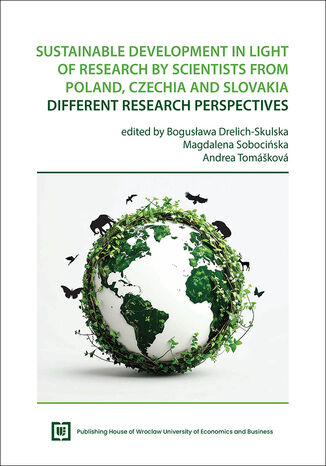
Sustainable Development in Light of Research by Scientists from Poland, Czechia and Slovakia. Different Research Perspectives
Bogusława Drelich-Skulska, Magdalena Sobocińska, Andrea Tomášková ed.
The multidimensionality of the concepts of sustainable development is shown in this monograph through the prism of literature reviews and empirical studies, as well as experiences of 30 authors representing 13 universities and science institutes. The monograph confirms the long-standing academic cooperation between the research community of Wroclaw University of Economics and Business and other academic centres in Poland with scholars from Czechia and Slovakia. It is also worth noting that the list of the contributors has been further extended to authors from Hungary and Pakistan who are part of international research teams working in Poland and Czechia.
The main structure of the monograph is composed of four parts. Part 1 concentrates on tasks which institutions of higher education have to realise in the context of expanding the scope of implementing the principles of sustainable development. The considerations in Part 2 are directed at the regional dimension of sustainable development, with particular attention to its economic aspects demonstrated in the context of regions. The authors of the chapters in Part 3 indicate the importance of technological advancements and the possibility of their use to support sustainable development, whilst Part 4 presents the issues linked with sustainable development from the perspective of consumer behaviour and business activity of enterprises.
Foreword 11
Part 1. Higher Education Institutions in Terms of the Need to Implement Concepts of Sustainable Development 17
- Bogusława Drelich-Skulska, Magdalena Sobocińska: The Role of Higher Education Institutions in Advancing Sustainable Development 19
1.1. Introduction 19
1.2. The Origins and Principles of Sustainable Development as a Key Context for Higher Education Institutions 20
1.3. The Cultural Dimension of Sustainable Development 21
1.4. Implementing the Principles of Sustainable Development in Higher Education Institutions 23
1.5. The Approach of Wroclaw University of Economics and Business to Implementing the Principles of Sustainable Development 26
1.6. Conclusions 28
References 29
- Emília Huttmanová, Jana Chovancová, Peter Adamišin, Radoslav Mikča: The Changing Face of Economic and Management Education: Students’ Perspectives and Expectations in the Context of Green Transition (on the Example of the Faculty of Management and Business, University of Prešov) 31
2.1. Introduction 31
2.2. Material and Methods 34
2.3. Results 35
2.4. Conclusions 43
References 46
- Marcin Majewski: Implementation of Experimental Innovation Ecosystems as Tools for the Realisation of Sustainable Development: A Polish, Czechand Slovak Perspective 47
3.1. Introduction 47
3.2. Sustainable Development and Implementation Logic 49
3.3. Real-World Laboratories 51
3.4. Experimental Innovation Ecosystems 52
3.5. Comparative Analysis of Real-World Laboratories and Living Labs in Poland, Czechia and Slovakia 54
3.6. Conclusions 57
References 58
Part 2. Regional Dimension of Sustainable Development 61
- Anna Mempel-Śnieżyk, Agata Pluta, Agata Girul: Regional Patterns of Structural Green Infrastructure and Landscape Diversity: Implications for Sustainable Development in Europe 63
4.1. Introduction 64
4.2. Literature Review 65
4.3. Methods and Data 66
4.4. Results and Discussion 67
4.5. Conclusions 72
References 73
- Adam A. Ambroziak, Joanna Stefaniak: Trade in Business Services Withinthe Visegrad Countries 75
5.1. Introduction 75
5.2. Literature Review 77
5.3. Research Methods 78
5.4. Results 81
5.4.1. Trade in Accounting Services 82
5.4.2. Trade in Consulting Services 83
5.4.3. Trade in RDI Services 84
5.4.4. Trade in ICT Services. 85
5.4.5. Trade in Architectural and Engineering Services 86
5.5. Conclusions 87
References 88
- Marta Kampa, Marta Maciejasz: Minimum Wage vs Inflation in Poland and Czechia in 2004-2024 91
6.1. Introduction 91
6.2. The Essence of Inflation and the Minimum Wage as Economic Phenomena 92
6.3. Assessment of the Relationship Between the Minimum Wage Level and Inflation. Case Study of Poland and Czechia 94
6.3.1. Research Methods 94
6.3.2. Socio-Economic Characteristics of Poland and Czechia 96
6.3.3. Inflation Rate and Minimum Wage in Poland and Czechia in 2004-2024 97
6.3.4. Relation Between Inflation Rate and Minimum Wage in Poland and Czechia in 2004-2024 100
6.4. Conclusions. 101
References.102
- Anna Dada: R&D Tax Relief from the Perspective of Green Investment in Poland.104
7.1. Introduction 104
7.2. Statistics on the Research and Development Tax Relief 105
7.3. Basic Legal Regulations and Expenditure Eligibility Practices 108
7.4. R&D Activities in Green Investment from the Perspective of Individual Tax Interpretations 113
7.5. Conclusions 116
References 118
- Katarzyna Łukaniszyn-Domaszewska, Roman Śmietański: Cross-Border Cooperation Between Poland and Czechia as a Driver of Sustainable Regional Development 119
8.1. Introduction 119
8.2. Literature Review 120
8.3. Results 124
8.3.1. Institutional Framework and Best Practices of Cross-Border Cooperation: Insights from the Polish-Czech Border Region 124
8.3.2. Interreg V-A Czech Republic – Poland Programme (2021-2027) 126
8.3.3. Civic Engagement: Case of the Association of Friends of Czechia in Opole 128
8.4. Conclusions 130
References 131
- Piotr Zawadzki: The Use of Public Support Mechanisms by Tourism Enterprises on the Border Between Poland and Czechia – A Comparative Analysis 135
9.1. Introduction 135
9.2. Public Support for SMEs During the COVID-19 Pandemic – Literature Review 136
9.3. Support Mechanisms for SMEs in the Tourism Sector in Poland and Czechia 138
9.4. Survey Research Methodology 140
9.5. Research Results 140
9.6. Conclusions 145
References 146
Part 3. Use of Technological Advancements in Supporting Sustainable Development 149
- Eva Kostikov, Zahid Iqbal, Mehmood Bushra: Satellite Earth Observation as a Catalyst for Sustainable Business Development: Economic and Managerial Perspectives 151
10.1. Introduction 151
10.2. Literature Review 153
10.2.1. Earth Observation (EO) Data and Characteristics in Business.153
10.2.2. EO Applications Across Industries 154
10.2.3. Impact of EO Adoption in Business 156
10.3. Methodology and Research Results 157
10.3.1. Interview Design and Themes 158
10.3.2. Sampling and Participants 158
10.3.3. Data Analysis 158
10.3.4. Ensuring Validity and Reliability 159
10.3.5. Ethical Considerations 159
10.4. Findings and Data Analysis 159
10.4.1. Current Applications of EO in Industry 159
10.4.2. Perceived Benefits of EO Integration 160
10.4.3. Challenges and Barriers to Adoption. 160
10.4.4. Strategic Opportunities and Recommendations 161
10.5. Discussion 161
10.6. Conclusions 165
Appendix 166
References 168
- Julia Majewska: Perspectives on Treating Outer Space as a Resource Within Ecological Economics: An Analysis of the Space for V4 Project 170
11.1. Introduction 170
11.2. Outer Space as a Resource in Ecological Economics 171
11.3. The Nature and Uses of Outer Space 175
11.4. Case Study: Space Cooperation in the Visegrad Group (V4) 178
11.5. Conclusions 178
References 179
- Ladislava Knihová: From Products to Immersive Experiences: Synthesising Responsible AI, Marketing, and the Managerial Challenge of Sustainability 181
12.1. Introduction 181
12.2. Methodology 183
12.3. From Product Logic to Experience Logic 184
12.4. Designing Immersive Customer Experience in the Age of AI 186
12.5. Responsible AI and Ethical Experience Design 189
12.6. Managerial Perspective on Sustainability in Marketing Practice 189
12.7. Future Research Directions 189
12.8. Conclusion 190
References 191
Part 4. Sustainable Development in Consumer Behaviour and Business Activity 193
- Agnieszka Stanimir: Generational Differences in Tourism Participation – A Convergence Analysis in the Aspects of SDG and Social Cohesion 195
13.1. Introduction 195
13.2. Postulate for European Convergence in the Era of Ageing Societies 196
13.3. Methodology and Data Sources 198
13.4. Conclusions, Limitations and Suggested Future Research 203
References 205
- Jaroslava Dědková, Piotr Gryszel, Izabela Michalska-Dudek: Changes in the Behaviour of Tourist Consumers on the Polish-Czech Border During Crises. Generational Context 208
14.1. Introduction 208
14.2. Tourism Crises – Literature Review and Definition 209
14.3. The Division into Generations and Tourist Travel 210
14.4. Description of the Study and Research Results 212
14.5. Conclusions 215
References 215
- Andrea Tomášková: Family Businesses and Traditional Crafts: Heritage, Continuity, and Innovation 217
15.1. Introduction217
15.2. Methodology 218
15.3. Intangible Cultural Heritage and Entrepreneurship 218
15.4. Case studies 219
15.4.1. Case Study 1: The Bearer of Folk Craft Traditions Program – A Guarantee of Quality, Protection, and Cultural Transmission 219
15.4.2. Case Study 2: Shrovetide Door-to-Door Processions and Masks in the Villages of the Hlinecko Area 220
15.4.3. Case Study 3: Josef Fidler and the Chenille Tradition 221
15.4.4. Case Study 4: Koulier – Glassmaking Tradition and Innovation 222
15.5. Intergenerational Exchange and Innovation as the Key to Sustainability 224
15.6. Conclusions 225
References 225
- Vanda Lieskovská: Sustainable Development in Slovak Retail Practice 227
16.1. Introduction 227
16.2. Sustainable Development in Retail Practice 228
16.3. Alternatives for Sustainable Strategies in Retail 229
16.4. Sustainable Products in Retail 229
16.5. Circular Economy and Waste Reduction 231
16.6. Slovakia’s Experience with the Implementation of Deposits on Single‑Use Packaging 232
16.7. Examples of Good Practice 235
16.8. Conclusions 237
References 237
- Jolanta Maroń: Green Transformation in a Special Economic Zone. A Case Study of Krakow Technology Park 240
17.1. Introduction 240
17.2. Krakow Technology Park 241
17.3. Green Transformation at Krakow Technology Park 242
17.4. Methodology 244
17.5. Conclusions 246
References 246
Notes About the Authors 248
List of Figures 257
List of Tables 259
- Назва:Sustainable Development in Light of Research by Scientists from Poland, Czechia and Slovakia. Different Research Perspectives
- Автор:Bogusława Drelich-Skulska, Magdalena Sobocińska, Andrea Tomášková ed.
- ISBN:978-83-68699-20-3, 9788368699203
- Дата видання:2026-01-20
- Формат:Eлектронна книга - PDF
- Ідентифікатор видання: e_4qyq
- Видавець: Wydawnictwo Uniwersytetu Ekonomicznego we Wrocławiu