
Details zum E-Book
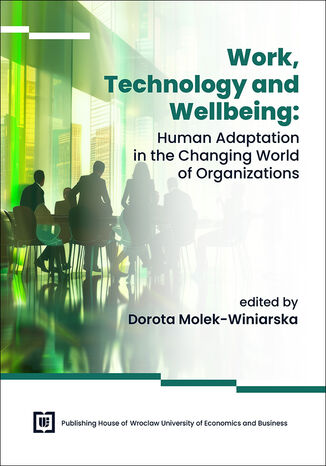
Work, Technology, and Wellbeing: Human Adaptation in the Changing World of Organizations
Dorota Molek-Winiarska red.
Work in the digital world is taking on a new dimension. Technologies are transforming how tasks are performed, employee experiences, and the competencies required, while also challenging organizations to support wellbeing and strengthen professional resilience. Adaptation to these changes takes place at the individual, team, and organizational levels.
The monograph Work, Technology, and Wellbeing: Human Adaptation in the Changing World of Organizations offers an integrated perspective on the relationships among work, technology, and wellbeing. The authors examine hybrid work, digital employee experience, competencies required in AI-driven environments, work engagement, psychological safety, professional resilience, and the risk of digital exclusion. They also address algorithmic management, psychosocial risks, the strategic management of organizational wellbeing, and the creation of neuroinclusive work environments.
The publication combines conceptual discussion with empirical research findings. It demonstrates that responsible digital transformation requires employees capable of adapting to new conditions as well as mature, responsible, and human-centered organizations that deliberately shape work environments and support diversity.
Introduction 6
Part 1. Foundations of the Digital Environment: Experiences, Competencies, and New Work Models
- Hybrid Work in the Modern Realities of Management in the Age of Digital Transformation (Anna Cierniak-Emerych, Katarzyna Emerych) 10
1.1. Introduction 10
1.2. Theoretical Background 12
1.3. Research Methodology 15
1.4. Findings and Discussion 16
1.5. Conclusions 17
References 19
- Antecedents of Digital Employee Experiences (Anna Lipka) 21
2.1. Introduction 21
2.2. Research Methodology 22
2.3. Findings 23
2.4. Conclusions 28
References 29
- Developing AI Literacy in Marketing Education: A Problem-Based Learning Approach (Maciej Ławrynowicz, Alicja Skrzypczak) 32
3.1. Introduction 32
3.2. Theoretical Background 33
3.3. Research Methodology 36
3.4. Findings 38
3.5. Discussion 42
3.6. Conclusions 43
References 44
Part 2. The Human Dimension of Digital Transformation: Wellbeing, Safety, and Resilience in Evolving Work Systems
- Wellbeing as a Mediator of the Relationship between Psychological Climate and Employee Engagement (Małgorzata Baran) 47
4.1. Introduction 47
4.2. Theoretical Background 48
4.3. Research Methodology 50
4.4. Findings 52
4.5. Discussion 57
4.6. Conclusions 58
References 59
- Perceived Team Psychological Safety and Post-Adoption Generative Artificial Intelligence Routinization in Consulting: Evidence from a Linked Survey and Focus Group Study (Grzegorz Plezia) 61
5.1. Introduction 61
5.2. Theoretical Background 62
5.3. Research Methodology 64
5.4. Findings 67
5.5. Conclusions 72
References 73
- Digital Routine Rather Than Culture at a Click: A Nationwide Survey of Digital Technology Use among People Approaching Retirement Age (Izabela Warwas) 75
6.1. Introduction 75
6.2. Theoretical Background 76
6.3. Research Methodology 77
6.4. Findings 78
6.5. Conclusions 84
References 86
- Professional Resilience of Psychotherapists in Poland: A Human Resources Management Perspective on Institutional and Technological Uncertainty (Julia Piecuch-Jodłowiec) 88
7.1. Introduction 88
7.2. Theoretical Background 91
7.3. A Proposed Conceptual Model 94
7.4. Conclusions 96
References 97
Part 3.Strategic Governance and Organizational Responsibility: Managing Risks, Wellbeing, and Diversity
- Algorithmic Management and New Psychosocial Risks (Łukasz Sienkiewicz) 100
8.1. Introduction 100
8.2. Theoretical Background 101
8.3. Research Methodology 104
8.4. Findings 107
8.5. Discussion and Conclusions 110
References 112
- Perceptions of Organizational Wellbeing: Its Relevance, Operationalization, and Measurement among C-Suite Executives and Top-Management Representatives (Ewa Stelmasiak, Dorota Molek-Winiarska) 114
9.1. Introduction 114
9.2. Theoretical Background 115
9.3. Research Methodology 117
9.4. Findings 121
9.5. Discussion 124
9.6. Conclusions 126
References 127
- A Theoretical Approach to Neurodiversity Management in Organizations (Violetta Grabińska) 130
10.1. Introduction 130
10.2. Neurodiversity as a Theoretical Concept in Organizations 132
10.3. Leadership and Awareness in Neurodiversity Management 134
10.4. Organizational Maturity in Neurodiversity Management 137
10.5. Conclusions 139
References 140
Summary 143
List of figures 145
List of Tables 146
- Titel:Work, Technology, and Wellbeing: Human Adaptation in the Changing World of Organizations
- Autor:Dorota Molek-Winiarska red.
- ISBN:978-83-68699-75-3, 9788368699753
- Veröffentlichungsdatum:2026-09-22
- Format:E-Book - PDF
- Artikel-ID: e_5441
- Verleger: Wydawnictwo Uniwersytetu Ekonomicznego we Wrocławiu