
Publisher: K-i-s-publishing
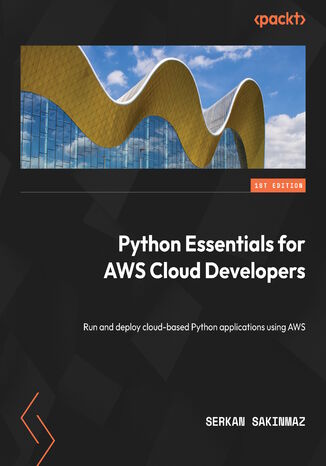
Python Essentials for AWS Cloud Developers. Run and deploy cloud-based Python applications using AWS
Serkan Sakinmaz
AWS provides a vast variety of services for implementing Python applications, which can pose a challenge for those without an AWS background. This book addresses one of the more predominant problems of choosing the right service and stepping into the implementation of exciting Python apps using AWS.The book begins by showing you how to install Python and create an AWS account, before helping you explore AWS Lambda, EC2, Elastic Beanstalk, and S3 for Python programming. You'll then gain hands-on experience in using these services to build the Python application. As you advance, you'll discover how to debug Python apps using PyCharm, and then start deploying the Python applications on Elastic Beanstalk. You’ll also learn how to monitor Python applications using the CloudWatch service, along with creating and publishing APIs on AWS to access the Python application. The concluding chapters will help you get to grips with storing unstructured and semi-structured data using NoSQL and DynamoDB, as well as advance your knowledge using the Glue serverless data integration service in AWS.By the end of this Python book, you’ll be able to take your application development skills up a notch with AWS services and advance in your career.
Steven F. Lott
This book is designed for Python 2 developers who want to get to grips with Python 3 in a short period of time. It covers the key features of Python, assuming you are familiar with the fundamentals of Python 2.
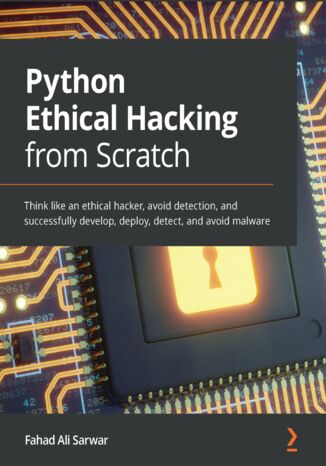
Fahad Ali Sarwar
Penetration testing enables you to evaluate the security or strength of a computer system, network, or web application that an attacker can exploit. With this book, you'll understand why Python is one of the fastest-growing programming languages for penetration testing. You'll find out how to harness the power of Python and pentesting to enhance your system security.Developers working with Python will be able to put their knowledge and experience to work with this practical guide. Complete with step-by-step explanations of essential concepts and practical examples, this book takes a hands-on approach to help you build your own pentesting tools for testing the security level of systems and networks. You'll learn how to develop your own ethical hacking tools using Python and explore hacking techniques to exploit vulnerabilities in networks and systems. Finally, you'll be able to get remote access to target systems and networks using the tools you develop and modify as per your own requirements.By the end of this ethical hacking book, you'll have developed the skills needed for building cybersecurity tools and learned how to secure your systems by thinking like a hacker.
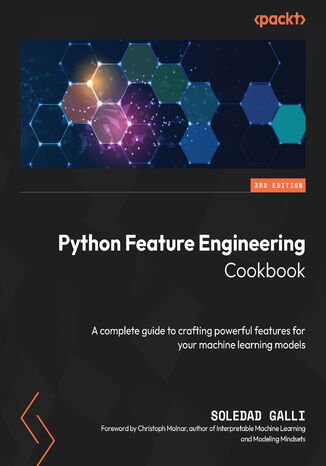
Soledad Galli, Christoph Molnar
Streamline data preprocessing and feature engineering in your machine learning project with this third edition of the Python Feature Engineering Cookbook to make your data preparation more efficient.This guide addresses common challenges, such as imputing missing values and encoding categorical variables using practical solutions and open source Python libraries. You’ll learn advanced techniques for transforming numerical variables, discretizing variables, and dealing with outliers. Each chapter offers step-by-step instructions and real-world examples, helping you understand when and how to apply various transformations for well-prepared data.The book explores feature extraction from complex data types such as dates, times, and text. You’ll see how to create new features through mathematical operations and decision trees and use advanced tools like Featuretools and tsfresh to extract features from relational data and time series.By the end, you’ll be ready to build reproducible feature engineering pipelines that can be easily deployed into production, optimizing data preprocessing workflows and enhancing machine learning model performance.
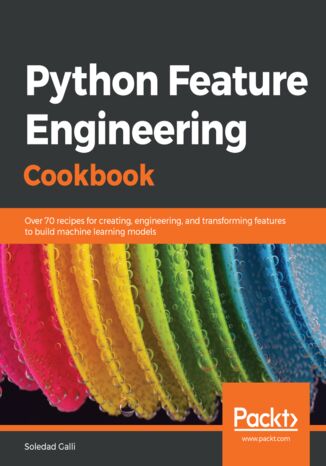
Soledad Galli
Feature engineering is invaluable for developing and enriching your machine learning models. In this cookbook, you will work with the best tools to streamline your feature engineering pipelines and techniques and simplify and improve the quality of your code.Using Python libraries such as pandas, scikit-learn, Featuretools, and Feature-engine, you’ll learn how to work with both continuous and discrete datasets and be able to transform features from unstructured datasets. You will develop the skills necessary to select the best features as well as the most suitable extraction techniques. This book will cover Python recipes that will help you automate feature engineering to simplify complex processes. You’ll also get to grips with different feature engineering strategies, such as the box-cox transform, power transform, and log transform across machine learning, reinforcement learning, and natural language processing (NLP) domains.By the end of this book, you’ll have discovered tips and practical solutions to all of your feature engineering problems.
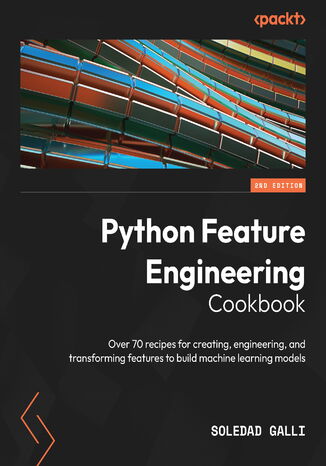
Soledad Galli
Feature engineering, the process of transforming variables and creating features, albeit time-consuming, ensures that your machine learning models perform seamlessly. This second edition of Python Feature Engineering Cookbook will take the struggle out of feature engineering by showing you how to use open source Python libraries to accelerate the process via a plethora of practical, hands-on recipes.This updated edition begins by addressing fundamental data challenges such as missing data and categorical values, before moving on to strategies for dealing with skewed distributions and outliers. The concluding chapters show you how to develop new features from various types of data, including text, time series, and relational databases. With the help of numerous open source Python libraries, you'll learn how to implement each feature engineering method in a performant, reproducible, and elegant manner.By the end of this Python book, you will have the tools and expertise needed to confidently build end-to-end and reproducible feature engineering pipelines that can be deployed into production.
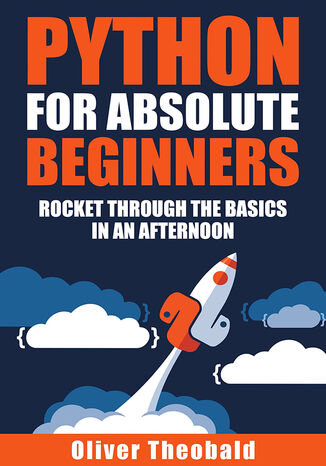
Oliver Theobald
This book provides a thorough introduction to Python, starting with basic operations like arithmetic and variable creation. As you progress, you'll delve into more complex topics such as loops, conditionals, functions, and object-oriented programming. By the end, you'll be able to write Python code and use libraries like Pandas to manipulate data efficiently. Practical challenges and exercises help solidify your learning. It’s designed to be engaging and easy to follow, making the Python learning experience as enjoyable as it is informative. As you build your skills, you will also gain hands-on experience by tackling coding exercises that reinforce each concept. Whether you're new to programming or looking to sharpen your Python skills, this book will guide you through every essential aspect of the language, preparing you for real-world applications.
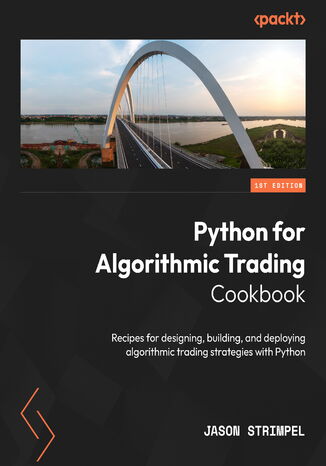
Jason Strimpel
Discover how Python has made algorithmic trading accessible to non-professionals with unparalleled expertise and practical insights from Jason Strimpel, founder of PyQuant News and a seasoned professional with global experience in trading and risk management. This book guides you through from the basics of quantitative finance and data acquisition to advanced stages of backtesting and live trading.Detailed recipes will help you leverage the cutting-edge OpenBB SDK to gather freely available data for stocks, options, and futures, and build your own research environment using lightning-fast storage techniques like SQLite, HDF5, and ArcticDB. This book shows you how to use SciPy and statsmodels to identify alpha factors and hedge risk, and construct momentum and mean-reversion factors. You’ll optimize strategy parameters with walk-forward optimization using VectorBT and construct a production-ready backtest using Zipline Reloaded. Implementing all that you’ve learned, you’ll set up and deploy your algorithmic trading strategies in a live trading environment using the Interactive Brokers API, allowing you to stream tick-level data, submit orders, and retrieve portfolio details.By the end of this algorithmic trading book, you'll not only have grasped the essential concepts but also the practical skills needed to implement and execute sophisticated trading strategies using Python.