
Publisher: K-i-s-publishing
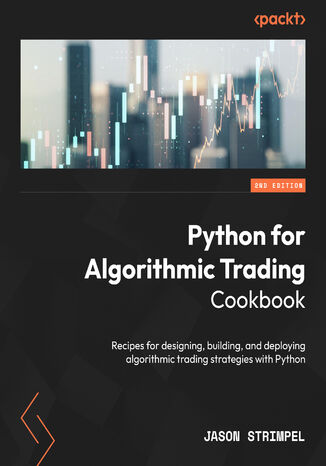
Jason Strimpel
Get Python code for algorithmic trading along with practical guidance from Jason Strimpel, founder of PyQuant News and a veteran of global trading and risk management. This highly practical book takes you from core algorithmic trading concepts and modern data acquisition to rigorous backtesting and strategy execution.Detailed recipes show you how to use the OpenBB Platform to source free equities, options, and futures data. Using that data, accelerate research with Parquet, Polars, DuckDB, and ArcticDB. You’ll engineer alpha factors with SciPy and statsmodels, using PCA to find latent factors, regression to hedge beta, and measure Fama-French exposures. Then optimize backtests with walk-forward analysis using VectorBT and build production-grade backtests with Zipline Reloaded. You’ll evaluate alpha with pro tools like Alphalens Reloaded and PyFolio and apply agentic AI workflows to automate research and code generation.For execution, you’ll connect to Interactive Brokers’ API to stream ticks, place and manage orders, retrieve portfolio state, and deploy strategies with monitoring and risk KPIs suitable for live trading. By the end of this book, you’ll not only understand the essentials, but you’ll also have the code templates and patterns to implement, evaluate, and operate Python-based algorithmic trading strategies.
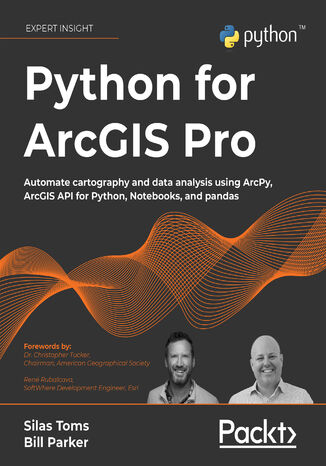
Silas Toms, William Parker
Integrating Python into your day-to-day ArcGIS work is highly recommended when dealing with large amounts of geospatial data. Python for ArcGIS Pro aims to help you get your work done faster, with greater repeatability and higher confidence in your results.Starting from programming basics and building in complexity, two experienced ArcGIS professionals-turned-Python programmers teach you how to incorporate scripting at each step: automating the production of maps for print, managing data between ArcGIS Pro and ArcGIS Online, creating custom script tools for sharing, and then running data analysis and visualization on top of the ArcGIS geospatial library, all using Python.You’ll use ArcGIS Pro Notebooks to explore and analyze geospatial data, and write data engineering scripts to manage ongoing data processing and data transfers. This exercise-based book also includes three rich real-world case studies, giving you an opportunity to apply and extend the concepts you studied earlier.Irrespective of your expertise level with Esri software or the Python language, you’ll benefit from this book’s hands-on approach, which takes you through the major uses of Python for ArcGIS Pro to boost your ArcGIS productivity.
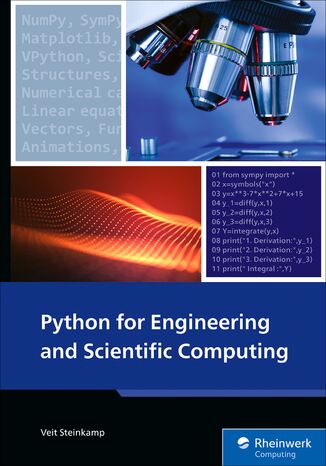
Rheinwerk Publishing, Inc, Veit Steinkamp
This book provides a thorough introduction to Python programming designed for engineers and scientists. It begins with foundational topics like development environments and program structures, then introduces key Python libraries such as NumPy, SymPy, SciPy, Matplotlib, and VPython. Clear explanations and practical exercises help readers write efficient, well-structured code while progressing through increasingly complex projects.The content covers core programming paradigms including functions, branching, and object-oriented design, followed by numerical analysis with NumPy and symbolic math with SymPy. Detailed chapters on data visualization with Matplotlib and 3D animations with VPython enhance comprehension. Additional focus on statistical computations, Boolean algebra, and interactive GUI programming with Tkinter prepares readers for real-world applications. Each chapter ends with project tasks reinforcing hands-on learning.Throughout the book, readers build a strong skill set combining programming expertise and scientific problem-solving. By the end, they will confidently use Python’s libraries to solve diverse engineering and scientific challenges. This practical, project-based approach ensures knowledge is both solid and immediately useful in research and professional work.
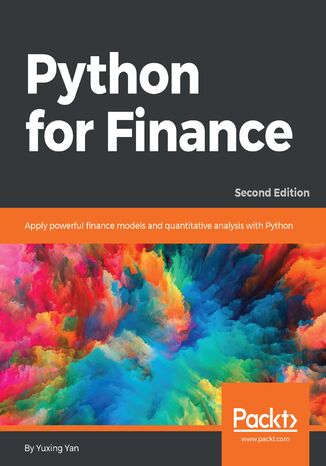
Yuxing Yan
This book uses Python as its computational tool. Since Python is free, any school ororganization can download and use it. This book is organized according to various finance subjects. In other words, the first edition focuses more on Python, while the second edition is truly trying to apply Python to finance.The book starts by explaining topics exclusively related to Python. Then we deal with critical parts of Python, explaining concepts such as time value of money stock and bond evaluations, capital asset pricing model, multi-factor models, time series analysis, portfolio theory,options and futures.This book will help us to learn or review the basics of quantitative finance and apply Python to solve various problems, such as estimating IBM’s market risk,running a Fama-French 3-factor, 5-factor, or Fama-French-Carhart 4 factor model, estimating the VaR of a 5-stock portfolio, estimating the optimal portfolio, and constructing the efficient frontier for a 20-stock portfolio with real-world stock, and with Monte Carlo Simulation. Later, we will also learn how to replicate the famous Black-Scholes-Merton option model and how to price exotic options such as the average price call option.
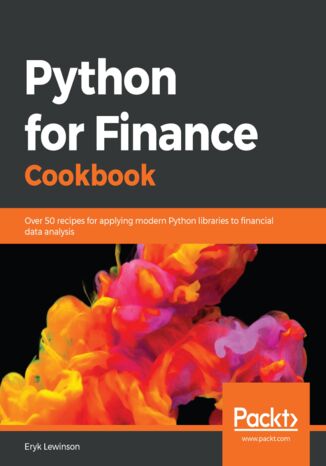
Eryk Lewinson
Python is one of the most popular programming languages used in the financial industry, with a huge set of accompanying libraries. In this book, you'll cover different ways of downloading financial data and preparing it for modeling. You'll calculate popular indicators used in technical analysis, such as Bollinger Bands, MACD, RSI, and backtest automatic trading strategies. Next, you'll cover time series analysis and models, such as exponential smoothing, ARIMA, and GARCH (including multivariate specifications), before exploring the popular CAPM and the Fama-French three-factor model. You'll then discover how to optimize asset allocation and use Monte Carlo simulations for tasks such as calculating the price of American options and estimating the Value at Risk (VaR). In later chapters, you'll work through an entire data science project in the financial domain. You'll also learn how to solve the credit card fraud and default problems using advanced classifiers such as random forest, XGBoost, LightGBM, and stacked models. You'll then be able to tune the hyperparameters of the models and handle class imbalance. Finally, you'll focus on learning how to use deep learning (PyTorch) for approaching financial tasks.By the end of this book, you’ll have learned how to effectively analyze financial data using a recipe-based approach.
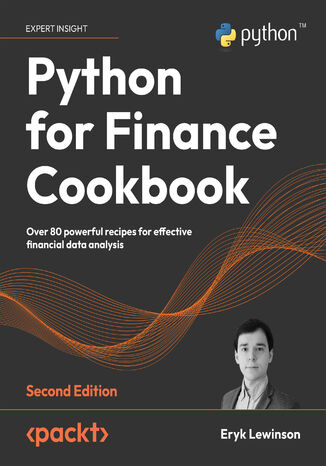
Eryk Lewinson
Python is one of the most popular programming languages in the financial industry, with a huge collection of accompanying libraries. In this new edition of the Python for Finance Cookbook, you will explore classical quantitative finance approaches to data modeling, such as GARCH, CAPM, factor models, as well as modern machine learning and deep learning solutions.You will use popular Python libraries that, in a few lines of code, provide the means to quickly process, analyze, and draw conclusions from financial data. In this new edition, more emphasis was put on exploratory data analysis to help you visualize and better understand financial data. While doing so, you will also learn how to use Streamlit to create elegant, interactive web applications to present the results of technical analyses.Using the recipes in this book, you will become proficient in financial data analysis, be it for personal or professional projects. You will also understand which potential issues to expect with such analyses and, more importantly, how to overcome them.
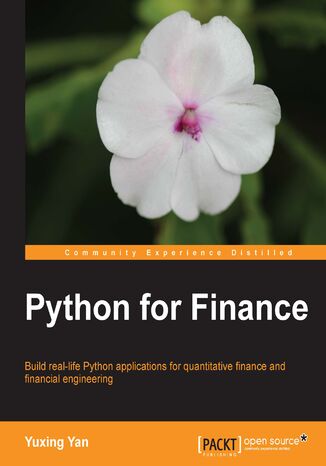
Yuxing Yan
A hands-on guide with easy-to-follow examples to help you learn about option theory, quantitative finance, financial modeling, and time series using Python. Python for Finance is perfect for graduate students, practitioners, and application developers who wish to learn how to utilize Python to handle their financial needs. Basic knowledge of Python will be helpful but knowledge of programming is necessary.
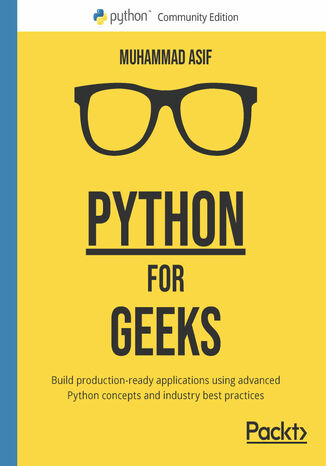
Muhammad Asif
Python is a multipurpose language that can be used for multiple use cases. Python for Geeks will teach you how to advance in your career with the help of expert tips and tricks.You'll start by exploring the different ways of using Python optimally, both from the design and implementation point of view. Next, you'll understand the life cycle of a large-scale Python project. As you advance, you'll focus on different ways of creating an elegant design by modularizing a Python project and learn best practices and design patterns for using Python. You'll also discover how to scale out Python beyond a single thread and how to implement multiprocessing and multithreading in Python. In addition to this, you'll understand how you can not only use Python to deploy on a single machine but also use clusters in private as well as in public cloud computing environments. You'll then explore data processing techniques, focus on reusable, scalable data pipelines, and learn how to use these advanced techniques for network automation, serverless functions, and machine learning. Finally, you'll focus on strategizing web development design using the techniques and best practices covered in the book.By the end of this Python book, you'll be able to do some serious Python programming for large-scale complex projects.