Publisher: KtoCzyta.pl
Ridgwell Cullum
The story of the difficulties faced by residents in northern Canada. Everybody had a mad desire to get more gold, so the gold rush came. Mysterious guy robbed gold miners. All people are in a panic, all their gold disappears sharply.
Herbert George Wells
The Bulpington of Blup, a 1932 novel by H. G. Wells, is a character study analyzing the psychological sources of resistance to Wellsian ideology, and was influenced by Wellss acquaintance with Carl Gustav Jung and his ideas. Theodore Bulpington is a very ordinary man with a very vivid imagination. Ill at ease with himself, he sees a way to recreate his identity by adding layer upon layer of deception. This he does with such panache that eventually he becomes an impostor, a liar and a cheat. But with so many different masks to hold in place, his carefully woven deception soon spirals out of control and heads towards the chaos of mental torment. The novel is also of interest for its extended analysis of psychological responses to World War I.
The Burning of Rome. A Story of the Days of Nero
Alfred J. Church
Alfred J. Church was a 19th century historian best known for his comprehensive histories on different periods of the Roman Empire, including this one. Vivid story of Rome in the days of Nero, beginning with the burning of the city, seemingly ordered by Nero himself. The narrative revolves around a set of characters who suffer acutely in the cruel persecutions of the Christians, set in motion by Nero after the fire to deflect blame for the conflagration from himself and fasten it on the Christians. Set in pagan Rome, this story outlines the authors conception of what happened immediately before, during, and after the burning of Rome occurred. This authors belief is that it happened exclusively due to Neros perpetuation. While possible, this is not something that is historically established.
The Busted Ex-Texan and Other Stories
W.H.H. Murray
The rumble of merry conversation mixed with the mumble of a stream; and from time to time a piece of a sweet song broke from melodious lips, short, energetic, melodious like a bobolink, rushing up from clover heads. And before the mighty shadow, gloomily lying on the great plain on the prairies, stretching east for a thousand miles, turned into darkness, active, happy workers gave the bivouac the kind of skillful ordering that a trained group always gives to any place.
Edgar Wallace
An enjoyable Edgar Wallace horse-racing escapade. One of the most prolific writers of the twentieth century, Edgar Wallace was an immensely popular author, who created exciting thrillers spiced with tales of treacherous crooks and hard-boiled detectives. The setting of this mystery/thriller is the horse-racing world. A wealthy racehorse owner is banned from racing when he is double- crossed by the woman he loves. With the help of his butler an ex-burglar he succeeds in regaining a L100 note that will clear his name and he falls for the bad girls sister. In an impulsive moment, a man agrees to throw a big race-and then is faced with all the consequences.
H.P. Lovecraft
The Call of Cthulhu is the story of a man who uncovers evidence of otherworldly beings residing in a state of hibernation deep beneath the surface of the Earths oceans. Though the image of Cthulhu is by no means original, as it is heavily borrowed from Scandinavian lore among other sources, Lovecrafts descriptionsin this case of a basrelief carved in its likenessare still nothing short of chilling. It is the only story written by Lovecraft in which the extraterrestrial entity Cthulhu himself makes a major appearance. The story is written in a documentary style, with three independent narratives linked together by the device of a narrator discovering notes left by a deceased relative. Considered as the father of contemporary horror fiction, H. P. Lovecraft shows exquisite details in The Call of Cthulhu that perfectly denote his cosmic indifferentism beliefs and takes advantages of his imaginative universe filled with immense entities to demonstrate how weak humans really are.
Zane Grey
From the master of the western novel comes a tale full of romance and adventure. This is the story of Carley Burch, a young wealthy socialite living in New York City. As the story begins soldiers are coming home from the trenches of WWI, many of them damaged physically and emotionally. Among them is Carleys fiancé, Glenn Kilbourne. He goes West to find his health and himself, with the idea that hell return when all is well. They correspond until she eventually heads West to find and woo him, in the process realizing that she too has changed. How can she reconcile the love for this man and her love for this place he has gone so far away from? Their fate together remains in doubt until the end.
Jack London
The Call of the Wild is a touching novel about a great friendship between a dog and a human. The novel follows up the life of the dog Buck since he lived in sunny California all the way until the day he was kidnapped and tossed into the chaos of the Klondike Gold Rush and the brutal realities of frontier life. Buck changes hands a number of times before landing in the kindly hands of John Thornton who took care of him with great tenderness while not expecting anything in return. The novel carries a high moral, and the author tells us through it that we should never back down because then we will experience the disappointment of failure. However, it also has significant philosophical underpinnings, which strengthen the book and undermine some of its weaknesses.
Herbert George Wells
Wellss treatise on education is set in the region of Camford (Cambridge/Oxford), and tells of a visitor who proves that education can save the world from destruction. The story centres around a Utopian ventriloquist who subjects human life and in particular its treatment by the University of Camford to sympathetic but quite unsparing scrutiny. At its core, it was a warning to the educational world of imminent war and of its lack of action, as well as an exploration of the place of education in society. Contents include: Mr Trumbers Experience, In the Cramb Meadows, Mr Preeders Pigeon-holes, The Communist Party is Annoyed in its Turn, Congregation Day, and The Healing Touch in History. In this short tale of 75 pages Wells summarises many of his current preoccupations in the form of a parable which is noteworthy for its careful building up of atmosphere and its lively and biting characterisations.
S.S. Van Dine
One of the best novels by the little American detective writer Van Dyne, The Canary Killing Case, takes the reader to New York sixty years ago, where amateur detective Filo Vance, a literary relative of Sherlock Holmes, brilliantly uses the deductive method to find the killer of the star Broadway at night nicknamed Canary.
Victor L. Whitechurch
The Reverend John Smith is an ordinary cleric who learns during his vacation that he was promoted to canon at the residence of Frattenbury Cathedral. During his stay at the hotel he meets an Englishman who tells him that the clergy is too divorced from reality. This is an interesting mystery involving a clergyman who defends his faith and moral values in solving a crime.
Oscar Wilde
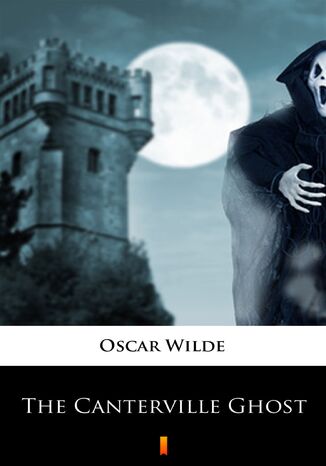
A family of flag-flaunting United States acquire an historic English mansion from the thoroughly prim, thoroughly British Lord Canterville. Throw in a murderous, aesthetically-minded ghost with a penchant for high drama and theater, and you have a classic, joy-inducing tale of clashing cultures, progress vs. tradition, and Wildes self-mockery of his own philosophy of decadent aestheticism. Wilde emphasized differences in culture by creating special characters and then pitting the unsophisticated tastes of the patriotic Americans patriotic as their children are named Washington and Virginia against the Brittish esteem of traditions. More telling, given the storys ending and that the events are closely placed within the historical context of conflicting views and several wars, the overall theme of forgiveness reads surprisingly fresh, even in todays time.
Hugh Walpole
Strikingly bright characters. Such a well-designed image of moods, places and feelings. Maggie Cardinals father dies very suddenly, leaving her alone, not very upset, since he never showed special love for her. She is strange, misunderstood a captive in a world in which others fit in, but she does not.
The Cardinal Moth. Or The Accused Orchid
Fred M. White
Sir Clement Frobisher collects rare orchids. He has conflicts in the service, which have further consequences. There are plenty of twists and turns, along with a very mysterious murder weapon. It will most definitely keep you guessing!
Aidan de Brune
The Carson Loan Mystery novel is one of mystery by Aidan de Brune, and deals with complications arising out of a loan of a large sum of money, concerned with the unscrupulous activities of several more or less shady characters. The locale of the story is Sydney, and introduces many places familiar to those who have visited that capital. The author knows Sydney, and also knows passing well the procedure in police and detective departments, besides having a passing acquaintance with newspaper staff feuds. The result is a smart novel, brightly written. Highly recommended!
The Carter Girls of Carter House
Emma Speed Sampson
Written for young girls, this is book 4 in The Carter Girls Series by Emma Speed Sampson. Sampson, using the name of her sister Nell Speed, wrote 4 titles in the Molly Brown series after her sisters death in 1913. She also wrote several volumes including the Carter Girls series and the Tucker Twins before she began publishing works under her own name. The Carter Girls of Carter House is a good, clean book full of the antics of a family working together to solve their financial woes in a very creative way. The girls are creative, daring, dramatic, and pure fun! As usual with Sampsons writing, the story is characterized with a contagious work ethic, ambition, cheerfulness, and entrepreneurial endeavors. She shines in the realm of attitudes toward hardship.