Publisher: KtoCzyta.pl
E. Phillips Oppenheim
If you have a fondness for mystery you should find this novel to be an entertaining read. Lord Alceston, the Earl of Harrowdean, statesman, philanthropist, nobleman, is murdered in his own study on the night of a great ball given at his home. On the same night a mysterious woman is murdered in the slums of East London. The valet disappears. Thus begins a moody and dramatic tale of love, jealousy, and revenge. This is the second published novel by E. Phillips Oppenheim and deals with a rigid Victorian moral code which is hard to comprehend today. Oppenheim dictated many of his later novels, but the careful writing, lengthy descriptions, and close observation of characters are beautifully expressed in this early work.
R. Austin Freeman
The Penrose Mystery, fist published in 1936, is definitely up to the high standard of the wonderful Dr. Thorndyke series. Penrose is an eccentric old man in possession of some dazzling gems, which he wont insure. When Dr. Thorndyke is alerted to a burglary at his house, a scrap of paper is found with the word lobster on it along with two Latin words. Meanwhile, Penrose has fled in panic after a car accident. The police believe hes gone into hiding to avoid a manslaughter charge after a hit-and-run accident. Finding him is a forlorn hope, theres so little to go on. But Thorndyke has a way of seeing significance in the merest bits of dirt inside a tire or oddments in a pocket... Polton, Dr. Thorndykes lovable lab assistant, has an important presence in the plot, less this time for his remarkable technical skills than for his fondness for fixing antique clocks.
The People of the Black Circle
Robert E. Howard
The king of vendhya was dying. Through the hot, stifling night the temple gongs boomed and the conchs roared. Their clamor was a faint echo in the gold- domed chamber where Bhunda Chand struggled on the velvet-cushioned dais. Beads of sweat glistened on his dark skin; his fingers twisted the gold-worked fabric beneath him. He was young; no spear had touched him, no poison lurked in his wine.
T.C. Bridges
As the great plane roared through the upper air, young Monty Vince sat with his eyes glued to the thick glass window of her enclosed body, and watched the sea of clouds lying like a pearly floor far below. Every nerve in his body tingled with excitement and triumph, for even he, small as was his experience, knew that this first flight of his brothers new machine was a magnificent success.
H. Rider Haggard
In this story, readers are introduced to Leonard Outram, a penniless British adventurer in his pocket who is seeking wealth in distant lands, having lost his family lands and estates. He is involved in the rescue of a young Portuguese woman from the largest slave camp in Africa. As a result, the main character discovered a lost race. He will not be easy, because he will face their God.
Edgar Wallace
The setting is Nigeria a century ago, and British District Commissioner R.G. Sanders oversees the tribes. He discovers that Bosambo has been acting as chief without approval, but is so impressed with his skills Sanders allows him to remain in place, but Sanders heads to England to marry and unrest follows. The classic Commissioner Sanders stories about Africa by Edgar Wallace. This is the second collection in the series, following Sanders of the River. Wallace served in Africa and he gets the background right. Both books were written in the same year, when world powers were vying for colonial honor. Great humor, lots left to the readers imagination, but delightful stories about individuals and their interactions with Commissioner Sanders, British authority figure.
Max Brand
Kildare saves the life of a skater who had a car accident. But even though her leg is broken, she cannot walk, and she is trying to sue Kildare for negligence, and Kildares entire career and reputation are now based on the correct diagnosis in the courtroom.
Fyodor Mikhailovich Dostoevsky
Decades later after Uncles Dream, Dostoevsky wrote The Permanent Husband, also known as The Eternal Husband (1890). It is one of Dostoevskys most perfect works. Classical in form, it presents his most profound exploration of mimetic rivalry and the duality of human consciousness. A love-affair drama that is both tragedy and comedy, that follows complicated relationships, remarriages, and unrequited love. Told from the point of view of a rich and idle man who is confronted by a younger rival, the husband of his former, and now deceased, mistress, the story portrays the interchanging hatred and love of the two men. Some critics have ranked this novella among Dostoyevskys best works because of its style and structure. Alfred Bem has called it one of the most complete works by Dostoyevsky in regards to its composition and development.
Fred M. White
Sebastian Wilde really was a great man. He seemed to be paralysed from his hips downwards, which, indeed, was the case, though his arms were vigorous enough and his affliction had not robbed him of the brightness of his eyes or blunted the edge of his amazing intellect. He had no friends and visitors; he was pleased, in his words, to work quietly on the task of his life and, perhaps, when this is completed, he can go out of his obscurity and again take his place in the great world. However, what could such a noble person hide?
B.M. Bower
In The Phantom Herd from 1916 we follow a film director Luck Lindsay who wants to make an authentic western, therefore using the Happy Family boys and some of their friends as actors instead of professional actors. There are many difficulties along the way, some of which bid fair to be insurmountable and they are up against big problems, mostly the weather and deadline. The story is absolutely thrilling and at the same time Bower, with the help from a real western actor, has made a great research on how you made films in those early silent film days. One of many recommended works by this prolific author.
Aidan de Brune
There is always a special thrill of excitement about a mystery story, especially when the main characters cover their tracks successfully. The Phantom Launch is an Australian story through and through, its main setting being Sydney and Melbourne, and the swiftness and sureness with which both the launch people and amateur sleuths act will keep the reader breathless. Wireless plays an important part in this story. We defy any reader to guess the perpetrators of the crimes and the secret of the launch until the colorful and prolific Australian writer Aidan de Brune? reveals them.
Gaston Leroux
The fascinating story about a young Swede Christine Daaé. Her father, a famous musician, dies, and she is brought up in the Paris Opera House. After a while in the opera house, she begins to hear a voice that, in the end, teaches her how to sing beautifully. The ghost is in love with the main character and is jealous of her friend, but it can only spell disaster.
The Phantom Rickshaw and Other Ghost Stories
Rudyard Kipling
The world of Kiplings stories is complex and rich, representing essentially an encyclopedia of the plot experience of the best English and American storytellers of the XIX century. They are characterized by psychology, innovation, which consists in introducing new layers of life into the fabric of narration, and a kind of naturalism. The lazy tourists demanding communication with people have already somewhat dulled this feeling of complacency and wide hospitality.
Robert E. Howard
Over shadowy spires and gleaming towers lay the ghostly darkness and silence that runs before dawn. Into a dim alley, one of a veritable labyrinth of mysterious winding ways, four masked figures came hurriedly from a door which a dusky hand furtively opened. They spoke not but went swiftly into the gloom, cloaks wrapped closely about them; as silently as the ghosts of murdered men they disappeared in the darkness.
Herman Melville
Melville has a fairly wide range of styles and approaches. Piazza is a Tolkien excursion into a fairyland, but she asks where the real fairyland is actually located. Piazza, a descriptive and sensitively told pastoral story.
Charles Dickens
This novel demonstrates Dickens experimenting with building his own voice. The Pickwick Papers is a series of linear adventures, unlike the convoluted plots of Dickenss later novels. In other words, we follow our heroes from one stop to the next and meet interesting characters, rather than unraveling a mystery. The novel is a late example of the picaresque, a style of story in which we follow a rough, but still likable, hero through his adventures.The Pickwick Club sends Mr. Pickwick and a group of friends to travel across England and to report back on the interesting things they find. In the course of their travels, they repeatedly encounter the friendly but disreputable Mr. Jingle, who becomes a continual source of trouble for all who know him. Pickwick himself is the victim of a number of misunderstandings that bring him both embarrassment and problems with the law.
Oscar Wilde
Possessing eternal youth and beauty produces exactly the same effect as sentencing a man to life without the possibility of parole. Both have nothing to lose and morals disappear before the desire for immediate self-gratification in all things. And so it is with Dorian Gray. Its a moral story so eventually his evil catches up with him and he dies, as does the criminal. The Picture of Dorian Gray by Oscar Wilde is a fascinating novel in which a beautiful young man, under the poisonous influence of an older dandy, makes a bargain with the devil, according to which he stays young and charming while his portrait becomes a reflection of his conscience. Wildes novel is about youth and beauty versus experience; morality and the triumph of the senses over reason; sin and accountability; society, its hypocrisy and the depths of the human condition.
Valentine Williams
The novel begins in Paris on the wedding night of Sally and Rex Garrett. A former member of the French Foreign Legion Rex mysteriously disappears on the night of his wedding. At The Pigeon House, a lonely inn, a band of conspirators await the arrival of a deserter from the Foreign Legion, who is their key man in their plan to start an uprising in French Morocco. The conspirators have also driven the bridegrooms closest friend into exile and a shameful death, which means he must hunt them down and destroy them. Williams spy story, The Pigeon Man (1927), presents us with a character whose motivations are as obscure as any in modernist literature. Why is the hero doing what he is doing? Why, for that matter, are the other characters? George Valentine Williams never says explicitly, leaving readers to puzzle this out for themselves.
Robert E. Howard
Robert E. Howard turned to writing comic and dialect Western tales only late in his career, but he found an immediate and continuously successful market for them, and they are in many respects his most accomplished and polished works. The Pike Bearfield Stories is a collection of stories in the western genre, featuring Pike Bearfield the character who lead well-intentioned lives of perpetual confusion, mischance, and outright catastrophe. It includes: While the Smoke Rolled, A Gent from the Pecos Shave That Hawg! , Gents on the Lynch, The riot at Bucksnort. They are reminiscent of traditional southwestern tall tales, told in dialect, featuring larger-than-life characters, swift action, broad satire, and wry humor. All stories are fast-paced with simple yet effective plots that have a few surprises thrown in for good measure.
James Fenimore Cooper
In The Pilot (1824), James Fenimore Cooper invented a new literary genre: the sea novel. Bold, vigorous, original, it is a tale of high adventure that vividly captures the majesty and power of the seafaring life. Cooper drew on his direct knowledge of ships and sailors to present a truer picture of life on the sea than had ever before achieved in literature. As a boy of seventeen he had experienced the life of a common seaman, learned the craft of sailing, encountered terrifying storms, was chased by pirates, and watched the impressment of crew members by a British man-of-war.The Pilot is loosely based upon stories of John Paul Joness daring hit-and-run tactics during the Revolutionary War. The shadowy hero, modeled on Jones, leads a squadron of the infant American navy in a series of raids on the English coast, braving fierce storms and the guns of hostile warships, yet never revealing his identity. In this novel Cooper introduced the character of the old salt, the seasoned deckhand happy only aboard ship.
The Pioneers. or The Sources of the Susquehanna
James Fenimore Cooper
The fourth of the Leatherstocking novels, we find Leatherstocking (Natty Bumppo) entering the last stages of his life. He has lost a great deal of his effectiveness with his musket and now relies a great deal on his dog to help him hunting. The main focus is one two things: 1. the reinstatement of Nattys old commander in his properties and wealth in the new US while believing he is the victim of treachery by his old friend the judge in this story; and 2. Nattys struggle with and disgust about the developing societal rules that limit his freedom in hunting, trapping and fishing in the wilderness as he has his whole life. Good story on both accounts. In The Pioneers, James Fenimore Cooper thematically debates the complexity of landscape within a new American frontier. The battle between nature and civilization is a constant and competing force within the minds of the characters and in the general surroundings.
Charles Williams
Charles Williams is able to create wonderful ghostly episodes powerful moments of disclosure. In the novel The Place of the Lion, the world of feelings is depicted as an illusion simply a reflection of the real world from which it originates. This makes some absolutely fascinating scenes, as people suddenly face a reality that they cannot understand. The book raises some interesting questions about good and evil.
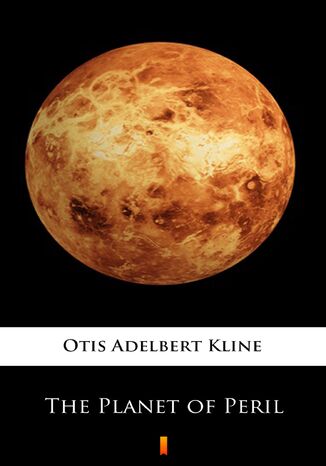
Otis Adelbert Kline
Otis Adelbert Kline is best known for his purported novelistic feud with Edgar Rice Burroughs. In 1929, long before planetary romance became a conventional genre, he wrote Planet of Peril, a novel set on the planet Venus and written in the storytelling form of Burroughs Martian novels. He followed this with two sequels. This novel is a science-fiction adventure on a world of semi-barbaric nations, ferocious beasts, gigantic reptiles, and maidens in distress. In it, Robert Grandon of Earth exchanges his body with that of a captive Prince of the planet Venus. Of course being a earthmen he doesnt stay captive very long. Battles, swordfights, monsters, whirlwind of intrigue, danger, desperation and beautiful Queens vie for your attention as this story unfolds.
Stanley G. Weinbaum
If youre going to launch a series dedicated to the very best science fiction and fantasy writers of the century, it makes sense to start with Stanley G. Weinbaum. The Planetary Series includes ten stories set on worlds of Earths solar system following several centuries of human exploration and settlement. It features a host of fascinating alien creatures, including birdlike Martians (features in A Martian Odyssey and its sequel Valley of Dreams) and The Red Peri and the Venusian trioptes (in Parasite Planet, The Lotus Eaters). Written in the 1930s, the planetary stories were consistent with scientific understanding of the solar system at that time, as well as consistent with science fiction ideas of the planets, most notably a warm and wet jungle-like Venus. Even today, the collection remains a highly readable and enjoyable, a great example of early science fiction that exhibits the finest pulp virtues: fast action, colorful settings and characters, and terrific storytelling.