Wydawca: KtoCzyta.pl
The Secret of the Barbican and Other Stories
J.S. Fletcher
The protagonist is a wonderful lawyer who was born in a small town. Advocates visits the museum and notices rare moenty. And realizes that they were stolen. He immediately goes to investigate... and the trail of a thief leads him to rather unusual places...
The Secret of the League. The Story of a Social War
Ernest Bramah
The secret of the league is a dystopian novel written by Ernest Bramah in 1907. It was first published as What might have been: the story of a social war, but later was republished in 1909 as The secret of the league. The Secret of the League is kind of an underground oddity of a novel. Its a prophetic-warning novel, science fiction before that term was coined, largely sociopolitical but also with some charming technical extrapolations. The story centers around one mans daring and ingenious plan, enacted through a mysterious alliance called the Unity League, to stop the workings of the nations elected government in order to restore some measure of lost freedom and greatness, even at the risk of civil war. Its plot is developed rather patchily, and like most warning novels, was overtaken by real events and didnt come true. The Secret of the League was written, when the growth of the labour movement was beginning to terrify the middle class, who wrongly imagined that they were menaced from below rather than from above.
Gaston Leroux
Like The Mystery of the Yellow Room, The Secret of the Night is a Joseph Rouletabille mystery. The main character, detective Joseph Rouletabille must once again face a new riddle and solve it. This time it will be harder. In this case he is brought to Russia by the Czar to protect General Trebassof, whose assassination has been plotted by the revolutionariesthe Nihilists. The author again keeps all readers in tension to the end.
Fred M. White
Sir Devereuxs name had stood deservedly high in the annals of the Indian Army. He was more than a soldier and a strategist, his name was known everywhere where good work was done. Sometimes he was tough and strict, his code of honor was simple and sincere. He never considered his people fighting vehicles, but treated them like members of his family. The horror that has arrived, will soon change everything.
The Secret Places of the Heart
Herbert George Wells
H.G. Wells is best remembered as a central figure in the development of the science fiction genre. However, much of his literary output was more conventional in nature, and he published a number of novels dealing with interpersonal relationships and social themes. H.G. Wells was so charmed by Margaret Sanger that he based The Secret Places of the Heart on his time with her. The novel is a thinly-veiled autobiography that depicts an English gentleman, Sir Richard Hardy, who is attempting to sort out his marital problems while he travels the English countryside in the company of a psychiatrist and much brilliant discussion ranging over the past and future topics of world-wide significance. The Secret Places of the Heart was, in many ways, a love letter from Wells to Sanger... Many critics regard The Secret Places of the Heart as a heavily autobiographical account of one of Wells failed love affairs.
Marie Corelli
Morgana Royal is a beautiful, rich female fairy, endowed with a powerful mind, has a personal flying ship, communicates wirelessly with representatives of a superior race and reveals the secret of eternal life. But the wild beauty Manella becomes her rival in the fight for the heart of a selfish scientist who dreams of subduing the whole world with his destructive discovery.
The Secrets of the Princesse de Cadignan
Honoré de Balzac
Secrets of the Princesse de Cadignan is a comic tale about a society woman, a Princess and a Duchess, who attempts to recycle her slightly seedy past by pursuing a minor literary figure of great probity and innocence. The Princess de Cadignan, aka the Duchesse de Maufrigneuse, has consorted with such notable Balzac rakes as Henri de Marsay, Maxime de Trailles, and Eugene de Rastignac, but is disconcerted to find herself being stalked by an unknown but comely young man. The Princesse de Cadignan, nee Diane dUxelles appears in a number of stories of the Human Comedy. Her husband left France with the Royal Family after the disasters of the Revolution of July 1830, but the Princess decided to remain in Paris. With much of the great familys fortune unavailable for her use, she determined to live in complete retirement, forgotten by society.
Fred M. White
Fred M. White wrote a story on a historical basis. Belgium is just a pawn in a game of chess, in which Germany has played continuously for the last 40 years. And now England was waiting. Black Monday was overtaken. Germany violated its solemn promise to Belgium, and England was at war with Germany, and the greatest conflict in the history of the world began.
Fred M. White
The title of the story is misleading. There is no court, and no one is convicted, although the eminent specialist of Harley Street who essays the role of villain richly deserves to be. We meet some pretty charming people, as well as two extremely unpleasant people, and if the web of mystery is held together in places by a somewhat generous share of obtuseness on the part of the persons concerned it is not for us to complain, since we become aware of the defect only after the affair is over.
E. Phillips Oppenheim
British author E. Phillips Oppenheim achieved worldwide fame with his thrilling novels and short stories concerning, mystery, international espionage and intrigue. Many of his novels have been adapted for the screen. Mr. Oppenheim can be depended upon to give his plots that turn which is as admirable as it is unexpected, and The Seven Conundrums is one of the best of his many good and exciting books. His plotting is as smooth as silk, with the virtue of creating believable characters of genuine sophistication and wit. Readers of Mr. Oppenheims novels may always count on a story of absorbing interest, turning on a complicated plot, worked out with dexterous craftsmanship. Highly recommended!
The Seventeen Thieves of El-Kalil
Talbot Mundy
From the point of view of a serious expert on the events, Jimmarg holds control over the situation to try and prevent bloody fighting in Jerusalem and elsewhere. It involves some trick, which makes some deals that you can not abandon with Ali Baba, the descendant of different generations. Lots of tension, a lot of camels and James Shuiller Thunder coolly do their thing.
Max Brand
Renowned Western writer Max Brand does it again in the eminently enjoyable novel "The Seventh Man". Packed with enough action and romance to please even the most die-hard fans of the genre, the novel also addresses a wide range of important themes with insight and sensitivity. This novel by Max Brand, tells part of the story of the larger-than-life western character, Dan Barry, known as "Whistling Dan". Its also the story of Kate Cumberland and the incredible five-year-old daughter of Kate and Dan, Joan. "The Untamed" is the third part of a trilogy about a mysterious gunslinger who appears to be a Casper Milquetoaste but, in concert with a powerful wolf-dog, and a murderous stallion; is able to overpower seemingly any opposing force.
Aidan de Brune
Aidan de Brune has been described as the Edgar Wallace of Australia. De Brune was a Canadian-born writer who settled in Australia. His latest novel, The Shadow Crook, certainly justifies the claim. It is an amazing story of a master criminal who terrorized Sydney, taunted the police, and baffled the finger-print experts. The Shadow Crook raided the detective offices in Sydney, bound and gagged the fingerprint expert, and ransacked his records. Who was he? Why did he take the tremendous risk of breaking into police headquarters? What connection had he with the death of Stacey Carr, and the disappearance of valuable jewels? A very private vengeance stalks Sydneys underground.
Robert E. Howard
The blare of the trumpets grew louder, like a deep golden tide surge, like the soft booming of the evening tides against the silver beaches of Valusia. The throng shouted, women flung roses from the roofs as the rhythmic chiming of silver hosts came clearer and the first of the mighty array swung into view in the broad, white street that curved round the golden-spired Tower of Splendor.
Fred M. White
Roy Kindermere hated one thing more than anything else: the business of Man from Blankney, whom he was forced to make a living. He had no choice because he quarreled with the last of his relatives. Mrs. Leverson is ready to pay Roy to attend her party, where guests can meet with the heir of Count Kindale. And Roy, desperate for money, readily joined this scheme.
Robert E. Howard
So thay brought the envoys, pallid from months of imprisonment, before the canopied throne of Suleyman the Magnificent, Sultan of Turkey, and the mightiest monarch in an age of mighty monarchs. Under the great purple dome of the royal chamber gleamed the throne before which the world trembled gold-paneled, pearl-inlaid. An emperors wealth in gems was sewn into the silken canopy from which depended a shimmering string of pearls ending a frieze of emeralds which hung like a halo of glory above Suleymans head.
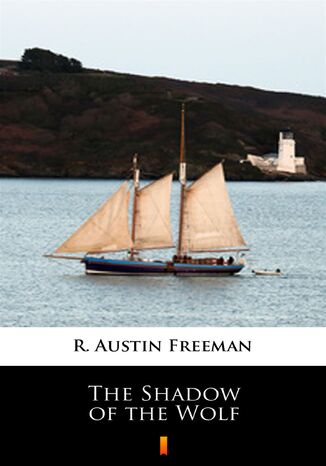
R. Austin Freeman
This novel is an excellent example of the inverted detective story, a modern form that R. Austin Freeman is credited with inventing. You know from the beginning who the guilty party is, but watching Dr. Thorndyke figure it out is amazing. And watching the perpetrator think that he is getting away with his crime, while watching Dr. Thorndyke close in on him is well-done literary irony. The fun comes not from being baffled, but from watching Thorndykes mind at work and observing his scientific methods which include, in this case, geology, petrology, psychology, marine biology, handwriting analysis, and chemical analysis. The crime takes place in a yacht off the coast of Penzance in Cornwall, where a circle of friends are vacationing. The victim is a boorish, overbearing, dishonest brute with money. The murderer is a likable, gentlemanly, talented artist of modest means. Every one likes the murderer, including Dr. Thorndyke.
H.P. Lovecraft
A novel told in first person by a human abducted mind,describing the world of the ancient alien strange civilization,a world of amazing colossal partial underground costructions that persisted buried for eons. The Shadow Out of Time is the story of Professor of Economics Nathaniel Wingate Peaslee who faints one day in the middle of a lecture and regains consciousness five years later only to find that heor some entity inhabiting his bodyhas been pursuing eccentric researches in the obscure libraries and remote places of the world. The Nathaniel of those five years acted strange, knew foreign and dead languages, travelled to weirdest places, researched the strangest things and talked to various cult leaders. Eventually his journey ends in the outback of Australia, amid cavernous ruins and terrifying revelations.
H.P. Lovecraft
The Shadow Over Innsmouth follows a nameless narrator touring New England for information on his family, and studying the local architecture. The story describes a man who finds himself stranded in a half-deserted town with strange inhabitants. They look human mostly, but there is something odd about their eyes and their behavior. He meets the town drunk, Zadok Allen, who tells him the terrifying history of the town, about Devil Reef and mutant humanoids, sea gods, gold, and human sacrifice. When the narrator finds himself stranded in town overnight, he comes face to face with the towns horrifying secret... one not of this world... A story about the horror that could turn to wonder, the once perceived abyss is afterwards seen as the most fascinating destiny, and what was at first avoided at all costs is eventually embraced with open arms.
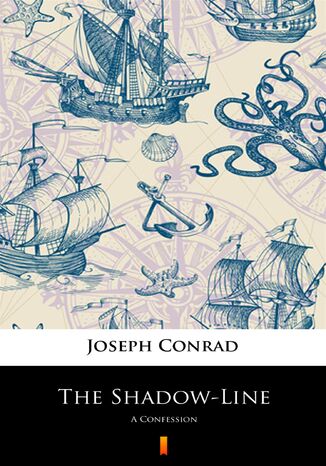
Joseph Conrad
This book is about a young captain who is hastily given his first command of a ghost ship. Its about a first mate who will lose his mind to madness as the malaria sickness spreads without medicine. This book is about a calm sea with not a sigh of a wind to move the ship. The Shadow Line by Joseph Conrad describes that demarcation line in the journey of life that divides the happy, bright, fantastic and irresponsible youth with the darker ages of manhood. Conrad goes on to delineate this vision as being beyond the charm and innocence of illusions. It isnt an elaborate story, but one that explores that moment, that shadow-line between youth and adulthood. It is a story about maturity, wisdom, experience. And, even though Conrad himself tells us this story is not about the supernatural, a curse and the first captain who died before Conrad took command, tells us otherwise.
Hal G. Evarts
Arapaho Gilroy, who was briefly loved to call Rapaho Hill. He was known by many. He was known wherever there were Indians of any tribe or white people with many years of experience to the West. Arpakho, to some extent, was a real robber. He ran across adventures everywhere. For such a hero is interesting to watch.
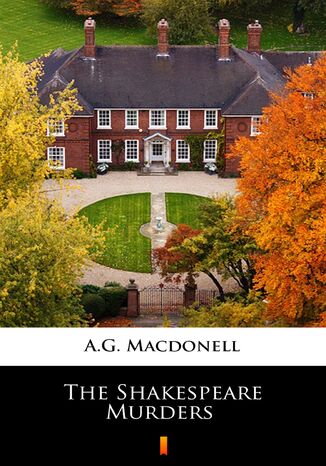
A.G. Macdonell
An amusing thriller by A.G. Macdonell, one of six mysteries he wrote under the pseudonym Neil Gordon. Macdonell is best known for the gently satirical novel England, Their England, which appeared the same year as The Shakespeare Murders and enjoyed a great success, which probably led to his abandoning the mystery genre. In The Shakespeare Murders, the treasure was to be found in an English country house, and it was worth one million pounds, but what was the treasure, was it jewels or something else? Various parties were searching; American gangsters among them, and all had to unravel the clues to be found in the works of Shakespeare. Murder followed murder as the ruthless search continued... Macdonell uses his usual skill, well-dosed with ingenious twists, and a fast moving story-line, to keep the reader riveted to the book.
Hulbert Footner
This story is something vital, but very tragic. The main character decides to travel from New York to northwestern Canada to see her mother, who sent her to New York twenty years ago. She falls in love with a local catcher, and then an evil fur trader tries to intervene.
Herbert George Wells
The Shape of Things to Come is one of the great classics of science fiction. Originally written in 1929, this masterly work of science fiction has already confirmed H G Wells status as a remarkable soothsayer, and provides glimpses of what is perhaps yet to come. The book is written as a sort of historical account. It tells of how a world state could be considered an answer to Earths problems. After a large plague wipes out much of humanity, a dictatorship takes over, taking away all religion and uniting the world. If someone opposes the dictatorship, they are given a choice to commit suicide in an environment of their choice. However, the dictatorship is later overthrown and the world state dissolves. Spanning the years from 1929 to 2105, it describes future generations and predicts the advent of wars, advancing technology and sweeping cultural changes.