Видавець: KtoCzyta.pl
Fyodor Mikhailovich Dostoevsky
The Possessed (also known in English as The Devils and The Demons) is the greatest novel ever written about the politics of revolution. It is a social and political satire, a psychological drama, and large scale tragedy. Published in 1871, Fyodor Dostoevskys novel foretold with uncanny prescience events that would occur almost fifty years later during the Bolshevik Revolution and the Communist tyranny that followed. Inspired by the true story of a political murder that horrified Russians in 1869, Dostoevsky conceived of Demons as a novel-pamphlet in which he would say everything about the plague of materialist ideology that he saw infecting his native land. The novels relevance, however, is not limited to Russia and its revolution. With its cast of idealistic murderers and suicides, seductive madmen and glamorous fanatics, The Possessed is a novel for our time as well.
The Postmaster of Market Deignton
E. Phillips Oppenheim
This early work from the prince of storytellers E. Phillips Oppenheim published as a novel in 1897. Mr. Norman Scott is a young, hardworking, distinguished physician with a busy practice in London. He is called to visit a patient, Mr. Humphrey Deignton, who suffers from gout and who is murdered later. Dr. Scott is suspected. Two years later, we meet Mr. John Martin, postmaster and chemist in Market Deignton. A lonely, bitter, impoverished man. He is living near the home of Lady Deignton, seeking revenge upon the person who killed Lord Deignton, and ruined his name and career. There are lots of unexpected turns and twists to the adventure of poor John and the local color of the setting is extremely charming.
The Pot of Gold and Other Stories
Mary E. Wilkins Freeman
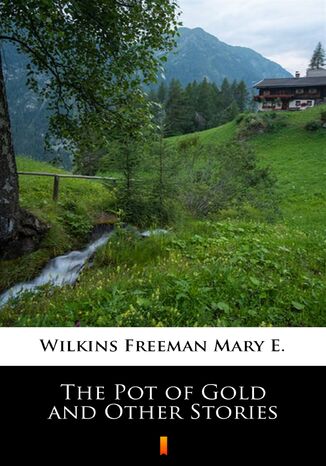
This novel is for those who are looking for a quick and easy read. The Flowers family lived in a small house in a wide grassy meadow that descended a few branches from the front door to a gentle silvery river. Directly across the river stood a lovely dark green mountain, and when a rainbow fell, as it often did, nothing could look more charming than it rose from the opposite bank of the stream against the backdrop of a wet, shady mountain.
The Power of Darkness. A Drama in Five Acts
Leo Tolstoy
The very concept of The Power of Darkness for Tolstoy corresponds to the Gospel, where darkness is identified with the concept of hell and death, and light with hope and paradise. The Power of Darkness expresses not only religious, but also philosophical ideas of the great Russian writer. Darkness is the moral blindness of people who commit a crime in order to satisfy the most base motives. The power of The Power of Darkness for Tolstoy is the tragedy of hopelessness, a heavy chain of sins that entangle a person. But The Power of Darkness is also the path to moral regeneration through repentance.
Max Brand
One of Max Brands greatest gifts as a storyteller is his ability to create unforgettable, larger-than-life characters. Frederick Schiller Faust (May 29, 1892 - May 12, 1944) was an American author known primarily for his thoughtful and literary Westerns under the pen name Max Brand. This is one of his novels. "The Power of Prayer" (1922) is an unusual and vexing Christmas story in which Gerald Kern, gentleman, gunman and fortune-hunter, must make a fateful choice when his cold-blooded nature and his love of a woman collide. Neatly plotted and briskly told, it illustrates Brands remarkable gift for storytelling. Another great read by Max Brand.
John Buchan
Edward Leithen is a young British lawyer who learns that one of his Oxford contemporaries, Charles Pitt-Heron, has just disappeared. Leithen learns from Pitt-Herons wife that he has been forced to flee. But a series of strange events that follow Pitt-Herons disappearance convinces Leithen that he is dealing with a sinister secret society. His suspicions begin to center on a wealthy, well-known, and intelligent businessman, who reveals himself to Leithen as an ardent anarchist. The barrister finds himself the target of many watchers, and then, as his understanding of the conspiracy involving the Power House grows, he is trapped and chased unrelentingly. The Author, despite being very busy in Public Service, wrote over fifty books during his life but his particular talent was for writing fast-moving adventure stories. The Power-House, a good example of this genre, was published in 1916.
James Fenimore Cooper
The Prairie: A Tale (1827) is a novel by James Fenimore Cooper, the 3rd novel written by him featuring Natty Bumppo. Civilization drives old hunter Natty Bumppo (Leatherstocking) west of the Mississippi to the prairies, where he becomes a trapper and helps a band of emigrants in their conflicts with Indians, miscreants, and the harsh environment. We find Hawkeye removed to the uncharted territory which would become Wyoming and the Dakotas. Having fled the relentless sound of axes hewing down his beloved forests in the east, the Leatherstocking is now in his eighties and has isolated himself in the land of the Pawnee, the Sioux and countless herds of buffalo. Culminating in a magnificently written death scene, The Prairie brings the old hunter full circle with images of his youth and reminiscences of the remarkable life which made him the prototype of the American Hero.
Hugh Walpole
This is the story of a Cambridge student, Olva Dune, who commits murder. Ironically, the moment he commits his crime, he feels the presence of God. Perhaps a hundred years ago, March Square could boast of such excellent ignorance, but fashion is changing to prevent, perhaps, our own being too easily annoyed.