
C++
Książki z kategorii C++ przedstawiają szereg zasad programowania obiektowego z użyciem języka C++, poparte interesującymi przykładami i ćwiczeniami.
Poznacie pochodzenie i konstrukcję samego języka oraz jego elementy. Dowiecie się czym są instrukcje warunkowe, jak działają mechanizmy dziedziczenia oraz jak poprawnie zdefiniować obiekty i klasy. Odkryjecie tajniki kluczowych składników standardu ANSI/ISO, przeczytacie jak sprawnie dopasować wyrażenia regularne, a pojęcia jak kontenery, iteratory, wektory czy poliformizm staną się mniej abstrakcyjne.
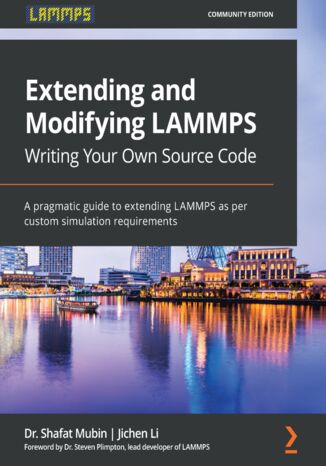
Dr. Shafat Mubin , Jichen Li
LAMMPS is one of the most widely used tools for running simulations for research in molecular dynamics. While the tool itself is fairly easy to use, more often than not you’ll need to customize it to meet your specific simulation requirements. Extending and Modifying LAMMPS bridges this learning gap and helps you achieve this by writing custom code to add new features to LAMMPS source code. Written by ardent supporters of LAMMPS, this practical guide will enable you to extend the capabilities of LAMMPS with the help of step-by-step explanations of essential concepts, practical examples, and self-assessment questions.This LAMMPS book provides a hands-on approach to implementing associated methodologies that will get you up and running and productive in no time. You’ll begin with a short introduction to the internal mechanisms of LAMMPS, and gradually transition to an overview of the source code along with a tutorial on modifying it. As you advance, you’ll understand the structure, syntax, and organization of LAMMPS source code, and be able to write your own source code extensions to LAMMPS that implement features beyond the ones available in standard downloadable versions.By the end of this book, you’ll have learned how to add your own extensions and modifications to the LAMMPS source code that can implement features that suit your simulation requirements.
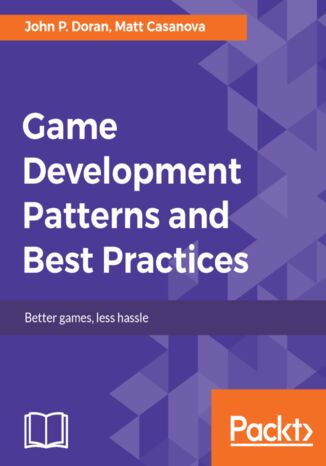
Game Development Patterns and Best Practices. Better games, less hassle
John P. Doran, Matt Casanova
You’ve learned how to program, and you’ve probably created some simple games at some point, but now you want to build larger projects and find out how to resolve your problems. So instead of a coder, you might now want to think like a game developer or software engineer. To organize your code well, you need certain tools to do so, and that’s what this book is all about.You will learn techniques to code quickly and correctly, while ensuring your code is modular and easily understandable.To begin, we will start with the core game programming patterns, but not the usual way. We will take the use case strategy with this book. We will take an AAA standard game and show you the hurdles at multiple stages of development. Similarly, various use cases are used to showcase other patterns such as the adapter pattern, prototype pattern, flyweight pattern, and observer pattern. Lastly, we’ll go over some tips and tricks on how to refactor your code to remove common code smells and make it easier for others to work with you. By the end of the book you will be proficient in using the most popular and frequently used patterns with the best practices.
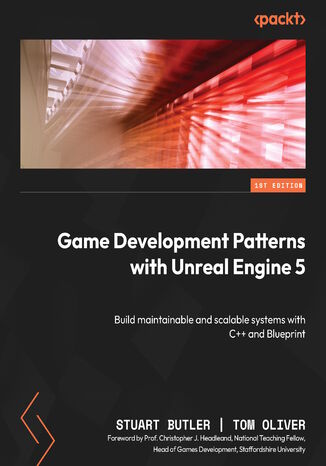
Stuart Butler, Tom Oliver, Christopher J. Headleand
Design patterns serve as a toolkit of techniques and practices that enable you to write code that’s not only faster, but also more manageable. With this book, you’ll explore a range of design patterns and learn how to apply them to projects developed in Unreal Engine 5.You’ll begin by delving into the foundational principles of coding and develop a solid understanding of the concepts, challenges, and benefits of using patterns in your code. As you progress, you’ll identify patterns that are woven into the core of Unreal Engine 5 such as Double Buffer, Flyweight, and Spatial Partitioning, followed by some of the existing tool sets that embody patterns in their design and usage including Component, Behavior Tree, and Update.In the next section of the book, you’ll start developing a series of gameplay use cases in C++ to implement a variety of design patterns such as Interface and Event-based Observers to build a decoupled communications hierarchy. You’ll also work with Singleton, Command, and State, along with Behavioral Patterns, Template, Subclass Sandbox, and Type Object. The final section focuses on using design patterns for optimization, covering Dirty Flag, Data Locality, and Object Pooling.By the end, you’ll be proficient in designing systems with the perfect C++/Blueprint blend for maintainable and scalable systems.
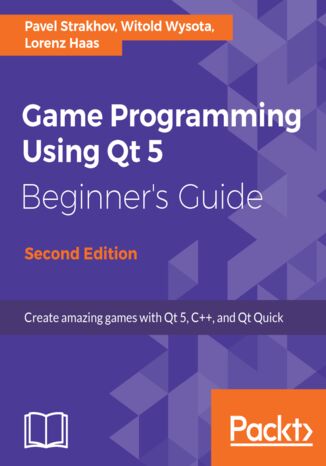
Pavel Strakhov, Witold Wysota, Lorenz Haas
Qt is the leading cross-platform toolkit for all significant desktop, mobile, and embedded platforms and is becoming popular by the day, especially on mobile and embedded devices. It's a powerful tool that perfectly fits the needs of game developers. This book will help you learn the basics of Qt and will equip you with the necessary toolsets to build apps and games.The book begins by how to create an application and prepare a working environment for both desktop and mobile platforms. You will learn how to use built-in Qt widgets and Form Editor to create a GUI application and then learn the basics of creating graphical interfaces and Qt's core concepts.Further, you'll learn to enrich your games by implementing network connectivity and employing scripting. You will learn about Qt's capabilities for handling strings and files, data storage, and serialization.Moving on, you will learn about the new Qt Gamepad module and how to add it in your game and then delve into OpenGL and Vulcan, and how it can be used in Qt applications to implement hardware-accelerated 2D and 3D graphics. You will then explore various facets of Qt Quick: how it can be used in games to add game logic, add game physics, and build astonishing UIs for your games. By the end of this book, you will have developed the skillset to develop interesting games with Qt.
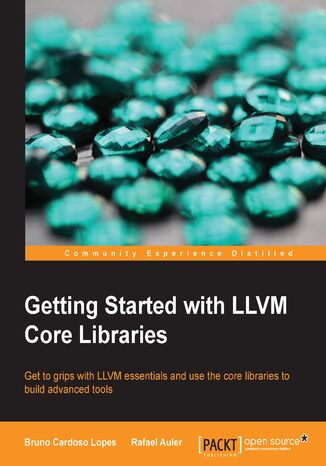
Bruno Lopes, Rafael Auler
In today’s fast-paced world of change, companies expect you to do more, with less. Drawing on over a decade of Change Management experience as a consultant with Fortune 500 companies including IBM and NCR, Emily Carr shares the secrets to making change happen smoothly.
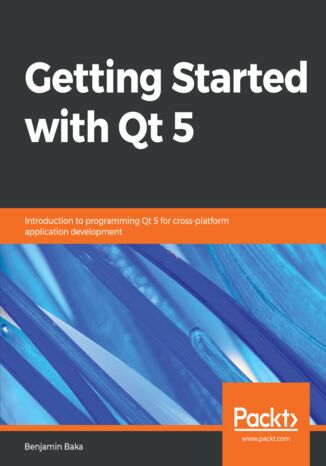
Benjamin Baka
Qt is a cross-platform application framework and widget toolkit that is used to create GUI applications that can run on different hardware and operating systems. The main aim of this book is to introduce Qt to the reader. Through the use of simple examples, we will walk you through building blocks without focusing too much on theory.Qt is a popular tool that can be used for building a variety of applications, such as web browsers, media players such as VLC, and Adobe Photoshop. Following Qt installation and setup, the book dives straight into helping you create your first application.You will be introduced to Widgets, Qt's interface building block, and the many varieties that are available for creating GUIs. Next, Qt's core concept of signals and slots are well illustrated with sufficient examples. The book further teaches you how to create custom widgets, signals and slots, and how to communicate useful information via dialog boxes. To cap everything off, you will be taken through writing applications that can connect to databases in order to persist data.By the end of the book, you should be well equipped to start creating your own Qt applications and confident enough to pick up more advanced Qt techniques and materials to hone your skills.
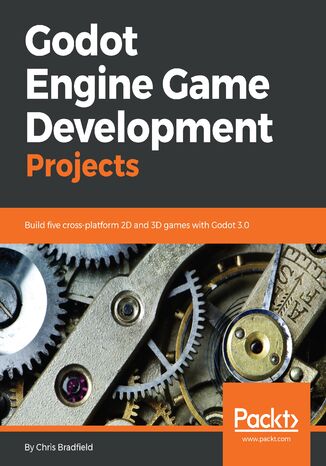
Godot Engine Game Development Projects. Build five cross-platform 2D and 3D games with Godot 3.0
Chris Bradfield
Godot Engine Game Development Projects is an introduction to the Godot game engine and its new 3.0 version. Godot 3.0 brings a large number of new features and capabilities that make it a strong alternative to expensive commercial game engines. For beginners, Godot offers a friendly way to learn game development techniques, while for experienced developers it is a powerful, customizable tool that can bring your visions to life.This book consists of five projects that will help developers achieve a sound understanding of the engine when it comes to building games.Game development is complex and involves a wide spectrum of knowledge and skills. This book can help you build on your foundation level skills by showing you how to create a number of small-scale game projects. Along the way, you will learn how Godot works and discover important game development techniques that you can apply to your projects.Using a straightforward, step-by-step approach and practical examples, the book will take you from the absolute basics through to sophisticated game physics, animations, and other techniques. Upon completing the final project, you will have a strong foundation for future success with Godot 3.0.
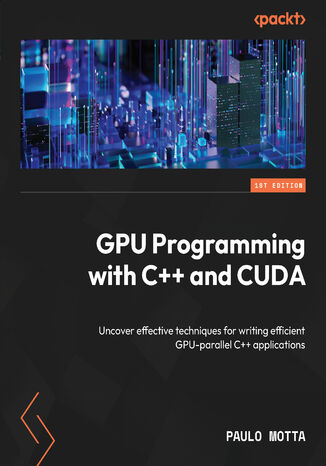
Paulo Motta
Written by Paulo Motta, a senior researcher with decades of experience, this comprehensive GPU programming book is an essential guide for leveraging the power of parallelism to accelerate your computations. The first section introduces the concept of parallelism and provides practical advice on how to think about and utilize it effectively. Starting with a basic GPU program, you then gain hands-on experience in managing the device. This foundational knowledge is then expanded by parallelizing the program to illustrate how GPUs enhance performance.The second section explores GPU architecture and implementation strategies for parallel algorithms, and offers practical insights into optimizing resource usage for efficient execution.In the final section, you will explore advanced topics such as utilizing CUDA streams. You will also learn how to package and distribute GPU-accelerated libraries for the Python ecosystem, extending the reach and impact of your work.Combining expert insight with real-world problem solving, this book is a valuable resource for developers and researchers aiming to harness the full potential of GPU computing. The blend of theoretical foundations, practical programming techniques, and advanced optimization strategies it offers is sure to help you succeed in the fast-evolving field of GPU programming.