
Popularnonaukowe i akademickie
Kategoria "Popularnonaukowe i akademickie" w księgarni Ebookpoint.pl to skarbnica wiedzy dla wszystkich, którzy pragną poszerzać swoje horyzonty i zgłębiać tajemnice świata. Znajdziesz tutaj publikacje z różnych dziedzin nauki, od psychologii i tajemnic ludzkiego umysłu, przez ekonomię, matematykę, aż po kosmologię i zagadnienia Wszechświata. Starannie dobrane ebooki, audiobooki i książki, które w przystępny sposób tlumaczą zachodzące w świecie procesy - nie musisz być związany ze światem nauki, by zrozumieć treść publikowanych tu książek.
Artificial Intelligence Engines. A Tutorial Introduction to the Mathematics of Deep Learning
James V Stone
This book is a comprehensive guide to the mathematics behind artificial intelligence engines, taking readers from foundational concepts to advanced applications. It begins with an introduction to artificial neural networks, exploring topics like perceptrons, linear associative networks, and gradient descent. Practical examples accompany each chapter, making complex mathematical principles accessible, even for those with limited prior knowledge.The book's detailed structure covers key algorithms like backpropagation, Hopfield networks, and Boltzmann machines, advancing to deep restricted Boltzmann machines, variational autoencoders, and convolutional neural networks. Modern topics such as generative adversarial networks, reinforcement learning, and capsule networks are explored in depth. Each section connects theory to real-world AI applications, helping readers understand how these techniques are used in practice.Ideal for students, researchers, and AI enthusiasts, the book balances theoretical depth with practical insights. Basic mathematical knowledge or foundation is recommended, allowing readers to fully engage with the content. This book serves as an accessible yet thorough resource for anyone eager to dive deeper into artificial intelligence and machine learning.
Artificial Intelligence. Ethical, social, and security impacts for the present and the future
IT Governance Publishing, Dr. Julie E. Mehan
This book offers an in-depth exploration of Artificial Intelligence (AI), from its origins to the ethical and societal challenges it presents today. It provides a comprehensive understanding of AI’s impact on human interaction, collaboration, privacy, and security. Through analyzing both opportunities and risks, the book emphasizes the ethical concerns surrounding AI, such as bias, privacy violations, and security threats.Chapters explore AI’s transformative role in cybersecurity, misinformation, and human-machine collaboration, highlighting its implications for job markets and human relationships. Real-world examples illustrate how AI can drive progress or cause harm. The ethical dilemmas around AI, including its use in surveillance and decision-making, are thoroughly examined, presenting challenges central to modern technology.Looking ahead, the book offers a forward-thinking perspective on AI’s future, discussing emerging trends and the need for responsible policy-making. It concludes by addressing how society can prepare for AI’s continued growth, offering strategies for navigating the evolving landscape. With practical insights and deep analysis, this book helps readers grasp AI’s profound implications for our future.

Bojan Kolosnjaji, Huang Xiao, Peng Xu, Apostolis...
Artificial intelligence offers data analytics methods that enable us to efficiently recognize patterns in large-scale data. These methods can be applied to various cybersecurity problems, from authentication and the detection of various types of cyberattacks in computer networks to the analysis of malicious executables.Written by a machine learning expert, this book introduces you to the data analytics environment in cybersecurity and shows you where AI methods will fit in your cybersecurity projects. The chapters share an in-depth explanation of the AI methods along with tools that can be used to apply these methods, as well as design and implement AI solutions. You’ll also examine various cybersecurity scenarios where AI methods are applicable, including exercises and code examples that’ll help you effectively apply AI to work on cybersecurity challenges. The book also discusses common pitfalls from real-world applications of AI in cybersecurity issues and teaches you how to tackle them.By the end of this book, you’ll be able to not only recognize where AI methods can be applied, but also design and execute efficient solutions using AI methods.*Email sign-up and proof of purchase required
Artificial Intelligence in Accounting. What the past and present mean for the future
Jacek Kalinowski, Piotr Kalinowski
AI in Accounting. What the past and present mean far the future is an interdisciplinary work that shows how artificial intelligence and generative models are transforming the world of accounting. The authors combine the historical background of technology with practical case studies from global companies. The book is particularly important for accountants, who face the challenges of automation and redefining their role in the digital age. As reviewer Prof. Stanisław Hońko noted, they are the very audience who should turn to this book. At the same time, it serves as a practical guide to AI tools. The authors organize and systematize a wide range of technologies - from OCR and R PA, through chatbots and popular solutions such as ChatGPT or Microsoft Copilot, to large language models including GPT, Gemini, Perplexity, and DeepSeek. Such a broad spectrum can easily overwhelm, but this book provides a clear and structured introduction. Reviewer Prof. Karol Klimczak highlighted its logical structure and comprehensive scope, which make the work valuable for both scholars and practitioners. For that reason, AI in Accounting is not only essential reading for accountants, controllers, and auditors, but also an accessible guide for any one beginning their journey with AI - whether in finance, education, business, the arts, or any other field where artificial intelligence can become a source of support and inspiration.
Tomasz Rymarczyk
This monograph aims to synthesize methods, measurement architectures, and algorithms that advance approaches to electrical and ultrasonic tomography, with a particular focus on artificial intelligence in image reconstruction and decision support. The work places these techniques in modern, complex environmental, industrial, and medical diagnostic systems, where non-invasive measurements are required for reliable observation, control, and process optimization. The scope of this work encompasses forward and inverse problems, numerical modelling, and data-driven learning methods, and is based on practical prototypes and verified applications. Tomographic imaging is presented as a family of techniques that infer internal structure based on boundary or remote measurements, enabling inspection without physical intervention. The theoretical foundations are outlined along with historical context and standard formulations of inverse problems, which are ill-posed and sensitive to noise and modelling errors. Established numerical frameworks, such as the Finite Element Method, are used to regularize and solve forward and inverse problems for electric and acoustic fields. These pillars provide a coherent path from physics to computation, and ultimately to images interpreted in an operational context. Artificial intelligence methods were applied to improve reconstruction fidelity, noise immunity, and computational efficiency. The text discusses deterministic frameworks such as Tikhonov, Gauss-Newton, and Total Variation, followed by a discussion of machine learning and deep learning architectures such as LSTM and CNN, along with ResNet, DiffNet, and specifically developed differential models for tomographic signals. The proposed multi-branch and pixel-centric strategies were evaluated using quantitative metrics such as RMSE, SSIM, ICC, Pearson correlation, relative image error, MAE, MAPE, and related metrics that reflect both perceptual and task-specific quality. The combination of physics-based modeling and prior knowledge has been shown to reduce inference time and increase noise tolerance compared to classical iterative solvers. A significant portion of the monograph is devoted to the design and evolution of measurement devices. Electrical and hybrid tomographs, next-generation ultrasound tomographs, a beamforming platform, and specialized flaw detection solutions are designed and characterized. Portable and mobile configurations, along with body potential mapping, are used to extend tomographic detection capabilities to include outpatient and situational monitoring. The measurement layer is integrated with distributed acquisition, synchronization, and embedded processing, allowing the systems to operate within industrial and clinical constraints. Applications in process engineering and medicine are presented. Fermentation control, crystallization monitoring, and autonomous process supervision illustrate industrial utility, including connections to the Internet of Things and real-time data infrastructure. Medical research includes non-invasive lung monitoring, portable diagnostics, and ultrasound brain detection, as well as portable hybrid ultrasound impedance solutions for lower urinary tract assessment. Non-destructive testing is addressed using advanced ultrasound imaging on the DefectoVision platform, which describes 3D reconstruction and quantitative assessment. These cases demonstrate that tomographic sensing can reveal internal states, detect anomalies, and support inspection without disrupting production or compromising safety. The book is designed to guide the reader from fundamentals to implementations and verified use cases. Chapter 1 introduces tomographic imaging, the physical principles underlying electrical and ultrasound techniques, and the challenges of the inverse problem. Chapter 2 discusses reconstruction methods, from deterministic regularization to machine learning and deep learning, along with evaluation metrics. Chapter 3 documents the designed measurement devices along with their electronics, sensor geometry, and system characteristics. Chapter 4 develops reconstruction processes based on simulated and experimental datasets and discusses comparative performance, including hybrid and 3D approaches. Chapter 5 consolidates applications in industrial processes and medical diagnostics, presenting experimental setups, results, and discussions that link quantitative metrics to operational requirements. Chapter 6 concludes with a summary, conclusions, and perspectives for further development. This publication is aimed at researchers and PhD students in the fields of sensors, inverse problems, and computational imaging, as well as engineers and practitioners responsible for process control, non-destructive testing, and medical technology assessment. The material was developed autonomously, with theoretical assumptions, numerical methods, device descriptions, and application studies, so that knowledge can be transferred from laboratory prototypes to real systems. This work was developed thanks to the research community and collaboration at the Netrix S.A. Research and Development Centre and the Institute of Information Technology and Innovative Technologies at the WSEI University in Lublin. Appreciation is expressed to my colleagues who collaborated with me on research projects in the areas of device prototyping, data acquisition, and algorithm development, which translated concepts into working systems. We also extend our gratitude to the reviewers, whose insightful comments contributed to improved clarity and completeness, and to our family for their continued support. The presented projects were developed to demonstrate how intelligent tomographic measurement systems can be constructed and deployed as reliable imaging, monitoring, and control tools. This synthesis of physics-based modelling and learning-based reasoning will be useful to both academia and industry seeking to implement practical, large-scale tomography.
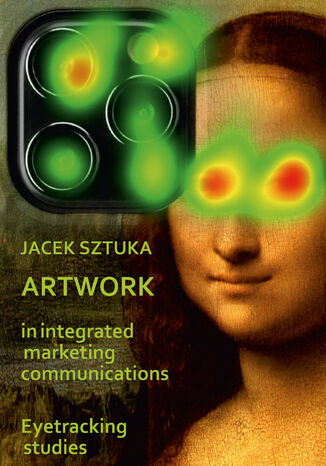
Artwork in Integrated Marketing Communications. Eyetracking Studies
Jacek Sztuka
In considering the relationship of the artwork to integrated marketing communications, it is worth addressing the hard-to-grasp concept of art itself and the work of art associated with it. Seeking answers to the fundamental question of the role of art and its creations in visual marketing communications, we must be aware of what an artwork is and how to distinguish it from other visual communications used in today's advertising and marketing. The fundamental problem of the research was to compare the ways of looking at authentic works of art as seen in the marketing space. Several works of artists, such as Leonardo da Vinci, Piet Mondrian, Rafael Santi, Vincent van Gogh and Salvador Dali that have been recognized over the centuries as unquestionably outstanding, impressive in both craftsmanship and depth of artistic expression, have been selected for the analysis. First two chapters of the work are an attempt to grasp the concept of an artwork and its meaning for the artist and the recipients, and at the same time - we are exposed to the difficulty of formulating a proper definition of an artwork. Then, in chapter three, a brief history of some of the greatest works of previously mentioned artists is presented. The following chapters are a considerations weather an artist's work, born of their "creative love", could be exhibited as a "product for sale", and if not too often great artifacts were able to become an object of trade only after the death of their authors. Chapter six exposes the ethical dilemmas regarding putting the images of the greatest masterpieces on promotional tools, a phenomenon which occurs also in the most famous museums in the world. The discussed integrated marketing communications in chapter seven make an introduction for consideration of the benefits of reproducing famous artworks onto advertising gadgets in chapter eight. Chapter nine is an in-depth analysis of the results of the eyetracking study conducted, and consists pictures of original artworks, as well as their reproductions on various items, and the way they were perceived by the eyetracking study respondents. The purpose of the study was to test the following theses: Does the power of an artwork viewed on a museum wall continue in its reproductions on promotional items, i.e. for example, on so-called advertising gadgets? Does the emotional impact of the image presented on the promotional materials still persist causing attention to be focused, or does audience's attention dissipate? If so, to what extent does it dissipate and what determines it?
Artykulacje traumy: Andrzej Strug, Tadeusz Konwicki
Grażyna Maroszczuk
Artykulacje traumy: Andrzej Strug, Tadeusz Konwicki to monografia poświęcona prozie pisarzy doświadczonych wojną. Analizowane utwory pozwalają uchwycić pewne skomplikowanie, splot, w którym spotyka się tak silne doznanie wzniosłości, że poraża, obezwładnia i odbiera mowę. Traumatyczne wydarzenie może być zrozumiane jako takie wyłącznie po fakcie przez reminiscencje, powtórzenie. Następstwem tego mocnego, nagłego doznania jest rozciągnięcie w czasie, wpisane w traumę opóźnienie. Wzniosłość zatem, sama w sobie będąca mocnym afektem, paradoksalnie skutkuje artykulacją słabą, niedopowiedzeniem, słabością doświadczenia.

Arystoksenos z Tarentu. Harmonika
Anna Maciejewska
Muzyka towarzyszy człowiekowi od zarania dziejów, a jej teoretyczne badania na gruncie europejskim zapoczątkowali starożytni Grecy. W klasycznej Grecji była obecna wszędzie tam, gdzie w grę wchodziło świętowanie i rozrywka: podczas obrzędów religijnych, zarówno publicznych, jak misteryjnych, na uroczystościach publicznych o charakterze bardziej państwowym czy społecznym niż sakralnym, przy świętach prywatnych i spotkaniach towarzyskich. Gdyby wymienić typy utworów wykonywanych przy poszczególnych okazjach, otrzymalibyśmy wykaz niemal tożsamy z listą antycznych gatunków poetyckich. Polski przekład "Harmoniki" Arystoksenosa z Tarentu jest pierwszym w pełni naukowym i jednocześnie najstarszym zachowanym - choć jedynie w części - greckim traktatem muzykologicznym. Zachowane partie tekstu zawierają przegląd pojęć z zakresu antycznej teorii muzyki oraz niepełne, lecz bardzo systematyczne i drobiazgowe rozważania na temat budowy ówczesnych skal muzycznych. Jego lektura pozwala ponadto prześledzić praktyczne zastosowanie metody badawczej Arystotelesa, którego bezpośrednim uczniem był Arystoksenos. Przekład traktatu został poprzedzony obszernym wstępem, który, oprócz danych na temat samego dzieła i jego autora, zawiera podstawowe informacje o miejscu muzyki w starożytnej Grecji oraz ogólny zarys jej struktur, szczegółowo analizowanych w samym dziele, a znacznie się różniących od stosowanych obecnie w muzyce artystycznej.