
Gry
Henrique Campos, Nathan Lovato
The Essential Guide to Creating Multiplayer Games with Godot 4.0 guides you in exploring the built-in network API for online multiplayer games, offering practical knowledge through concrete use cases.Throughout the book, you'll assume the role of a network engineer in a fictional indie game studio, tackling real-world requests from your peers and gaining expertise in adding new network features to the studio's games. Following step-by-step instructions, you’ll go from making your first network handshake to optimizing online gameplay. You’ll learn how to sync players and pass data over the internet as you add online multiplayer features to a top-down shooter adventure game.This book puts you in a fictional game project team where you set up your first online server before advancing to creating an online chat system and transitioning local gameplay to go online. With a focus on implementing multiplayer features, you’ll create shared world adventures and learn optimization techniques to allow more players to join your virtual world.By the end of this book, you’ll have learned how to set up a client-server network, implement remote procedure calls (RPCs), sync node properties remotely, and optimize your games to create smooth online multiplayer experiences.
The Lean-Agile Way. Unleash business results in the digital era with value stream management
Cecil 'Gary' Rupp, Richard Knaster, Steve Pereira,...
In today’s fast-paced business landscape, efficiency is essential. Authored by industry experts Cecil ‘Gary’ Rupp, a Lean-Agile consultant with over three decades of executive experience; Richard Knaster, a SAFe® Fellow and transformation leader; Steve Pereira, a value stream consultant and board advisor; and Al Shalloway, creator of FLEX and PMI’s Disciplined Agile Value Stream Consultant workshop, the book offers proven strategies to streamline processes, enhance products, and improve service delivery. You’ll start with an introduction to foundational Lean and Agile practices, recognizing the significance of digital enhancements in modernizing business processes. As you progress, you'll learn VSM techniques to identify and prioritize work and investments to provide maximum value to customers. Moreover, you'll grasp Lean-Agile practices aimed at promoting collaboration among teams and ensuring the continuous flow of product-oriented deliveries tailored to address customer needs. Finally, you'll gain executive-level insights on how organizations must access timely information for decision-making and foster a culture of continuous business transformation. Armed with this knowledge and a robust toolkit, you'll be empowered to drive meaningful change, optimize resources, and stay ahead in the rapidly evolving marketplace.
Preetish Kakkar, Mauricio Maurer
Vulkan is a graphics API that gives the program total control of the GPU, allowing the GPU to be used to its full potential. This cookbook will uncover useful techniques for emerging new technologies, such as hybrid rendering, extended reality – mixed reality (MR), augmented reality (AR), virtual reality (VR) – and GPU-driven rendering, and even features a dedicated chapter to help you debug and profile your graphics applications with tips and tricks tested in real-world scenarios.The book starts by explaining basic Vulkan concepts while guiding you through the implementation of a basic graphics engine. The building blocks presented in the first few chapters will then help you implement more advanced techniques and algorithms, while getting you acquainted with the inner workings of Vulkan. Gradually, you’ll discover how Vulkan can be used to build hybrid renderers as well as leveraged for the future of graphics with AR/VR/MR. Moreover, you’ll gain an understanding of how it can be debugged or measured for performance.By the end of this book, you’ll be well versed in how to use Vulkan to write graphics applications and how graphics algorithms are implemented using Vulkan.
Rebecca Terpstra, Dana Hoffman
Design professionals often find it hard to help their clients visualize their unique concepts and visions. Luckily, SketchUp bridges this communication gap with a powerful set of tools for visualizing and presenting your design ideas. This book teaches the approach perfected by two successful interior designers who have mastered SketchUp Pro/Studio to generate a workflow that produces fascinating designs and enables you to communicate them through vivid illustrations.Starting with a review of the basics of creating 3D models, this book introduces Becca’s Hierarchy of Modeling—a ten-step process that establishes a rhythmic pattern in your workflow. As you progress, you’ll build on your SketchUp Pro knowledge by constructing architectural elements of a commercial building and furnishing a residential room with your own furniture, fixtures, and equipment (FFE) from scratch. From infusing photorealism into models to crafting appealing client presentations using SketchUp LayOut, this book has you covered. Each chapter provides step-by-step explanations of essential concepts and practical examples to reinforce learning.By the end of this book, you’ll have an advanced understanding of SketchUp Pro’s capabilities, ensuring you enjoy working on conceptual or full design projects from start to finish and showing off your design prowess.
Taylor Field-Draper, Natasha West
Roblox is a massively popular online gaming platform, but it can be challenging to maneuver for beginners who don’t know where to start, as well as seasoned developers who tend to struggle with limited scripting tools that make transitioning from other platforms such as Unity more difficult.The Ultimate Roblox Game Building Cookbook is an invaluable asset for any Roblox developer looking to take their skills to the next level. With a wide range of recipes, this Roblox book covers everything from the basics of game development on the platform to advanced techniques for creating immersive experiences.As you progress through the chapters, you'll gain a deep understanding of the proper workflow and building methods that will enable you to create extraordinary virtual worlds. You'll gain insights into creating complex game mechanics, such as multiplayer games, working with textures, and special effects in games. This cookbook will also provide you with tips from top Roblox developers, as well as valuable guidance on how to monetize your games and stay up to date with the latest trends in the Roblox development community.By the end of this book, you’ll have gained a comprehensive understanding of Roblox game development and design.

The Universal Service Desk (USD). Implementing, controlling, and improving service delivery
IT Governance Publishing, Brian Johnson, Léon-Paul de...
This book is your go-to guide to mastering the Universal Service Desk (USD) for improving service management. The reader will understand USD's role in enterprises, delve into its design process, and learn how to use it for effective customer service and business operations. With practical examples and industry case studies, this book offers deep insights into the application of the USD for organizational success.The book begins by introducing the USD concept, highlighting its importance in streamlining service delivery and enhancing customer satisfaction. It outlines how a demand-oriented approach can be implemented across various business environments, optimizing workflows from front-office interactions to back-office coordination. Through the chapters, readers will learn to adapt USD to meet the evolving needs of enterprises.The final chapters focus on advanced practices such as improving service quality, managing virtual USD platforms, and aligning service desk operations with business goals. By following the structured approach outlined, you’ll gain the tools to create a USD that delivers measurable value, fosters seamless communication, and aligns with organizational priorities.
Tworzenie aplikacji dla Windows. Od prostych programów do gier komputerowych
Paweł Borkowski
Poznaj tajniki tworzenia aplikacji dla Windows Jak określić położenie, rozmiar i styl okna? Jak tworzyć wątki aplikacji za pomocą funkcji CreateThread? Jak definiować biblioteki? Dev-C++ to zintegrowane środowisko programistyczne, którego niewątpliwym atutem są tzw. DevPaki, czyli rozszerzenia programu, pozwalające korzystać z różnych bibliotek, szablonów i narzędzi. Środowisko Dev-C++ wspomaga także pracę nad nowym projektem Windows -- gotowym kodem tworzącym okno z obsługą podstawowych komunikatów. Wszystko to sprawia, że mamy do czynienia z wygodnym i funkcjonalnym środowiskiem, zarówno dla początkujących, jak i zaawansowanych programistów. Z książki "Tworzenie aplikacji dla Windows. Od prostych programów do gier komputerowych" może skorzystać każdy, kto chce nauczyć się programowania: zarówno studenci kierunków informatycznych, jak i osoby, które nie mają takiego przygotowania. Podręcznik kolejno odsłania poszczególne elementy wiedzy programistycznej -- od najprostszych po najbardziej zaawansowane. Dowiesz się więc, jak wprowadzać niewielkie zmiany w kodzie, jak projektować aplikacje wielowątkowe i definiować biblioteki, jak budować duże, składające się z kilku plików projekty, aby na koniec samodzielnie stworzyć grę komputerową. Instalacja środowiska Dev-C++ Tworzenie narzędzia pióro Obsługa map bitowych Obsługa komunikatów myszy i klawiatury Obiekty sterujące w oknie Menu i plik zasobów Projektowanie aplikacji wielowątkowych Biblioteki statyczne i dynamiczne Multimedia Programowanie gier Naucz się programowania i twórz własne gry!
Tworzenie gier dla początkujących
Tomasz Błaszczyk
Książka „Tworzenie gier dla początkujących” dedykowana jest wszystkim osobom chcącym wgłębić się w świat programowania gier 3D oraz zaznajomić się i wykorzystać możliwości środowiska Unity. Celem książki jest przekazanie początkującym twórcom wiedzy z zakresu: obsługi podstawowych funkcjonalności, pisania i implementacji skryptów, tworzenia obiektów fizycznych, animacji, teksturowania i optymalizacji. Książka adresowana jest również dla każdego, już nieco bardziej doświadczonego programisty, który szuka nowych, rozbudowanych narzędzi, pozwalających poszerzyć swoją dotychczas zdobytą wiedzę o coś zupełnie odmiennego i niezwykle kreatywnego. Dzięki tej książce: Stworzysz swój własny trójwymiarowy świat wraz z postacią głównego bohatera. Zapoznasz się z wieloma istotnymi pojęciami dotyczącymi fizyki w grach. Nauczysz się tworzyć proste animacje, dodawać muzykę i dźwięki, a następnie wszystko to łączyć z rozbudowanymi skryptami. Dowiesz się, czym jest Asset Store, w którym czeka na Ciebie niezliczona ilość możliwych do wykorzystania zasobów. Stworzysz prosty system walki, wskaźnik punktów życia i podążających za graczem przeciwników. Zbudujesz system zbierania punktów oraz ich zliczania • temat tworzenia prostych interfejsów oraz menu nie będzie dla Ciebie niczym obcym. Dowiesz się, jak wbrew teorii heliocentrycznej poruszyć słońce, tworząc zjawiskowy cykl dnia i nocy w swoim świecie gry. Zbudujesz od podstaw mechanizm zapisu stanu gry oraz jego późniejszego wczytania. Wyrobisz sobie (mam nadzieję) nawyk porządkowania utworzonych obiektów oraz ich intuicyjnego nazywania.
Tworzenie gier komputerowych. Kompendium producenta
Rafał Nowocień
Zostań profesjonalnym producentem gier komputerowych Poznaj fazy tworzenia gry komputerowej Dowiedz się, kto jest kim w procesie produkcji Naucz się przygotowywać odpowiednią dokumentację Tworzenie gier komputerowych, podobnie jak produkcja każdego innego rodzaju oprogramowania, to złożony, wieloetapowy proces wymagający zaangażowania szeregu różnych specjalistów, odpowiedniej koordynacji działań, kontrolowania terminów i budżetu oraz ciągłego zarządzania i nadzoru nad zespołem. Wiele doskonale zapowiadających się projektów upada nie z powodu trudnej sytuacji rynkowej czy niewystarczających środków na inwestycję, lecz przez zwykły brak wiedzy i doświadczenia u prowadzących je osób, przejawiający się często nadmiernym optymizmem i mało obiektywną oceną realiów. Można tego uniknąć, zawczasu uzbroiwszy się w odpowiednie kompetencje. Dowiedz się, jak wygląda proces tworzenia gier komputerowych, jakie role są konieczne na poszczególnych etapach pracy i kto jest za co odpowiedzialny, a także jaką dokumentację trzeba przygotować przed rozpoczęciem produkcji oraz w jej trakcie. Poznaj zakres odpowiedzialności i specyfikę pracy menedżera zarządzającego projektem gry, zdobądź najważniejsze umiejętności z punktu widzenia producenta i naucz się mijać niebezpieczne rafy, które spowodowały niejedną spektakularną katastrofę. Ta książka otworzy Ci oczy na wiele nieoczywistych spraw - pomoże nie tylko unikać błędów, lecz również odnieść sukces w branży! Role zarządcze, kreatywne, artystyczne, programistyczne i inne Przebieg procesu i fazy produkcji gry komputerowej Opracowanie koncepcji, założeń oraz projektu gry Tworzenie dokumentacji i planowanie działań Programowanie, testowanie i wersjonowanie gry Publikacja gry, marketing i obsługa klienta Planuj, zarządzaj, dokumentuj - odnieś sukces w branży gier!

Tworzenie gier na platformę Android 4
J. F. DiMarzio
Stwórz wciągającą grę na platformę Android! System operacyjny Android podbił rynek smartfonów, a obecnie uczestniczy w walce o panowanie na tabletach. Swoją pozycję zawdzięcza niezwykle intuicyjnemu interfejsowi użytkownika, szerokim możliwościom dostosowania do własnych potrzeb, genialnej wręcz integracji z usługami firmy Google oraz niewyobrażalnej ilości dostępnych aplikacji. Te wszystkie możliwości czynią z niego idealną platformę dla wszystkich programistów chcących stworzyć nową grę i zdobyć popularność. Jak się do tego zabrać? Odpowiedzi dostarcza ta książka. W trakcie lektury poznasz cały proces tworzenia gry działającej zarówno na smartfonie, jak i na tablecie. Już tylko mały krok dzieli Cię od stworzenia pierwszej strzelanki 2D z tłem przewijanym z góry do dołu, a następnie czegoś bardziej zaawansowanego w trójwymiarze. Grafika 3D, sztuczna inteligencja przeciwników, zaawansowane efekty graficzne - to wszystko masz na wyciągnięcie ręki. Ponadto dowiesz się stąd, jak wykrywać kolizje, sterować postaciami oraz zapewnić najwyższą wydajność Twojej grze. Książka ta poprowadzi Cię krok po kroku poprzez rozwój dwóch różnych gier komórkowych, począwszy od pomysłu, a na kodzie skończywszy. Sięgnij po nią i opublikuj swoją pierwszą grę w Google Play! Wykorzystaj potencjał platformy Android i: zaprojektuj swoją pierwszą grę stwórz zaawansowane efekty graficzne obdarz przeciwników sztuczną inteligencją rzuć wyzwanie użytkownikom! Doskonałe źródło informacji dla pasjonatów platformy Android!
Tworzenie gier w języku HTML5 dla profesjonalistów. Wydanie II
Aditya Ravi Shankar
HTML5 jest dziś kojarzony ze znakomitym narzędziem do tworzenia zaawansowanych, interaktywnych i dynamicznych aplikacji internetowych. Udostępnia programistom szereg nowoczesnych technologii, które są konsekwentnie rozwijane w ramach wielu specyfikacji nadzorowanych przez W3C i grupę WHATWG. Szczególnie atrakcyjne jest wykorzystanie HTML5 do tworzenia gier. Mogą to być gry najróżniejszych rodzajów: od prostych układanek po skomplikowane gry fabularne dla wielu graczy. Aby jednak Twoje dzieło stało się prawdziwym hitem, musisz się dowiedzieć, jak swoją pracę wykonać na wysokim, profesjonalnym poziomie. Ta książka jest drugim, uaktualnionym i uzupełnionym, wydaniem świetnego podręcznika dla programistów gier. Dzięki niej zaczniesz mistrzowsko stosować zaawansowane techniki programistyczne w języku HTML5. Nauka będzie polegać na wykonaniu dwóch projektów: strategicznej gry planszowej oraz gry czasu rzeczywistego typu RST. Dzięki przejrzystym wskazówkom i dokładnym instrukcjom sprawnie ukończysz kolejne elementy aplikacji. W ten sposób zapoznasz się z najważniejszymi narzędziami służącymi do tworzenia gier, a także dowiesz się, w jaki sposób praktycznie wykorzystać najbardziej zaawansowane możliwości HTML. Dzięki książce nauczysz się również pisać gry na urządzenia mobilne. Szybko zaczniesz tworzyć złożone dopracowane gry i staniesz się profesjonalnym programistą gier HTML5. W tej książce między innymi: Wykorzystanie silnika fizyki Box2D i uzyskiwanie realistycznych efektów Projektowanie złożonych światów i interaktywnych postaci Efekty paralaksy i efekty dźwiękowe Algorytmy odnajdowania ścieżek oraz nawigacji Wykorzystanie drzew decyzyjnych, maszyn stanów oraz zdarzeń skryptowych HTML5. Idealny język dla profesjonalnego twórcy gier!
Tworzenie izometrycznych gier społecznościowych w HTML5, CSS3 i JavaScript
Mario Andres Pagella
Masz konto na Facebooku? Pewnie, że tak - wszyscy mają! Musiałeś więc zauważyć gry dostępne w tym serwisie. Może nie oszałamiają fotorealistyczną grafiką i superdynamiczną akcją, mają jednak to coś. Nazywa się to grywalność. Frajda ze współzawodniczenia nie da się niczym zastąpić. Popularność tego typu gier gwałtownie rośnie, a firma, która wyprodukowała prawdopodobnie najbardziej znaną z nich - Farmville - właśnie wchodzi na giełdę! Dzięki tej książce również i Ty będziesz mógł spróbować szczęścia. W trakcie lektury dowiesz się, jak wykorzystać nowości HTML5 i CSS3 do osiągnięcia interesujących efektów, takich jak rzut izometryczny. Ponadto zobaczysz, jak wzbogacić aplikację o efekty dźwiękowe oraz przygotować atrakcyjny interfejs użytkownika. Wiedza tutaj zawarta pozwoli Ci na przygotowanie kompletnej gry z pomocą HTML5, CSS3 i JavaScriptu, a następnie zintegrowanie jej z Facebookiem. Teraz to, czy zdobędziesz popularność i osiągniesz sukces finansowy, zależy tylko i wyłącznie od Twojej pomysłowości oraz kreatywności! Przygotuj grę, która będzie: oparta na nowoczesnych technologiach zintegrowana z serwisem Facebook dostępna dla setek graczy zaopatrzona w grafikę 3D popularna Zaistniej na rynku gier komputerowych!
Raymundo Barrera, Aung Sithu Kyaw, Thet Naing...
Unity 2017 provides game and app developers with a variety of tools to implement Artificial Intelligence. Leveraging these tools via Unity's API or built-in features allows limitless possibilities when it comes to creating your game's worlds and characters. This third edition with Unity will help you break down Artificial Intelligence into simple concepts to give you a fundamental understanding of the topic to build upon. Using a variety of examples, the book then takes those concepts and walks you through actual implementations designed to highlight key concepts, and features related to game AI in Unity 5. Further on you will learn to distinguish the state machine pattern and implement one of your own. This is followed by learning how to implement a basic sensory system for your AI agent and coupling it with a Finite State Machine (FSM).Next you'll learn how to use Unity's built-in NavMesh feature and implement your own A* pathfinding system. You will then learn how to implement simple flocks and crowd's dynamics, key AI concepts. Moving on, you will learn how to implement a behavior tree through a game-focused example. Lastly, you'll combine fuzzy logic concepts with state machines and apply all the concepts in the book to build a simple tank game.
Unity 2017 Game Optimization. Optimize all aspects of Unity performance - Second Edition
Chris Dickinson
Unity is an awesome game development engine. Through its massive feature-set and ease-of-use, Unity helps put some of the best processing and rendering technology in the hands of hobbyists and professionals alike.This book shows you how to make your games fly with the recent version of Unity 2017, and demonstrates that high performance does not need to be limited to games with the biggest teams and budgets.Since nothing turns gamers away from a game faster than a poor user-experience, the book starts by explaining how to use the Unity Profiler to detect problems. You will learn how to use stopwatches, timers and logging methods to diagnose the problem. You will then explore techniques to improve performance through better programming practices. Moving on, you will then learn about Unity’s built-in batching processes; when they can be used to improve performance, and their limitations. Next, you will import your art assets using minimal space, CPU and memory at runtime, and discover some underused features and approaches for managing asset data. You will also improve graphics, particle system and shader performance with a series of tips and tricks to make the most of GPU parallel processing. You will then delve into the fundamental layers of the Unity3D engine to discuss some issues that may be difficult to understand without a strong knowledge of its inner-workings. The book also introduces you to the critical performance problems for VR projects and how to tackle them.By the end of the book, you will have learned to improve the development workflow by properly organizing assets and ways to instantiate assets as quickly and waste-free as possible via object pooling.
Unity 2017 Mobile Game Development. Build, deploy, and monetize games for Android and iOS with Unity
John P. Doran
Unity has established itself as an overpowering force for developing mobile games. If you love mobile games and want to learn how to make them but have no idea where to begin, then this book is just what you need. This book takes a clear, step-by-step approach to building an endless runner game using Unity with plenty of examples on how to create a game that is uniquely your own.Starting from scratch, you will build, set up, and deploy a simple game to a mobile device. You will learn to add touch gestures and design UI elements that can be used in both landscape and portrait mode at different resolutions. You will explore the best ways to monetize your game projects using Unity Ads and in-app purchases before you share your game information on social networks. Next, using Unity’s analytics tools you will be able to make your game better by gaining insights into how players like and use your game. Finally, you’ll learn how to publish your game on the iOS and Android App Stores for the world to see and play along.
Jorge Palacios
Interactive and engaging games come with intelligent enemies, and this intellectual behavior is combined with a variety of techniques collectively referred to as Artificial Intelligence. Exploring Unity's API, or its built-in features, allows limitless possibilities when it comes to creating your game's worlds and characters. This cookbook covers both essential and niche techniques to help you take your AI programming to the next level.To start with, you’ll quickly run through the essential building blocks of working with an agent, programming movement, and navigation in a game environment, followed by improving your agent's decision-making and coordination mechanisms – all through hands-on examples using easily customizable techniques. You’ll then discover how to emulate the vision and hearing capabilities of your agent for natural and humanlike AI behavior, and later improve the agents with the help of graphs. This book also covers the new navigational mesh with improved AI and pathfinding tools introduced in the Unity 2018 update. You’ll empower your AI with decision-making functions by programming simple board games, such as tic-tac-toe and checkers, and orchestrate agent coordination to get your AIs working together as one.By the end of this book, you’ll have gained expertise in AI programming and developed creative and interactive games.
Jesse Glover
Augmented Reality allows for radical innovations in countless areas. It magically blends the physical and virtual worlds, bringing applications from a screen into your hands. Meanwhile, Unity has now become the leading platform to develop augmented reality experiences, as it provides a great pipeline for working with 3D assets.Using a practical and project-based approach, Unity 2018 Augmented Reality Projects educates you about the specifics of augmented reality development in Unity 2018.This book teaches you how to use Unity in order to develop AR applications which can be experienced with devices such as HoloLens and Daydream. You will learn to integrate, animate, and overlay 3D objects on your camera feed, before gradually moving on to implementing sensor-based AR applications. In addition to this, you will explore the technical considerations that are especially important and possibly unique to AR. The projects in the book demonstrate how you can build a variety of AR experiences, whilst also giving insights into C# programming as well as the Unity 3D game engine via the interactive Unity Editor.By the end of the book, you will be equipped to develop rich, interactive augmented reality experiences for a range of AR devices and platforms using Unity.
Alan Thorn
Unity is the most exciting and popular engine used for developing games. With its 2018 release, Unity has become the primary source of both game development and virtual reality content.In Unity 2018 By Example, you’ll learn how to use Unity in order to make amazing games from popular genres - from action shooters to mind-bending puzzle games to adventure and Virtual Reality (VR) games. Even if you have no previous experience of using Unity, this book will help you understand the toolsets it provides in depth. In addition to this, you'll understand how to create time-critical collection games, twin-stick space shooters, platformers, and action-fest games with intelligent enemies. Finally, you'll get to grips with creating VR games with the new toolsets introduced by Unity to help you develop amazing VR experiences.To make things easier, you will be provided with step-by-step tutorials for making five great games in Unity 2018, along with a detailed explanation of all the fundamental concepts. By the end of this book, you’ll have established a strong foundation in making games with Unity 2018.
Matt Smith, Chico Queiroz, Jate Wittayabundit
With the help of the Unity 2018 Cookbook, you’ll discover how to make the most of the UI system and understand how to animate both 2D and 3D characters and game scene objects using Unity's Mecanim animation toolsets.Once you’ve got to grips with the basics, you will familiarize yourself with shaders and Shader Graphs, followed by understanding the animation features to enhance your skills in building fantastic games. In addition to this, you will discover AI and navigation techniques for nonplayer character control and later explore Unity 2018’s newly added features to improve your 2D and 3D game development skills. This book provides many Unity C# gameplay scripting techniques.By the end of this book, you'll have gained comprehensive knowledge in game development with Unity 2018.
John P. Doran, Alan Zucconi
Since their introduction to Unity, shaders have been seen as notoriously difficult to understand and implement in games. Complex mathematics has always stood in the way of creating your own shaders and attaining the level of realism you crave.Unity 2018 Shaders and Effects Cookbook changes that by giving you a recipe-based guide to creating shaders using Unity. It will show you everything you need to know about vectors, how lighting is constructed with them, and how textures are used to create complex effects without the heavy math.This book starts by teaching you how to use shaders without writing code with the post-processing stack. Then, you’ll learn how to write shaders from scratch, build up essential lighting, and finish by creating stunning screen effects just like those in high-quality 3D and mobile games. You'll discover techniques, such as normal mapping, image-based lighting, and animating your models inside a shader. We'll explore how to use physically based rendering to treat light the way it behaves in the real world. At the end, we’ll even look at Unity 2018’s new Shader Graph system.With this book, what seems like a dark art today will be second nature by tomorrow.
Robert Wells
The Unity game engine, used by millions of developers around the world, is popular thanks to its features that enable you to create games and 3D apps for desktop and mobile platforms in no time. With Unity 2020, this state-of-the-art game engine introduces enhancements in Unity tooling, editor, and workflow, among many other additions.The third edition of this Unity book is updated to the new features in Unity 2020 and modern game development practices. Once you’ve quickly got to grips with the fundamentals of Unity game development, you’ll create a collection, a twin-stick shooter, and a 2D adventure game. You’ll then explore advanced topics such as machine learning, virtual reality, and augmented reality by building complete projects using the latest game tool kit. As you implement concepts in practice, this book will ensure that you come away with a clear understanding of Unity game development.By the end of the book, you'll have a firm foundation in Unity development using C#, which can be applied to other engines and programming languages. You'll also be able to create several real-world projects to add to your professional game development portfolio.
John P. Doran
Unity 2020 brings a lot of new features that can be harnessed for building powerful games for popular mobile platforms. This updated second edition delves into Unity development, covering the new features of Unity, modern development practices, and augmented reality (AR) for creating an immersive mobile experience. The book takes a step-by-step approach to building an endless runner game using Unity to help you learn the concepts of mobile game development.This new edition also covers AR features and explains how to implement them using ARCore and ARKit with Unity. The book explores the new mobile notification package and helps you add notifications for your games. You’ll learn how to add touch gestures and design UI elements that can be used in both landscape and portrait modes at different resolutions. The book then covers the best ways to monetize your games using Unity Ads and in-app purchases before you learn how to integrate your game with various social networks. Next, using Unity’s analytics tools, you’ll enhance your game by gaining insights into how players like and use your game. Finally, you’ll take your games into the real world by implementing AR capabilities and publishing them on both Android and iOS app stores.By the end of this book, you will have learned Unity tools and techniques and be able to use them to build robust cross-platform mobile games.
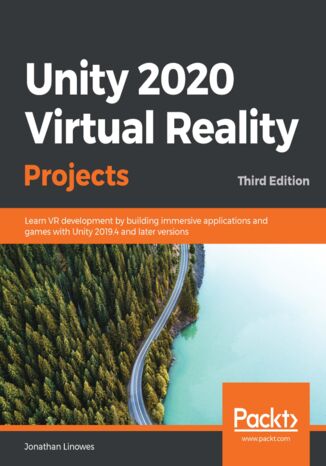
Jonathan Linowes
This third edition of the Unity Virtual Reality (VR) development guide is updated to cover the latest features of Unity 2019.4 or later versions - the leading platform for building VR games, applications, and immersive experiences for contemporary VR devices.Enhanced with more focus on growing components, such as Universal Render Pipeline (URP), extended reality (XR) plugins, the XR Interaction Toolkit package, and the latest VR devices, this edition will help you to get up to date with the current state of VR. With its practical and project-based approach, this book covers the specifics of virtual reality development in Unity. You'll learn how to build VR apps that can be experienced with modern devices from Oculus, VIVE, and others. This virtual reality book presents lighting and rendering strategies to help you build cutting-edge graphics, and explains URP and rendering concepts that will enable you to achieve realism for your apps. You'll build real-world VR experiences using world space user interface canvases, locomotion and teleportation, 360-degree media, and timeline animation, as well as learn about important VR development concepts, best practices, and performance optimization and user experience strategies.By the end of this Unity book, you'll be fully equipped to use Unity to develop rich, interactive virtual reality experiences.
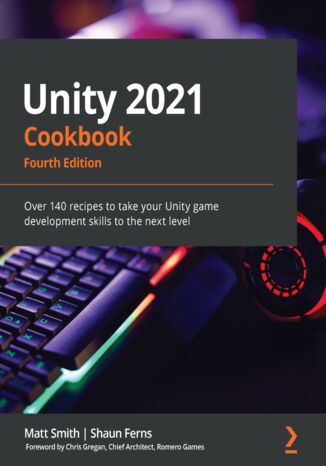
Matt Smith, Shaun Ferns, Chris Gregan
If you are a Unity developer looking to explore the newest features of Unity 2021 and recipes for advanced challenges, then this fourth edition of Unity Cookbook is here to help you.With this cookbook, you’ll work through a wide variety of recipes that will help you use the essential features of the Unity game engine to their fullest potential. You familiarize yourself with shaders and Shader Graph before exploring animation features to enhance your skills in building games.As you progress, you will gain insights into Unity's latest editor, which will help you in laying out scenes, tweaking existing apps, and building custom tools for augmented reality and virtual reality (AR/VR) experiences. The book will also guide you through many Unity C# gameplay scripting techniques, teaching you how to communicate with database-driven websites and process XML and JSON data files.By the end of this Unity book, you will have gained a comprehensive understanding of Unity game development and built your development skills. The easy-to-follow recipes will earn a permanent place on your bookshelf for reference and help you build better games that stay true to your vision.