
Sztuczna inteligencja
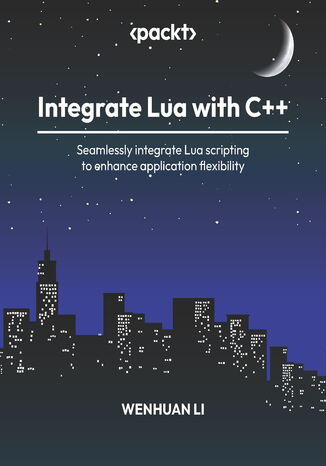
Integrate Lua with C++. Seamlessly integrate Lua scripting to enhance application flexibility
Wenhuan Li
C++ is a popular choice in the developer community for building complex and large-scale performant applications and systems. Often a need arises to extend the system at runtime, without recompiling the whole C++ program. Using a scripting language like Lua can help achieve this goal efficiently.Integrate Lua to C++ is a comprehensive guide to integrating Lua to C++ and will enable you to achieve the goal of extending C++ programs at runtime. You’ll learn, in sequence, how to get and compile the Lua library, the Lua programming language, calling Lua code from C++, and calling C++ code from Lua. In each topic, you’ll practice with code examples, and learn the in-depth mechanisms for smooth working. Throughout the book, the latter examples build on the earlier ones while also acting as a standalone. You’ll learn to implement Lua executor and Lua binding generator, which you can use in your projects directly with further customizations.By the end of this book, you’ll have mastered integrating Lua into C++ and using Lua in your C++ project efficiently, gained the skills to extend your applications at runtime, and achieved dynamic and adaptable C++ development.
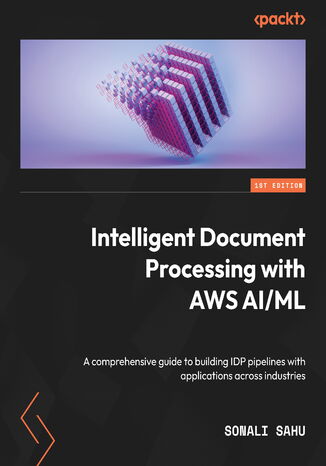
Sonali Sahu
With the volume of data growing exponentially in this digital era, it has become paramount for professionals to process this data in an accelerated and cost-effective manner to get value out of it. Data that organizations receive is usually in raw document format, and being able to process these documents is critical to meeting growing business needs.This book is a comprehensive guide to helping you get to grips with AI/ML fundamentals and their application in document processing use cases. You’ll begin by understanding the challenges faced in legacy document processing and discover how you can build end-to-end document processing pipelines with AWS AI services. As you advance, you'll get hands-on experience with popular Python libraries to process and extract insights from documents. This book starts with the basics, taking you through real industry use cases for document processing to deliver value-based care in the healthcare industry and accelerate loan application processing in the financial industry. Throughout the chapters, you'll find out how to apply your skillset to solve practical problems.By the end of this AWS book, you’ll have mastered the fundamentals of document processing with machine learning through practical implementation.
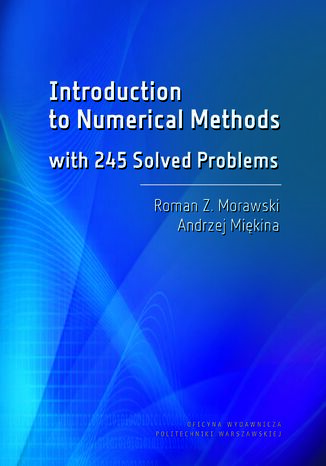
Introduction to Numerical Methods with 245 Solved Problems
Roman Z. Morawski, Andrzej Miękina
This textbook is the result of the authors' experience of teaching the undergraduate students of the Faculty of Electronics and Information Technology at Warsaw University of Technology in the period 1985-2025, and in particular - the students following the English-medium programmes of study offered there during last 30 years. It is composed of seven chapters devoted to basic numerical problems, such as accuracy of computation, approximation of functions, numerical differentiation and integration, solving algebraic and differential equations. Each chapter contains a short general introduction followed by a considerable number of solved numerical problems. The textbook may be useful for students attending any engineering-oriented course of numerical methods.
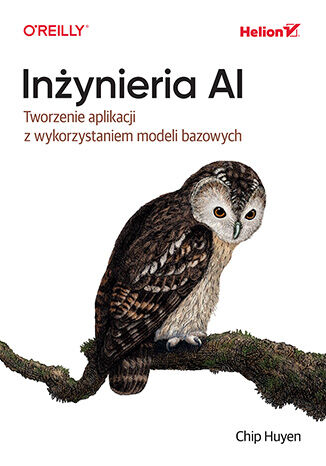
Inżynieria AI. Tworzenie aplikacji z wykorzystaniem modeli bazowych
Chip Huyen
Modele bazowe (foundation models) zapoczątkowały prawdziwy rozkwit aplikacji opartych na sztucznej inteligencji. AI stała się potężnym narzędziem rozwojowym, którego dziś może używać niemal każdy. Decyzja o stworzeniu własnej aplikacji AI wymaga jednak zrozumienia procesu budowy i świadomego podejmowania decyzji projektowych. Ta książka jest kompleksowym przewodnikiem po budowaniu generatywnych aplikacji AI w środowiskach produkcyjnych. Luke Metz, współtwórca ChatGPT w OpenAI Ten przystępnie napisany i praktyczny podręcznik pokazuje, czym jest inżynieria AI i w jaki sposób tworzy się aplikacje z wykorzystaniem łatwo dostępnych modeli bazowych. Dowiesz się, jak się poruszać w świecie sztucznej inteligencji, czym dokładnie są modele, zbiory danych, wskaźniki oceny i wzorce aplikacyjne. W książce przedstawiono również, krok po kroku, kompletny proces tworzenia aplikacji AI i ich efektywnego wdrażania. Poszczególne zagadnienia zostały zilustrowane dobrze udokumentowanymi studiami przypadków. Nie zabrakło również komentarzy odnoszących się do zaimplementowania systemu opinii użytkowników w celu zapewnienia przydatnych informacji zwrotnych. Najważniejsze zagadnienia: istota inżynierii AI proces tworzenia aplikacji AI różne techniki adaptacji modeli, w tym inżynieria promptów, generowanie wspomagane wyszukiwaniem (RAG), dostrajanie modeli, agenty i inżynieria zbiorów danych wąskie gardła modeli podstawowych i ich pokonywanie zasady wyboru modelu, wskaźników, danych oraz wzorców projektowych Pozycja obowiązkowa dla każdego profesjonalisty, który chce wdrożyć AI w swojej firmie! Vittorio Cretella, były dyrektor IT w P&G i Mars
Inżynieria promptów bez tajemnic. Sztuka kreatywnego generowania tekstów
Gilbert Mizrahi
Pojawienie się dużych modeli językowych, takich jak GPT-4 czy Gemini, okazało się prawdziwym przełomem w wielu branżach. Modele te potrafią generować znakomite teksty i prowadzić zaawansowane konwersacje. Z ich potencjału można czerpać poprzez odpowiednio sformułowane prompty. Aby więc w pełni skorzystać z możliwości modelu do wykonania konkretnego zadania, trzeba opanować sztukę pisania promptów. Na podstawie tej praktycznej książki nauczysz się pisać skuteczne prompty dla dużych modeli językowych. Dowiesz się, w jaki sposób mogą posłużyć do generowania opisów produktów, spersonalizowanych wiadomości e-mail, postów w mediach społecznościowych, a nawet tekstów beletrystycznych i poetyckich. Poznasz także zaawansowane techniki użycia, takie jak integracja dużych modeli językowych z innymi narzędziami i tworzenie chatbotów. Wszystkie opisane tu techniki przetestujesz, eksperymentując i optymalizując swoje rozwiązania. W efekcie zdobędziesz umiejętności, które pozwolą Ci wykonywać codzienne zadania szybciej i lepiej! Dzięki tej książce: poznasz różne typy promptów i ich zastosowania rozwiniesz umiejętności kreatywnego pisania, korzystając ze sztucznej inteligencji zdobędziesz zaawansowane umiejętności tworzenia i wdrażania chatbotów nauczysz się integrować duże modele językowe z innymi narzędziami poznasz zagadnienia etyczne i najlepsze praktyki związane ze sztuczną inteligencją Moc promptów w Twoich rękach ― twórz, inspiruj, zaskakuj!
Perry Lea
Industries are embracing IoT technologies to improve operational expenses, product life, and people's well-being. An architectural guide is needed if you want to traverse the spectrum of technologies needed to build a successful IoT system, whether that's a single device or millions of IoT devices.IoT and Edge Computing for Architects, 2E encompasses the entire spectrum of IoT solutions, from IoT sensors to the cloud. It examines modern sensor systems, focusing on their power and functionality. It also looks at communication theory, paying close attention to near-range PAN, including the new Bluetooth® 5.0 specification and mesh networks. Then, the book explores IP-based communication in LAN and WAN, including 802.11ah, 5G LTE cellular, Sigfox, and LoRaWAN. It also explains edge computing, routing and gateways, and their role in fog computing, as well as the messaging protocols of MQTT 5.0 and CoAP.With the data now in internet form, you'll get an understanding of cloud and fog architectures, including the OpenFog standards. The book wraps up the analytics portion with the application of statistical analysis, complex event processing, and deep learning models. The book then concludes by providing a holistic view of IoT security, cryptography, and shell security in addition to software-defined perimeters and blockchains.
Jak zarabiać przez Internet z AI
Włodzimierz Iwanowski
Freelancing wspomagany mocą sztucznej inteligencji? To działa! Wchodzimy w erę dynamicznych zmian związanych ze sztuczną inteligencją. Spodziewaliśmy się tego i już to widzimy ― AI rewolucjonizuje nasze życie, zmienia codzienne funkcjonowanie, ale również (a może przede wszystkim) zaczyna wpływać na sposób zarobkowania. Ten, kto szybciej nauczy się efektywnie korzystać z jej narzędzi, tego czeka sukces finansowy. Dotyczy to także osób z branży kreatywnej, pracujących na zlecenie. Ta książka wprowadzi Cię do świata najpopularniejszych platform freelancerskich, za których pośrednictwem możesz oferować swoje usługi, takich jak Fiverr, Upwork czy Useme. Autor podpowie Ci, jak dzięki narzędziom sztucznej inteligencji wykonać swoją pracę szybciej i efektywniej, niezależnie od tego, czy przygotowujesz audiobook, nagrywasz podcast, komponujesz muzykę, budujesz grę, piszesz dowolny tekst, czy... tworzysz wirtualnego influencera. W poradniku znajdziesz również praktyczne porady, jak zarządzać ryzykiem, jak reagować na negatywne opinie i jak unikać najczęstszych błędów finansowych. Książka w mediach: Books4Busines Bookstagram Bielicka Bookstagram
Jak zbudować własnego asystenta GPT - krok po kroku
Katarzyna Maciejko-Zielińska
"Jak zbudować własnego asystenta GPT - krok po kroku" to praktyczny przewodnik dla każdego, kto chce wykorzystać AI w codziennej pracy lub biznesie. Dowiesz się, po co tworzyć własnego asystenta, jak przygotować skuteczny brief oraz jak przejść przez proces budowy w interfejsie GPT. Autor prowadzi Cię przez testowanie, optymalizację i udostępnianie gotowego rozwiązania. Dodatkowo otrzymasz dostęp do biblioteki gotowych inspiracji. To konkretne, uporządkowane wskazówki, które pozwolą Ci szybko stworzyć działające narzędzie dopasowane do Twoich potrzeb.