
Sztuczna inteligencja
Jak zarabiać przez Internet z AI
Włodzimierz Iwanowski
Freelancing wspomagany mocą sztucznej inteligencji? To działa! Wchodzimy w erę dynamicznych zmian związanych ze sztuczną inteligencją. Spodziewaliśmy się tego i już to widzimy ― AI rewolucjonizuje nasze życie, zmienia codzienne funkcjonowanie, ale również (a może przede wszystkim) zaczyna wpływać na sposób zarobkowania. Ten, kto szybciej nauczy się efektywnie korzystać z jej narzędzi, tego czeka sukces finansowy. Dotyczy to także osób z branży kreatywnej, pracujących na zlecenie. Ta książka wprowadzi Cię do świata najpopularniejszych platform freelancerskich, za których pośrednictwem możesz oferować swoje usługi, takich jak Fiverr, Upwork czy Useme. Autor podpowie Ci, jak dzięki narzędziom sztucznej inteligencji wykonać swoją pracę szybciej i efektywniej, niezależnie od tego, czy przygotowujesz audiobook, nagrywasz podcast, komponujesz muzykę, budujesz grę, piszesz dowolny tekst, czy... tworzysz wirtualnego influencera. W poradniku znajdziesz również praktyczne porady, jak zarządzać ryzykiem, jak reagować na negatywne opinie i jak unikać najczęstszych błędów finansowych. Książka w mediach: Books4Busines Bookstagram Bielicka Bookstagram
Jak zbudować własnego asystenta GPT - krok po kroku
Katarzyna Maciejko-Zielińska
"Jak zbudować własnego asystenta GPT - krok po kroku" to praktyczny przewodnik dla każdego, kto chce wykorzystać AI w codziennej pracy lub biznesie. Dowiesz się, po co tworzyć własnego asystenta, jak przygotować skuteczny brief oraz jak przejść przez proces budowy w interfejsie GPT. Autor prowadzi Cię przez testowanie, optymalizację i udostępnianie gotowego rozwiązania. Dodatkowo otrzymasz dostęp do biblioteki gotowych inspiracji. To konkretne, uporządkowane wskazówki, które pozwolą Ci szybko stworzyć działające narzędzie dopasowane do Twoich potrzeb.
Java Deep Learning Essentials. Unlocking the next generation of predictive power
Yusuke Sugomori
AI and Deep Learning are transforming the way we understand software, making computers more intelligent than we could even imagine just a decade ago. Deep Learning algorithms are being used across a broad range of industries – as the fundamental driver of AI, being able to tackle Deep Learning is going to a vital and valuable skill not only within the tech world but also for the wider global economy that depends upon knowledge and insight for growth and success. It’s something that’s moving beyond the realm of data science – if you’re a Java developer, this book gives you a great opportunity to expand your skillset.Starting with an introduction to basic machine learning algorithms, to give you a solid foundation, Deep Learning with Java takes you further into this vital world of stunning predictive insights and remarkable machine intelligence. Once you’ve got to grips with the fundamental mathematical principles, you’ll start exploring neural networks and identify how to tackle challenges in large networks using advanced algorithms. You will learn how to use the DL4J library and apply Deep Learning to a range of real-world use cases. Featuring further guidance and insights to help you solve challenging problems in image processing, speech recognition, language modeling, this book will make you rethink what you can do with Java, showing you how to use it for truly cutting-edge predictive insights. As a bonus, you’ll also be able to get to grips with Theano and Caffe, two of the most important tools in Deep Learning today.By the end of the book, you’ll be ready to tackle Deep Learning with Java. Wherever you’ve come from – whether you’re a data scientist or Java developer – you will become a part of the Deep Learning revolution!

Języki i paradygmaty programowania. Teoria i praktyka
Feliks Kurp
Czym w rzeczywistości jest programowanie? I jak zacząć programować? Oprogramowanie jest dziś praktycznie wszędzie, a programiści od dawna należą do najbardziej poszukiwanych specjalistów. Na podstawie napisanego przez nich kodu funkcjonują już nie tylko komputery i smartfony. Oprogramowanie steruje sprzętami domowymi, telewizorem czy lodówką. W ramach tak zwanego internetu rzeczy wiele urządzeń technicznych komunikuje się między sobą bez udziału człowieka. Gwałtownie rozwija się sztuczna inteligencja, wymagająca specjalistycznego oprogramowania. Nie dziwi więc, że jego rozwój ciągle przyspiesza. W obliczu tych faktów odpowiedź na pytanie, jakiego języka programowania warto się nauczyć, jest trudna. Nawet dla osoby, która wie, w jaki sposób zamierza w przyszłości korzystać ze swoich informatycznych umiejętności. Autor książki proponuje nieco inne podejście do nauki programowania. Zachęca do zapoznania się z podstawowymi własnościami i możliwymi zastosowaniami kilku odległych od siebie, ale niezwykle ważnych aktualnie języków programowania, takich jak Python, Java SE, JavaScript i Prolog. W trakcie ich poznawania czytelnicy będą mieli okazję zgłębić filozofię programowania, a równocześnie zdobywać praktyczne umiejętności programistyczne na podstawowym poziomie. Starannie dobrany kod pokazuje możliwe zastosowania wybranych języków programowania. Pomoc w nauce stanowią też zadania do samodzielnego rozwiązania.
Keras 3. Comprehensive Insights into Keras for Deep Learning and AI Solutions
Rheinwerk Publishing, Inc, Mohammad Nauman
This book provides a comprehensive guide to mastering deep learning with Keras 3, starting from the fundamentals of machine learning and neural networks to advanced techniques in reinforcement learning, transformers, and generative AI. Readers will begin with understanding the core principles of machine learning, including supervised, unsupervised, and reinforcement learning. The book explains how neural networks function and how to build them using Keras, TensorFlow, and Python. You'll dive into critical topics such as convolutional neural networks (CNNs), dropout regularization, and gradient descent optimization. As you progress, you’ll learn advanced deep learning concepts like transfer learning, transformers, and the powerful Keras Functional API for building complex models. There’s a focus on practical applications, such as building and evaluating deep learning models for real-world tasks, and enhancing models using GPU acceleration. You'll also explore generative models, including autoencoders and GANs, and apply them to tasks like image generation and data augmentation. By the end of the book, you’ll be able to implement state-of-the-art AI models and deploy them in production environments.

Komunikacja z AI. Dla początkujących
Katarzyna Majzel-Pośpiech
Naucz się promptować i skorzystaj w pełni z możliwości, jakie oferuje AI Jedni się jej obawiają, inni patrzą na nią z nadzieją. Sztuczna inteligencja, z angielskiego artificial intelligence (AI), to technologia, która oferuje niespotykane dotąd możliwości i imponującą wydajność. Jeśli w odpowiedni sposób zadać jej pytanie, jest w stanie precyzyjnie na nie odpowiedzieć i podsunąć rozwiązanie. Po otrzymaniu konkretnych wskazówek może wygenerować wysokiej jakości grafiki i filmy. Kluczowe jest, aby nauczyć się właściwie zadawać pytania i poprawnie formułować polecenia. Innymi słowy ― promptować. Prompt engineering polega na tworzeniu i optymalizowaniu promptów, czyli komend lub zapytań kierowanych do modeli sztucznej inteligencji. Promptowanie wymaga kreatywności, logicznego myślenia, znajomości języka i technologii AI, ale opanowanie jego reguł warte jest poświęconego czasu. W efekcie bowiem otrzymamy oczekiwane treści, grafiki, muzykę, wydajne wsparcie w kodowaniu i analizie danych. A to dopiero początek możliwości narzędzi takich jak ChatGPT czy Midjourney. Jeśli: chcesz zrozumieć, na jakich zasadach działa sztuczna inteligencja pragniesz poznać reguły prompt engineeringu zależy Ci na tym, by spróbować swoich sił w promptowaniu zamierzasz tworzyć skuteczne i kreatywne prompty to książka właśnie dla Ciebie! Znajdziesz w niej wiedzę i inspiracje, które pozwolą Ci rozpocząć współpracę z dostępnymi na rynku modelami AI.

Barbara Orzeł
W jaki sposób media przedstawiają kryzysy? Jak fake newsy oraz technologia deepfake wpływają na emocje użytkowników mediów? Jaka jest rola sztucznej inteligencji w działaniach dezinformacyjnych? Jakie zabiegi językowe i wizualne mają wpływ na zmianę nastrojów opinii publicznej? To tylko nieliczne pytania, na które próbuje odpowiedzieć najnowsza książka Barbary Orzeł o "świecie, który wypadł z formy", o tematach kryzysowych, które "zasilane" kontrowersją, fake newsami i algorytmami sztucznej inteligencji, wzbudzają określone emocje. A emocje, jak wiemy, znakomicie się sprzedają...
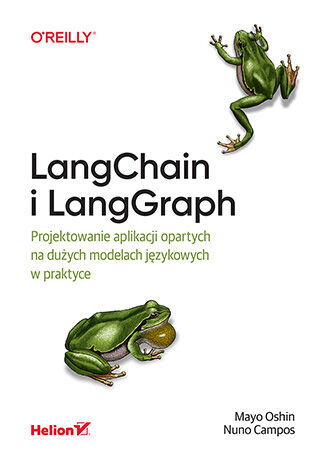
LangChain i LangGraph. Projektowanie aplikacji opartych na dużych modelach językowych w praktyce
Mayo Oshin, Nuno Campos
Jak zacząć tworzyć aplikacje AI, które potrafią wnioskować i wyszukiwać zewnętrzne dane w celu zapewniania odpowiedniego kontekstu? Sięgnij po LangChain! To popularne narzędzie programistyczne służy do tworzenia, uruchamiania aplikacji LLM, a także zarządzania nimi. LangChain jest używany przez wiele znanych firm, a jego popularność dynamicznie rośnie. To lektura obowiązkowa dla programistów, którzy chcą przesuwać granice możliwości LangChain! Tom Taulli, konsultant IT i autor książek Jeśli znasz Pythona lub JavaScript i chcesz rozpocząć przygodę z aplikacjami AI ta książka jest dla Ciebie! Krok po kroku zbudujesz agenta AI korzystającego ze wskazanego źródła danych, wyposażysz go w mechanizmy autoryzacji działań i umożliwisz mu zdobywanie dodatkowych informacji lub wyjaśnień. Dowiesz się, jak przygotować go do pracy w środowisku produkcyjnym z uwzględnieniem kwestii opóźnień, niezawodności i bezpieczeństwa. Nauczysz się również monitorować i stale ulepszać swoje aplikacje. Najciekawsze zagadnienia: zwiększanie dokładności LLM za pomocą techniki RAG inteligentna komunikacja aplikacji AI z użytkownikami architektura agentowa z wykorzystaniem LangGraph integracja z interfejsami API i narzędziami firm trzecich monitorowanie, testowanie i ewaluacja aplikacji AI praktyczne zastosowanie biblioteki LangChain Ta książka sprawia, że nauka LangChain jest interesująca i zabawna! Rajat K. Goel, IBM