
Sztuczna inteligencja
Sztuczna inteligencja o Bogu, wierze i Biblii. Rozmowy z chatbotem
Jarosław Jankowski
Czy dziś sztuczna inteligencja odpowiedziałaby tak samo? W tej książce ChatGPT odpowiada na pytania o Boga, wiarę, Biblię i sens życia. Rozmowy toczyły się w pierwszych miesiącach po premierze modelu, gdy możliwość swobodnego dialogu z chatbotem wciąż była czymś nowym, budziła ciekawość i poruszała wyobraźnię. Ich zapis ukazał się w połowie 2023 roku. Dziś można go czytać także jako kapsułę czasu z początków powszechnego dostępu do generatywnej sztucznej inteligencji. Pokazuje, jak działał wówczas chatbot, zanim późniejsze aktualizacje zmieniły jego możliwości i sposób formułowania wypowiedzi. Autor i jego cyfrowy rozmówca poruszają kwestie istnienia zła, potrzeby wiary, wielości religii i odmiennych sposobów rozumienia Biblii. Rozmawiają także o życiu i nauczaniu Jezusa oraz rozmaitych nurtach chrześcijaństwa. Osobne miejsce zajmują wpływ osobowości na życie duchowe, sylwetki ludzi wierzących i poszukujących, relacje między wiarą a nauką oraz możliwe scenariusze przyszłości. ChatGPT porównuje tradycje religijne, objaśnia trudne fragmenty Biblii i zestawia odmienne punkty widzenia. Nie brakuje też twórczych eksperymentów. ChatGPT wciela się w znane postacie z historii chrześcijaństwa, układa psalmy, przypowieści i modlitwy, przenosi opowieści biblijne we współczesne realia, a nawet prowadzi nabożeństwo. Niektóre jego wypowiedzi zaskakują przenikliwością, inne odsłaniają ograniczenia ówczesnej technologii. Czy rzeczywiście trafiają w sedno, czy tylko brzmią przekonująco? To lektura dla wierzących, niewierzących i poszukujących - dla wszystkich zaintrygowanych spotkaniem duchowości ze sztuczną inteligencją i tym, jak cyfrowy rozmówca mierzy się z odwiecznymi pytaniami. Jarosław Jankowski Magister pedagogiki, absolwent Executive MBA, dyrektor do spraw badań i rozwoju w międzynarodowej organizacji pozarządowej. Popularyzator wiedzy o typach osobowości, autor książki "Czy wiesz, kim jesteś? Przewodnik po 16 typach osobowości ID16". Fascynują go Biblia, duchowość i nowe technologie. ChatGPT System konwersacyjny oparty na sztucznej inteligencji, stworzony przez OpenAI do prowadzenia rozmów, analizowania tekstów i tworzenia treści. Korzysta z modeli językowych wytrenowanych na materiałach z wielu dziedzin, między innymi religii, filozofii, nauki i sztuki. Choć nie jest nieomylny, ma wiele do powiedzenia także o Biblii, wierze i duchowości.
Sztuczna inteligencja. O czym myśli, gdy nikt nie patrzy?
Gniewosz Leliwa
Witaj w nowym, wspaniałym świecie! Świecie AI O sztucznej inteligencji jest ostatnio bardzo głośno, to nośny temat, nierzadko przedstawiany w tonie sensacyjnym. Czy AI nas zniewoli? Czy wymknie się spod kontroli? A może zabierze nam pracę i zmieni nasze życie w bezproduktywny koszmar? Rzeczywistość wygląda zgoła inaczej, niż zdają się sugerować clickbaitowe nagłówki w prasie i mediach społecznościowych. Sztuczna inteligencja jest obecna w naszym życiu od wielu lat, choć często nie zdajemy sobie z tego sprawy. Służy nam pomocą, gdy szukamy czegoś w sieci, kiedy chcemy coś przetłumaczyć, kupić, porównać albo dotrzeć z miejsca A do miejsca B. Odsiewa dla nas spam w poczcie internetowej i chroni nasze urządzenia elektroniczne przed cyberatakami. Oczywiście, ma swoje mroczne strony i tych także powinniśmy być świadomi. Książka "Sztuczna inteligencja. o czym myśli, gdy nikt nie patrzy?" w przystępny i rzetelny sposób wprowadzi Cię w fascynujący świat sztucznej inteligencji. Bez skomplikowanej matematyki, odwołując się jedynie do niezbędnego minimum na poziomie szkoły średniej, autor przybliża zasady działania i uczenia się sztucznych sieci neuronowych, funkcjonowanie dużych modeli językowych i generatywnej AI, jak słynny ChatGPT, a także omawia ich dzisiejsze możliwości i nadchodzące wyzwania. Odwołuje się przy tym do własnej praktyki zawodowej - od wielu lat współtworzy rozwiązania służące proaktywnej ochronie przed cyberprzemocą i wsparciu osób w kryzysie suicydalnym, dokładając tym samym swoją cegiełkę do prac nad rozwojem sztucznej inteligencji. O książce "Sztuczna inteligencja. o czym myśli, gdy nikt nie patrzy?" w mediach Rozmowa z Gniewoszem Leliwą w audycji „Eureka” na antenie Jedynki Polskiego Radia Gniewosz Leliwa gościem w podcaście „Wahanie” u Piotrka Szumowskiego i Abelarda Gizy Rozmowa z Gniewoszem Leliwą w podcaście LIMITY AI na kanale MIT Sloan Management Review Polska Przyszłość Rynku Pracy. Rozmowa z Gniewoszem Leliwą na kanale Damiana Olszewskiego – Praktycznie o pieniądzach Rozmowa z Gniewoszem Leliwą na kanale Bartosza Ziółko – AI trends and achievements
Sztuczna inteligencja od podstaw
Feliks Kurp
Nie ma wątpliwości, że sztuczna inteligencja (AI) zrewolucjonizuje w najbliższych dekadach nasze życie. Wśród największych autorytetów świata nauki panuje przekonanie, że stoimy w obliczu przełomu porównywalnego z wynalezieniem i zastosowaniami elektryczności. Sztuczna inteligencja od podstaw to pozycja, która począwszy od opisu klasycznych metod SI, takich jak algorytm genetyczny, algorytm mrówkowy, systemy ekspertowe czy sztuczne życie, zapoznaje Czytelnika z najbardziej zaawansowanymi modelami opartymi na sztucznych sieciach neuronowych. Autor skrupulatnie objaśnia złożone zagadnienia dotyczące zarówno podstaw teoretycznych, jak i budowy i zastosowań takich systemów, nie unika przy tym odwołania do historii ich rozwoju. Książka stanowi kompendium wiedzy na temat tej niesłychanie szybko rozwijającej się i dynamicznie wkraczającej w nasze życie dziedziny. Została napisana tak, aby była przystępna dla osób posiadających podstawowe umiejętności matematyczne. Może stanowić podręcznik dla studentów takich kierunków jak informatyka, mechatronika, a także automatyka i robotyka. Dzięki książce: poznasz historię rozwoju sztucznej inteligencji zdobędziesz wiedzę na temat aktualnych metod AI, takich jak uczenie maszynowe (ML), głębokie uczenie maszynowe (DL) czy przetwarzanie języka naturalnego (NLP) na podstawie udostępnionych kodów źródłowych kilku autorskich aplikacji nabędziesz umiejętności w zakresie tworzenia i optymalizacji systemów sztucznej inteligencji

Sztuczna inteligencja w instytucjach kultury
Praca zbiorowa
Od 2 lutego 2025 r. instytucje kultury stosujące systemy sztucznej inteligencji (AI) muszą dostosować się do nowych regulacji wynikających z Aktu w sprawie AI (AI Act). Nowe przepisy nakładają obowiązki związane z odpowiedzialnym wykorzystaniem sztucznej inteligencji, eliminacją szkodliwych praktyk oraz szkoleniem personelu. W książce omówione zostały najważniejsze obowiązki instytucji kultury, przepisy prawne i zmiany oraz instrukcje 60 programów dla poszczególnych instytucji.
Sztuczna inteligencja w organizacji. Innowacje biznesowe w praktyce
Ryszard Ćwiertniak
Jak skłonić sztuczną inteligencję do pracy na naszą rzecz? Temat sztucznej inteligencji (SI) i jej potencjalnych zastosowań w firmach jest obecnie szeroko dyskutowany. Oparte na niej technologie są coraz bardziej zaawansowane i powszechniej dostępne, a także coraz lepiej dostosowane do potrzeb biznesu. Już dziś okazują się pomocne w pracy rozmaitych działów, od zarządzania łańcuchem dostaw, przez marketing i sprzedaż, po obsługę klienta i rozwój produktów. Odpowiednio, w kompetentny sposób wdrożona sztuczna inteligencja może stanowić motor rozwoju przedsiębiorstwa: wspomagać pracę ludzi, wyręczać ich w realizacji wielu monotonnych zadań i dać przestrzeń do skupienia się na wyzwaniach wymagających większej kreatywności ― obszarach, w których SI też może być niezwykle pomocna. Tajemnica sukcesu modelu współpracy człowiek - maszyna kryje się w sformułowaniu "odpowiednio wdrożona sztuczna inteligencja". Autor książki dzieli się w niej opracowanym przez siebie modelem systemu zarządzania, umożliwiającym ustalenie obszarów sterowania innowacjami procesu biznesowego, a więc rozpoznanie i hierarchizację funkcji oraz określenie sekwencji czynności we wprowadzaniu sztucznej inteligencji do organizacji. Swoją publikację kieruje do osób, które pracują nad projektami procesów biznesowych, do ekspertów doradzających firmom w zakresie zarządzania innowacjami i wprowadzania zmian, a także do studiujących zarządzanie projektami, jakością, innowacjami i projektami. Skorzystają z niej również właściciele firm, którzy chcą wprowadzać nowości w swoich organizacjach i szukają narzędzi do ich skutecznego wdrażania. Książka w mediach: Focus On Business Books4Business - Bookstagram - Recenzja
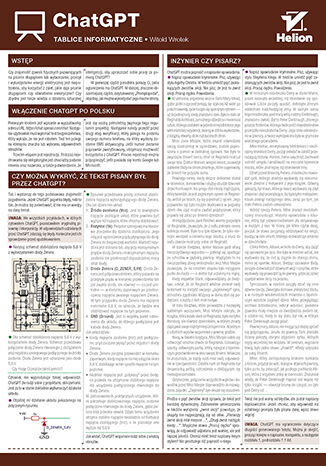
Tablice informatyczne. ChatGPT
Witold Wrotek
W porozumieniu ze sztuczną inteligencją ChatGPT, chatbot opracowany i udostępniony przez firmę OpenAI, szybko stał się obiektem zainteresowania internautów na całym świecie - i na nowo wzbudził gorące dyskusje wokół sztucznej inteligencji. Ludzie mediów prześcigają się w skrajnych wizjach, jedni podchodzą do tematu entuzjastycznie, wypatrując kolejnych, doskonalszych wersji ChatGPT i pokrewnych mu botów, inni kreślą wizje ponure niczym z literatury i filmów science fiction, oczekując momentu, w którym sztuczna inteligencja się zbuntuje i przejmie władzę nad światem... W tej dyskusji nie powinien nam umknąć praktyczny aspekt zagadnienia. Wszak ChatGPT to model językowy opracowany w konkretnym celu - ma w odpowiedni sposób reagować na dane wprowadzane do niego przez użytkownika. Innymi słowy, odpowiadać na zadawane pytania dotyczące rozmaitych dziedzin dostępnej ludziom wiedzy. Jak się z nim poprawnie komunikować? Jak formułować myśli w sposób, który pozwoli nakłonić ChatGPT do podzielenia się pożądanymi przez nas informacjami? Tego dowiesz się z niniejszej pozycji. Jeśli chcesz zaprząc ChatGPT do pracy na swoją rzecz: Poznaj mocne i słabe strony ChatGPT Dowiedz się, w czym i jak może Ci pomóc Naucz się promptować, czyli zadawać właściwe pytania w odpowiedni sposób
Tech Trends of the 4th Industrial Revolution. Navigating the Future of Technology in Business
Mercury Learning and Information, D. Pyo, J....
The term 4th Industrial Revolution is often mentioned in the media, but public understanding of its technologies lags behind their rapid development. This book bridges the gap, explaining essential technologies like IoT, blockchain, AI, cloud computing, and big data. It aims to enhance comprehension by minimizing technical content.The book introduces key technologies and their applications, emphasizing their importance in contemporary business models. Readers will find accessible descriptions and practical examples to aid understanding. Covering topics and trends vital for modern business, this book ensures readers grasp the technological landscape shaping the future.Throughout the book, you'll explore how these technologies are revolutionizing industries and their integration into business strategies. This journey provides a comprehensive understanding of the 4th Industrial Revolution, equipping readers with the knowledge needed to navigate and leverage these advancements effectively.
Technologie cyfrowe w przemyśle. Możliwości i wyzwania
Paweł Gepner, Jerzy Krawiec
Publikacja kompleksowo ujmuje implementację technologii cyfrowych w przemyśle w obliczu koncepcji Przemysłu 4.0/5.0/6.0. Szybko postępująca rewolucja technologiczna wprowadza pojęcia, które stały się podstawowymi terminami w dyskusji o przyszłości produkcji i technologii. Chociaż te koncepcje przemysłowe są ze sobą powiązane, znacznie różnią się pod względem podejścia do technologii i roli człowieka w procesie produkcyjnym. Ogólnie rzecz ujmując, Przemysł 4.0, znany również jako czwarta rewolucja przemysłowa, to era, w której dominuje automatyzacja i cyfryzacja procesów przemysłowych. Charakteryzuje się wzajemnym połączeniem systemów, takich jak chmura obliczeniowa, internet rzeczy (IoT), a właściwie przemysłowy internet rzeczy (IIoT) z wykorzystaniem danych do podejmowania decyzji oraz podniesienia wydajności. Jest to etap, w którym technologia i maszyny zaczęły odgrywać kluczową rolę w produkcji, minimalizując udział czynnika ludzkiego w rutynowych procesach.