
Sztuczna inteligencja
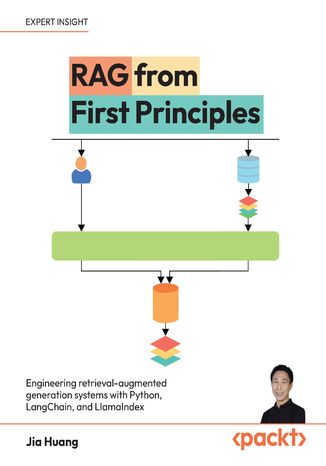
Jia Huang
Most developers can spin up a RAG pipeline in an afternoon using LangChain or LlamaIndex. Far fewer understand why retrieval fails or how to fix it. This book is for those who want to go deeper.'RAG From First Principles' dismantles the retrieval-augmented generation stack layer by layer, how documents are ingested and parsed, why chunking strategy directly impacts answer quality, how embedding models encode meaning, what happens inside a vector database, and how sparse and dense retrieval interact in a hybrid system. Written by Jia Huang, a research engineer and bestselling AI author, it brings research depth and production experience to one of AI's most critical engineering disciplines.Structured as a progressive dialogue between a seasoned engineer and two students, the book surfaces the questions practitioners actually ask. Each chapter builds on the last, from data import and chunking through embedding selection, index design, hybrid search, and post-retrieval processing, into response generation, evaluation, and advanced paradigms including GraphRAG, Agentic RAG, and Modular RAG.By the end, you'll have the architectural understanding to optimize, debug, and extend your RAG systems with confidence.
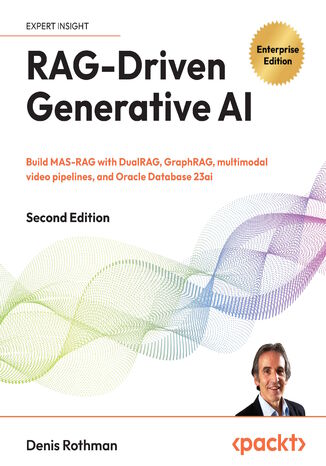
Denis Rothman
Stop moving your data to the AI. This second edition defines a revolutionary architectural shift: bringing the AI to the data. By using Oracle Database 23ai as a converged engine in this book, you will architect Sovereign AI systems that eliminate the fragmentation, latency, and massive security risks inherent in traditional data extraction.You’ll work with DualRAG, synchronizing unstructured vector semantics with the deterministic truth of structured SQL, Graph, and Spatial retrieval. This allows your systems to reason over verified corporate data rather than probabilistic guesses, reducing hallucinations at the source. Moving beyond simple pipelines, you’ll also build MAS-RAG (multi-agent systems for RAG), where autonomous agents coordinate across hybrid retrieval workflows, multimodal video pipelines, and graph-based knowledge structures.Designed for developers and architects, these blueprints transform disconnected data silos into a unified engine to architect autonomous enterprise intelligence that scales with RLHF and model fine-tuning. By the end of the book, you’ll be able to design and deploy enterprise AI systems that combine retrieval, reasoning, and structured data to build reliable generative AI applications.*Email sign-up and proof of purchase required
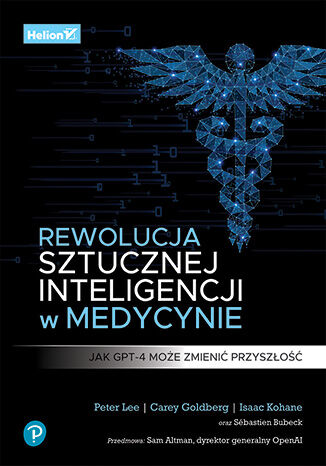
Rewolucja sztucznej inteligencji w medycynie. Jak GPT-4 może zmienić przyszłość
Peter Lee, Carey Goldberg, Isaac Kohane
Odkąd się pojawił, ChatGPT wzbudza ogromne zainteresowanie wśród ludzi różnych profesji. Szybko stało się jasne, że to jeden z największych przełomów technologicznych ostatnich kilkudziesięciu lat. Możemy oczekiwać, że modele językowe radykalnie wpłyną na to, jak ludzie będą pracować, komunikować się ze sobą i zdobywać wiedzę. Szczególnie dużo nadziei ― i obaw ― wiąże się z zastosowaniem GPT w medycynie. Niezależnie od tego, czy jesteś pracownikiem ochrony zdrowia, medykiem, czy pacjentem, powinieneś jak najszybciej zrozumieć możliwości tej technologii. W tej książce opisano różne zastosowania GPT-4 w medycynie: jako źródło informacji medycznej, wsparcie w podejmowaniu decyzji dotyczących leczenia czy też pomoc w tworzeniu dokumentacji, takiej jak podsumowanie wizyty pacjenta. Podczas lektury odkryjesz niezwykły potencjał tej technologii, przekonasz się także, jak bardzo może poprawić skuteczność diagnozowania i usprawnić niektóre procedury. Znajdziesz tu spostrzeżenia o potencjalnych wadach sztucznej inteligencji i najświeższe wnioski związane z jej zastosowaniem. Nie zabrakło również opisu zagrożeń związanych z tą technologią i wskazówek, do czego GPT nie można używać. Poszczególne zagadnienia zilustrowano prawdziwymi rozmowami z GPT-4. Są one w pełni spontaniczne i pozbawione poprawek, często błyskotliwe i czasami nietaktowne, wzbogacone o cenny kontekst i szczere komentarze. AI w medycynie: jutro zaczęło się wczoraj!
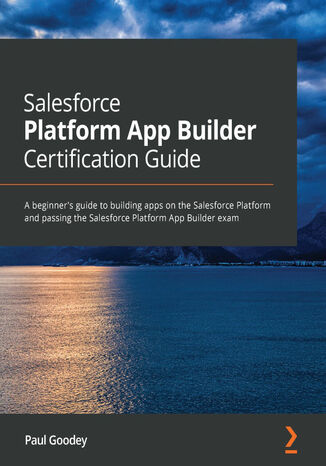
Paul Goodey GP, Paul Goodey
Do you want to be able to confidently design and build apps that support business processes within the Lightning Platform? Salesforce Platform App Builder Certification Guide not only helps you to do this, but also prepares you for the certification exam.The book starts by describing the core capabilities of the Lightning Platform. You'll learn techniques for data modeling to design, build, and deploy apps without writing code and achieve rapid results with the declarative capabilities that the Lightning Platform provides. Next, you'll explore utilities for importing and exporting data and the features available in the Lightning Platform to restrict and extend access to objects, fields, and records. You'll also be able to customize the Salesforce Lightning Experience user interface (UI) and build functionality for custom buttons, links, and actions. Later, this certification study guide will take you through reporting and the social and mobile features of the Lightning Platform. Finally, you’ll get to grips with Salesforce build environments and deployment options.By the end of this Salesforce book, you'll not only have learned how to build data models, enforce data security, and implement business logic and process automation, but also have gained the confidence to pass the Platform App Builder exam and achieve Salesforce certification.
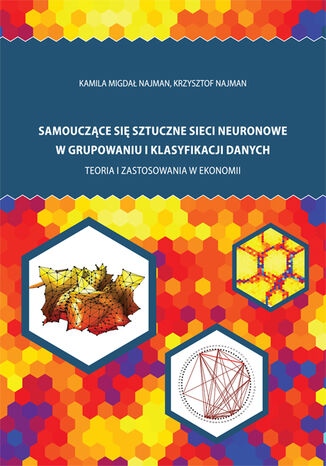
Kamila Migdał-Najman, Krzysztof Najman
Prezentowana książka składa się z dwóch zasadniczych części. Część pierwsza ma charakter teoretyczny. Omawia genezę, rozwój, podstawy empiryczne i teoretyczne procesu klasyfikacji i grupowania danych. Jest pełna faktów, anegdot i własnych przemyśleń autorów. Część druga książki jest poświęcona szerokim badaniom teoretycznym, symulacyjnym i empirycznym nad własnościami samouczących się sieci neuronowych w grupowaniu danych społeczno-ekonomicznych. Szczegółowo omówiono algorytm budowy i samouczenia się trzech modeli sztucznych sieci neuronowych: SOM (Self Organizing Map), GNG (Growing Neural Gas) i sieci hybrydowej SOM-GNG. Zaproponowano także ich modyfikacje zwiększające zdolność badanych sieci do poprawnego wyróżniania istniejących skupień. W książce położono szczególny nacisk na możliwie prosty i przejrzysty opis często złożonych zjawisk. Poza koniecznym formalizmem matematycznym autorzy posługują się wieloma zaawansowanymi metodami wizualizacji omawianych zagadnień. Dzięki temu, mimo naukowego charakteru książki, może ona stanowić wartościowy podręcznik dla bardziej zaawansowanych studentów, praktyków i naukowców nie będących specjalistami w zakresie klasyfikacji i grupowania danych.
Guillermo Moncecchi, Raul G Tompson, Trent Hauck,...
Machine learning, the art of creating applications that learn from experience and data, has been around for many years. Python is quickly becoming the go-to language for analysts and data scientists due to its simplicity and flexibility; moreover, within the Python data space, scikit-learn is the unequivocal choice for machine learning. The course combines an introduction to some of the main concepts and methods in machine learning with practical, hands-on examples of real-world problems. The course starts by walking through different methods to prepare your data—be it a dataset with missing values or text columns that require the categories to be turned into indicator variables. After the data is ready, you'll learn different techniques aligned with different objectives—be it a dataset with known outcomes such as sales by state, or more complicated problems such as clustering similar customers. Finally, you'll learn how to polish your algorithm to ensure that it's both accurate and resilient to new datasets. You will learn to incorporate machine learning in your applications. Ranging from handwritten digit recognition to document classification, examples are solved step-by-step using scikit-learn and Python. By the end of this course you will have learned how to build applications that learn from experience, by applying the main concepts and techniques of machine learning.
MJ Schwenger
The rapid rise of autonomous AI systems is transforming modern supply chains, where intelligent agents increasingly make decisions that trigger real-world actions across warehouses, ports, and logistics networks. A nation-state actor no longer needs to hack a PLC; compromising the AI agent that tells it what to do may be enough. This book equips security leaders, architects, and engineers with frameworks and strategies to defend emerging agentic ecosystems.The book begins by examining the shift from AI copilots to autonomous execution systems and the risks that arise when digital reasoning directly controls physical processes. It introduces the Cyber-Physical Systems Threat Chain, a model that maps how adversarial intent can enter an agentic system at the intelligence layer and propagate through authorized channels to physical consequences. You will then follow practical approaches to securing models, and autonomous execution environments, along with architectural and operational controls to defend cyber-physical AI systems.By the end of the book, you will be able to defend the full execution chain from AI reasoning to physical actuation. You will gain the ASCR Blueprint—deployment-ready artifacts designed to operationalize security across risk intelligence, technical enforcement, operational response, and governance.

Skuteczna inżynieria promptów. Przyszłościowe rozwiązania dla rzetelnych wyników generatywnej AI
James Phoenix, Mike Taylor
Udostępnienie dużych modeli językowych (LLM, ang. large language model) i modeli dyfuzyjnych, takich jak ChatGPT, Midjourney czy Stable Diffusion, zrewolucjonizowało wiele branż. Dzięki nim możliwa stała się realizacja szerokiego zakresu zadań, nawet tych, które do niedawna wydawały się niemożliwe do automatyzacji. Ponadto próg wejścia w świat AI jest bardzo niski, co sprawia, że niemal każdy może korzystać z modeli AI zgodnie ze swoimi potrzebami. Absolutnie najlepsza książka na temat inżynierii promptów! Dan Shipper, współzałożyciel i prezes Every Z tą książką opanujesz podstawy generatywnej AI i nauczysz się skutecznie stosować jej modele w praktyce. Szczególną uwagę poświęcono integracji modeli językowych i dyfuzyjnych, co często bywa wyzwaniem, zwłaszcza w zakresie stabilności uzyskanych rozwiązań. Autorzy w jasny sposób wyjaśniają, jak za sprawą inżynierii promptów zapewnić niezawodność działania sztucznej inteligencji w środowiskach produkcyjnych. Co więcej, zaproponowane zasady są skonstruowane tak, aby bez trudu przetrwały próbę czasu i mogły być używane również dla przyszłych modeli! W książce: pięć uniwersalnych i perspektywicznych reguł promptowania korzystanie z generatywnej AI za pomocą bibliotek i frameworków, takich jak LangChain zalety i wady różnych modeli, w tym autorstwa OpenAI, i ich alternatyw praktyczne pisanie wysokiej jakości promptów w obszarze generowania tekstu, kodu i obrazów Jeśli chcesz poprawić wiarygodność swoich systemów AI, musisz mieć tę książkę! Mayo Oshin, założyciel i prezes Siennai Analytics Obaj autorzy eksperymentowali z inżynierią promptów od 2020 roku, teraz pracują jako inżynierowie promptów.