
Sztuczna inteligencja
Prawo w IT. Praktycznie i po ludzku
Szymon Ciach
Książka Prawo w IT. Praktycznie i po ludzku Szymona Ciacha zdobyła II Nagrodę w konkursie na Najlepszą Polską Książkę Informatyczną 2025r. organizowanym przez Polskie Towarzystwo Informatyczne. Większość pracowników IT wie, że znajomość prawa istotnego dla sektora, w którym działają, jest niezwykle przydatna. Wszak nieznajomość prawa szkodzi, a jego zrozumienie i umiejętność praktycznego stosowania są kluczowe dla skutecznego funkcjonowania w branży. Prawo w IT. Praktycznie i po ludzku to prawdziwe kompendium wiedzy nie tylko dla prawników, ale także konsultantów IT, menedżerów do spraw bezpieczeństwa informacji, wreszcie wszystkich tych, którym zależy na zrozumieniu i stosowaniu prawa w obszarze technologii informatycznych. Lektura niezbędna dla osób chcących się efektywnie poruszać w cyfrowej rzeczywistości i skutecznie chronić swoje interesy w świecie internetu i nowych mediów. Szymon Ciach, który specjalizuje się w umowach IT oraz regulacjach ICT w sektorze finansowym, używając żargonu właściwego dla branży IT, zagłębia się w najważniejsze aspekty regulacji prawnych związanych z cyberprzestrzenią, ochroną danych czy prawami autorskimi w świecie cyfrowym. Koncentruje się na wymiarze praktycznym omawianych zagadnień, co pozwala lepiej zrozumieć, jak działa prawo w odniesieniu do stanów faktycznych związanych z IT - nie tylko pokazuje zestaw istotnych przepisów, ale też wskazuje sposób myślenia, jaki można "zaimplementować", by radzić sobie ze stosowaniem prawa w tym obszarze. W książce między innymi: Świat IT okiem prawnika Umowy IT (rodzaje, najważniejsze zagadnienia) Technologie (chmura obliczeniowa, AI, DLT, blockchain, kryptoaktywa i więcej) Regulacje IT (przetwarzanie i ochrona danych, cyberbezpieczeństwo) Spory i transakcje M&A w IT
Emily Webber
Foundation models have forever changed machine learning. From BERT to ChatGPT, CLIP to Stable Diffusion, when billions of parameters are combined with large datasets and hundreds to thousands of GPUs, the result is nothing short of record-breaking. The recommendations, advice, and code samples in this book will help you pretrain and fine-tune your own foundation models from scratch on AWS and Amazon SageMaker, while applying them to hundreds of use cases across your organization.With advice from seasoned AWS and machine learning expert Emily Webber, this book helps you learn everything you need to go from project ideation to dataset preparation, training, evaluation, and deployment for large language, vision, and multimodal models. With step-by-step explanations of essential concepts and practical examples, you’ll go from mastering the concept of pretraining to preparing your dataset and model, configuring your environment, training, fine-tuning, evaluating, deploying, and optimizing your foundation models.You will learn how to apply the scaling laws to distributing your model and dataset over multiple GPUs, remove bias, achieve high throughput, and build deployment pipelines.By the end of this book, you’ll be well equipped to embark on your own project to pretrain and fine-tune the foundation models of the future.
Produkty oparte na sztucznej inteligencji. Projektowanie, budowa i rozwijanie rozwiązań z AI i GenAI
Dr. Marily Nika
Liczba zastosowań generatywnej AI rośnie lawinowo - od automatyzacji procesów, przez personalizację treści, po nowatorskie formy interakcji z użytkownikami. Niemal każda firma technologiczna stara się wkomponować elementy sztucznej inteligencji w swoje produkty. Wprowadzenie dużych modeli językowych stworzyło możliwości, które jeszcze niedawno wydawały się nieosiągalne. Sztuczna inteligencja może nadać naszej pracy większy sens i zmienić jej charakter. Deb Liu, prezes i dyrektor generalny Ancestry.com Ta książka jest niezbędnikiem dla liderów produktowych, którzy chcą projektować i wdrażać produkty oparte na AI i GenAI, a także skutecznie zarządzać zespołami zaangażowanymi w ich rozwój. Znajdziesz tu sprawdzone strategie, praktyczne narzędzia i konkretne przykłady, dzięki którym łatwiej przekujesz potencjał najnowszych technologii w realne korzyści dla użytkowników. Bez względu na to, czy już zarządzasz produktem, czy dopiero chcesz wejść do świata produktów AI - ten przewodnik ułatwi Ci pewne poruszanie się po każdym etapie cyklu życia produktu. W książce między innymi: zarządzanie rozwojem produktów AI za pomocą narzędzi Google, Meta, OpenAI i innych rozwiązywanie problemów za pomocą agentowej i generatywnej sztucznej inteligencji zasady pracy z modelami AI i LLM koordynowanie zespołów produktowych i technicznych podejmowanie trafnych decyzji w obliczu kompromisów strategicznych Ta książka oferuje kombinację ramowych zasad, studiów przypadków i praktycznych porad. Lenny Rachitsky, autor Lenny's Newsletter i gospodarz podcastu
Rheinwerk Publishing, Inc, Dr. Joachim Steinwendner, Dr....
This book offers a comprehensive guide to understanding and programming neural networks and deep learning. Starting with the basics, readers will learn how to build neural networks using Python and TensorFlow. By the end, they’ll master key algorithms and techniques to apply them to real-world machine learning challenges. The book walks through the development of simple perceptrons and progresses to complex multilayer networks, showing how deep learning methods work in practice. The evolution of neural networks is explored, from the origins of artificial neurons to cutting-edge deep learning architectures. Along the way, readers will learn about the different types of neural networks, including convolutional and transformer networks. The book also delves into optimization techniques like gradient descent and backpropagation. Hands-on coding exercises ensure practical learning, preparing readers to implement neural networks for tasks like image recognition, natural language processing, and data classification. By the end of the book, readers will be equipped to apply neural networks to solve diverse AI problems effectively.
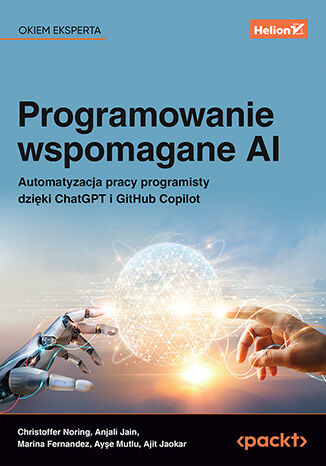
Programowanie wspomagane AI. Automatyzacja pracy programisty dzięki ChatGPT i GitHub Copilot
Christoffer Noring, Anjali Jain, Marina Fernandez, Ayşe...
Obecnie miliony użytkowników korzystają z dużych modeli językowych do generowania treści, analizy danych, pisania kodu i automatyzacji pracy. Narzędzia takie jak ChatGPT i GitHub Copilot pozwalają na zwiększenie efektywności i radzenie sobie ze skomplikowanymi wyzwaniami. Ułatwiają również tworzenie aplikacji na profesjonalnym poziomie. Ta książka jest przeznaczona dla programistów, którzy chcą używać AI do optymalizacji procesu tworzenia oprogramowania. Znalazły się tu praktyczne informacje dotyczące budowy interfejsu użytkownika, backendu, tworzenia i optymalizacji kodu. Opisano, jak pisać interfejsy Web API, refaktoryzować kod i zwiększać jego wydajność za pomocą Copilota. Omówiono ponadto sposoby formułowania podpowiedzi dla przetwarzania danych, inżynierii cech, doboru modeli, ich trenowania, strojenia hiperparametrów i oceny jakości uczenia maszynowego. Nie zabrakło również zaawansowanych technik pracy z Copilotem i agentami programowymi, a także omówienia zasad wywoływania narzędzi AI. W książce: budowa modeli uczenia maszynowego za pomocą GitHub Copilot i ChatGPT korzystanie z asystentów AI w całym cyklu tworzenia oprogramowania techniki inżynierii podpowiedzi w projektach data science tworzenie frontendu i backendu aplikacji internetowej za pomocą sztucznej inteligencji refaktoryzacja kodu i poprawa jego efektywności i czytelności optymalizacja przepływów pracy AI w programowaniu ― twórz szybciej i skuteczniej!
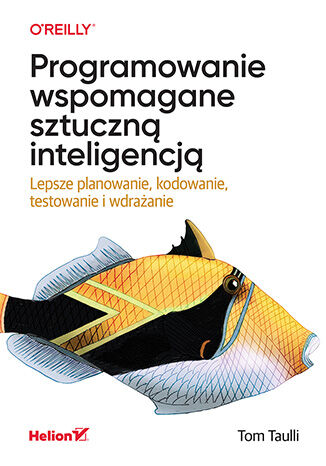
Programowanie wspomagane sztuczną inteligencją. Lepsze planowanie, kodowanie, testowanie i wdrażanie
Tom Taulli
To już się dzieje! Narzędzia oparte na sztucznej inteligencji wykonują monotonne zadania i zajmują się złożonymi szczegółami kodu. W tym czasie programista może się skupić na rozwiązywaniu problemów i innowacjach. AI w takim tandemie ogrywa rolę zaufanego pomocnika, wyręczającego człowieka w zawiłych lub nużących aspektach kodowania. Efekt? Imponujący wzrost produktywności! Ta praktyczna książka ułatwi Ci optymalne używanie narzędzi AI na wszystkich etapach tworzenia oprogramowania. Niezależnie od Twojego doświadczenia nauczysz się korzystać z szerokiej gamy rozwiązań: od dużych modeli językowych ogólnego przeznaczenia (ChatGPT, Gemini i Claude) po systemy przeznaczone do kodowania (GitHub Copilot, Tabnine, Cursor i Amazon CodeWhisperer). Poznasz również metodykę programowania modułowego, która efektywnie współgra z technikami pisania promptów do generowania kodu. W książce znajdziesz także najlepsze sposoby zastosowania uniwersalnych modeli LLM w nauce języka programowania, wyjaśnianiu kodu lub przekładaniu go na inny język programowania. Najciekawsze zagadnienia: możliwości narzędzi opartych na AI, przeznaczonych do tworzenia kodu zalety i wady popularnych systemów korzystanie z ogólnych modeli językowych podczas kodowania narzędzia oparte na AI w cyklu życia oprogramowania inżynieria promptów podczas tworzenia oprogramowania realizacja żmudnych zadań, takich jak pisanie wyrażeń regularnych Ta książka zaoszczędzi Ci wielu godzin prób i błędów! Jonathan Ellis, współzałożyciel firmy DataStax
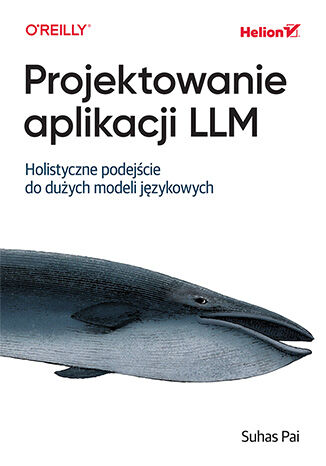
Projektowanie aplikacji LLM. Holistyczne podejście do dużych modeli językowych
Suhas Pai
Duże modele językowe przeniknęły do wielu dziedzin techniki uważa się je za skuteczne narzędzia do rozwiązywania szerokiej gamy problemów. Coraz więcej przedsiębiorstw korzysta z ich potencjału w celu własnego rozwoju. Jednak przekształcenie prototypów w funkcjonalne aplikacje bywa złożone i skomplikowane. To wyjątkowe opracowanie zawiera wszystkie ważne koncepcje w dziedzinie LLM! Madhav Singhal, CEO, AutoComputer W tej praktycznej książce opisano wszelkie niezbędne narzędzia, techniki i rozwiązania, których potrzebujesz do tworzenia użytecznych produktów wykorzystujących potęgę modeli językowych. Na początku zdobędziesz wiedzę o budowie modelu językowego. Następnie poznasz różne sposoby zastosowania modeli językowych, czy to poprzez bezpośrednie zapytania do modelu, czy też poprzez jego dostrajanie. Zrozumiesz ograniczenia LLM, takie jak halucynacje i problemy z rozumowaniem, a także dowiesz się, jak sobie z nimi poradzić. Znajdziesz tu również omówienie paradygmatów zastosowań, takich jak generowanie wspomagane wyszukiwaniem (RAG) czy agenty. Z tą książką: przygotujesz zbiory danych do treningu i dostrajania modeli zrozumiesz architekturę transformera zaadaptujesz wstępnie wytrenowane modele do własnych potrzeb poznasz skuteczne techniki optymalizacji i adaptacji dziedzinowej dowiesz się, jak integrować modele językowe z zewnętrznymi środowiskami i źródłami danych Gorąco polecam tę książkę! Megan Risdal, Kaggle (Google) To mistrzowski kurs budowania zaawansowanych systemów AI! Jay Alammar, autor książek
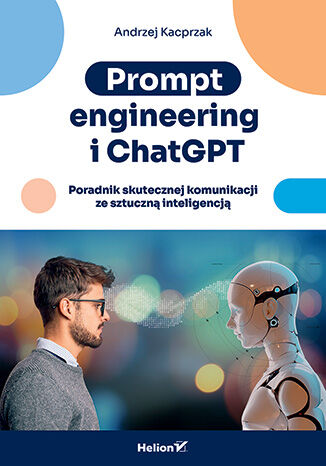
Prompt engineering i ChatGPT. Poradnik skutecznej komunikacji ze sztuczną inteligencją
Andrzej Kacprzak
Twój przewodnik po świecie prompt engineeringu Wszystkie znaki na niebie i ziemi wskazują wyraźnie: wkraczamy w erę, w której sztuczna inteligencja (SI) będzie wszechobecna. Wygra na tym ten, kto szybciej nauczy się z nią skutecznie porozumiewać. Nie czekaj zatem i już dziś opanuj sztukę tworzenia precyzyjnych i trafnych promptów, czyli instrukcji dla modeli językowych, takich jak ChatGPT. Autor z zapałem dzieli się swoją fascynacją sztuczną inteligencją i prezentuje praktyczne metody jej zastosowania w różnych obszarach. Korzystając z własnego doświadczenia inżynierskiego, w przystępny sposób wyjaśnia zasady prompt engineeringu, pozwalające optymalnie formułować "podpowiedzi" dla SI. Pracując z tym praktycznym przewodnikiem, nauczysz się między innymi: Efektywnie komunikować się z SI Budować prompty, które przynoszą oczekiwane rezultaty Korzystać z prostych, a także bardziej zaawansowanych strategii i technik prompt engineeringu Zaprzęgać ChatGPT do rozwiązywania problemów z różnych dziedzin życia zarówno prywatnego, jak i zawodowego Odkryj fascynujący świat sztucznej inteligencji i poznaj możliwości, jakie otwiera przed Tobą dobrze skonstruowany prompt.