
Sztuczna inteligencja
Prateek Joshi
Computer vision is found everywhere in modern technology. OpenCV for Python enables us to run computer vision algorithms in real time. With the advent of powerful machines, we are getting more processing power to work with. Using this technology, we can seamlessly integrate our computer vision applications into the cloud. Web developers can develop complex applications without having to reinvent the wheel.This book will walk you through all the building blocks needed to build amazing computer vision applications with ease. We start off with applying geometric transformations to images. We then discuss affine and projective transformations and see how we can use them to apply cool geometric effects to photos. We will then cover techniques used for object recognition, 3D reconstruction, stereo imaging, and other computer vision applications.This book will also provide clear examples written in Python to build OpenCV applications. The book starts off with simple beginner’s level tasks such as basic processing and handling images, image mapping, and detecting images. It also covers popular OpenCV libraries with the help of examples.The book is a practical tutorial that covers various examples at different levels, teaching you about the different functions of OpenCV and their actual implementation.
Ajeet Singh Raina, Harsh Manvar
Modern AI systems don’t fail at modeling; they fail in production. Moving from experiments to reliable, scalable systems requires more than notebooks and scripts. It requires infrastructure.Operational AI with Docker shows you how to build, deploy, and operate AI systems that work beyond a single machine. You’ll learn how to use Docker as a consistent runtime for machine learning workflows, package models as reproducible artifacts, and run them reliably across environments.Starting with containerized machine learning, you’ll progress to model serving, AI deployment, and scalable infrastructure using Kubernetes. You’ll implement production-ready patterns for resource management, autoscaling, observability, and performance tuning, ensuring your AI workloads remain stable under real-world conditions.The book goes beyond traditional MLOps by introducing agentic AI systems, including autonomous agents, multi-agent architectures, and secure execution environments. You’ll also explore modern integration patterns using the Model Context Protocol (MCP), enabling AI systems to interact safely with tools, APIs, and data sources.By the end of this book, you’ll be able to design and operate production AI systems that are reproducible, scalable, and ready for real-world deployment using Docker and Kubernetes.
Justyna Żywiołek
Monografia rozwija nowatorskie spojrzenie na bezpieczeństwo organizacyjne, proponując podejście integrujące technologię, prawo, zarządzanie i wiedzę użytkowników. Jest to podejście, które wpisuje się w interdyscyplinarny charakter nauk o bezpieczeństwie i jednocześnie odpowiada na bieżące potrzeby sektora przemysłowego. W monografii nie tylko dokonano analizy zagrożeń i regulacji, ale przede wszystkim wskazano, jak organizacje mogą budować modele odporności adekwatne do wyzwań XXI wieku. Kolejne części monografii przybliżają, jak ewolucja przemysłu wpływa na charakter zagrożeń, w jaki sposób systemy AI generują nowe podatności, jaką rolę odgrywa świadomość społeczna oraz jak budować odporność organizacyjną w erze systemów autonomicznych. W rozdziale pierwszym czytelnik zostanie wprowadzony w zjawisko przemysłowej transformacji oraz genezę cyberzagrożeń 6.0, w rozdziale drugim przedstawiono technologiczne aspekty zagrożeń, w rozdziale trzecim skupiono się na świadomości społecznej, w rozdziale czwartym na modelach przeciwdziałania zagrożeniom, natomiast w rozdziale piątym ukazano scenariusze przyszłości i kierunki rozwoju bezpieczeństwa w przemyśle w perspektywie Industry 6.0. Taka struktura monografii umożliwia całościowe, wielowymiarowe spojrzenie na zagadnienie bezpieczeństwa w erze sztucznej inteligencji. Monografia stanowi oryginalny i samodzielny wkład w rozwój dyscypliny nauk o bezpieczeństwie, zarówno w wymiarze teoretycznym, jak i metodologicznym oraz aplikacyjnym. Jej nowatorstwo polega na całościowym i systemowym ujęciu bezpieczeństwa informacyjnego w organizacjach przemysłowych funkcjonujących w warunkach transformacji określanej mianem Przemysłu 6.0, z uwzględnieniem roli sztucznej inteligencji jako czynnika generującego jakościowo nowe kategorie zagrożeń oraz znaczenia świadomości społecznej jako kluczowej determinanty skuteczności systemów bezpieczeństwa. Wprowadzenie pojęcia "cyberzagrożenia 6.0", połączenie perspektywy technologicznej i społecznej oraz spójne osadzenie rozważań w paradygmacie bezpieczeństwa sprawiają, że opracowanie ma charakter wartościowy i inspirujący. Jego znaczenie wykracza poza aktualny stan badań, tworząc solidne podstawy do dalszego rozwoju tej problematyki. W dotychczasowych analizach brakuje ujęć, które traktowałyby bezpieczeństwo organizacyjne jako zjawisko socjotechniczne, wynikające z interakcji pomiędzy technologią, strukturą organizacyjną i człowiekiem jako podmiotem interpretującym informacje i podejmującym decyzje. Niniejsza monografia wypełnia tę lukę, przesuwając punkt ciężkości analizy z samej infrastruktury technicznej na mechanizmy poznawcze, kulturowe i organizacyjne, które w praktyce decydują o odporności organizacji na zagrożenia generowane przez systemy sztucznej inteligencji.
Doug Bierer, Rainier Sarabia
PHP 8 introduces powerful features like JIT compilation, Fibers, union types, and attributes, but many developers struggle to use them effectively in real-world projects. This book solves that problem by combining PHP 8 with Generative AI to help you build faster, smarter, and more reliable applications.Through practical, hands-on recipes, you’ll learn how to use AI to generate clean OOP code, design scalable architectures, and automate repetitive development tasks. You’ll optimize performance using OPcache, JIT, and async programming while also implementing robust security practices and modern design patterns.The book goes beyond basics, covering real-world use cases such as building REST APIs, microservices, WebSocket-based applications, and database-driven systems. You’ll also learn how to modernize legacy PHP applications, improve code quality with AI-assisted testing, and apply test-driven development workflows.By the end, you’ll be able to confidently use AI alongside PHP 8 to build secure, high-performance, and production-ready web applications.
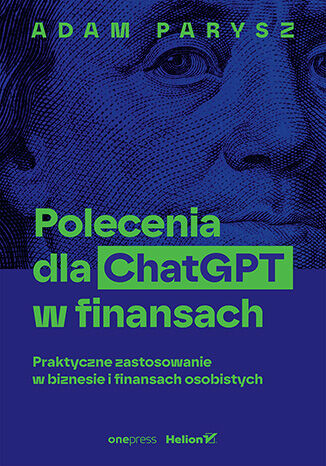
Polecenia dla ChatGPT w finansach: praktyczne zastosowanie w biznesie i finansach osobistych
Adam Parysz
Czy kiedykolwiek zastanawiało Cię, jak sztuczna inteligencja może zrewolucjonizować zarządzanie finansami? Jeśli nie, to może warto się nad tym zastanowić? Zwłaszcza w kontekście możliwości, jakie stwarza ChatGPT, jedno z kluczowych narzędzi transformacji technologicznej. Model opracowany przez OpenAI może być używany do planowania budżetu, oszczędzania, raportowania danych czy nawet doradztwa inwestycyjnego. Dzięki zaawansowanym algorytmom AI może analizować wszelkie dane finansowe i sugerować optymalne strategie inwestycyjne, co pozwala na efektywniejsze zarządzanie finansami osobistymi. Książka Polecenia dla ChatGPT w finansach. Praktyczne zastosowanie w biznesie i finansach osobistych pokazuje możliwości, jakie daje współpraca z tym narzędziem. To praktyczny przewodnik skierowany do osób, które na co dzień korzystają z AI w instytucjach finansowych, ale także tych, które dopiero rozpoczynają przygodę z tą technologią. Również szefowie organizacji znajdą tu inspiracje do zastosowania narzędzia w codziennej pracy ― odkryją jego potencjał w zarządzaniu nie tylko finansami, ale i procesami biznesowymi. Przekonaj się, że ChatGPT może się stać Twoim najlepszym wirtualnym asystentem ― który w dodatku nic nie kosztuje! W książce: Cel i zakres zastosowania ChatGPT w finansach: Wprowadzenie do OpenAI, rozwój ChatGPT oraz jego kluczowe cechy) Zastosowanie ChatGPT w finansach osobistych (planowanie budżetu, oszczędzanie, zarządzanie długiem, doradztwo inwestycyjne) Automatyzacja obsługi klienta i personalizacja usług (najlepsze praktyki, skrypty dialogów z klientami) Automatyzacja analizy i raportowania danych finansowych (przegląd narzędzi i metodologii) Automatyzacja procesów wewnętrznych (zarządzanie dokumentacją, audyt) Automatyzacja zarządzania ryzykiem (przykłady poleceń dotyczących identyfikacji i reagowania na sygnały ryzyka)
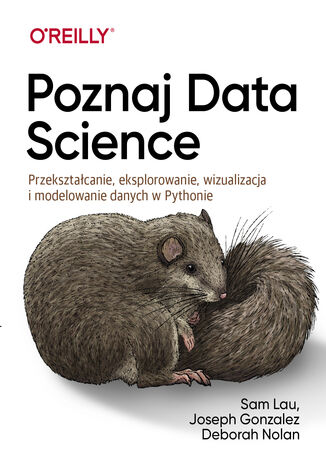
Poznaj Data Science. Przekształcanie, eksplorowanie, wizualizacja i modelowanie danych w Pythonie
Deborah Nolan, Joseph Gonzalez, Sam Lau
Jako ambitny Data Scientist, czyli danetyk, rozumiesz, dlaczego organizacje polegają na danych przy podejmowaniu ważnych decyzji - czy chodzi o firmy projektujące witryny internetowe, władze miasta decydujące o sposobie poprawy usług, czy naukowców pracujących nad zatrzymaniem rozprzestrzeniania się choroby. Chcesz nabyć umiejętności wyciągania praktycznych wniosków z nieuporządkowanego mnóstwa danych. Nazywamy to danetycznym cyklem życia: proces zbierania, przekształcania, analizowania danych i wyciągania z nich wniosków. Poznaj Data Science to pierwsza książka przedstawiająca fundamentalne umiejętności dotyczące zarówno programowania, jak i statystyki, które są potrzebne w całym cyklu życia. Jest skierowana do osób, które chcą zostać danetykami lub z nimi współpracują, a także analityków danych, którzy chcą przekroczyć podział na "techniczne/nietechniczne". Jeśli znasz podstawy programowania w Pythonie, nauczysz się pracować z danymi przy użyciu standardowych w branży narzędzi, takich jak pandas. - Sprecyzuj pytanie, aby pozwalało na badanie interesującej kwestii przy użyciu danych - Zgromadź dane, co może obejmować przetwarzanie tekstu, ekstrakcję danych internetowych itp. - Zyskaj wartościowe spostrzeżenia, dzięki oczyszczaniu, eksplorowaniu i wizualizacji danych - Poznaj sposoby modelowania służące do opisu danych - Dokonaj uogólnień wykraczających poza dane "Żałuję, że nie mieliśmy tej książki, gdy pierwszy raz wymyślaliśmy określenie Data Scientist na nasz zawód. Warto zacząć od niej zajmowanie się analizą/inżynierią danych, sztuczną inteligencją lub uczeniem maszynowym". -DJ Patil, PhD pierwszy US Chief Data Scientist Sam Lau jest asystentem w Halıcıoğlu Data Science Institute na uniwersytecie UC San Diego. Sam ma dziesięć lat doświadczenia w nauczaniu. Ułożył program przedmiotu Data Science i nauczał go na wzorcowych kursach na uniwersytetach UC Berkeley i UC San Diego. Joey Gonzalez jest adiunktem na wydziale EECS na uniwersytecie UC Berkeley, członkiem grupy badawczej Berkeley AI Research oraz członkiem założycielem organizacji Berkeley RISE Lab. Jest także współzałożycielem firm Turi Inc. i Aqueduct, które tworzą narzędzia dla osób zajmujących się Data Science. Deborah Nolan jest profesorem emerita statystyki i prodziekanem ds. studentów w College of Computing, Data Science, and Society na uniwersytecie UC Berkeley.
Salil Ajgaonkar
With the huge amount of data being generated over the internet and the benefits that Machine Learning (ML) predictions bring to businesses, ML implementation has become a low-hanging fruit that everyone is striving for. The complex mathematics behind it, however, can be discouraging for a lot of users. This is where H2O comes in – it automates various repetitive steps, and this encapsulation helps developers focus on results rather than handling complexities.You’ll begin by understanding how H2O’s AutoML simplifies the implementation of ML by providing a simple, easy-to-use interface to train and use ML models. Next, you’ll see how AutoML automates the entire process of training multiple models, optimizing their hyperparameters, as well as explaining their performance. As you advance, you’ll find out how to leverage a Plain Old Java Object (POJO) and Model Object, Optimized (MOJO) to deploy your models to production. Throughout this book, you’ll take a hands-on approach to implementation using H2O that’ll enable you to set up your ML systems in no time.By the end of this H2O book, you’ll be able to train and use your ML models using H2O AutoML, right from experimentation all the way to production without a single need to understand complex statistics or data science.
Lars Malmqvist
Agentforce is Salesforce’s next-generation framework for building autonomous AI agents that act intelligently on behalf of users. This book is your practical guide to leveraging Agentforce to create enterprise-grade agents that reason, plan, and execute across clouds.You'll begin by mastering core concepts, agent types, the Atlas Reasoning Engine, and the Einstein Trust Layer, before setting up your development environment and using Agent Builder to create your first agents. A full case study walks you through building a production-grade room booking agent, preparing you for more advanced implementations.In later chapters, you'll extend agents with Flow and Apex, build real-time intelligence using Data Cloud and semantic search, and secure your implementations. You'll then adopt DevOps practices to manage deployments, use the Command Center for performance insights, and integrate Agentforce across your enterprise landscape using MuleSoft and external services. By the end, you’ll design and run robust Agentforce solutions that automate complex workflows and deliver measurable business value.*Email sign-up and proof of purchase required