
Programowanie
Niezależnie czy dopiero rozpoczynacie swoją przygodę z programowaniem, czy jesteście już uznanymi na rynku profesjonalistami, to w kategorii Programowanie na pewno znajdziecie podręczniki, które pomogą Wam w przebiegu pracy, czy też w nauce podstaw programowania.
W książkach z tego działu zawarta jest wiedza zarówno związana z czysto technicznymi sprawami typu składnia języków, ale także z umiejętnościami bardziej "miękkimi" jak obsługa i wykorzystanie pełnych możliwości środowisk programistycznych, czy też projektowanie oprogramowania lub metody numeryczne czy oraz struktury danych.
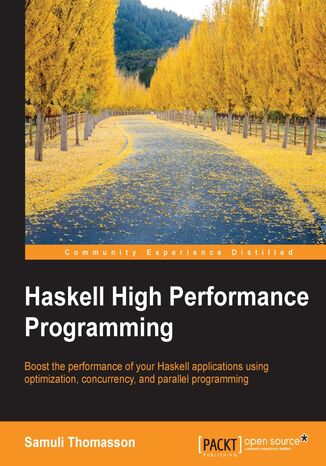
Samuli Thomasson
Haskell, with its power to optimize the code and its high performance, is a natural candidate for high performance programming. It is especially well suited to stacking abstractions high with a relatively low performance cost. This book addresses the challenges of writing efficient code with lazy evaluation and techniques often used to optimize the performance of Haskell programs. We open with an in-depth look at the evaluation of Haskell expressions and discuss optimization and benchmarking. You will learn to use parallelism and we'll explore the concept of streaming. We’ll demonstrate the benefits of running multithreaded and concurrent applications. Next we’ll guide you through various profiling tools that will help you identify performance issues in your program. We’ll end our journey by looking at GPGPU, Cloud and Functional Reactive Programming in Haskell. At the very end there is a catalogue of robust library recommendations with code samples.By the end of the book, you will be able to boost the performance of any app and prepare it to stand up to real-world punishment.
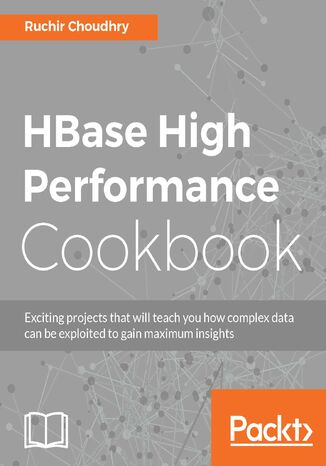
HBase High Performance Cookbook. Solutions for optimization, scaling and performance tuning
Ruchir Choudhry
Apache HBase is a non-relational NoSQL database management system that runs on top of HDFS. It is an open source, disturbed, versioned, column-oriented store and is written in Java to provide random real-time access to big Data.We’ll start off by ensuring you have a solid understanding the basics of HBase, followed by giving you a thorough explanation of architecting a HBase cluster as per our project specifications. Next, we will explore the scalable structure of tables and we will be able to communicate with the HBase client. After this, we’ll show you the intricacies of MapReduce and the art of performance tuning with HBase. Following this, we’ll explain the concepts pertaining to scaling with HBase. Finally, you will get an understanding of how to integrate HBase with other tools such as ElasticSearch. By the end of this book, you will have learned enough to exploit HBase for boost system performance.
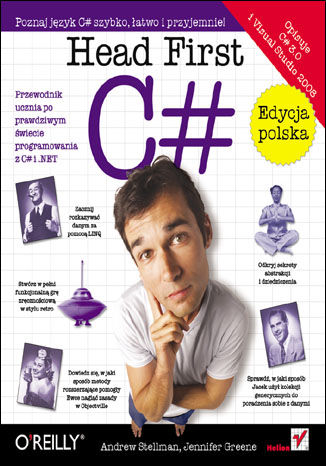
Andrew Stellman, Jennifer Greene
Język programowania C# został zaprojektowany specjalnie dla firmy Microsoft. C# czerpie najlepsze wzorce z języka Java oraz C++. Aktualnie dostępna wersja 3.0 zawiera takie elementy jak automatyczne oczyszczanie pamięci, typy ogólne, dynamiczne tworzenie kodu i wiele innych. Język C# zawiera bogatą bibliotekę klas pozwalających na tworzenie i rozwijanie aplikacji okienkowych, bazodanowych, a także dynamicznych aplikacji internetowych. Rozwiązanie to zdobyło już swoją pozycję na rynku języków programowania, a narzędzia dla programistów dostarczane przez firmę Microsoft sprawiają, że pozycja ta wydaje się niezagrożona. W książce "Head First C#. Edycja polska" autorzy, jak zwykle w charakterystyczny dla tej serii -- niekonwencjonalny, a przy tym niezwykle skuteczny sposób, nauczą Cię niezbędnych podstaw C#. Lektura tej książki pozwoli Ci na swobodne poruszanie się wśród takich zagadnień jak wykorzystanie interfejsów czy też dziedziczenie. Dowiesz się, w jaki sposób obsługiwać wyjątki oraz zapisywać dane do pliku, aby potem je z niego odczytać. Nauczysz się korzystać z języka LINQ, a także odbędziesz krótki kurs korzystania z Visual Studio. Sposób, w jaki została napisana ta książka, gwarantuje, że szybko i z łatwością opanujesz język C#! Podstawy C# Typy danych wykorzystywane w C# Wykorzystanie interfejsów oraz klas abstrakcyjnych Zastosowanie typów wyliczeniowych i kolekcji Sposób wykorzystania plików do przechowywania danych Wykorzystanie zdarzeń i delegacji Zastosowania języka LINQ Visual Studio -- sposób na wydajniejsze tworzenie aplikacji Poznaj język C# szybko, łatwo i przyjemnie!
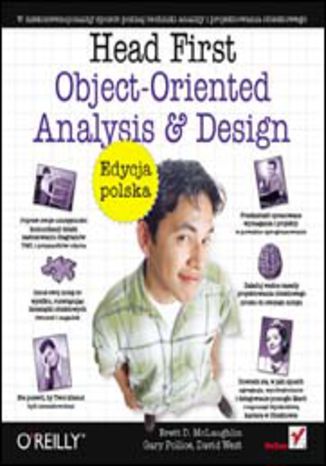
Head First Object-Oriented Analysis and Design. Edycja polska (Rusz głową!)
Brett D. McLaughlin, Gary Pollice, David West
Poznaj techniki analizy i projektowania obiektowego Naucz się zbierać wymagania od użytkowników systemu Zarządzaj zmianami w specyfikacji Przeprowadź analizę i wykonaj projekt Systemy informatyczne stają się coraz bardziej rozbudowane. Programowanie obiektowe znacznie ułatwia ich tworzenie i późniejsze modyfikacje, aby jednak system był sprawny i funkcjonalny, musi zostać zaprojektowany w oparciu o prawidłowo zebrane wymagania. Tu również z pomocą przychodzi metodologia obiektowa -- wzorce projektowe, język UML i odpowiednie narzędzia niezwykle ułatwiają przygotowanie dobrego projektu. Jeśli rozbudowane przykłady, skomplikowane diagramy i niezrozumiałe wywody teoretyczne wywołują w Tobie niechęć, koniecznie sięgnij po tę książkę! Dzięki niej poznasz metody analizy i projektowania obiektowego w nietypowy i ciekawy sposób, wykorzystujący najnowsze teorie skutecznego przekazywania wiedzy. Przeczytasz o tym, w jaki sposób warto gromadzić wymagania i oczekiwania użytkowników wobec projektowanego systemu, jak uwzględniać w projekcie postulowane zmiany i przeprowadzać proces analizy obiektowej. Nauczysz się stosować notację UML do przedstawiania struktury systemu i przetwarzanych przez niego danych. Dowiesz się także, jak testować projektowany system. Zasady i cele projektowania obiektowego Gromadzenie wymagań Przypadki użycia Analiza obiektowa Diagramy UML przedstawiające strukturę systemu Korzystanie ze wzorców projektowych Projektowanie architektury systemu Testowanie

Head First Ruby on Rails. Edycja polska
David Griffiths
Bez wysiłku poznaj niesamowite możliwości Ruby on Rails i twórz wspaniałe aplikacje Jeśli chcesz szybko i sprawnie budować internetowe aplikacje bazodanowe, warto, abyś poznał niezwykłe możliwości Rails. Ta wyjątkowa platforma programowania pozwala tworzyć w pełni funkcjonalne aplikacje z wykorzystaniem języka Ruby. Jej wielką zaletą jest to, że wszystkie zmiany wprowadzane do aplikacji można zobaczyć natychmiast po ich zapisaniu i odświeżeniu strony w przeglądarce. Dzieje się tak dzięki zastosowaniu języka Ruby, ponieważ kod w tym języku nie musi być kompilowany. Książkę "Head First Ruby on Rails. Edycja polska" napisano w oparciu o najnowsze, skuteczne techniki ułatwiające zrozumienie i przyswajanie wiedzy. Dzięki temu szybko i bez trudności nauczysz się tworzyć interaktywne aplikacje internetowe za pomocą tej platformy. Dowiesz się, na czym polega współpraca z bazą danych, integracja z Ajaksem i XML oraz dynamiczne wykreślanie danych. Ponieważ to obrazy najlepiej przemawiają do Twojego umysłu, książka ta została bogato zilustrowana — abyś jak najszybciej poznał możliwości Rails i natychmiast zaczął wykorzystywać je w praktyce. Język Ruby Tworzenie tabel Wykonywanie migracji bazy danych Kod modelu, widoku i kontrolera Tworzenie formularza Sprawdzanie poprawności danych Zapobieganie błędom Dołączanie bibliotek Ajaksa Udostępnianie aplikacji użytkownikom Wykorzystaj najnowsze metody uczenia się i szybko opanuj Ruby on Rails!
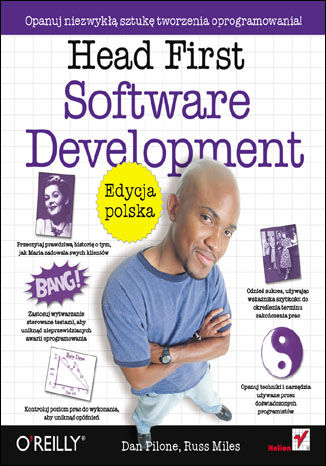
Head First Software Development. Edycja polska
Dan Pilone, Russ Miles
Opanuj niezwykłą sztukę wytwarzania oprogramowania! W jaki sposób zadowolić klienta? Jak wygląda proces wytwarzania oprogramowania? Jakie pułapki czekają na Ciebie? Proces wytwarzania oprogramowania -- już sam opis sugeruje trudności. I rzeczywiście -- jest to proces niezwykle złożony. Od samego początku trafiamy na kwestie takie, jak analiza potrzeb klienta i zebranie jego wymagań. Z każdym krokiem wszystko komplikuje się jeszcze bardziej... Konieczna jest implementacja poszczególnych wymagań klienta, testowanie tych rozwiązań, korekta znalezionych błędów. Na to wszystko nakłada się jeszcze konieczność tworzenia różnych wersji rozwiązań i zmienny nastrój klienta. Jak sobie z tym wszystkim poradzić? Jak bezboleśnie i skutecznie przejść przez cały ten proces? Tylko bez obaw! Oto podręcznik, który dzięki innowacyjnym metodom przekazywania wiedzy sprawi, że szybko zrozumiesz proces wytwarzania oprogramowania i nauczysz się gładko podążać jego wyboistą ścieżką. Autorzy książki "Head First Software Development. Edycja polska" -- Dan i Russ -- pokażą Ci, w jaki sposób zadowolić klienta i zebrać od niego wymagania oraz określić jego potrzeby. Dowiesz się, jak zapanować nad poszczególnymi wersjami Twojego projektu. Nauczysz się prowadzić testy i usuwać błędy. Zdobędziesz informacje dotyczące wytwarzania oprogramowania sterowanego testami, a na koniec zobaczysz, jak taki proces wygląda w rzeczywistości. Wszystkie te informacje przedstawione zostały na licznych ilustracjach, co wydatnie ułatwia przyswajanie wiedzy, dodatkowo przekazanej przystępnym i pełnym humoru językiem. Po lekturze tego podręcznika nawet laik będzie w stanie zarządzać takim procesem! Zbieranie wymagań Planowanie projektu Kontrola wersji Wytwarzanie sterowane testami Testy integracyjne Usuwanie błędów Tworzenie oprogramowania? Nic prostszego!!!
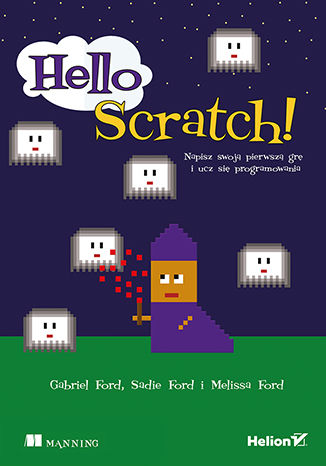
Hello Scratch! Napisz swoją pierwszą grę i ucz się programowania
Melissa Ford, Sadie Ford, Gabriel Ford
Programowanie i gry komputerowe mają ze sobą wiele wspólnego. Są interesujące, wciągające oraz dają mnóstwo radości i satysfakcji. A przede wszystkim są znakomitą zabawą dla każdego bystrego dzieciaka, nawet jeśli ten dzieciak ma osiem lat i dopiero co opanował sztukę czytania. Naturalnie, dla tak młodych adeptów sztuki kodowania potrzebne jest specjalne środowisko, właśnie takie jak Scratch - język programowania dla dzieci stworzony przez MIT i udostępniony na zasadach open source. To świetny sposób na naukę programistycznego myślenia bez konieczności wnikania w złożoność standardowego programowania. Ta książka jest doskonałym przewodnikiem po świecie Scratcha. Jej autorami są dwunastoletnie bliźnięta, które w przyjazny sposób pokazały, jak napisać pięć wciągających gier. To znakomity sposób na pierwsze kroki w świecie programowania! W książce opisano, jak rozpocząć pracę ze Scratchem i jak wygląda jego przestrzeń robocza oraz edytor grafiki. Przystępnie przedstawiono podstawowe idee programowania. Omówiono krok po kroku tworzenie zabawnych gier w stylu retro. Starannie dobrane projekty zachęcają do prowadzenia samodzielnych poszukiwań, eksperymentów i modyfikacji. Przy tym wszystkim książka jest znakomitą pomocą zarówno do samodzielnych ćwiczeń, jak i do wspólnej pracy z rodzicami, dla których może stać się pretekstem do wspomnień o grach sprzed lat. Książka jest przeznaczona dla dzieci w wieku 8 - 14 lat i zawiera: Wprowadzenie do Scratcha Przedstawienie podstawowych idei programistycznych Zasady tworzenia elementów graficznych (pixel art) i skryptów Wyczerpująco opisane projekty mniejszych i większych programów Instrukcje budowania wciągających gier retro Dziecinajlepiej wiedzą, jak nauczyć dzieci programowania!
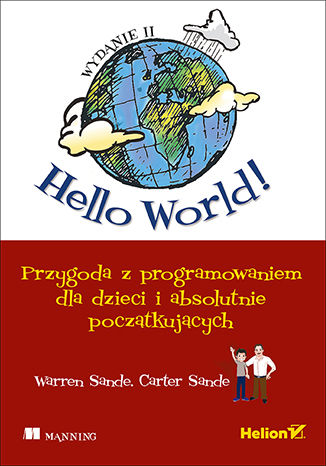
Hello World! Przygoda z programowaniem dla dzieci i absolutnie początkujących. Wydanie II
Warren Sande, Carter Sande
Nauka programowania to świetny pomysł, ale musimy Cię ostrzec: programowanie wciąga! Jeśli nauczysz się porozumiewać z komputerem w jego języku, szybko zorientujesz się, że napisanie własnej gry, skryptu do złożonych obliczeń czy funkcjonalnej aplikacji do codziennego użytku daje wielką satysfakcję i sprawia mnóstwo radości. Co więcej, programowania można nauczyć się niemal w każdym wieku. Wystarczy odrobina cierpliwości i konsekwencji! Trzymasz w ręce chyba najlepszy podręcznik do nauki programowania dla osób absolutnie początkujących — nawet takich, które komputera używają wyłącznie do przeglądania stron i obsługi poczty. W sposób szczególny nadaje się on dla dzieci, ale skorzystają z niego również dorośli, którzy chcą poznać podstawy programowania. Jasno i klarownie przedstawiono tu wszystkie niezbędne informacje, a liczne (bardzo zabawne) przykłady pozwalają na głębsze zrozumienie prezentowanych treści. Nauka odbywa się w języku Python. Jest to język łatwy w nauce, a przy tym bardzo popularny i wciąż rozwijany. Co więcej, przyswojenie sobie Pythona pozwala na szybką naukę innych języków! W tym podręczniku znajdziesz informacje m.in. o tym: jak przygotować się do pracy: zainstalować Pythona i napisać pierwsze linie kodu czym są i do czego służą zmienne, typy danych, operatory czym jest GUI i jak go napisać jakie są rodzaje pętli, co to są funkcje i na czym polega obsługa zdarzeń jak przygotować symulacje komputerowe Witaj w niezwykłym świecie programowania! Warren Sande — jest inżynierem systemów elektronicznych. Na co dzień korzysta z Pythona zarówno do nauczania programowania, jak i do pisania w pełni profesjonalnych skryptów. Carter Sande — jest uczniem o wielkiej pasji do technologii. Troszczy się o szkolną sieć informatyczną, chętnie pomaga kolegom w rozwiązywaniu problemów z komputerami, a ponadto uwielbia jeździć na rowerze i grać w stare gry wideo.
Anubhav Hanjura
An easy-to-follow, hands-on guide that clearly explains the various components of the Heroku platform and provides step-by-step guidance as well as numerous examples on how to build and troubleshoot robust and scalable production-ready web applications on the Heroku platform. This book is intended for those who want to learn Heroku the right way. Perhaps you are new to Heroku or are someone who has heard about Heroku but have not built anything significant with it. You should have knowledge or familiarity with cloud computing and basic knowledge of database and network deployment.
Mike Coutermarsh
Heroku is a Platform as a Service that enables developers to rapidly deploy and scale their web applications. Heroku is designed for developer happiness, freeing developers from doing system administrative tasks such as configuring servers and setting up load balancers. Developers are able to focus on what they do best, building web applications, while leaving the details of deployment and scaling to the experts at Heroku.This practical guide is packed with step-by-step solutions to problems faced by every production-level web application hosted on Heroku. You'll quickly get comfortable with managing your Heroku applications from the command line and then learn everything you need to know to deploy and administer production-level web applications.
Hibernate Search. Skuteczne wyszukiwanie
Steve Perkins
Użytkownicy aplikacji prawdopodobnie najczęściej korzystają z funkcji wyszukiwania. Ze strony interfejsu użytkownika problem wydaje się trywialny. Zupełnie inne zdanie na ten temat mają programiści. Przygotowanie wydajnego, intuicyjnego i szybkiego mechanizmu wyszukiwania stanowi ogromne wyzwanie. Liczne kryteria, wyszukiwanie tekstu, zależności i połączenia logiczne to tylko część zagadnień, które trzeba opracować. Na szczęście z pomocą przychodzi narzędzie Hibernate Search. Jest to dodatek dla popularnej w świecie Javy i nie tylko biblioteki Hibernate. Dzięki Hibernate Search wprowadzenie rozbudowanych mechanizmów wyszukiwania w Twojej aplikacji będzie całkowicie bezbolesne. W trakcie lektury tej książki dowiesz się, jak zamapować encję, jak budować zapytania oraz zarządzać indeksami. Ponadto poznasz zaawansowane strategie poprawy wydajności oraz pełnię możliwości zapytań. Książka ta jest doskonałym podręcznikiem dla wszystkich programistów języka Java, mających za zadanie wprowadzenie do aplikacji rozbudowanych mechanizmów wyszukujących. Hibernate Search to dla nich prawdziwe koło ratunkowe! Dzięki tej książce: - poznasz możliwości biblioteki Hibernate Search - opanujesz najlepsze strategie zarządzania indeksami - błyskawicznie zbudujesz zapytanie - zachwycisz użytkowników Twojej aplikacji rozbudowaną wyszukiwarką Błyskawicznie zaprojektuj rozbudowany mechanizm wyszukiwania dzięki Hibernate Search!
Dr. Edward Lavieri Jr.
Building high performance into your applications is key to creating an optimal user experience, although it is not the only consideration for the performant nature of your apps. High performance applications can lead to cost-effective resource utilization, especially when scalability and cloud computing are involved. They can also provide highly reliable systems that are easier to maintain.High Performance with Java begins by helping you explore the Java Virtual Machine (JVM) and understand how to push it to its limits to further optimize your programs. You’ll take a hands-on approach to go through memory optimization strategies, input/output operations, concurrency, networking, as well as frameworks and libraries focused on performance. You’ll also learn key strategies and best practices by using industry-relevant examples to architect scalable and resource-efficient applications. The concluding chapters provide valuable insights on optimizing your Java code when interacting with databases and show you how to leverage artificial intelligence (AI) for high performance Java applications.By the end of this book, you’ll grasp the importance of developing high performance Java applications and gain practical experience in implementing key strategies to help ensure your Java applications perform optimally.
High Performance with MongoDB. Best practices for performance tuning, scaling, and architecture
Asya Kamsky, Ger Hartnett, Alex Bevilacqua, MongoDB...
With data as the new competitive edge, performance has become the need of the hour. As applications handle exponentially growing data and user demand for speed and reliability rises, three industry experts distill their decades of experience to offer you guidance on designing, building, and operating databases that deliver fast, scalable, and resilient experiences.MongoDB’s document model and distributed architecture provide powerful tools for modern applications, but unlocking their full potential requires a deep understanding of architecture, operational patterns, and tuning best practices. This MongoDB book takes a hands-on approach to diagnosing common performance issues and applying proven optimization strategies from schema design and indexing to storage engine tuning and resource management.Whether you’re optimizing a single replica set or scaling a sharded cluster, this book provides the tools to maximize deployment performance. Its modular chapters let you explore query optimization, connection management, and monitoring or follow a complete learning path to build a rock-solid performance foundation. With real-world case studies, code examples, and proven best practices, you’ll be ready to troubleshoot bottlenecks, scale efficiently, and keep MongoDB running at peak performance in even the most demanding production environments.
Jason Alls
Writing high-performance code while building an application is crucial, and over the years, Microsoft has focused on delivering various performance-related improvements within the .NET ecosystem. This book will help you understand the aspects involved in designing responsive, resilient, and high-performance applications with the new version of C# and .NET.You will start by understanding the foundation of high-performance code and the latest performance-related improvements in C# 10.0 and .NET 6. Next, you’ll learn how to use tracing and diagnostics to track down performance issues and the cause of memory leaks. The chapters that follow then show you how to enhance the performance of your networked applications and various ways to improve directory tasks, file tasks, and more. Later, you’ll go on to improve data querying performance and write responsive user interfaces. You’ll also discover how you can use cloud providers such as Microsoft Azure to build scalable distributed solutions. Finally, you’ll explore various ways to process code synchronously, asynchronously, and in parallel to reduce the time it takes to process a series of tasks.By the end of this C# programming book, you’ll have the confidence you need to build highly resilient, high-performance applications that meet your customer's demands.
Doron Feinstein
3D graphics are becoming increasingly more realistic and sophisticated as the power of modern hardware improves. The High Level Shader Language (HLSL) allows you to harness the power of shaders within DirectX 11, so that you can push the boundaries of 3D rendering like never before.HLSL Development Cookbook will provide you with a series of essential recipes to help you make the most out of different rendering techniques used within games and simulations using the DirectX 11 API.This book is specifically designed to help build your understanding via practical example. This essential Cookbook has coverage ranging from industry-standard lighting techniques to more specialist post-processing implementations such as bloom and tone mapping. Explained in a clear yet concise manner, each recipe is also accompanied by superb examples with full documentation so that you can harness the power of HLSL for your own individual requirements.

HoloLens Beginner's Guide. Join the AR revolution with HoloLens
Jason M. Odom
HoloLens revolutionizes the way we work and interact with the virtual world. HoloLens brings you the amazing world of augmented reality and provides an opportunity to explore it like never before. This is the best book for developers who want to start creating interactive and intuitive augmented reality apps for the HoloLens platform.You will start with a walkthrough of the HoloLens hardware before creating your first app. Next you will be introduced to the various HoloLens sensors and find out how to program them efficiently so that they can interact with the real world seamlessly. Moving on, you will learn how to create smart animations and add video overlay that implements real-time tracking and motion-sensing abilities to your HoloLens app. Finally, you will learn how to test your app effectively.