
Programowanie
Niezależnie czy dopiero rozpoczynacie swoją przygodę z programowaniem, czy jesteście już uznanymi na rynku profesjonalistami, to w kategorii Programowanie na pewno znajdziecie podręczniki, które pomogą Wam w przebiegu pracy, czy też w nauce podstaw programowania.
W książkach z tego działu zawarta jest wiedza zarówno związana z czysto technicznymi sprawami typu składnia języków, ale także z umiejętnościami bardziej "miękkimi" jak obsługa i wykorzystanie pełnych możliwości środowisk programistycznych, czy też projektowanie oprogramowania lub metody numeryczne czy oraz struktury danych.
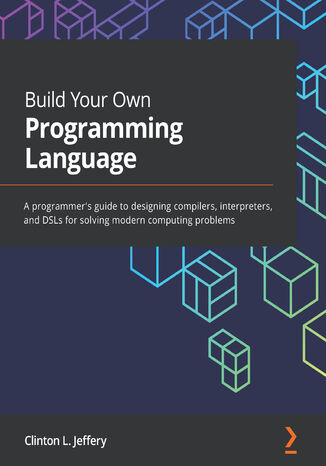
Clinton L. Jeffery
The need for different types of computer languages is growing rapidly and developers prefer creating domain-specific languages for solving specific application domain problems. Building your own programming language has its advantages. It can be your antidote to the ever-increasing size and complexity of software.In this book, you’ll start with implementing the frontend of a compiler for your language, including a lexical analyzer and parser. The book covers a series of traversals of syntax trees, culminating with code generation for a bytecode virtual machine. Moving ahead, you’ll learn how domain-specific language features are often best represented by operators and functions that are built into the language, rather than library functions. We’ll conclude with how to implement garbage collection, including reference counting and mark-and-sweep garbage collection. Throughout the book, Dr. Jeffery weaves in his experience of building the Unicon programming language to give better context to the concepts where relevant examples are provided in both Unicon and Java so that you can follow the code of your choice of either a very high-level language with advanced features, or a mainstream language.By the end of this book, you’ll be able to build and deploy your own domain-specific languages, capable of compiling and running programs.
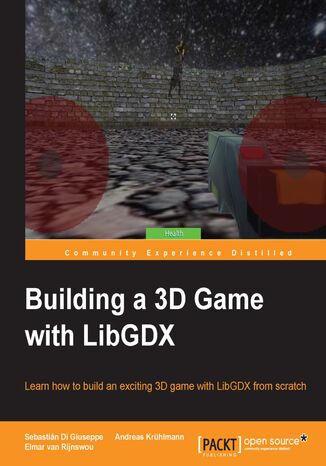
Building a 3D Game with LibGDX. Learn how to build an exciting 3D game with LibGDX from scratch
Sebastián Di Giuseppe, Andreas Krühlmann, Elmar van...
LibGDX is a hugely popular open source, cross-platform, Java-based game development framework built for the demands of cross-platform game development. This book will teach readers how the LibGDX framework uses its 3D rendering API with the OpenGL wrapper, in combination with Bullet Physics, 3D Particles, and Shaders to develop and deploy a game application to different platformsYou will start off with the basic Intellij environment, workflow and set up a LibGDX project with necessary APIs for 3D development. You will then go through LibGDX’s 3D rendering API main features and talk about the camera used for 3D. Our next step is to put everything together to build a basic 3D game with Shapes, including basic gameplay mechanics and basic UI. Next you will go through modeling, rigging, and animation in Blender. We will then talk about refining mechanics, new input implementations, implementing enemy 3D models, mechanics, and gameplay balancing. The later part of this title will help you to manage secondary resources like audio, music and add 3D particles in the game to make the game more realistic. You will finally test and deploy the app on a multitude of different platforms, ready to start developing your own titles how you want!
Lucas A. Meyer
In the fast-paced world of AI, developers are constantly seeking efficient ways to integrate AI capabilities into their apps. Microsoft Semantic Kernel simplifies this process by using the GenAI features from Microsoft and OpenAI.Written by Lucas A. Meyer, a Principal Research Scientist in Microsoft’s AI for Good Lab, this book helps you get hands on with Semantic Kernel. It begins by introducing you to different generative AI services such as GPT-3.5 and GPT-4, demonstrating their integration with Semantic Kernel. You’ll then learn to craft prompt templates for reuse across various AI services and variables. Next, you’ll learn how to add functionality to Semantic Kernel by creating your own plugins. The second part of the book shows you how to combine multiple plugins to execute complex actions, and how to let Semantic Kernel use its own AI to solve complex problems by calling plugins, including the ones made by you. The book concludes by teaching you how to use vector databases to expand the memory of your AI services and how to help AI remember the context of earlier requests. You’ll also be guided through several real-world examples of applications, such as RAG and custom GPT agents.By the end of this book, you'll have gained the knowledge you need to start using Semantic Kernel to add AI capabilities to your applications.
Martin Yanev
Unlock the power of AI in your applications with ChatGPT with this practical guide that shows you how to seamlessly integrate OpenAI APIs into your projects, enabling you to navigate complex APIs and ensure seamless functionality with ease.This new edition is updated with key topics such as OpenAI Embeddings, which’ll help you understand the semantic relationships between words and phrases. You’ll find out how to use ChatGPT, Whisper, and DALL-E APIs through 10 AI projects using the latest OpenAI models, GPT-3.5, and GPT-4, with Visual Studio Code as the IDE. Within these projects, you’ll integrate ChatGPT with frameworks and tools such as Flask, Django, Microsoft Office APIs, and PyQt. You’ll get to grips with NLP tasks, build a ChatGPT clone, and create an AI code bug-fixing SaaS app. The chapters will also take you through speech recognition, text-to-speech capabilities, language translation, generating email replies, creating PowerPoint presentations, and fine-tuning ChatGPT, along with adding payment methods by integrating the ChatGPT API with Stripe.By the end of this book, you’ll be able to develop, deploy, and monetize your own groundbreaking applications by harnessing the full potential of ChatGPT APIs.
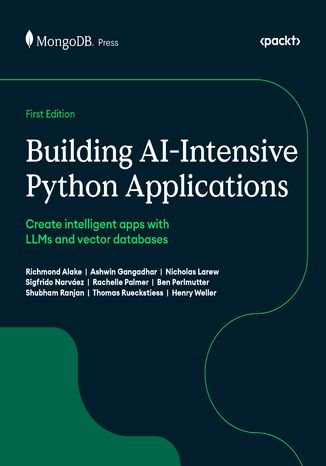
Building AI Intensive Python Applications. Create intelligent apps with LLMs and vector databases
Rachelle Palmer, Ben Perlmutter, Ashwin Gangadhar, Nicholas...
The era of generative AI is upon us, and this book serves as a roadmap to harness its full potential. With its help, you’ll learn the core components of the AI stack: large language models (LLMs), vector databases, and Python frameworks, and see how these technologies work together to create intelligent applications.The chapters will help you discover best practices for data preparation, model selection, and fine-tuning, and teach you advanced techniques such as retrieval-augmented generation (RAG) to overcome common challenges, such as hallucinations and data leakage. You’ll get a solid understanding of vector databases, implement effective vector search strategies, refine models for accuracy, and optimize performance to achieve impactful results. You’ll also identify and address AI failures to ensure your applications deliver reliable and valuable results. By evaluating and improving the output of LLMs, you’ll be able to enhance their performance and relevance.By the end of this book, you’ll be well-equipped to build sophisticated AI applications that deliver real-world value.
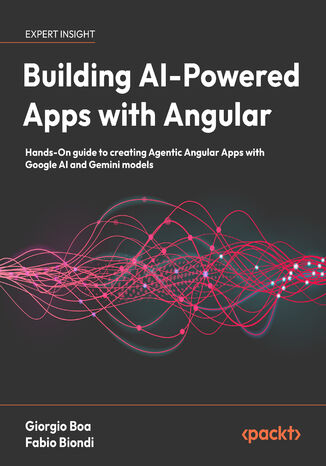
Giorgio Boa, Fabio Biondi
In Building AI-Powered Apps with Angular, you'll embark on an end-to-end journey to revolutionize web development with artificial intelligence. This hands-on guide shows you how to integrate cutting-edge AI capabilities, particularly Large Language Models (LLMs) like Google Gemini and multimodal agents, directly into your Angular applications.Starting with AI/ML fundamentals and an introduction to Google Gemini using Node.js, you’ll quickly progress to building sophisticated AI features within your Angular frontend. You’ll create dynamic content, design intelligent multi-turn chat interfaces, and harness multimodal AI to analyze and generate rich media such as images and videos.The journey extends beyond the frontend. You’ll build robust backends with Angular Server-Side Rendering and Genkit, enabling seamless communication with AI models. You’ll also implement advanced search capabilities using Retrieval Augmented Generation (RAG) and Firestore and learn how to deploy your AI-powered Angular app to the cloud.By the end of the book, you'll have the skills to design, develop, and deploy innovative and intelligent Angular applications that leverage the full potential of AI.
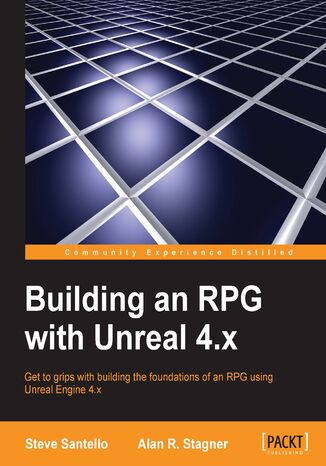
Alan R. Stagner, Steve Santello
Now that Unreal Engine 4 has become one of the most cutting edge game engines in the world, developers are looking for the best ways of creating games of any genre in the engine. This book will lay out the foundation of creating a turn-based RPG in Unreal Engine 4.12. The book starts by walking you through creating a turn-based battle system that can hold commands for party members and enemies. You’ll get your hands dirty by creating NPCs such as shop owners, and important mechanics, that make up every RPG such as a currency system, inventory, dialogue, and character statistics. Although this book specifically focuses on the creation of a turn-based RPG, there are a variety of topics that can be utilized when creating many other types of genres.By the end of the book, you will be able to build upon core RPG framework elements to create your own game experience.
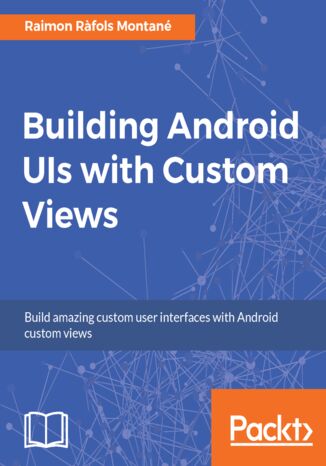
Raimon Rafols Montane
To build great user interfaces for your Android apps that go beyond the standard UI elements, you need to use custom Android views. With these, you can give your app a distinctive look and ensure that it functions properly across multiple devices. This book will help you construct a great UI for your apps by teaching you how to create custom Android views. You will start by creating your first Android custom view and go through the design considerations. You will then see how the right choices will enable your custom view to perform seamlessly across multiple platforms and Android versions. You will create custom styleable attributes that work with Android XML layouts, learn to process touch events, define custom attributes, and add properties and events to them. By the end of this book, you will be able to create apps with custom views that are responsive and adaptable to make your app distinctive and an instant hit with its users.