
Programowanie
Alex Boten
Cloud-Native Observability with OpenTelemetry is a guide to helping you look for answers to questions about your applications. This book teaches you how to produce telemetry from your applications using an open standard to retain control of data. OpenTelemetry provides the tools necessary for you to gain visibility into the performance of your services. It allows you to instrument your application code through vendor-neutral APIs, libraries and tools.By reading Cloud-Native Observability with OpenTelemetry, you’ll learn about the concepts and signals of OpenTelemetry - traces, metrics, and logs. You’ll practice producing telemetry for these signals by configuring and instrumenting a distributed cloud-native application using the OpenTelemetry API. The book also guides you through deploying the collector, as well as telemetry backends necessary to help you understand what to do with the data once it's emitted. You’ll look at various examples of how to identify application performance issues through telemetry. By analyzing telemetry, you’ll also be able to better understand how an observable application can improve the software development life cycle.By the end of this book, you’ll be well-versed with OpenTelemetry, be able to instrument services using the OpenTelemetry API to produce distributed traces, metrics and logs, and more.
Dominik Berner, Mustafa Kemal Gilor
CMake is a powerful tool used to perform a wide variety of tasks, so finding a good starting point for learning CMake is difficult. This book cuts to the core and covers the most common tasks that can be accomplished with CMake without taking an academic approach. While the CMake documentation is comprehensive, it is often hard to find good examples of how things fit together, especially since there are lots of dirty hacks and obsolete solutions available on the internet. This book focuses on helping you to tie things together and create clean and maintainable projects with CMake.You'll not only get to grips with the basics but also work through real-world examples of structuring large and complex maintainable projects and creating builds that run in any programming environment. You'll understand the steps to integrate and automate various tools for improving the overall software quality, such as testing frameworks, fuzzers, and automatic generation of documentation. And since writing code is only half of the work, the book also guides you in creating installers and packaging and distributing your software. All this is tailored to modern development workflows that make heavy use of CI/CD infrastructure.By the end of this CMake book, you'll be able to set up and maintain complex software projects using CMake in the best way possible.
Dominik Berner, Mustafa Kemal Gilor
Discover the cutting-edge advancements in CMake with the new edition of CMake Best Practices. This book focuses on real-world applications and techniques to leverage CMake, avoiding outdated hacks and overwhelming documentation.You’ll learn how to use CMake presets for streamlined project configurations and embrace modern package management with Conan 2.0. Covering advanced methods to integrate third-party libraries and optimize cross-platform builds, this updated edition introduces new tools and techniques to enhance software quality, including testing frameworks, fuzzers, and automated documentation generation. Through hands-on examples, you’ll become proficient in structuring complex projects, ensuring that your builds run smoothly across different environments. Whether you’re integrating tools for continuous integration or packaging software for distribution, this book equips you with the skills needed to excel in modern software development.By the end of the book, you’ll have mastered setting up and maintaining robust software projects using CMake to streamline your development workflow and produce high-quality software.
CMake Cookbook. Building, testing, and packaging modular software with modern CMake
Radovan Bast, Roberto Di Remigio
CMake is cross-platform, open-source software for managing the build process in a portable fashion. This book features a collection of recipes and building blocks with tips and techniques for working with CMake, CTest, CPack, and CDash.CMake Cookbook includes real-world examples in the form of recipes that cover different ways to structure, configure, build, and test small- to large-scale code projects. You will learn to use CMake's command-line tools and master modern CMake practices for configuring, building, and testing binaries and libraries. With this book, you will be able to work with external libraries and structure your own projects in a modular and reusable way. You will be well-equipped to generate native build scripts for Linux, MacOS, and Windows, simplify and refactor projects using CMake, and port projects to CMake.

Lyssa Adkins
Na czym polega coaching według zasad Agile? Na ciągłym poprawianiu wpływu swoich działań coachingowych, aby inni mogli stawać się świetni. Dzięki temu zespoły mogą tworzyć wspaniałe produkty, a firmy czerpią korzyści z funkcjonowania samodzielnych i odpowiedzialnych zespołów. Być może w efekcie w świecie pełnym możliwości zapanuje kultura innowacyjności i ciągłego doskonalenia się. Właśnie ten imperatyw „ciągłego doskonalenia się” oznacza otwieranie się na coraz to nowsze koncepcje coachingowe i wprowadzanie ich do swojej codziennej pracy z zespołami i pojedynczymi ludźmi. Aby to osiągnąć, każdy coach potrzebuje zmierzyć się z nowymi pomysłami, nawet jeśli część z nich miałaby wymiar prowokacyjny, a tylko niektóre praktyczny. Ta książka jest czymś w rodzaju wyprawy, podczas której poznasz sposoby na osiągnięcie doskonałości w roli Agile Coacha. Zainspiruje Cię do obserwowania swojego zespołu i poszczególnych osób oraz wyciągania wniosków z tych obserwacji, a także przepracowania własnych uprzedzeń i emocji. Dowiesz się, kiedy podejmować decyzje o przekuciu tych obserwacji i refleksji w działania, aby możliwie najlepiej przysłużyć się poprawie obecnego stanu. Nie znajdziesz tu jedynego słusznego przepisu, ale pomoc w odkryciu własnej, niepowtarzalnej ścieżki coacha. Opisane tu koncepcje ułatwią zmianę perspektywy i odkrywanie skutecznych technik, które pomogą w motywowaniu zespołu do uzyskiwania wyższej efektywności. Treści zawarte w tej książce: style przywódcze a predyspozycje Agile Coacha podstawy profesjonalnego coachingu w zwinnym zespole sterowanie konfliktem i konstruktywna niezgoda kształtowanie zdolności zespołu do współdziałania najczęstsze błędy Agile Coachów i sposoby, jak się ich ustrzec Jaki efekt uzyskasz? Niesamowity zespół i spektakularne wyniki!
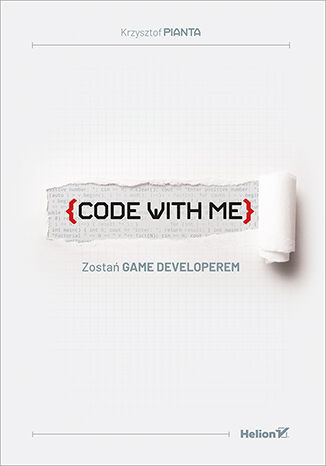
Code with me. Zostań game developerem
Krzysztof Pianta
Projektuj, programuj, promuj! Zostań twórcą gier komputerowych! Nie zaglądaj tu, nie warto! Stracisz tylko czas, na sto procent nie dowiesz się niczego ciekawego, znudzisz się i będziesz rozczarowany, bo... z pewnością nie chcesz dołączyć do prawdziwej elity programistów, zdobyć poszukiwanych na rynku umiejętności, nauczyć się czegoś naprawdę ekscytującego ani uzyskać wpływu na jedną z najdynamiczniej rozwijających się gałęzi przemysłu komputerowego, prawda? Jeśli jednak mocno pragniesz zostać twórcą gier komputerowych, dobrze trafiłeś! Ta książka powstała właśnie z myślą o tych, którzy chcą rozpocząć karierę profesjonalnego game developera. Bezboleśnie wprowadzi Cię w zagadnienia związane z tworzeniem gier sieciowych 2D w językach: HTML5, PHP i MySQL. Nauczysz się projektować oprogramowanie, dbać o jakość rozwiązania, opracowywać niezbędne materiały graficzne i dźwiękowe, a nawet promować i sprzedawać swoje dzieło. Niszczenie terenu jak w grach Worms i Soldat Scrollowanie obrazu (kamera 2D) Pseudooświetlenie (2D lighting) Manipulowanie pikselami (getImageData) i proste efekty, na przykład blur (rozmycie) Różne typy kolizji, perfekcyjna kolizja (pixel perfect collision) System cząsteczek (efekty 2D): efekt gwiezdny (starfield effect), deszcz, śnieg, deszcz 3D, mgła lub dym NW.js (node-webkit) Rysowanie prostych kształtów, obrazków i sprite'ów Własny loader plików Grawitacja Menu obsługiwane za pomocą klawiatury lub myszy Zrób pierwszy krok na drodze do profesjonalnej kariery!
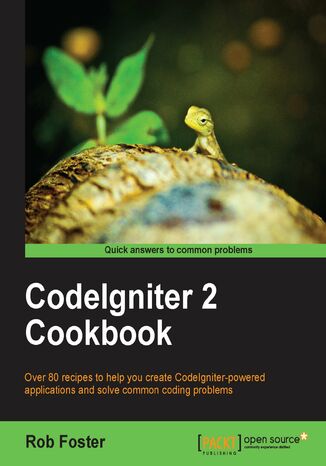
Robert Foster
As a developer, there are going to be times when you'll need a quick and easy solution to a coding problem. CodeIgniter is a powerful open source PHP framework which allows you to build simple yet powerful full-feature web applications. CodeIgniter 2 Cookbook will give you quick access to practical recipes and useful code snippets which you can add directly into your CodeIgniter application to get the job done. It contains over 80 ready-to-use recipes that you can quickly refer to within your CodeIgniter application or project.This book is your complete guide to creating fully functioning PHP web applications, full of easy-to-follow recipes that will aid you in any aspect of developing with CodeIgniter. CodeIgniter 2 Cookbook takes you from the basics of CodeIgniter, through e-commerce features for your applications, and ends by helping you ensure that your environment is secure for your users and SEO friendly to draw in customers. Starting with installation and setup, CodeIgniter 2 Cookbook provides quick solutions to programming problems that you can directly include in your own projects. You will be moving through databases, EU Cookie Law, caching, and everything else in-between with useful, ready-to-go recipes. You will look at image manipulation using the Image Manipulation library, user management (building a simple CRUD interface), switching languages on the fly according to the user preference, caching content to reduce server load, and much more.
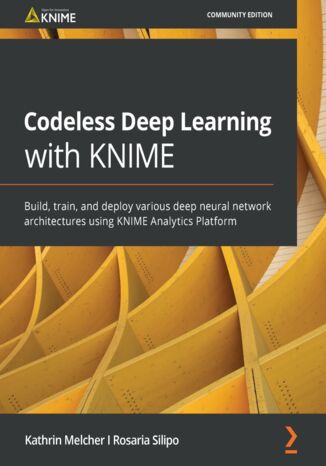
Kathrin Melcher, Rosaria Silipo
KNIME Analytics Platform is an open source software used to create and design data science workflows. This book is a comprehensive guide to the KNIME GUI and KNIME deep learning integration, helping you build neural network models without writing any code. It’ll guide you in building simple and complex neural networks through practical and creative solutions for solving real-world data problems.Starting with an introduction to KNIME Analytics Platform, you’ll get an overview of simple feed-forward networks for solving simple classification problems on relatively small datasets. You’ll then move on to build, train, test, and deploy more complex networks, such as autoencoders, recurrent neural networks (RNNs), long short-term memory (LSTM), and convolutional neural networks (CNNs). In each chapter, depending on the network and use case, you’ll learn how to prepare data, encode incoming data, and apply best practices.By the end of this book, you’ll have learned how to design a variety of different neural architectures and will be able to train, test, and deploy the final network.