
Programowanie
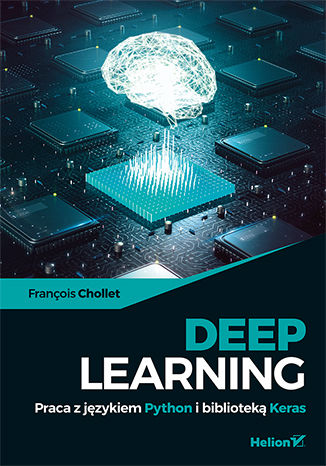
Deep Learning. Praca z językiem Python i biblioteką Keras
Francois Chollet
W skrócie uczenie maszynowe polega na wyodrębnianiu informacji z surowych danych i budowie modelu, który służy do przetwarzania kolejnych surowych danych. Technologia ta od kilku lat intensywnie się rozwija, a w miarę wzrostu jej możliwości rosną również zainteresowanie i oczekiwania architektów i użytkowników. Niektórzy widzą w głębokim uczeniu poważne zagrożenie, jednak obietnice, jakie daje ten rodzaj sztucznej inteligencji, są fascynujące. Narzędzia służące do programowania uczenia maszynowego, takie jak zaimplementowana w Pythonie biblioteka Keras, są dostępne dla każdego, kto chce wykorzystać tę technologię do własnych celów. Niniejsza książka jest praktycznym przewodnikiem po uczeniu głębokim. Znalazły się tu dokładne informacje o istocie uczenia głębokiego, o jego zastosowaniach i ograniczeniach. Wyjaśniono zasady rozwiązywania typowych problemów uczenia maszynowego. Pokazano, jak korzystać z pakietu Keras przy implementacji rozpoznawania obrazu, przetwarzania języka naturalnego, klasyfikacji obrazów, przewidywania danych szeregu czasowego, analizy sentymentu, generowania tekstu i obrazu. Nawet dość skomplikowane zagadnienia, włączając w to koncepcje i dobre praktyki, zostały wyjaśnione w sposób bardzo przystępny i zrozumiały, tak aby umożliwić samodzielne stosowanie technik uczenia głębokiego w kolejnych projektach. W tej książce między innymi: kontekst i ogólne koncepcje sztucznej inteligencji, uczenia maszynowego i uczenia głębokiego sieci neuronowe i pakiet Keras typowe sposoby pracy nad projektami uczenia głębokiego rozbudowane modele uczenia głębokiego oraz modele generatywne perspektywy i ograniczenia technologii Uczenie głębokie. Nikt nie zna granic tej technologii!

Deep Learning. Praca z językiem R i biblioteką Keras
Francois Chollet, J. J. Allaire
W ostatnich latach byliśmy świadkami ogromnego postępu technik sztucznej inteligencji, uczenia maszynowego oraz uczenia głębokiego. Konsekwencje tego błyskawicznego rozwoju są odczuwalne w niemal każdej dziedzinie. Wydaje się, że to jedna z tych technologii, które powinny być dostępne dla jak najszerszej grupy ludzi. Dopiero wtedy uczenie głębokie wykorzysta w pełni swój potencjał i stanie się prawdziwym impulsem rozwoju naszej cywilizacji. Co prawda na pierwszy rzut oka ta niesamowita technologia może wydawać się wyjątkowo skomplikowana i trudna do zrozumienia, warto jednak wykorzystać dostępne narzędzia, takie jak biblioteka Keras i język R, aby implementować mechanizmy uczenia głębokiego wszędzie tam, gdzie okażą się przydatne. Ta książka jest znakomitym przewodnikiem po technikach uczenia głębokiego. Poza wyczerpująco przedstawionymi podstawami znajdziesz tu zasady implementacji tych technik z wykorzystaniem języka R i biblioteki Keras. Dzięki przystępnym wyjaśnieniom i praktycznym przykładom szybko zrozumiesz nawet bardziej skomplikowane zagadnienia uczenia głębokiego. Poznasz koncepcje i dobre praktyki związane z tworzeniem mechanizmów analizy obrazu, przetwarzania języka naturalnego i modeli generatywnych. Przeanalizujesz ponad 30 przykładów kodu uzupełnionego dokładnymi komentarzami. W efekcie szybko przygotujesz się do korzystania z uczenia głębokiego w rozwiązywaniu konkretnych problemów. W tej książce między innymi: podstawowe koncepcje sztucznej inteligencji, uczenia maszynowego i uczenia głębokiego wprowadzenie do budowy i trenowania sieci neuronowych uczenie głębokie w przetwarzaniu obrazów modele generatywne tworzące obrazy i tekst perspektywy i ograniczenia uczenia głębokiego Uczenie głębokie: zafascynuj się i zaimplementuj!
Deep Learning. Uczenie głębokie z językiem Python. Sztuczna inteligencja i sieci neuronowe
Valentino Zocca, Gianmario Spacagna, Daniel Slater, Peter...
Na naszych oczach dokonuje się przełom: technologie wykorzystujące rozmaite formy sztucznej inteligencji zaczynają się pojawiać w różnych branżach. Niektórzy nawet nie zdają sobie sprawy, jak często i jak powszechnie stosuje się algorytmy uczenia głębokiego. Możliwości w tym zakresie stale rosną. Wzrasta też zapotrzebowanie na inżynierów, którzy swobodnie operują wiedzą o uczeniu głębokim i są w stanie zaimplementować potrzebne algorytmy w konkretnym oprogramowaniu. Uczenie głębokie jest jednak dość złożonym zagadnieniem, a przyswojenie sobie potrzebnych umiejętności wymaga wysiłku. Ta książka stanowi doskonałe wprowadzenie w temat uczenia głębokiego. Wyjaśniono tu najważniejsze pojęcia uczenia maszynowego. Pokazano, do czego mogą się przydać takie narzędzia jak pakiet scikit-learn, biblioteki Theano, Keras czy TensorFlow. Ten praktyczny przewodnik znakomicie ułatwi zrozumienie zagadnień rozpoznawania wzorców, dokładnego skalowania danych, pozwoli też na rzetelne zapoznanie się z algorytmami i technikami uczenia głębokiego. Autorzy zaproponowali wykorzystanie w powyższych celach języka Python - ulubionego narzędzia wielu badaczy i pasjonatów nauki. W książce między innymi: Solidne podstawy uczenia maszynowego i sieci neuronowych Trening systemów sztucznej inteligencji w grach komputerowych Rozpoznawanie obrazów Rekurencyjne sieci neuronowej w modelowaniu języka Budowa systemów wykrywania oszustw i włamań Uczenie głębokie: zajrzyj w przyszłość programowania! Dr Valentino Zokka opracował wiele algorytmów matematycznych i modeli prognostycznych dla firmy Boeing. Obecnie jest konsultantem w branży finansowej. Gianmario Spacagna pracuje w firmie Pirelli, gdzie buduje systemy maszynowego uczenia się i kompletne rozwiązania do produktów informacyjnych. Daniel Slater tworzył oprogramowanie do oceny ryzyka dla branży finansowej. Obecnie zajmuje się systemami do przetwarzania dużych ilości danych i analizy zachowań użytkowników. Peter Roelants specjalizuje się w stosowaniu technik uczenia głębokiego do badań spektralnych obrazów, rozpoznawania mowy czy ekstrakcji danych z dokumentów.
Deep Learning with C++. Design and deploy neural networks using CUDA for high-performance AI in C++
Bill Chen, Vikash Gupta
Deep learning systems often struggle to meet performance demands in real-time and production environments. This book shows you how to build high-performance deep learning systems in C++, enabling efficient and scalable artificial intelligence (AI) in resource-constrained environments where performance matters.You’ll start by setting up a complete C++ deep learning environment and implementing core neural networks from scratch. As you progress, you’ll build advanced architectures, including Convolutional Neural Networks (CNNs), Recurrent Neural Networks (RNNs), Long Short-Term Memory Networks (LSTMs), Generative Adversarial Networks (GANs), and Transformers, using C++, CUDA, and PyTorch’s C++ API. The book then focuses on model quantization and compression. It will guide you through the model deployment process in production with robust monitoring and explainability. You’ll also explore distributed training and techniques for real-time inference in performance-critical domains.By the end of this book, you’ll be able to design, optimize, and deploy deep learning systems in C++ that are production-ready, scalable, and efficient across multiple industries.*Email sign-up and proof of purchase required
Mark Ryan
fastai is an easy-to-use deep learning framework built on top of PyTorch that lets you rapidly create complete deep learning solutions with as few as 10 lines of code. Both predominant low-level deep learning frameworks, TensorFlow and PyTorch, require a lot of code, even for straightforward applications. In contrast, fastai handles the messy details for you and lets you focus on applying deep learning to actually solve problems.The book begins by summarizing the value of fastai and showing you how to create a simple 'hello world' deep learning application with fastai. You'll then learn how to use fastai for all four application areas that the framework explicitly supports: tabular data, text data (NLP), recommender systems, and vision data. As you advance, you'll work through a series of practical examples that illustrate how to create real-world applications of each type. Next, you'll learn how to deploy fastai models, including creating a simple web application that predicts what object is depicted in an image. The book wraps up with an overview of the advanced features of fastai.By the end of this fastai book, you'll be able to create your own deep learning applications using fastai. You'll also have learned how to use fastai to prepare raw datasets, explore datasets, train deep learning models, and deploy trained models.
Willem Meints
Cognitive Toolkit is a very popular and recently open sourced deep learning toolkit by Microsoft. Cognitive Toolkit is used to train fast and effective deep learning models. This book will be a quick introduction to using Cognitive Toolkit and will teach you how to train and validate different types of neural networks, such as convolutional and recurrent neural networks.This book will help you understand the basics of deep learning. You will learn how to use Microsoft Cognitive Toolkit to build deep learning models and discover what makes this framework unique so that you know when to use it. This book will be a quick, no-nonsense introduction to the library and will teach you how to train different types of neural networks, such as convolutional neural networks, recurrent neural networks, autoencoders, and more, using Cognitive Toolkit. Then we will look at two scenarios in which deep learning can be used to enhance human capabilities. The book will also demonstrate how to evaluate your models' performance to ensure it trains and runs smoothly and gives you the most accurate results. Finally, you will get a short overview of how Cognitive Toolkit fits in to a DevOps environment
Andrés P. Torres, Paul Newman
Explore the capabilities of the open-source deep learning framework MXNet to train and deploy neural network models and implement state-of-the-art (SOTA) architectures in Computer Vision, natural language processing, and more. The Deep Learning with MXNet Cookbook is your gateway to constructing fast and scalable deep learning solutions using Apache MXNet.Starting with the different versions of MXNet, this book helps you choose the optimal version for your use and install your library. You’ll work with MXNet/Gluon libraries to solve classification and regression problems and gain insights into their inner workings. Venturing further, you’ll use MXNet to analyze toy datasets in the areas of numerical regression, data classification, picture classification, and text classification. From building and training deep-learning neural network architectures from scratch to delving into advanced concepts such as transfer learning, this book covers it all. You'll master the construction and deployment of neural network architectures, including CNN, RNN, LSTMs, and Transformers, and integrate these models into your applications.By the end of this deep learning book, you’ll wield the MXNet and Gluon libraries to expertly create and train deep learning networks using GPUs and deploy them in different environments.
Kunal Sawarkar, Dheeraj Arremsetty
Building and implementing deep learning (DL) is becoming a key skill for those who want to be at the forefront of progress.But with so much information and complex study materials out there, getting started with DL can feel quite overwhelming.Written by an AI thought leader, Deep Learning with PyTorch Lightning helps researchers build their first DL models quickly and easily without getting stuck on the complexities. With its help, you’ll be able to maximize productivity for DL projects while ensuring full flexibility – from model formulation to implementation.Throughout this book, you’ll learn how to configure PyTorch Lightning on a cloud platform, understand the architectural components, and explore how they are configured to build various industry solutions. You’ll build a neural network architecture, deploy an application from scratch, and see how you can expand it based on your specific needs, beyond what the framework can provide.In the later chapters, you’ll also learn how to implement capabilities to build and train various models like Convolutional Neural Nets (CNN), Natural Language Processing (NLP), Time Series, Self-Supervised Learning, Semi-Supervised Learning, Generative Adversarial Network (GAN) using PyTorch Lightning.By the end of this book, you’ll be able to build and deploy DL models with confidence.