
Programowanie gier
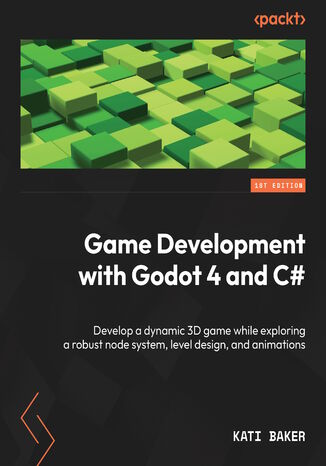
Kati Baker
Godot is a versatile, open-source game engine that empowers developers with creative freedom and ownership of their work. Written by a game developer and designer who's been creating games since her first game jam in 2016, this comprehensive guide helps you gain the essential skills you need to embark on an exciting journey into the realm of game development with Godot 4 and C#.This book guides you through the installation of the Godot Engine and introduces you to the powerful capabilities of C# within it. The chapters will help you smoothly integrate C# into your Godot project as you learn how to create a captivating 3D adventure game by exploring topics including project organization, player controller creation, world design, and user-friendly UI development. As you progress, you'll delve into advanced game development aspects such as audio integration, pathfinding algorithms, and dynamic lighting. You'll also get to grips with accessibility considerations in game development and effective bug reporting techniques. Toward the end, you'll discover the vibrant Godot community and gain access to a wealth of resources to further improve your game development skills.By the end of this Godot book, you'll have built a complete 3D adventure game and gained a solid foundation to continue creating your own games.
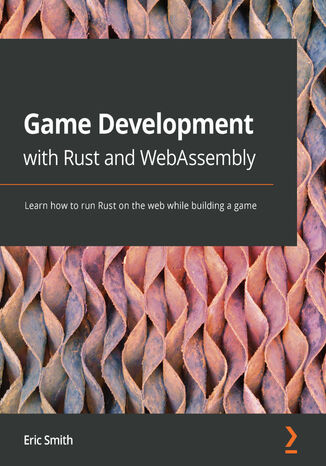
Game Development with Rust and WebAssembly. Learn how to run Rust on the web while building a game
Eric Smith
The Rust programming language has held the most-loved technology ranking on Stack Overflow for 6 years running, while JavaScript has been the most-used programming language for 9 years straight as it runs on every web browser. Now, thanks to WebAssembly (or Wasm), you can use the language you love on the platform that's everywhere.This book is an easy-to-follow reference to help you develop your own games, teaching you all about game development and how to create an endless runner from scratch. You'll begin by drawing simple graphics in the browser window, and then learn how to move the main character across the screen. You'll also create a game loop, a renderer, and more, all written entirely in Rust. After getting simple shapes onto the screen, you'll scale the challenge by adding sprites, sounds, and user input. As you advance, you'll discover how to implement a procedurally generated world. Finally, you'll learn how to keep your Rust code clean and organized so you can continue to implement new features and deploy your app on the web.By the end of this Rust programming book, you'll build a 2D game in Rust, deploy it to the web, and be confident enough to start building your own games.
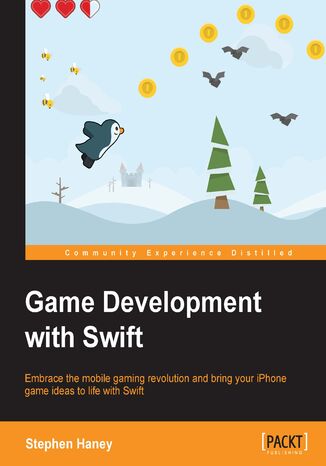
Stephen Haney
If you wish to create and publish fun iOS games using Swift, then this book is for you. You should be familiar with basic programming concepts. However, no prior game development or Apple ecosystem experience is required.
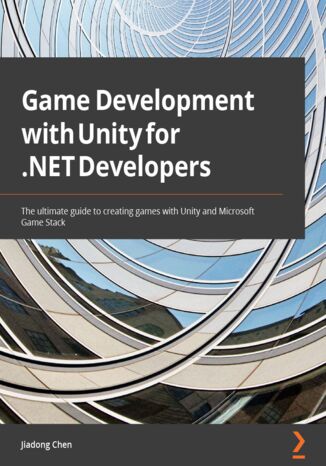
Jiadong Chen
Understand what makes Unity the world’s most widely used real-time 3D development platform and explore its powerful features for creating 3D and 2D games, as well as the Unity game engine and the Microsoft Game Dev, including the Microsoft Azure Cloud and Microsoft Azure PlayFab services, to create games.You will start by getting acquainted with the Unity editor and the basic concepts of Unity script programming with C#. You'll then learn how to use C# code to work with Unity's built-in modules, such as UI, animation, physics, video, and audio, and understand how to develop a game with Unity and C#. As you progress through the chapters, you'll cover advanced topics such as the math involved in computer graphics and how to create a custom render pipeline in Unity with the new Scriptable Render Pipeline, all while optimizing performance in Unity. Along the way, you'll be introduced to Microsoft Game Dev, Azure services, and Azure PlayFab, and using the Unity3D PlayFab SDK to access the PlayFab API.By the end of this Unity book, you'll have become familiar with the Unity engine and be ready to develop your own games while also addressing the performance issues that you could encounter in the development process.
Gabor Szauer
Physics is really important for game programmers who want to add realism and functionality to their games. Collision detection in particular is a problem that affects all game developers, regardless of the platform, engine, or toolkit they use.This book will teach you the concepts and formulas behind collision detection. You will also be taught how to build a simple physics engine, where Rigid Body physics is the main focus, and learn about intersection algorithms for primitive shapes.You’ll begin by building a strong foundation in mathematics that will be used throughout the book. We’ll guide you through implementing 2D and 3D primitives and show you how to perform effective collision tests for them. We then pivot to one of the harder areas of game development—collision detection and resolution. Further on, you will learn what a Physics engine is, how to set up a game window, and how to implement rendering. We’ll explore advanced physics topics such as constraint solving. You’ll also find out how to implement a rudimentary physics engine, which you can use to build an Angry Birds type of game or a more advanced game.By the end of the book, you will have implemented all primitive and some advanced collision tests, and you will be able to read on geometry and linear Algebra formulas to take forward to your own games!
Pavel Strakhov, Witold Wysota, Lorenz Haas
Qt is the leading cross-platform toolkit for all significant desktop, mobile, and embedded platforms and is becoming popular by the day, especially on mobile and embedded devices. It's a powerful tool that perfectly fits the needs of game developers. This book will help you learn the basics of Qt and will equip you with the necessary toolsets to build apps and games.The book begins by how to create an application and prepare a working environment for both desktop and mobile platforms. You will learn how to use built-in Qt widgets and Form Editor to create a GUI application and then learn the basics of creating graphical interfaces and Qt's core concepts.Further, you'll learn to enrich your games by implementing network connectivity and employing scripting. You will learn about Qt's capabilities for handling strings and files, data storage, and serialization.Moving on, you will learn about the new Qt Gamepad module and how to add it in your game and then delve into OpenGL and Vulcan, and how it can be used in Qt applications to implement hardware-accelerated 2D and 3D graphics. You will then explore various facets of Qt Quick: how it can be used in games to add game logic, add game physics, and build astonishing UIs for your games. By the end of this book, you will have developed the skillset to develop interesting games with Qt.
Nathan Thomas Auckett
This book is for users experienced with game development who now want to learn how to develop games in GameMaker: Studio in a fast-paced way.
Gamesalad Essentials. Create awesome cross-platform games in no time, and with no coding
Miguel DeQuadros
If you want to create your own game, but don't know where to start, this is the book for you. Whether you've used GameSalad before, or have prior game development experience or not you are sure to learn! Imaging software experience, such as Photoshop, is good to have, but art and assets are provided in the book's resources.
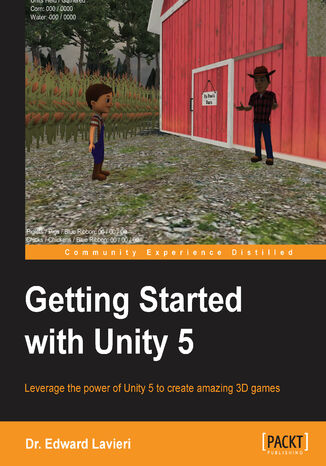
Getting Started with Unity 5. Leverage the power of Unity 5 to create amazing 3D games
Dr. Edward Lavieri Jr.
If you are a game developer interested in learning Unity 3D from scratch and becoming familiar with its core features, then this book is for you. No prior knowledge of Unity 3D is required.
Francesco Sapio
Want to get started in the world of 2D game development with Unity? This book will take your hand and guide you through this amazing journey to let you know exactly what you need to build the games you want to build, without sacrificing quality. You will build a solid understanding of Unity 5.x, by focusing with the embedded tools to develop 2D games. In learning about these, along with accurate explanations and practical examples, you will design, develop, learn how to market and publish a delectable Tower Defense game about cupcakes versus pandas.Each chapter in this book is structured to give you a full understanding on a specific aspect of the workflow pipeline. Each of these aspects are essential for developing games in Unity. In a step-by-step approach, you will learn about each of the following phases: Game Design, Asset Importing, Scripting, User Interfaces, Animations, Physics, Artificial Intelligence, Gameplay Programming, Polishing and Improving, Marketing, Publishing and much more.This book provides you with exercises and homework at the end of each chapter so that you can level up your skills as a Unity game developer. In addition, each of these parts are centered on a common point of discussion with other learners just like you. Therefore, by sharing your ideas with other people you will not only develop your skills but you will also build a network.
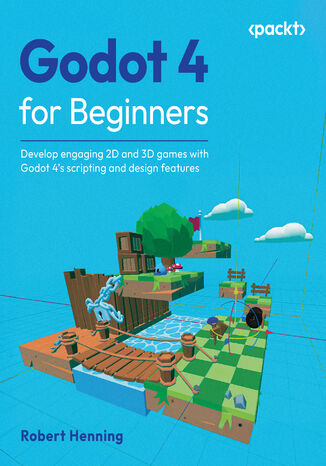
Godot 4 for Beginners. Develop engaging 2D and 3D games with Godot 4's scripting and design features
Robert Henning, Sander Vanhove
Jumping into Godot 4 as a beginner can be overwhelming. You’re wrestling with a new interface, trying to wrap your head around how nodes and scenes work, and learning GDScript all at once. After years of teaching game development and creating YouTube tutorials, Robert Henning knows exactly where you’re likely to have those “wait, what?” moments. He’s built this guide to systematically address those challenges head-on, breaking down complex concepts into digestible steps.You’ll start by setting up Godot 4 and understanding its interface and tools. Then, you’ll dive into nodes and scenes, Godot’s way of organizing everything, which sounds intimidating but is actually quite intuitive. From there, you’ll explore both 2D and 3D game creation, adding key elements such as players, enemies, collectibles, and lighting effects that make your game pop visually. You’ll also get hands-on with Godot’s scripting language, GDScript, to bring your game ideas to life.By the end of this Godot 4 book, you’ll have the skills to build complete 2D and 3D games from scratch, covering everything from level design and game state management to score tracking and more. Whether you’re just getting started or are ready to level up, this book will help you turn your ideas into fully playable games.*Email sign-up and proof of purchase required
Godot Engine Game Development Projects. Build five cross-platform 2D and 3D games with Godot 3.0
Chris Bradfield
Godot Engine Game Development Projects is an introduction to the Godot game engine and its new 3.0 version. Godot 3.0 brings a large number of new features and capabilities that make it a strong alternative to expensive commercial game engines. For beginners, Godot offers a friendly way to learn game development techniques, while for experienced developers it is a powerful, customizable tool that can bring your visions to life.This book consists of five projects that will help developers achieve a sound understanding of the engine when it comes to building games.Game development is complex and involves a wide spectrum of knowledge and skills. This book can help you build on your foundation level skills by showing you how to create a number of small-scale game projects. Along the way, you will learn how Godot works and discover important game development techniques that you can apply to your projects.Using a straightforward, step-by-step approach and practical examples, the book will take you from the absolute basics through to sophisticated game physics, animations, and other techniques. Upon completing the final project, you will have a strong foundation for future success with Godot 3.0.
GODOT ENGINE I GDSCRIPT POSWOJSKU Część 1: Wprowadzenie do świata gier i pierwsze skrypty
Gołębiowski Dariusz
Chcesz stworzyć własną grę, ale Godot Engine wita Cię dziesiątkami przycisków, tajemniczymi węzłami i pytaniem o renderer, zanim zdążysz napisać choćby jedną linijkę kodu? A może masz wrażenie, że bez znajomości Godot Engine czy GDScript - AI za Ciebie wszystko napisze? A co będzie jeżeli znajdzie się tam także niebezpieczny kod? Dla Ciebie, dla Twoich klientów? Nie znając technologii, musisz polegać na sztucznej inteligencji, a w tym obszarze - AI - istnieje wiele wątpliwości. Dlatego warto zrozumieć podstawy programowania. Ale spokojnie. Zacznijmy od początku. Tak - poswojsku :). "Godot Engine i GDScript poswojsku. Część 1: Wprowadzenie do świata gier i pierwsze skrypty" to praktyczny przewodnik dla osób, które chcą wejść do świata tworzenia gier bez zbędnego żargonu i bez zakładania, że już wszystko wiedzą. Krok po kroku poznasz Menedżera projektów, węzły, sceny oraz najważniejsze elementy interfejsu Godot Engine. Utworzysz pierwszy projekt, uruchomisz scenę, napiszesz skrypt w języku GDScript i sprawisz, że przycisk naprawdę zacznie reagować na Twoje polecenia. Następnie przejdziesz do podstaw programowania: zmiennych, typów danych, operatorów, instrukcji warunkowych, pętli i funkcji. Zamiast uczyć się samych definicji, wykorzystasz je podczas wykonywania kolejnych ćwiczeń - między innymi przy budowie prostego systemu punktów. W poradniku znajdziesz również omówienie najczęstszych błędów. Dowiesz się nie tylko, co wpisać, ale również dlaczego kod działa - albo dlaczego właśnie nie chce działać. Ta książka jest dla Ciebie, jeżeli: - dopiero zaczynasz przygodę z Godot Engine; - nigdy wcześniej nie programowałeś; - znasz podstawy kodowania, ale chcesz nauczyć się GDScript; - marzysz o własnej grze i szukasz konkretnej drogi od pomysłu do pierwszego działającego projektu; - cenisz wyjaśnienia napisane zwyczajnym, zrozumiałym językiem. Nie musisz jeszcze umieć tworzyć gier. Nie musisz znać GDScriptu. Potrzebujesz jedynie komputera, bezpłatnego Godot Engine i odrobiny ciekawości. Każdy wielki cyfrowy świat zaczyna się od pustego projektu. A potem pojawia się pierwsza linijka kodu. Praktycznie. Zrozumiale. Poswojsku. "Godot Engine i GDScript poswojsku" nie jest kolejnym suchym podręcznikiem opisującym przyciski i polecenia. To przemyślane wprowadzenie do świata tworzenia gier, które prowadzi czytelnika od pierwszego uruchomienia Godot Engine do napisania i zrozumienia własnych skryptów. Największą zaletą książki jest sposób przekazywania wiedzy. Autor nie zakłada wcześniejszego doświadczenia i nie ukrywa prostych zagadnień za technicznym żargonem. Wyjaśnia, czym są węzły, sceny, zmienne, funkcje czy sygnały, a następnie pokazuje ich zastosowanie w praktycznych ćwiczeniach. Czytelnik nie ogranicza się do przepisywania kodu. Stopniowo zaczyna rozumieć zależności pomiędzy interfejsem silnika, logiką programu i zachowaniem tworzonego projektu. Szczególnie wartościowe są omówienia częstych problemów, ponieważ uczą samodzielnego poszukiwania przyczyn błędów - jednej z najważniejszych umiejętności każdego programisty. Publikacja zachowuje właściwą równowagę pomiędzy prostotą a rzetelnością. Nie obiecuje stworzenia wielkiej gry w jeden wieczór. Buduje natomiast solidne podstawy, dzięki którym marzenie o własnym cyfrowym świecie zaczyna zmieniać się w konkretny plan działania. To bardzo dobry pierwszy krok dla każdego, kto chce rozpocząć naukę Godot Engine i GDScript bez stresu, pośpiechu i poczucia, że programowanie jest przeznaczone wyłącznie dla wybranych. Nota biograficzna Dariusz Gołębiowski - trener, nauczyciel, programista, pisarz oraz doradca specjalizujący się w cyberbezpieczeństwie, sztucznej inteligencji i nowych technologiach. Autor i współautor wielu gier, m.in. Ucieczka z Siódmej Planety. Od lat zajmuje się przekładaniem trudnych zagadnień technicznych na zwyczajny, zrozumiały język. Jest autorem książek, ebooków, poradników, materiałów edukacyjnych i kursów publikowanych pod marką poswojsku.pl. W swojej pracy łączy doświadczenie programisty i nauczyciela z przekonaniem, że technologii najlepiej uczyć poprzez praktykę, eksperymentowanie oraz samodzielne tworzenie. Jest również twórcą Sagi CyberJestestwa - rozbudowanego uniwersum łączącego fantastykę, science fiction, filozofię, sztuczną inteligencję i cyberbezpieczeństwo. Rozwija je poprzez powieści, komiksy, materiały multimedialne, a także projektowaną grę. Seria "Godot Engine i GDScript poswojsku" powstała z potrzeby pokazania, że rozpoczęcie programowania i tworzenia własnych gier jest możliwe niezależnie od wieku oraz wcześniejszego doświadczenia. Więcej materiałów Autora: poswojsku.pl poswojsku.eu
GODOT ENGINE I GDSCRIPT POSWOJSKU Część 2: Od pustego projektu do pierwszego
Gołębiowski Dariusz
Nie wystarczy poznać kilka poleceń. Trzeba jeszcze sprawić, aby kod zaczął podejmować decyzje, reagować na zdarzenia i naprawdę sterować grą czy aplikacją. UWAGA! PORADNIK JEST KONTYNUACJĄ CZĘŚCI 1: Wprowadzenie do świata gier i pierwsze skrypty. Dla lepszego zrozumienia zawartości tej książki, Autor i Wydawnictwo zalecają rozpocząć naukę GODOT Engine od Części 1. "Godot Engine i GDScript poswojsku. Część 2: Od pustego projektu do pierwszego programu"- prowadzi Czytelnika przez kolejny etap nauki programowania w Godot Engine. Krok po kroku. Bez zbędnego komplikowania. Z naciskiem na zrozumienie, praktykę i samodzielne tworzenie. W tej części nauczysz się budować logikę programu przy użyciu instrukcji warunkowych oraz pętli. Dowiesz się, jak wykorzystywać operatory `and`, `or` i `not`, czym różnią się pętle `for` oraz `while`, kiedy stosować `break` i `continue`, a także dlaczego niewłaściwie zaprojektowana pętla potrafi zatrzymać całą grę. Poznasz również jedno z najważniejszych pojęć w tworzeniu gier - `delta`. Zobaczysz, jak dzięki niej uzyskać płynny ruch niezależny od liczby klatek na sekundę, sterować obiektem `CharacterBody2D` oraz przygotować prawidłowe odliczanie czasu. Ale sama teoria to za mało. Dlatego wspólnie zbudujemy mini-grę "Klikaj, zanim czas minie!". Przygotujesz scenę, napiszesz skrypt gry, połączysz sygnały i zobaczysz, jak poszczególne elementy zaczynają ze sobą współpracować. Otrzymasz także zadania dodatkowe pozwalające rozwinąć projekt o punkty specjalne, poziomy wyniku oraz nowe zasady rozgrywki. W kolejnym module wejdziesz w świat funkcji, zdarzeń i sygnałów. Nauczysz się porządkować kod, przekazywać parametry, zwracać wyniki oraz rozpoznawać, kiedy użyć funkcji, a kiedy sygnału. Poznasz sygnały wbudowane, nauczysz się tworzyć własne i łączyć je zarówno w edytorze, jak i bezpośrednio w kodzie. W praktycznym projekcie zbudujesz scenę ze statkiem kosmicznym przekazującym punkty graczowi. Przygotujesz gracza, scenę główną oraz komunikację pomiędzy obiektami. Sprawdzisz również, jak jeden sygnał może docierać do kilku odbiorców i jak oczekiwać na zdarzenia za pomocą `await`. To nie jest podręcznik do biernego czytania. To zaproszenie do eksperymentowania, zmieniania kodu, popełniania błędów i odkrywania, dlaczego program działa - albo dlaczego jeszcze nie działa. Osobne zestawienia najczęstszych problemów pomogą Ci rozpoznać błędne wcięcia, niepołączone sygnały, nieskończone pętle, niewłaściwe użycie `delta` i inne pułapki początkujących twórców. Ta książka jest dla Ciebie, jeżeli: * chcesz nauczyć się programowania poprzez tworzenie gier; * znasz już absolutne podstawy GDScriptu i chcesz zrobić kolejny krok; * zależy Ci na rozumieniu kodu, a nie tylko jego przepisywaniu; * chcesz tworzyć własne mechaniki, zdarzenia i interakcje; * szukasz przewodnika napisanego prostym, ludzkim językiem. Nie musisz od razu znać odpowiedzi na wszystkie pytania. Wystarczy ciekawość, Godot Engine i gotowość do napisania kolejnych linijek kodu. Najpierw pojawi się warunek. Potem pętla. Następnie funkcja, sygnał i zdarzenie. Aż w pewnym momencie pusty projekt zacznie reagować, poruszać się i żyć zgodnie z regułami, które sam mu nadasz. Od pustego projektu do pierwszego programu. Od pierwszej instrukcji do działającej mechaniki. Praktycznie. Zrozumiale. Poswojsku. Dariusz Gołębiowski - trener, nauczyciel, programista, pisarz oraz doradca specjalizujący się w cyberbezpieczeństwie, sztucznej inteligencji i nowych technologiach. Autor i współautor wielu gier, m.in. Ucieczka z Siódmej Planety. Od lat zajmuje się przekładaniem trudnych zagadnień technicznych na zwyczajny, zrozumiały język. Jest autorem książek, ebooków, poradników, materiałów edukacyjnych i kursów publikowanych pod marką poswojsku.pl. W swojej pracy łączy doświadczenie programisty i nauczyciela z przekonaniem, że technologii najlepiej uczyć poprzez praktykę, eksperymentowanie oraz samodzielne tworzenie. Jest również twórcą Sagi CyberJestestwa - rozbudowanego uniwersum łączącego fantastykę, science fiction, filozofię, sztuczną inteligencję i cyberbezpieczeństwo. Rozwija je poprzez powieści, komiksy, materiały multimedialne, a także projektowaną grę. Seria "Godot Engine i GDScript poswojsku" powstała z potrzeby pokazania, że rozpoczęcie programowania i tworzenia własnych gier jest możliwe niezależnie od wieku oraz wcześniejszego doświadczenia. Więcej materiałów Autora: poswojsku.pl poswojsku.eu
Richard A. Hawley
This book is a practical guide with examples and clear steps to explain terrain modeling with Grome. If you’re a developer or artist looking for a guide to walk you through GROME 3.1, then this book is for you. This book will help you from the first step to exporting a terrain as a workable art asset in a game engine.

Grywalizacja. Mechanika gry na stronach WWW i w aplikacjach mobilnych
Gabe Zichermann, Christopher Cunningham
Zakoduj grywalizację w umysłach swoich klientów! Na rynku aplikacji jest już tak ciasno, że nowy produkt musi być zaskakujący, nowatorski i atrakcyjny, a ponadto gwarantować dużo przyjemności z użytkowania. Dopiero wtedy ma szansę konkurować z innymi, dostępnymi wcześniej. Warto więc zastanowić się nad tym, co sprawia, że jedna aplikacja zdobywa popularność, a druga o identycznej funkcjonalności nie może się przebić. Wszyscy autorzy pragną, aby ich dzieło należało do tej pierwszej kategorii. Jak to osiągnąć? Wszyscy wiedzą, jak gry potrafią wciągać. Często już po pierwszym uruchomieniu gracze mają problem, żeby zakończyć rozrywkę, i wracają do niej w każdej wolnej chwili. A gdyby zastosować mechanizmy stosowane w grach także w aplikacjach? Czy użytkownicy też mogliby się od nich uzależnić? Oczywiście! Proces ten nazywa się grywalizacją i jest powszechnie stosowany! W tej książce znajdziesz wiedzę niezbędną do wykorzystania tych elementów w Twojej aplikacji. Dzięki temu łatwiej osiągniesz sukces! Niezależnie od tego, czy jesteś producentem, projektantem, kierownikiem czy deweloperem gier, książka ta pozwoli Ci zrozumieć, jak tworzyć mechanikę gry zapewniającą lojalność klientów. Odkryj system motywacyjny stosowany przez projektantów gier do angażowania różnych typów klientów Poznaj podstawowe elementy mechaniki gry: punkty, odznaczenia, poziomy, wyzwania i tabele wyników Skuś klientów odpowiednią strukturą nagród, pozytywnym wzmocnieniem lub pętlami informacji zwrotnych Połącz grę z elementami społecznymi i działaniami takimi, jak zbieractwo, heroizm, chwalenie się lub dawanie prezentów Poznaj opisy systemów grywalizacji stosowanych przez Nike i Yahoo! oraz przeanalizuj rozwiązania firm Google, Facebook i Zynga Zaprojektuj i zaimplementuj grywalizację na prostej witrynie Gabe Zichermann to jeden z najlepszych ekspertów od grywalizacji. Jest przewodniczącym Gamification Summit and Workshops ( https://GSummit.com ). Christopher Cunningham to przedsiębiorca i ekspert od technologii informatycznych, który pomógł odkryć jedno z pierwszych rozwiązań dotyczących grywalizacji. Zachęć użytkowników do korzystania z Twojej aplikacji na okrągło!