
Java
Dział Java to obszerne i szczegółowe kompendium wiedzy na temat jednego z najpopularniejszych obiektowych języków programowania. Książki zawarte w tej kategorii zawierają nieocenioną pomoc dotyczącą zasad i mechanizmów programowania w Javie oraz możliwości wykorzystania tego języka na dowolnych platformach sprzętowych i systemowych.
Dowiecie się jak zapewnić niezmienność obiektu lub jak stosować wyjątki przechwytywalne lub wyjątki czasu wykonania. Poznacie typy ogólne i wyliczeniowe, interfejsy czy zalety stosowania statycznych klas składowych oraz nauczycie się jak tworzyć i usuwać wybrane obiekty, a także dokumentować bezpieczeństwo dla wątków.
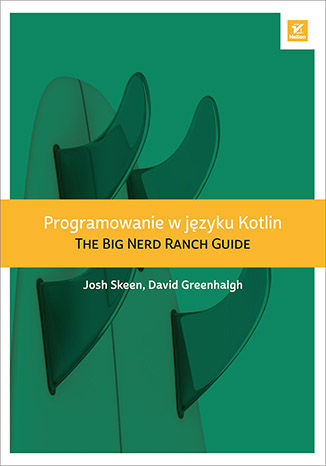
Programowanie w języku Kotlin. The Big Nerd Ranch Guide
Josh Skeen, David Greenhalgh
Gdy w 2017 roku na konferencji Google ogłoszono, że Kotlin jest jednym z oficjalnie wspieranych języków programowania aplikacji dla Androida, język ten błyskawicznie stał się popularny. Najpoważniejsze firmy technologiczne doceniają jego zalety, takie jak zwarta składnia i integracja z kodem Javy. Co ważne, twórcy Kotlina czerpali z doświadczeń projektantów Javy i zapewnili, że te dwa języki są ze sobą ściśle powiązane. W ten sposób świeżość rozwiązań i nowoczesne mechanizmy zostały znakomicie połączone z najlepszymi cechami Javy, a Kotlin stał się wszechstronnym wieloplatformowym językiem programowania. Ta książka jest przeznaczona dla programistów, którzy chcą poznać język o możliwościach wykraczających poza Javę i pisać solidne aplikacje dla różnych platform. Pozwala w praktyczny sposób zapoznać się z unikalnymi możliwościami Kotlina i - na podstawie licznych przykładowych projektów - stopniowo zgłębiać złożone zagadnienia. Znakomitym uzupełnieniem prezentowanych treści są informacje o wewnętrznych mechanizmach działania języka wraz z ćwiczeniami do samodzielnego wykonania. Dzięki tej książce nawet początkujący programista szybko zacznie pisać efektywne i solidne aplikacje, które będą służyć użytkownikom różnych platform. W tej książce między innymi: wprowadzenie do Kotlina funkcje w Kotlinie, w tym funkcje anonimowe praca na obiektach: dziedziczenie, klasy, klasy abstrakcyjne programowanie funkcyjne w Kotlinie najciekawsze biblioteki i współdziałanie z Javą Big Nerd Ranch mieści się w Atlancie w USA. Firma została założona w 2001 roku przez Aarona Hillegassa, znakomitego programistę i trenera programowania. Jej misją jest krzewienie wiedzy o rozwijających się technologiach mobilnych. Słynie ze świetnych szkoleń i znakomitych trenerów. Kotlin: najlepsze rozwiązania nie tylko dla Androida!
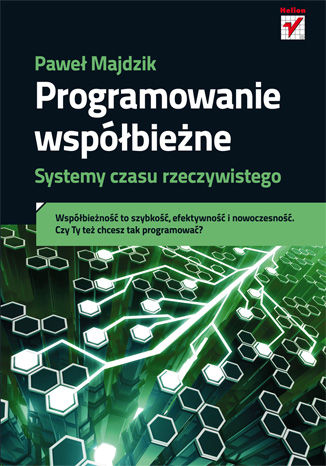
Programowanie współbieżne. Systemy czasu rzeczywistego
Paweł Majdzik
Współbieżność to szybkość, efektywność i nowoczesność. Czy Ty też chcesz tak programować? Coraz niższe ceny i powszechna dostępność sprzętu komputerowego o architekturze wieloprocesorowej powodują, że umiejętność projektowania i budowania aplikacji przetwarzających informacje współbieżnie staje się wręcz niezbędna każdemu zawodowemu programiście. W większości współczesnych języków programowania bezpośrednio zaimplementowano metody tworzenia zadań wykonywanych równolegle oraz wysokopoziomowe mechanizmy komunikacji i synchronizacji procesów. Tworzenie efektywnych aplikacji współbieżnych wciąż jednak wymaga dużej, specjalistycznej wiedzy dotyczącej systemów operacyjnych oraz programowania nisko- i wysokopoziomowego, o czym przekonało się wielu studentów kierunków informatycznych i profesjonalnych programistów. Na szczęście teraz wszyscy mogą sięgnąć po książkę "Programowanie współbieżne. Systemy czasu rzeczywistego". Pomoże ona uniknąć wielu typowych błędów związanych z tworzeniem aplikacji współbieżnych i pokaże, jak rozwiązywać problemy specyficzne dla tej dziedziny. Lektura ułatwi też zdobycie praktycznej umiejętności projektowania architektury niezawodnego współbieżnego oprogramowania, a także przybliży wiedzę na temat mechanizmów i metod wykorzystywanych przy tworzeniu systemów równoległych czasu rzeczywistego. Przedstawienie podstawowych pojęć dotyczących programowania współbieżnego Opis metod weryfikacji poprawności programów współbieżnych Definicje i własności mechanizmów synchronizacji oraz komunikacji Przykłady rozwiązań problemów programowania współbieżnego Opis mechanizmów wspierających programowanie systemów czasu rzeczywistego Implementacja metod szeregowania zadań w systemach czasu rzeczywistego Opis metod i mechanizmów języka Ada 2005 umożliwiających implementację programów współbieżnych i systemów czasu rzeczywistego Przyszłość informatyki to przetwarzanie współbieżne. Stać Cię na pozostanie w tyle? Paweł Majdzik - od 1998 roku pracuje jako adiunkt w Instytucie Sterowania i Systemów Informatycznych Uniwersytetu Zielonogórskiego. Jest autorem bądź współautorem ponad trzydziestu opracowań naukowych - książek, artykułów, referatów wydanych w kraju i za granicą, a dotyczących informatyki, w szczególności związanych z analitycznymi metodami modelowania i projektowania systemów współbieżnych.
Raspberry Pi 3 Projects for Java Programmers. Get the most out of your Raspberry Pi 3 with Java
John Sirach, Pradeeka Seneviratne
Raspberry Pi is a small, low cost and yet very powerful development platform. It is used to interact with attached electronics by the use of it's GPIO pins for multiple use cases, mainly Home Automation and Robotics. Our book is a project-based guide that will show you how to utilize the Raspberry Pi's GPIO with Java and how you can leverage this utilization with your knowledge of Java. You will start with installing and setting up the necessary hardware to create a seamless development platform. You will then straightaway start by building a project that will utilize light for presence detection. Next, you will program the application, capable of handling real time data using MQTT and utilize RPC to publish data to adafruit.io. Further, you will build a wireless robot on top of the zuma chassis with the Raspberry Pi as the main controller. Lastly, you will end the book with advanced projects that will help you to create a multi-purpose IoT controller along with building a security camera that will perform image capture and recognize faces with the help of notifications.By the end of the book, you will be able to build your own real world usable projects not limited to Home Automation, IoT and/or Robotics utilizing logic, user and web interfaces.
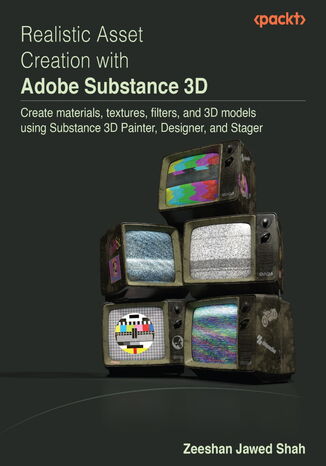
Zeeshan Jawed Shah
Adobe Substance 3D is a comprehensive suite complete with everything an artist needs to create stunning 3D digital materials. Getting a grip on the ecosystem of apps can be challenging for beginners, which is where Realistic Asset Creation with Adobe Substance 3D comes in!This practical guide doesn't bombard you with reams of textual information. Instead, you get an interactive, project-based book that’ll help you gain sound knowledge of Adobe Substance 3D and set you on the right path toward a career in 3D design. You’ll start off with the rudiments of Adobe Substance 3D Painter, which will enable you to acquire the skills needed to work with layers, masks, shelves, textures, and more. Next, you’ll move on to Adobe Substance 3D Designer and become well-acquainted with this node-based design tool as you progress through the chapters. The final section is devoted to Adobe Substance 3D Stager, which teaches you to build complex 3D scenes and visualize your edits in real time.By the end of this Adobe book, you’ll have gained a solid understanding of Adobe Substance 3D and developed the skills to build a comprehensive portfolio of work, setting you up for a lucrative career in 3D design.
REST. Najlepsze praktyki i wzorce w języku Java
Bhakti Mehta
Usprawnij wymianę danych z usługą REST! Postępująca cyfryzacja współczesnego świata wymaga coraz większej integracji przeróżnych systemów informatycznych. Nierzadko są to systemy znajdujące się w odległych lokalizacjach, napisane z wykorzystaniem różnych języków programowania i technologii. Jak zapewnić możliwość wymiany informacji między nimi? Usługi typu REST to jeden z najwygodniejszych sposobów! Co to jest REST? Jak przygotować usługę tego typu? Jak ustrzec się przed błędami? Na te i wiele innych pytań odpowiada ta książka. Znajdziesz w niej najlepsze praktyki tworzenia usług REST z wykorzystaniem języka Java. Sięgnij po nią i dowiedz się, jak projektować zasoby i zapewniać im bezpieczeństwo oraz w jaki sposób przygotowywać usługi REST dla różnych wersji językowych. Odkryj, jak testować udostępnione zasoby i zagwarantować ich najwyższą wydajność oraz jaka przyszłość czeka usługi tego typu. Sprawdź też, jak wygląda API takich usług, jak GitHub, Twitter i Facebook (API Graph). Ta książka jest doskonałą lekturą dla wszystkich programistów chcących bezproblemowo tworzyć wydajne usługi typu REST. Tematy opisane w książce: Tworzenie usług typu RESTful przy użyciu API JAX-RS 2.0 Zaawansowane techniki wykorzystania protokołu OAuth i zabezpieczeń w usługach typu RESTful Metody buforowania, weryfikacji danych, ograniczania liczby żądań, asynchronicznego wykonywania działań oraz najlepsze praktyki pozwalające zwiększyć interaktywność aplikacji Najlepsze metody stronicowania, dokumentowania i testowania usług typu RESTful HATEOAS i architektura mikrousługowa w budowanie aplikacji wykorzystujących usługi typu RESTful Przyszłość technologii REST, nowe standardy i sposób ich wykorzystania przez różne przedsiębiorstwa Porównanie technologii WebHook, WebSocket oraz Server-Sent Events umożliwiających dostarczanie informacji klientom na bieżąco Wydajne usługi REST w Twoim zasięgu!
Balachandar Bogunuva Mohanram
Representational State Transfer (REST) is a simple yet powerful software architecture style to create lightweight and scalable web services. The RESTful web services use HTTP as the transport protocol and can use any message formats, including XML, JSON(widely used), CSV, and many more, which makes it easily inter-operable across different languages and platforms.This successful book is currently in its 3rd edition and has been used by thousands of developers. It serves as an excellent guide for developing RESTful web services in Java.This book attempts to familiarize the reader with the concepts of REST. It is a pragmatic guide for designing and developing web services using Java APIs for real-life use cases following best practices and for learning to secure REST APIs using OAuth and JWT. Finally, you will learn the role of RESTful web services for future technological advances, be it cloud, IoT or social media.By the end of this book, you will be able to efficiently build robust, scalable, and secure RESTful web services using Java APIs.
René Enríquez
A sequential and easy-to-follow guide which allows you to understand the concepts related to securing web apps/services quickly and efficiently, since each topic is explained and described with the help of an example and in a step-by-step manner, helping you to easily implement the examples in your own projects. This book is intended for web application developers who use RESTful web services to power their websites. Prior knowledge of RESTful is not mandatory, but would be advisable.
Guillaume Gomez, Antoni Boucher
Rust is an open source, safe, concurrent, practical language created by Mozilla. It runs blazingly fast, prevents segfaults, and guarantees safety. This book gets you started with essential software development by guiding you through the different aspects of Rust programming. With this approach, you can bridge the gap between learning and implementing immediately. Beginning with an introduction to Rust, you’ll learn the basic aspects such as its syntax, data types, functions, generics, control flows, and more. After this, you’ll jump straight into building your first project, a Tetris game. Next you’ll build a graphical music player and work with fast, reliable networking software using Tokio, the scalable and productive asynchronous IO Rust library. Over the course of this book, you’ll explore various features of Rust Programming including its SDL features, event loop, File I/O, and the famous GTK+ widget toolkit. Through these projects, you’ll see how well Rust performs in terms of concurrency—including parallelism, reliability, improved performance, generics, macros, and thread safety. We’ll also cover some asynchronous and reactive programming aspects of Rust.By the end of the book, you’ll be comfortable building various real-world applications in Rust.
Sridhar Alla, Md. Rezaul Karim
Scala has been observing wide adoption over the past few years, especially in the field of data science and analytics. Spark, built on Scala, has gained a lot of recognition and is being used widely in productions. Thus, if you want to leverage the power of Scala and Spark to make sense of big data, this book is for you.The first part introduces you to Scala, helping you understand the object-oriented and functional programming concepts needed for Spark application development. It then moves on to Spark to cover the basic abstractions using RDD and DataFrame. This will help you develop scalable and fault-tolerant streaming applications by analyzing structured and unstructured data using SparkSQL, GraphX, and Spark structured streaming. Finally, the book moves on to some advanced topics, such as monitoring, configuration, debugging, testing, and deployment.You will also learn how to develop Spark applications using SparkR and PySpark APIs, interactive data analytics using Zeppelin, and in-memory data processing with Alluxio.By the end of this book, you will have a thorough understanding of Spark, and you will be able to perform full-stack data analytics with a feel that no amount of data is too big.
Ivan Nikolov
Design patterns make developers’ lives easier by helping them write great software that is easy to maintain, runs efficiently, and is valuable to the company or people concerned. You’ll learn about the various features of Scala and will be able to apply well-known, industry-proven design patterns in your work. The book starts off by focusing on some of the most interesting and latest features of Scala while using practical real-world examples. We will be learning about IDE’s and Aspect Oriented Programming. We will be looking into different components in Scala. We will also cover the popular Gang of Four design patterns and show you how to incorporate functional patterns effectively. The book ends with a practical example that demonstrates how the presented material can be combined in real-life applications. You’ll learn the necessary concepts to build enterprise-grade applications. By the end of this book, you’ll have enough knowledge and understanding to quickly assess problems and come up with elegant solutions.
Joshua Suereth D.
Scala to słowo, które ostatnio nie schodzi z ust programistów Javy. Pod tą nazwą kryje się język łączący światy programowania funkcyjnego i obiektowego. Jego ogromną zaletą jest działanie w oparciu o wirtualną maszynę Javy. Pozwala to między innymi na bezproblemową komunikację i współdzielenie kodu między oboma językami. James Gosling, twórca Javy, zapytany o to, jakiego języka oprogramowania działającego w ten sposób użyłby obecnie (gdyby nie mógł wykorzystać Javy), odparł bez zastanowienia: „Scala!”. To chyba najlepszy dowód na to, że ten język wart jest Twojego czasu! Dzięki tej książce opanujesz Scalę szybko i bezboleśnie, więc będziesz mógł wykorzystać jej zalety już w najbliższym projekcie. W trakcie lektury poznasz składnię, fundamentalne zasady tworzenia oprogramowania w Scali oraz konwencje kodowania w tym języku. W kolejnych rozdziałach dowiesz się, czym są niejawne widoki, jakie typy danych masz do dyspozycji i jakie są ich ograniczenia. Co jeszcze? Integracja Scali z Javą to niezwykle istotny temat, dający Ci pole do popisu! Ponadto poznasz wzorce stosowane w programowaniu funkcyjnym. Słowo wstępne do tej niezwykłej książki napisał sam Martin Odersky - twórca języka Scala! Niniejsza książka jest najlepszym kompendium wiedzy na temat programowania w tym języku. Musisz ją mieć! Poznaj: konwencje obowiązujące w Scali składnię języka najlepsze wzorce projektowe stosowane w programowaniu funkcyjnym potencjał języka Scala! Poznaj i wykorzystaj potęgę programowania funkcyjnego!
Mikael Valot, Nicolas Jorand
Scala Programming Projects is a comprehensive project-based introduction for those who are new to Scala. Complete with step-by-step instructions and easy-to-follow tutorials that demonstrate best practices when building applications, this Scala book will have you building real-world projects in no time.Starting with the fundamentals of software development, you’ll begin with simple projects, such as developing a financial independence calculator, and then advance to more complex projects, such as a building a shopping application and a Bitcoin transaction analyzer. You’ll explore a variety of Scala features, including its OOP and FP capabilities, and learn how to write concise, reactive, and concurrent applications in a type-safe manner. You’ll also understand how to use libraries such as Akka and Play. Furthermore, you’ll be able to integrate your Scala apps with Kafka, Spark, and Zeppelin, along with deploying applications on a cloud platform.By the end of the book, you’ll have a firm foundation in Java programming that’ll enable you to solve a variety of real-world problems, and you’ll have built impressive projects to add to your professional portfolio.
Hrishikesh Vijay Karambelkar
This book is a step-by-step guide for readers who would like to learn how to build complete enterprise search solutions, with ample real-world examples and case studies. If you are a developer, designer, or architect who would like to build enterprise search solutions for your customers or organization, but have no prior knowledge of Apache Solr/Lucene technologies, this is the book for you.
Carl Cocchiaro
The Selenium WebDriver 3.x Technology is an open source API available to test both Browser and Mobile applications. It is completely platform independent in that tests built for one browser or mobile device, will also work on all other browsers and mobile devices. Selenium supports all major development languages which allow it to be tied directly into the technology used to develop the applications. This guide will provide a step-by-step approach to designing and building a data-driven test framework using Selenium WebDriver, Java, and TestNG.The book starts off by introducing users to the Selenium Page Object Design Patterns and D.R.Y Approaches to Software Development. In doing so, it covers designing and building a Selenium WebDriver framework that supports both Browser and Mobile Devices. It will lead the user through a journey of architecting their own framework with a scalable driver class, Java utility classes, JSON Data Provider, Data-Driven Test Classes, and support for third party tools and plugins.Users will learn how to design and build a Selenium Grid from scratch to allow the framework to scale and support different browsers, mobile devices, versions, and platforms, and how they can leverage third party grids in the Cloud like SauceLabs.Other topics covered include designing abstract base and sub-classes, inheritance, dual-driver support, parallel testing, testing multi-branded applications, best practices for using locators, and data encapsulation.Finally, you will be presented with a sample fully-functional framework to get them up and running with the Selenium WebDriver for browser testing.By the end of the book, you will be able to design your own automation testing framework and perform data-driven testing with Selenium WebDriver.
Selenium WebDriver w Javie. Praktyczne wprowadzenie do tworzenia testów systemowych
Boni García
Selenium pozwala na automatyzację pracy przeglądarek internetowych. Kluczowym komponentem tego projektu open source jest Selenium WebDriver - biblioteka do programistycznego kontrolowania przeglądarek. Podstawowym zastosowaniem Selenium jest implementacja testów systemowych w celu weryfikacji funkcjonowania aplikacji. Narzędzie to zdobyło ogromną popularność - stanowi ono jedno z wiodących rozwiązań w zakresie testów systemowych. Jest chętnie używane zarówno przez duże organizacje, jak i samodzielnych programistów. Ten praktyczny przewodnik po Selenium WebDriver w wersji 4 z uwzględnieniem implementacji w Javie jest przeznaczony dla programistów Javy, inżynierów jakości i testerów. Przedstawiono w nim główne aspekty zautomatyzowanej nawigacji po stronie, manipulacji w przeglądarce, interakcji z elementami, naśladowania działań użytkownika i automatycznego zarządzania sterownikami. Opisano koncepcję wzorca projektowego POM, który pozwala na modelowanie stron internetowych w zorientowanych obiektowo klasach. Zaprezentowano różne sposoby przeprowadzania testów i wprowadzania odpowiedniej ich kolejności, omówiono też zasady analizy błędnych wykonań w celu określenia przyczyn niepowodzenia. Pokazano także możliwości wzbogacania testów o inne technologie, służące na przykład do raportowania wyników, generowania danych czy implementacji szczególnych przypadków użycia. W książce między innymi: przygotowanie środowiska do testów end-to-end z Selenium WebDriver automatyczne interakcje z aplikacjami internetowymi strategie testowania na wielu przeglądarkach testowanie działania formularzy, komunikatów w oknach i skryptów JavaScript posługiwanie się złożoną infrastrukturą w testach Selenium WebDriver wykorzystanie programowania zorientowanego obiektowo w testowanych aplikacjach Selenium: testowanie, które daje niezawodność i bezpieczeństwo!
Robert Nagy
Sharing code between platforms can help developers gain a competitive edge, and Kotlin Multiplatform Mobile (KMM) offers a sensible way to do it. KMM helps mobile teams share code between Android and iOS in a flexible way, leaving room for native development.The book begins by helping you to gain a clear understanding of the Kotlin Multiplatform approach, how it works, and how it is different from cross-platform technologies, such as React Native and Flutter, and code sharing options, such as C++. You'll then see how your team can use this software development kit (SDK) to build native applications more effectively by learning timeless concepts and working through practical examples. As you advance, you'll get to grips with the core concepts, understand why UI sharing fails, and get hands-on with developing a small KMM application. Finally, you'll discover expert tips and best practices, along with production- and adoption-related questions, that will help you take the next step in your project and career.By the end of this Kotlin book, you'll have gained a solid understanding of the capabilities of KMM and be able to share code between Android and iOS flexibly.
René Enríquez, Alberto Salazar
Spring 5 and its ecosystem can be used to build robust architectures effectively. Software architecture is the underlying piece that helps us accomplish our business goals whilst supporting the features that a product demands. This book explains in detail how to choose the right architecture and apply best practices during your software development cycle to avoid technical debt and support every business requirement. Choosing the right architecture model to support your business requirements is one of the key decisions you need to take when a new product is being created from scratch or is being refactored to support new business demands. This book gives you insights into the most common architectural models and guides you when and where they can be used. During this journey, you’ll see cutting-edge technologies surrounding the Spring products, and understand how to use agile techniques such as DevOps and continuous delivery to take your software to production effectively. By the end of this book, you’ll not only know the ins and outs of Spring, but also be able to make critical design decisions that surpass your clients’ expectations.
Wanderson Xesquevixos
Keep up with the fast-paced tech landscape with Software Architecture with Spring, your practical guide to making strategic architectural decisions that align seamlessly with your business objectives.Drawing from Wanderson's decades of experience, you'll journey through the complete software development lifecycle—from initial requirements gathering, through development and testing, to production deployment. You'll get hands-on with the evolution of an auction system, exploring its transformation through multiple architectural styles. You’ll discover how you can effectively transform a monolithic system into microservices using proven patterns and practices.As you progress, you’ll master advanced architectural paradigms such as Event-Driven Architecture, Filter-and-Pipeline Architecture, and Serverless Architecture.
Saurabh Shrivastava, Neelanjali Srivastav, Rajesh Sheth, Kamal...
Build a strong foundation in solution architecture and excel in your career with the Solutions Architect’s Handbook. Authored by seasoned AWS technology leaders Saurabh Shrivastav and Neelanjali Srivastav, this book goes beyond traditional certification guides, offering in-depth insights and advanced techniques to meet the specific needs and challenges of solutions architects today. This edition introduces exciting new features that keep you at the forefront of this evolving field. From large language models and generative AI to deep learning innovations, these cutting-edge advancements are shaping the future of technology. Key topics such as cloud-native architecture, data engineering architecture, cloud optimization, mainframe modernization, and building cost-efficient, secure architectures remain essential today. This book covers both emerging and foundational technologies, guiding you through solution architecture design with key principles and providing the knowledge you need to succeed as a Solutions Architect. It also sharpens your soft skills, providing career-accelerating techniques to stay ahead.By the end of this book, you will be able to harness cutting-edge technologies, apply practical insights from real-world scenarios, and enhance your solution architecture skills with the Solutions Architect's Handbook.
Dinesh Rajput
Design patterns help speed up the development process by offering well tested and proven solutions to common problems. These patterns coupled with the Spring framework offer tremendous improvements in the development process.The book begins with an overview of Spring Framework 5.0 and design patterns. You will understand the Dependency Injection pattern, which is the main principle behind the decoupling process that Spring performs, thus making it easier to manage your code. You will learn how GoF patterns can be used in Application Design. You will then learn to use Proxy patterns in Aspect Oriented Programming and remoting. Moving on, you will understand the JDBC template patterns and their use in abstracting database access. Then, you will be introduced to MVC patterns to build Reactive web applications. Finally, you will move on to more advanced topics such as Reactive streams and Concurrency.At the end of this book, you will be well equipped to develop efficient enterprise applications using Spring 5 with common design patterns
Claudio Eduardo de Oliveira
With growing demands, organizations are looking for systems that are robust and scalable. Therefore, the Spring Framework has become the most popular framework for Java development. It not only simplifies software development but also improves developer productivity. This book covers effective ways to develop robust applications in Java using Spring.The book has three parts, where each one covers the building of a comprehensive project in Java and Spring. In the first part, you will construct a CMS Portal using Spring's support for building REST APIs. You will also learn to integrate these APIs with AngularJS and later develop this application in a reactive fashion using Project Reactor, Spring WebFlux, and Spring Data. In the second part, you’ll understand how to build a messaging application, which will consume the Twitter API and perform filtering and transformations. Here, you will also learn about server-sent events and explore Spring’s support for Kotlin, which makes application development quick and efficient. In the last part, you will build a real microservice application using the most important techniques and patterns such as service discovery, circuit breakers, security, data streams, monitoring, and a lot more from this architectural style.By the end of the book, you will be confident about using Spring to build your applications.
Spring 5.0 Cookbook. Recipes to build, test, and run Spring applications efficiently
Sherwin John C. Tragura
The Spring framework has been the go-to framework for Java developers for quite some time. It enhances modularity, provides more readable code, and enables the developer to focus on developing the application while the underlying framework takes care of transaction APIs, remote APIs, JMX APIs, and JMS APIs. The upcoming version of the Spring Framework has a lot to offer, above and beyond the platform upgrade to Java 9, and this book will show you all you need to know to overcome common to advanced problems you might face.Each recipe will showcase some old and new issues and solutions, right from configuring Spring 5.0 container to testing its components. Most importantly, the book will highlight concurrent processes, asynchronous MVC and reactive programming using Reactor Core APIs. Aside from the core components, this book will also include integration of third-party technologies that are mostly needed in building enterprise applications. By the end of the book, the reader will not only be well versed with the essential concepts of Spring, but will also have mastered its latest features in a solution-oriented manner.
Spring 5.0 Microservices. Scalable systems with Reactive Streams and Spring Boot - Second Edition
Rajesh R V
The Spring Framework is an application framework and inversion of the control container for the Java platform. The framework’s core features can be used by any Java application, but there are extensions to build web applications on top of the Java EE platform.This book will help you implement the microservice architecture in Spring Framework, Spring Boot, and Spring Cloud. Written to the latest specifications of Spring that focuses on Reactive Programming, you’ll be able to build modern, internet-scale Java applications in no time. The book starts off with guidelines to implement responsive microservices at scale. Next, you will understand how Spring Boot is used to deploy serverless autonomous services by removing the need to have a heavyweight application server.Later, you’ll learn how to go further by deploying your microservices to Docker and managing them with Mesos. By the end of the book, you will have gained more clarity on the implementation of microservices using Spring Framework and will be able to use them in internet-scale deployments through real-world examples.
Nilang Patel
Spring makes it easy to create RESTful applications, merge with social services, communicate with modern databases, secure your system, and make your code modular and easy to test. With the arrival of Spring Boot, developers can really focus on the code and deliver great value, with minimal contour.This book will show you how to build various projects in Spring 5.0, using its features and third party tools. We'll start by creating a web application using Spring MVC, Spring Data, the World Bank API for some statistics on different countries, and MySQL database. Moving ahead, you'll build a RESTful web services application using Spring WebFlux framework. You'll be then taken through creating a Spring Boot-based simple blog management system, which uses Elasticsearch as the data store. Then, you'll use Spring Security with the LDAP libraries for authenticating users and create a central authentication and authorization server using OAuth 2 protocol. Further, you'll understand how to create Spring Boot-based monolithic application using JHipster. Toward the end, we'll create an online book store with microservice architecture using Spring Cloud and Net?ix OSS components, and a task management system using Spring and Kotlin.By the end of the book, you'll be able to create coherent and ?exible real-time web applications using Spring Framework.