
Uczenie maszynowe
Uczenie maszynowe (ang. machine learning) zajmuje się teorią i praktycznym zastosowaniem algorytmów analizujących dane — stanowi najciekawszą dziedzinę informatyki. Żyjemy w czasach przetwarzania olbrzymiej ilości informacji; za pomocą samouczących się algorytmów będących częścią uczenia maszynowego informacje te są przekształcane w rzeczywistą wiedzę. Dzięki licznym i potężnym bibliotekom o jawnym kodzie źródłowym, które powstały w ostatnich latach, prawdopodobnie teraz jest najlepszy czas, aby zainteresować się uczeniem maszynowym i nauczyć się wykorzystywać potężne algorytmy do wykrywania wzorców w przetwarzanych danych oraz prognozować przyszłe zdarzenia. Przykładami zastosowania Machine Learning są np. mechanizmy wyszukiwarek internetowych, GPS, autokorekta w edytorze tekstu czy boty w komunikatorach. Jedną z dziedzin uczenia maszynowego jest deep learning, podczas którego komputer uczy się procesów naturalnych dla ludzkiego mózgu (tworzy sieci neuronowe). Technologia ta jest wykorzystywana np. przy identyfikacji głosu i obrazów.
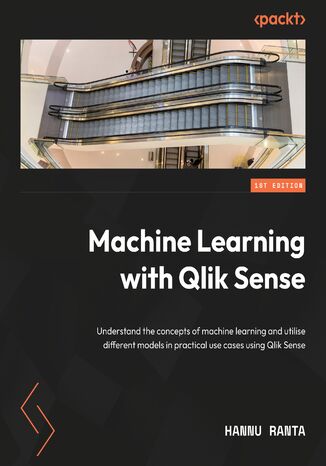
Hannu Ranta
The ability to forecast future trends through data prediction, coupled with the integration of ML and AI, has become indispensable to global enterprises. Qlik, with its extensive machine learning capabilities, stands out as a leading analytics platform enabling businesses to achieve exhaustive comprehension of their data. This book helps you maximize these capabilities by using hands-on illustrations to improve your ability to make data-driven decisions.You’ll begin by cultivating an understanding of machine learning concepts and algorithms, and build a foundation that paves the way for subsequent chapters. The book then helps you navigate through the process of framing machine learning challenges and validating model performance. Through the lens of Qlik Sense, you'll explore data preprocessing and analysis techniques, as well as find out how to translate these techniques into pragmatic machine learning solutions. The concluding chapters will help you get to grips with advanced data visualization methods to facilitate a clearer presentation of findings, complemented by an array of real-world instances to bolster your skillset.By the end of this book, you’ll have mastered the art of machine learning using Qlik tools and be able to take your data analytics journey to new heights.
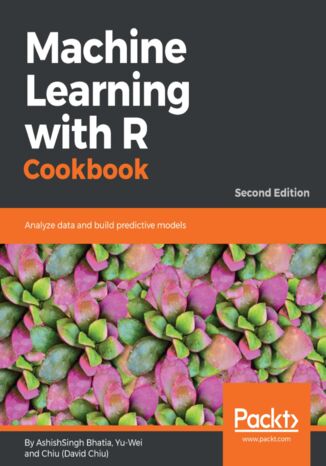
Machine Learning with R Cookbook. Analyze data and build predictive models - Second Edition
AshishSingh Bhatia, Yu-Wei, Chiu (David Chiu)
Big data has become a popular buzzword across many industries. An increasing number of people have been exposed to the term and are looking at how to leverage big data in their own businesses, to improve sales and profitability. However, collecting, aggregating, and visualizing data is just one part of the equation. Being able to extract useful information from data is another task, and a much more challenging one. Machine Learning with R Cookbook, Second Edition uses a practical approach to teach you how to perform machine learning with R. Each chapter is divided into several simple recipes. Through the step-by-step instructions provided in each recipe, you will be able to construct a predictive model by using a variety of machine learning packages. In this book, you will first learn to set up the R environment and use simple R commands to explore data. The next topic covers how to perform statistical analysis with machine learning analysis and assess created models, covered in detail later on in the book. You'll also learn how to integrate R and Hadoop to create a big data analysis platform. The detailed illustrations provide all the information required to start applying machine learning to individual projects. With Machine Learning with R Cookbook, machine learning has never been easier.
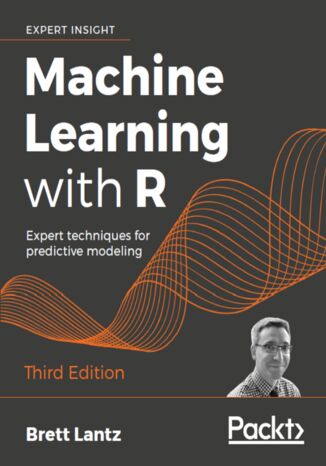
Machine Learning with R. Expert techniques for predictive modeling - Third Edition
Brett Lantz
Machine learning, at its core, is concerned with transforming data into actionable knowledge. R offers a powerful set of machine learning methods to quickly and easily gain insight from your data.Machine Learning with R, Third Edition provides a hands-on, readable guide to applying machine learning to real-world problems. Whether you are an experienced R user or new to the language, Brett Lantz teaches you everything you need to uncover key insights, make new predictions, and visualize your findings.This new 3rd edition updates the classic R data science book to R 3.6 with newer and better libraries, advice on ethical and bias issues in machine learning, and an introduction to deep learning. Find powerful new insights in your data; discover machine learning with R.
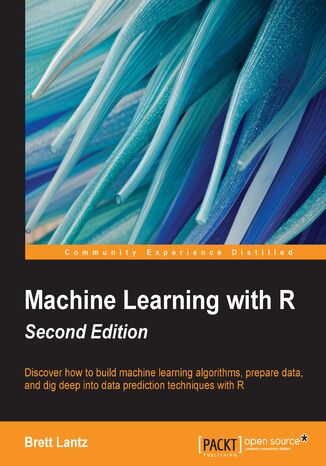
Brett Lantz
Updated and upgraded to the latest libraries and most modern thinking, Machine Learning with R, Second Edition provides you with a rigorous introduction to this essential skill of professional data science. Without shying away from technical theory, it is written to provide focused and practical knowledge to get you building algorithms and crunching your data, with minimal previous experience.With this book, you'll discover all the analytical tools you need to gain insights from complex data and learn how to choose the correct algorithm for your specific needs. Through full engagement with the sort of real-world problems data-wranglers face, you'll learn to apply machine learning methods to deal with common tasks, including classification, prediction, forecasting, market analysis, and clustering.
Iván Pastor Sanz
Machine Learning with R Quick Start Guide takes you on a data-driven journey that starts with the very basics of R and machine learning. It gradually builds upon core concepts so you can handle the varied complexities of data and understand each stage of the machine learning pipeline.From data collection to implementing Natural Language Processing (NLP), this book covers it all. You will implement key machine learning algorithms to understand how they are used to build smart models. You will cover tasks such as clustering, logistic regressions, random forests, support vector machines, and more. Furthermore, you will also look at more advanced aspects such as training neural networks and topic modeling.By the end of the book, you will be able to apply the concepts of machine learning, deal with data-related problems, and solve them using the powerful yet simple language that is R.
Brett Lantz
Machine learning, at its core, is concerned with transforming data into actionable knowledge. This fact makes machine learning well-suited to the present-day era of big data and data science. Given the growing prominence of R—a cross-platform, zero-cost statistical programming environment—there has never been a better time to start applying machine learning. Whether you are new to data science or a veteran, machine learning with R offers a powerful set of methods for quickly and easily gaining insight from your data.Machine Learning with R is a practical tutorial that uses hands-on examples to step through real-world application of machine learning. Without shying away from the technical details, we will explore Machine Learning with R using clear and practical examples. Well-suited to machine learning beginners or those with experience. Explore R to find the answer to all of your questions.How can we use machine learning to transform data into action? Using practical examples, we will explore how to prepare data for analysis, choose a machine learning method, and measure the success of the process.We will learn how to apply machine learning methods to a variety of common tasks including classification, prediction, forecasting, market basket analysis, and clustering. By applying the most effective machine learning methods to real-world problems, you will gain hands-on experience that will transform the way you think about data.Machine Learning with R will provide you with the analytical tools you need to quickly gain insight from complex data.
Md. Rezaul Karim, Ajay Kumar N
Scala is a highly scalable integration of object-oriented nature and functional programming concepts that make it easy to build scalable and complex big data applications. This book is a handy guide for machine learning developers and data scientists who want to develop and train effective machine learning models in Scala.The book starts with an introduction to machine learning, while covering deep learning and machine learning basics. It then explains how to use Scala-based ML libraries to solve classification and regression problems using linear regression, generalized linear regression, logistic regression, support vector machine, and Naïve Bayes algorithms.It also covers tree-based ensemble techniques for solving both classification and regression problems. Moving ahead, it covers unsupervised learning techniques, such as dimensionality reduction, clustering, and recommender systems. Finally, it provides a brief overview of deep learning using a real-life example in Scala.
Kevin Jolly
Scikit-learn is a robust machine learning library for the Python programming language. It provides a set of supervised and unsupervised learning algorithms. This book is the easiest way to learn how to deploy, optimize, and evaluate all of the important machine learning algorithms that scikit-learn provides.This book teaches you how to use scikit-learn for machine learning. You will start by setting up and configuring your machine learning environment with scikit-learn. To put scikit-learn to use, you will learn how to implement various supervised and unsupervised machine learning models. You will learn classification, regression, and clustering techniques to work with different types of datasets and train your models.Finally, you will learn about an effective pipeline to help you build a machine learning project from scratch. By the end of this book, you will be confident in building your own machine learning models for accurate predictions.
Machine Learning with Swift. Artificial Intelligence for iOS
Alexander Sosnovshchenko
Machine learning as a field promises to bring increased intelligence to the software by helping us learn and analyse information efficiently and discover certain patterns that humans cannot. This book will be your guide as you embark on an exciting journey in machine learning using the popular Swift language. We’ll start with machine learning basics in the first part of the book to develop a lasting intuition about fundamental machine learning concepts. We explore various supervised and unsupervised statistical learning techniques and how to implement them in Swift, while the third section walks you through deep learning techniques with the help of typical real-world cases. In the last section, we will dive into some hard core topics such as model compression, GPU acceleration and provide some recommendations to avoid common mistakes during machine learning application development. By the end of the book, you'll be able to develop intelligent applications written in Swift that can learn for themselves.
Rich Collier, Bahaaldine Azarmi
Machine Learning with the Elastic Stack is a comprehensive overview of the embedded commercial features of anomaly detection and forecasting. The book starts with installing and setting up Elastic Stack. You will perform time series analysis on varied kinds of data, such as log files, network flows, application metrics, and financial data.As you progress through the chapters, you will deploy machine learning within the Elastic Stack for logging, security, and metrics. In the concluding chapters, you will see how machine learning jobs can be automatically distributed and managed across the Elasticsearch cluster and made resilient to failure.By the end of this book, you will understand the performance aspects of incorporating machine learning within the Elastic ecosystem and create anomaly detection jobs and view results from Kibana directly.
Rich Collier, Camilla Montonen, Bahaaldine Azarmi
Elastic Stack, previously known as the ELK stack, is a log analysis solution that helps users ingest, process, and analyze search data effectively. With the addition of machine learning, a key commercial feature, the Elastic Stack makes this process even more efficient. This updated second edition of Machine Learning with the Elastic Stack provides a comprehensive overview of Elastic Stack's machine learning features for both time series data analysis as well as for classification, regression, and outlier detection.The book starts by explaining machine learning concepts in an intuitive way. You'll then perform time series analysis on different types of data, such as log files, network flows, application metrics, and financial data. As you progress through the chapters, you'll deploy machine learning within Elastic Stack for logging, security, and metrics. Finally, you'll discover how data frame analysis opens up a whole new set of use cases that machine learning can help you with.By the end of this Elastic Stack book, you'll have hands-on machine learning and Elastic Stack experience, along with the knowledge you need to incorporate machine learning in your distributed search and data analysis platform.
Machines That Think. How Artificial Intelligence Works and What It Means for Us
Rheinwerk Publishing, Inc, Inga Strümke
Machines That Think explores the evolution of artificial intelligence (AI), from its roots in early theoretical frameworks to modern machine learning technologies. It begins by diving into the history of AI, featuring the foundational contributions of pioneers like Alan Turing and John von Neumann. The book then examines the attempts to make machines intelligent, covering symbolic AI, expert systems, and the rise of neural networks. With a focus on the technological advancements that shaped AI, this book provides readers with a deep understanding of how AI systems have evolved over time.The book continues by addressing the growing importance of data in AI systems. It explores how data shapes machine learning models and the inherent challenges faced by data scientists when gathering and processing data for AI applications. The impact of data on model accuracy and the ethical dilemmas surrounding its collection and usage are also discussed. In the final chapters, the book delves into the ethical and societal implications of AI, exploring issues such as privacy, accountability, and the future of AI in everyday life. It speculates on the future of artificial general intelligence (AGI) and superintelligence, contemplating the potential consequences of these technologies.
Mastering Arduino. A project-based approach to electronics, circuits, and programming
Jon Hoffman, Ejike (George Steve) Ifeanyichukwu, Pratik...
Mastering Arduino is an all-in-one guide to getting the most out of your Arduino. This practical, no-nonsense guide teaches you all of the electronics and programming skills that you need to create advanced Arduino projects. This book is packed full of real-world projects for you to practice on, bringing all of the knowledge in the book together and giving you the skills to build your own robot from the examples in this book. The final two chapters discuss wireless technologies and how they can be used in your projects. The book begins with the basics of electronics, making sure that you understand components, circuits, and prototyping before moving on. It then performs the same function for code, getting you into the Arduino IDE and showing you how to connect the Arduino to a computer and run simple projects on your Arduino.Once the basics are out of the way, the next 10 chapters of the book focus on small projects centered around particular components, such as LCD displays, stepper motors, or voice synthesizers. Each of these chapters will get you familiar with the technology involved, how to build with it, how to program it, and how it can be used in your own projects.
Christoph Körner, Marcel Alsdorf
Azure Machine Learning is a cloud service for accelerating and managing the machine learning (ML) project life cycle that ML professionals, data scientists, and engineers can use in their day-to-day workflows. This book covers the end-to-end ML process using Microsoft Azure Machine Learning, including data preparation, performing and logging ML training runs, designing training and deployment pipelines, and managing these pipelines via MLOps.The first section shows you how to set up an Azure Machine Learning workspace; ingest and version datasets; as well as preprocess, label, and enrich these datasets for training. In the next two sections, you'll discover how to enrich and train ML models for embedding, classification, and regression. You'll explore advanced NLP techniques, traditional ML models such as boosted trees, modern deep neural networks, recommendation systems, reinforcement learning, and complex distributed ML training techniques - all using Azure Machine Learning.The last section will teach you how to deploy the trained models as a batch pipeline or real-time scoring service using Docker, Azure Machine Learning clusters, Azure Kubernetes Services, and alternative deployment targets.By the end of this book, you’ll be able to combine all the steps you’ve learned by building an MLOps pipeline.
Christoph Körner, Kaijisse Waaijer
The increase being seen in data volume today requires distributed systems, powerful algorithms, and scalable cloud infrastructure to compute insights and train and deploy machine learning (ML) models. This book will help you improve your knowledge of building ML models using Azure and end-to-end ML pipelines on the cloud.The book starts with an overview of an end-to-end ML project and a guide on how to choose the right Azure service for different ML tasks. It then focuses on Azure Machine Learning and takes you through the process of data experimentation, data preparation, and feature engineering using Azure Machine Learning and Python. You'll learn advanced feature extraction techniques using natural language processing (NLP), classical ML techniques, and the secrets of both a great recommendation engine and a performant computer vision model using deep learning methods. You'll also explore how to train, optimize, and tune models using Azure Automated Machine Learning and HyperDrive, and perform distributed training on Azure. Then, you'll learn different deployment and monitoring techniques using Azure Kubernetes Services with Azure Machine Learning, along with the basics of MLOps—DevOps for ML to automate your ML process as CI/CD pipeline.By the end of this book, you'll have mastered Azure Machine Learning and be able to confidently design, build and operate scalable ML pipelines in Azure.
Giuseppe Bonaccorso
Mastering Machine Learning Algorithms, Second Edition helps you harness the real power of machine learning algorithms in order to implement smarter ways of meeting today's overwhelming data needs. This newly updated and revised guide will help you master algorithms used widely in semi-supervised learning, reinforcement learning, supervised learning, and unsupervised learning domains.You will use all the modern libraries from the Python ecosystem – including NumPy and Keras – to extract features from varied complexities of data. Ranging from Bayesian models to the Markov chain Monte Carlo algorithm to Hidden Markov models, this machine learning book teaches you how to extract features from your dataset, perform complex dimensionality reduction, and train supervised and semi-supervised models by making use of Python-based libraries such as scikit-learn. You will also discover practical applications for complex techniques such as maximum likelihood estimation, Hebbian learning, and ensemble learning, and how to use TensorFlow 2.x to train effective deep neural networks.By the end of this book, you will be ready to implement and solve end-to-end machine learning problems and use case scenarios.