
JavaScript
Lektura podręczników z działu JavaScript pozwoli wam od podstaw poznać ten popularny, obiektowy język skryptowy, wykorzystywany głównie w celu tworzenia interaktywnych i dynamicznych elementów stron WWW.
Poznacie podstawowe elementy, składnię tego języka, zdarzenia i wyrażenia regularne. Opanujecie szereg metod pozwalających zidentyfikować przeglądarkę, dowiecie się jak sprawnie sterować ramkami i oknami przeglądarki a także jak obsługiwać pliki multimedialne.Zapoznacie się także z elementami technologii AJAX czy arkuszami stylów CSS. Teoria, poparta licznymi przykładami pozwoli wam skutecznie reagować na błędy w skrypcie oraz opracować mechanizmy komunikacji między klientem a serwerem.
Remo H. Jansen
TypeScript is an open source and cross-platform statically typed superset of JavaScript that compiles to plain JavaScript and runs in any browser or host. This book is a step-by-step guide that will take you through the use and benefits of TypeScript with the help of practical examples. You will start off by understanding the basics as well as the new features of TypeScript 2.x. Then, you will learn how to work with functions and asynchronous programming APIs. You will continue by learning how to resolve runtime issues and how to implement TypeScript applications using the Object-oriented programming (OOP) and functional programming (FP) paradigms. Later, you will automate your development workflow with the help of tools such as Webpack. Towards the end of this book, you will delve into some real-world scenarios by implementing some full-stack TypeScript applications with Node.js, React and Angular as well as how to optimize and test them. Finally, you will be introduced to the internal APIs of the TypeScript compiler, and you will learn how to create custom code analysis tools.
Bass Jobsen
Less is a CSS preprocessor that essentially improves the functionality of simple CSS with the addition of several features. The book begins by teaching you how Less facilitates the process of web development. You will quickly then move on to actually creating your first layout using Less and compiling your very first Less code.Next, you will learn about variables and mixins and how they will help in building robust CSS code. In addition, you'll learn how to keep your code clean and test it by using style guides. We will then move on to the concept of Bootstrapping and the strength of using Less with Twitter Bootstrap. Going one step further, you will be able to customize Twitter's Bootstrap 3 using Less.Finally, you will learn how to integrate Less into your WordPress themes and explore other web apps that use Less. By leveraging this powerful CSS preprocessor, you will be able to consistently produce amazing web applications while making CSS code development an enjoyable experience.
Xinsheng Robert Chen, Gaurav Barot, Samir Bhatt,...
Part of Packt’s Beginner’s Guide series, each chapter follows the creation of a fictional neighbourhood site to demonstrate an aspect of Liferay portal with practical examples, screenshots, and step-by-step instructions. All you need in order to benefit from the Liferay Beginner’s Guide is programming experience. No prior knowledge of Liferay is required, although experienced Liferay portal programmers who need to get up to speed with its latest features will also find this book useful.
Lo-Dash Essentials. Implement fast, lean, and readable code effectively with Lo-Dash
Adam Boduch
If you are a curious JavaScript developer interested simultaneously in tweaking the efficiency of your code, as well as improving the conciseness of it, and maintaining the readability of it, then this is the book for you. Ideally, the book is intended for readers already working on JavaScript projects and using frameworks such as jQuery and Backbone. Even if you're already using Lo-Dash, this book will show you how to use it efficiently. While extensive JavaScript experience isn't a requirement, you should have at least some prior programming experience in order to best understand the concepts presented.
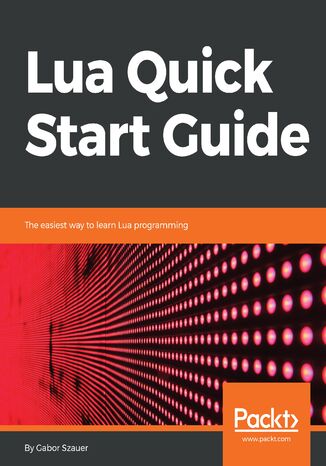
Lua Quick Start Guide. The easiest way to learn Lua programming
Gabor Szauer
Lua is a small, powerful and extendable scripting/programming language that can be used for learning to program, and writing games and applications, or as an embedded scripting language. There are many popular commercial projects that allow you to modify or extend them through Lua scripting, and this book will get you ready for that. This book is the easiest way to learn Lua. It introduces you to the basics of Lua and helps you to understand the problems it solves. You will work with the basic language features, the libraries Lua provides, and powerful topics such as object-oriented programming. Every aspect of programming in Lua, variables, data types, functions, tables, arrays and objects, is covered in sufficient detail for you to get started. You will also find out about Lua's module system and how to interface with the operating system.After reading this book, you will be ready to use Lua as a programming language to write code that can interface with the operating system, automate tasks, make playable games, and much more. This book is a solid starting point for those who want to learn Lua in order to move onto other technologies such as Love2D or Roblox.A quick start guide is a focused, shorter title that provides a faster paced introduction to a technology. It is designed for people who don't need all the details at this point in their learning curve. This presentation has been streamlined to concentrate on the things you really need to know.
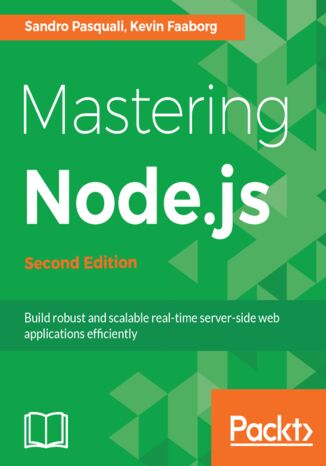
Sandro Pasquali, Kevin Faaborg
Node.js, a modern development environment that enables developers to write server- and client-side code with JavaScript, thus becoming a popular choice among developers.This book covers the features of Node that are especially helpful to developers creating highly concurrent real-time applications. It takes you on a tour of Node's innovative event non-blocking design, showing you how to build professional applications. This edition has been updated to cover the latest features of Node 9 and ES6. All code examples and demo applications have been completely rewritten using the latest techniques, introducing Promises, functional programming, async/await, and other cutting-edge patterns for writing JavaScript code. Learn how to use microservices to simplify the design and composition of distributed systems. From building serverless cloud functions to native C++ plugins, from chatbots to massively scalable SMS-driven applications, you'll be prepared for building the next generation of distributed software.By the end of this book, you'll be building better Node applications more quickly, with less code and more power, and know how to run them at scale in production environments.
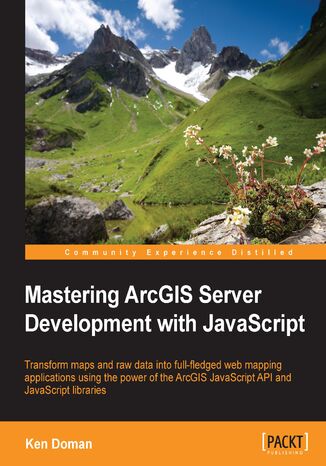
Raymond Kenneth Doman
ESRI and its ArcGIS line of software have been an industry leader in digital map production and publication for over 30 years. ArcGIS Server lets you design, configure, and publish maps that can be viewed and edited through the Internet.After designing basic maps, you may want to find out new and innovative ways to represent information using these maps. In this book, you'll work through practical examples, experiencing the pitfalls and successes of creating desktop and mobile map applications for a web browser using the ArcGIS Server platform.The book begins by introducing you to ArcGIS Server and ESRI's JavaScript API. You'll work with your first web map and then move on to learn about ESRI's building blocks. A Dojo AMS style widget will help you create your own widgets for a map and then see how to collect geographic data.Furthermore, you will learn different techniques such as using Dojo Charts to create charts and graphs to represent your data. Then you will see how to use ESRI JavaScript API with other JavaScript libraries and different styling methods to make your map stand out. By the end of the book, you will discover how to make your application compatible with different devices and platforms and test it using testing libraries.
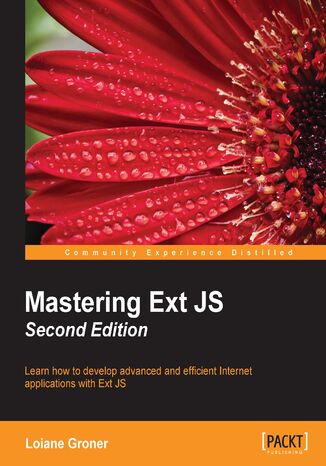
Loiane Avancini
If you are a developer who is familiar with Ext JS and want to augment your skills to create even better web applications, this is the book for you. Basic knowledge of JavaScript/HTML/CSS and any server-side language (PHP, Java, C#, Ruby, or Python) is required.