
Python
Fabrizio Romano, Benjamin Baka, Dusty Phillips
This Learning Path helps you get comfortable with the world of Python. It starts with a thorough and practical introduction to Python. You’ll quickly start writing programs, building websites, and working with data by harnessing Python's renowned data science libraries. With the power of linked lists, binary searches, and sorting algorithms, you'll easily create complex data structures, such as graphs, stacks, and queues. After understanding cooperative inheritance, you'll expertly raise, handle, and manipulate exceptions. You will effortlessly integrate the object-oriented and not-so-object-oriented aspects of Python, and create maintainable applications using higher level design patterns. Once you’ve covered core topics, you’ll understand the joy of unit testing and just how easy it is to create unit tests.By the end of this Learning Path, you will have built components that are easy to understand, debug, and can be used across different applications.This Learning Path includes content from the following Packt products:• Learn Python Programming - Second Edition by Fabrizio Romano• Python Data Structures and Algorithms by Benjamin Baka• Python 3 Object-Oriented Programming by Dusty Phillips
Benjamin Baka
Qt is a cross-platform application framework and widget toolkit that is used to create GUI applications that can run on different hardware and operating systems. The main aim of this book is to introduce Qt to the reader. Through the use of simple examples, we will walk you through building blocks without focusing too much on theory.Qt is a popular tool that can be used for building a variety of applications, such as web browsers, media players such as VLC, and Adobe Photoshop. Following Qt installation and setup, the book dives straight into helping you create your first application.You will be introduced to Widgets, Qt's interface building block, and the many varieties that are available for creating GUIs. Next, Qt's core concept of signals and slots are well illustrated with sufficient examples. The book further teaches you how to create custom widgets, signals and slots, and how to communicate useful information via dialog boxes. To cap everything off, you will be taken through writing applications that can connect to databases in order to persist data.By the end of the book, you should be well equipped to start creating your own Qt applications and confident enough to pick up more advanced Qt techniques and materials to hone your skills.
Tyler Richards
Streamlit shortens the development time for the creation of data-focused web applications, allowing data scientists to create web app prototypes using Python in hours instead of days. Getting Started with Streamlit for Data Science takes a hands-on approach to helping you learn the tips and tricks that will have you up and running with Streamlit in no time.You'll start with the fundamentals of Streamlit by creating a basic app and gradually build on the foundation by producing high-quality graphics with data visualization and testing machine learning models. As you advance through the chapters, you’ll walk through practical examples of both personal data projects and work-related data-focused web applications, and get to grips with more challenging topics such as using Streamlit Components, beautifying your apps, and quick deployment of your new apps.By the end of this book, you’ll be able to create dynamic web apps in Streamlit quickly and effortlessly using the power of Python.
Aldo Marzullo, Enrico Deusebio, Claudio Stamile
Graph Machine Learning, Second Edition builds on its predecessor’s success, delivering the latest tools and techniques for this rapidly evolving field. From basic graph theory to advanced ML models, you’ll learn how to represent data as graphs to uncover hidden patterns and relationships, with practical implementation emphasized through refreshed code examples. This thoroughly updated edition replaces outdated examples with modern alternatives such as PyTorch and DGL, available on GitHub to support enhanced learning.The book also introduces new chapters on large language models and temporal graph learning, along with deeper insights into modern graph ML frameworks. Rather than serving as a step-by-step tutorial, it focuses on equipping you with fundamental problem-solving approaches that remain valuable even as specific technologies evolve. You will have a clear framework for assessing and selecting the right tools.By the end of this book, you’ll gain both a solid understanding of graph machine learning theory and the skills to apply it to real-world challenges.*Email sign-up and proof of purchase required -
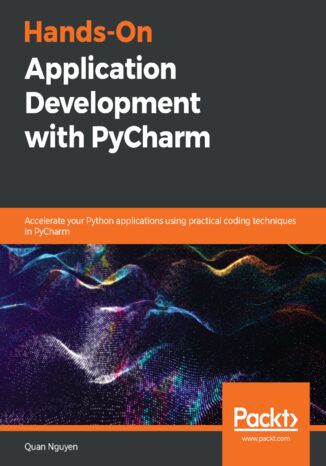
Quan Nguyen
JetBrain’s PyCharm is the most popular Integrated Development Environment (IDE) used by the Python community thanks to its numerous features that facilitate faster, more accurate, and more productive programming practices. However, the abundance of options and customizations can make PyCharm seem quite intimidating.Hands-on Application Development with PyCharm starts with PyCharm’s installation and configuration process, and systematically takes you through a number of its powerful features that can greatly improve your productivity. You’ll explore code automation, version control, graphical debugging/testing, management of virtual environments, and much more. Finally, you’ll delve into specific PyCharm features that support web development and data science, two of the fastest growing applications in Python programming. These include the integration of the Django framework as well as the extensive support for IPython and Jupyter Notebook.By the end of this PyCharm book, you will have gained extensive knowledge of the tool and be able to implement its features and make the most of its support for your projects.
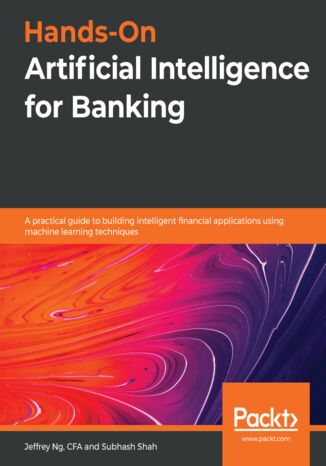
Jeffrey Ng , Subhash Shah
Remodeling your outlook on banking begins with keeping up to date with the latest and most effective approaches, such as artificial intelligence (AI). Hands-On Artificial Intelligence for Banking is a practical guide that will help you advance in your career in the banking domain. The book will demonstrate AI implementation to make your banking services smoother, more cost-efficient, and accessible to clients, focusing on both the client- and server-side uses of AI.You’ll begin by understanding the importance of artificial intelligence, while also gaining insights into the recent AI revolution in the banking industry. Next, you’ll get hands-on machine learning experience, exploring how to use time series analysis and reinforcement learning to automate client procurements and banking and finance decisions. After this, you’ll progress to learning about mechanizing capital market decisions, using automated portfolio management systems and predicting the future of investment banking. In addition to this, you’ll explore concepts such as building personal wealth advisors and mass customization of client lifetime wealth. Finally, you’ll get to grips with some real-world AI considerations in the field of banking. By the end of this book, you’ll be equipped with the skills you need to navigate the finance domain by leveraging the power of AI.
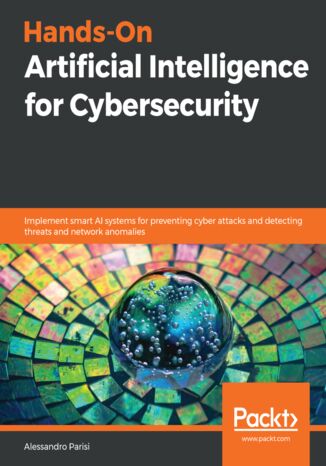
Alessandro Parisi
Today's organizations spend billions of dollars globally on cybersecurity. Artificial intelligence has emerged as a great solution for building smarter and safer security systems that allow you to predict and detect suspicious network activity, such as phishing or unauthorized intrusions.This cybersecurity book presents and demonstrates popular and successful AI approaches and models that you can adapt to detect potential attacks and protect your corporate systems. You'll learn about the role of machine learning and neural networks, as well as deep learning in cybersecurity, and you'll also learn how you can infuse AI capabilities into building smart defensive mechanisms. As you advance, you'll be able to apply these strategies across a variety of applications, including spam filters, network intrusion detection, botnet detection, and secure authentication.By the end of this book, you'll be ready to develop intelligent systems that can detect unusual and suspicious patterns and attacks, thereby developing strong network security defenses using AI.
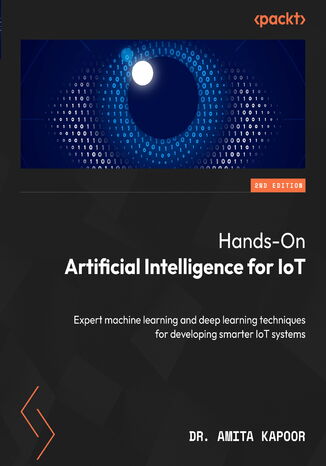
Dr. Amita Kapoor
Transform IoT devices into intelligent systems with this comprehensive guide by Amita Kapoor, Chief AI Officer at Tipz AI. Drawing on 25 years of expertise in developing intelligent systems across industries, she demonstrates how to harness the combined power of artificial intelligence and IoT technology. A pioneer in making AI and neuroscience education accessible worldwide, Amita guides you through creating smart, efficient systems that leverage the latest advances in both fields. This new edition is updated with various optimization techniques in IoT used for enhancing efficiency and performance. It introduces you to cloud platforms such as Platform as a Service (PaaS) and Infrastructure as a Service (IaaS) for analyzing data generated using IoT devices. You’ll learn about machine learning algorithms, deep learning techniques, and practical applications in real-world IoT scenarios and advance to creating AI models that work with diverse data types, including time series, images, and audio. You’ll also harness the power of widely used Python libraries, TensorFlow and Keras, to build a variety of smart AI models. *Email sign-up and proof of purchase required