
SQL
Publikacje z działu SQL przedstawią Wam zagadnienia dotyczące standardowego, strukturalnego języka zapytań, używanego do tworzenia i modyfikowania baz danych oraz do wprowadzania i pobierania informacji z baz danych.
Z dostępnych w tej kategorii książek możecie dowiedzieć się więcej o składowych tego języka, zapoznać się z kwerendami czyli zapytaniami, transakcjami czy optymalizacją systemów używających SQL. Poznacie najbardziej optymalne sposoby wykonywania operacji na danych, tabelach jak i samych bazach danych, obsługę wyjątków i testowanie zapytań. Zdobyta wiedza umożliwi Wam zaprojektowanie i zakodowanie nawet najbardziej skomplikowanej bazy danych.
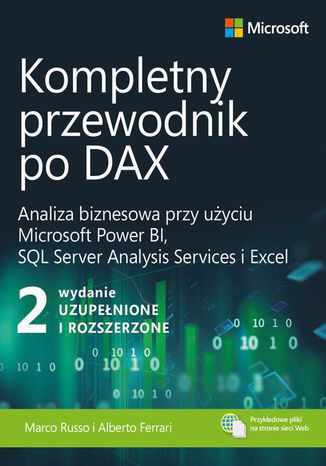
Alberto Ferrari, Marco Russo
WYDANIE DRUGIE uzupełnione i rozszerzone Najbardziej wyczerpujący przewodnik po języku DAX, obecnie rozszerzony i uzupełniony o najnowsze funkcje i nowoczesne zalecane praktyki, prezentujący opracowany w firmie Microsoft język na potrzeby analiz biznesowych i modelowania danych. Czołowi eksperci w dziedzinie Microsoft BI pomagają opanować wszystkie elementy systemu, od funkcji tablicowych po zaawansowany kod i optymalizację modelu. Dowiedz, co naprawdę dzieje się przy wykonywaniu poleceń DAX i jak użyć tej wiedzy do pisania szybkiego i niezawodnego kodu. Wydanie to skupia się na przykładach, które można budować i uruchamiać przy użyciu bezpłatnego narzędzia Power BI Desktop i pomaga wydobyć najwięcej korzyści ze składni zmiennych (VAR) w Power BI, Excelu lub Analysis Services. Pragniesz wykorzystać wszystkie możliwości języka ? To książka, której potrzebujesz. Wykonuj skuteczną analizę danych w programach Power BI, SQL Server i Excel Poznaj podstawowe koncepcje DAX, w tym kolumny obliczane, miary i obsługę błędów Wydajnie korzystaj z zaawansowanych funkcji tablicowych Opanuj istotę kontekstów wykonania oraz funkcje CALCULATE i CALCULATETABLE Wykonuj obliczenia czasowe i oparte na niestandardowych hierarchiach Korzystaj z grup obliczeń i elementów obliczanych Używaj składni zmiennych do tworzenia bardziej czytelnego, zrozumiałego kodu Wyrażaj różnorodne nietypowe relacje, w tym relacje wiele-do-wielu i filtry dwukierunkowe Opanuj zaawansowane techniki optymalizacyjne, aby zwiększyć wydajność agregacji Optymalizuj modele danych Mierz wydajność zapytań przy użyciu DAX Studio i dowiedz się, jak optymalizować kod DAX O tej książce Dla zaawansowanych użytkowników programu Excel oraz anlityków BI używających SQL Server Analysis Services lub Power BI O autorach Marco Russo i Alberto Ferrari są współzałożycielami strony sqlbi.com, w której regularnie publikują artykuły na temat Microsoft PowerPivot, DAX, Power BI oraz SQL Server Analysis Services. Występują też na głównych międzynarodowych konferencjach, takich jak TechEd, Ignite, PASS Summit czy SQLBits. Obydwaj wykładają teorię analizy biznesowej (BI) oraz technologie Microsoft BI począwszy od roku 1999. Książki ich autorstwa obejmują Excel 2013: Budowanie modeli danych przy użyciu PowerPivot, Analyzing Data with Power BI and Power Pivot for Excel oraz Introducing Microsoft Power BI.
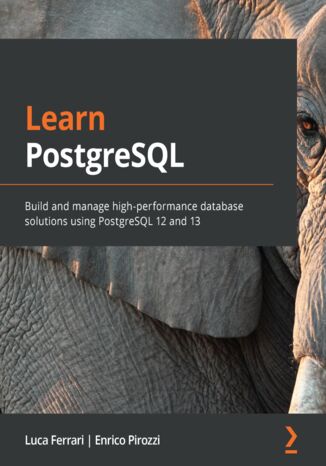
Learn PostgreSQL. Build and manage high-performance database solutions using PostgreSQL 12 and 13
Luca Ferrari, Enrico Pirozzi
PostgreSQL is one of the fastest-growing open source object-relational database management systems (DBMS) in the world. As well as being easy to use, it’s scalable and highly efficient. In this book, you’ll explore PostgreSQL 12 and 13 and learn how to build database solutions using it. Complete with hands-on tutorials, this guide will teach you how to achieve the right database design required for a reliable environment.You'll learn how to install and configure a PostgreSQL server and even manage users and connections. The book then progresses to key concepts of relational databases, before taking you through the Data Definition Language (DDL) and commonly used DDL commands. To build on your skills, you’ll understand how to interact with the live cluster, create database objects, and use tools to connect to the live cluster. You’ll then get to grips with creating tables, building indexes, and designing your database schema. Later, you'll explore the Data Manipulation Language (DML) and server-side programming capabilities of PostgreSQL using PL/pgSQL, before learning how to monitor, test, and troubleshoot your database application to ensure high-performance and reliability.By the end of this book, you'll be well-versed with the Postgres database and be able to set up your own PostgreSQL instance and use it to build robust solutions.
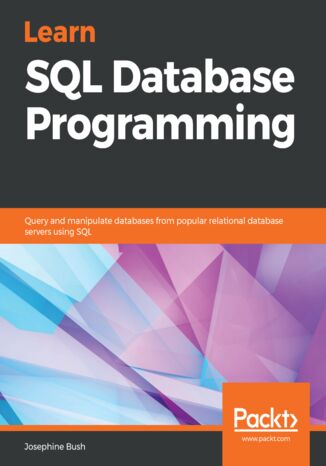
Josephine Bush
SQL is a powerful querying language that's used to store, manipulate, and retrieve data, and it is one of the most popular languages used by developers to query and analyze data efficiently.If you're looking for a comprehensive introduction to SQL, Learn SQL Database Programming will help you to get up to speed with using SQL to streamline your work in no time. Starting with an overview of relational database management systems, this book will show you how to set up and use MySQL Workbench and design a database using practical examples. You'll also discover how to query and manipulate data with SQL programming using MySQL Workbench. As you advance, you’ll create a database, query single and multiple tables, and modify data using SQL querying. This SQL book covers advanced SQL techniques, including aggregate functions, flow control statements, error handling, and subqueries, and helps you process your data to present your findings. Finally, you’ll implement best practices for writing SQL and designing indexes and tables.By the end of this SQL programming book, you’ll have gained the confidence to use SQL queries to retrieve and manipulate data.
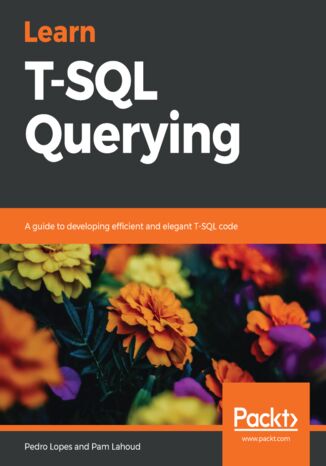
Learn T-SQL Querying. A guide to developing efficient and elegant T-SQL code
Pedro Lopes, Pam Lahoud
Transact-SQL (T-SQL) is Microsoft's proprietary extension to the SQL language used with Microsoft SQL Server and Azure SQL Database. This book will be a usefu to learning the art of writing efficient T-SQL code in modern SQL Server versions as well as the Azure SQL Database.The book will get you started with query processing fundamentals to help you write powerful, performant T-SQL queries. You will then focus on query execution plans and leverage them for troubleshooting. In later chapters, you will explain how to identify various T-SQL patterns and anti-patterns. This will help you analyze execution plans to gain insights into current performance, and determine whether or not a query is scalable. You will also build diagnostic queries using dynamic management views (DMVs) and dynamic management functions (DMFs) to address various challenges in T-SQL execution. Next, you will work with the built-in tools of SQL Server to shorten the time taken to address query performance and scalability issues. In the concluding chapters, this will guide you through implementing various features, such as Extended Events, Query Store, and Query Tuning Assistant, using hands-on examples.By the end of the book, you will have developed the skills to determine query performance bottlenecks, avoid pitfalls, and discover the anti-patterns in use.
Learning Google BigQuery. A beginner's guide to mining massive datasets through interactive analysis
Thirukkumaran Haridass, Eric Brown
Google BigQuery is a popular cloud data warehouse for large-scale data analytics. This book will serve as a comprehensive guide to mastering BigQuery, and how you can utilize it to quickly and efficiently get useful insights from your Big Data.You will begin with getting a quick overview of the Google Cloud Platform and the various services it supports. Then, you will be introduced to the Google BigQuery API and how it fits within in the framework of GCP. The book covers useful techniques to migrate your existing data from your enterprise to Google BigQuery, as well as readying and optimizing it for analysis. You will perform basic as well as advanced data querying using BigQuery, and connect the results to various third party tools for reporting and visualization purposes such as R and Tableau. If you're looking to implement real-time reporting of your streaming data running in your enterprise, this book will also help you.This book also provides tips, best practices and mistakes to avoid while working with Google BigQuery and services that interact with it. By the time you're done with it, you will have set a solid foundation in working with BigQuery to solve even the trickiest of data problems.
Hans-Jürgen Schönig
This second edition of Mastering PostgreSQL 11 helps you build dynamic database solutions for enterprise applications using the latest release of PostgreSQL, which enables database analysts to design both the physical and technical aspects of the system architecture with ease.This book begins with an introduction to the newly released features in PostgreSQL 11 to help you build efficient and fault-tolerant PostgreSQL applications. You’ll examine all of the advanced aspects of PostgreSQL in detail, including logical replication, database clusters, performance tuning, monitoring, and user management. You will also work with the PostgreSQL optimizer, configuring PostgreSQL for high speed, and see how to move from Oracle to PostgreSQL. As you progress through the chapters, you will cover transactions, locking, indexes, and optimizing queries to improve performance. Additionally, you’ll learn to manage network security and explore backups and replications, while understanding the useful extensions of PostgreSQL so that you can optimize the speed and performance of large databases. By the end of this book, you will be able to use your database to its utmost capacity by implementing advanced administrative tasks with ease.
Hans-Jürgen Schönig
Thanks to its reliability, robustness, and high performance, PostgreSQL has become the most advanced open source database on the market. This third edition of Mastering PostgreSQL helps you build dynamic database solutions for enterprise applications using the latest release of PostgreSQL, which enables database analysts to design both physical and technical aspects of system architecture with ease.Starting with an introduction to the newly released features in PostgreSQL 12, this book will help you build efficient and fault-tolerant PostgreSQL applications. You’ll thoroughly examine the advanced features of PostgreSQL, including logical replication, database clusters, performance tuning, monitoring, and user management. You’ll also work with the PostgreSQL optimizer, configure PostgreSQL for high speed, and understand how to move from Oracle to PostgreSQL. As you progress through the chapters, you’ll cover transactions, locking, indexes, and how to optimize queries for improved performance. Additionally, you’ll learn how to manage network security and explore backups and replications while understanding useful PostgreSQL extensions to help you in optimizing the performance of large databases.By the end of this PostgreSQL book, you’ll be able to get the most out of your database by implementing advanced administrative tasks effortlessly.
Hans-Jürgen Schönig
Thanks to its reliability, robustness, and high performance, PostgreSQL has become one of the most advanced open source databases on the market. This updated fourth edition will help you understand PostgreSQL administration and how to build dynamic database solutions for enterprise apps with the latest release of PostgreSQL, including designing both physical and technical aspects of the system architecture with ease.Starting with an introduction to the new features in PostgreSQL 13, this book will guide you in building efficient and fault-tolerant PostgreSQL apps. You’ll explore advanced PostgreSQL features, such as logical replication, database clusters, performance tuning, advanced indexing, monitoring, and user management, to manage and maintain your database. You’ll then work with the PostgreSQL optimizer, configure PostgreSQL for high speed, and move from Oracle to PostgreSQL. The book also covers transactions, locking, and indexes, and shows you how to improve performance with query optimization. You’ll also focus on how to manage network security and work with backups and replication while exploring useful PostgreSQL extensions that optimize the performance of large databases.By the end of this PostgreSQL book, you’ll be able to get the most out of your database by executing advanced administrative tasks.