
Big data
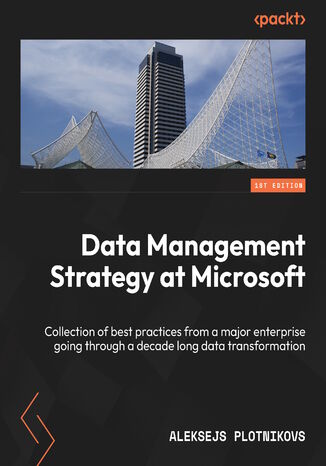
Aleksejs Plotnikovs
Microsoft pioneered data innovation and investment ahead of many in the industry, setting a remarkable standard for data maturity. Written by a data leader with over 15 years of experience following Microsoft’s data journey, this book delves into every crucial aspect of this journey, including change management, aligning with business needs, enhancing data value, and cultivating a data-driven culture.This book emphasizes that success in a data-driven enterprise goes beyond relying solely on modern technology and highlights the importance of prioritizing genuine business needs to propel necessary modernizations through change management practices. You’ll see how data-driven innovation does not solely reside within central IT engineering teams but also among the data's business owners who rely on data daily for their operational needs. This guide empower these professionals with clean, easily discoverable, and business-ready data, marking a significant breakthrough in how data is perceived and utilized throughout an enterprise. You’ll also discover advanced techniques to nurture the value of data as unique intellectual property, and differentiate your organization with the power of data.Its storytelling approach and summary of essential insights at the end of each chapter make this book invaluable for business and data leaders to advocate for crucial data investments.
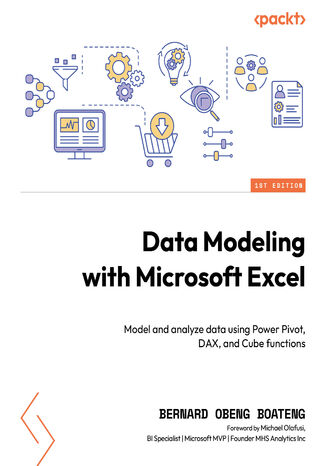
Bernard Obeng Boateng, Michael Olafusi
Microsoft Excel's BI solutions have evolved, offering users more flexibility and control over analyzing data directly in Excel. Features like PivotTables, Data Model, Power Query, and Power Pivot empower Excel users to efficiently get, transform, model, aggregate, and visualize data.Data Modeling with Microsoft Excel offers a practical way to demystify the use and application of these tools using real-world examples and simple illustrations.This book will introduce you to the world of data modeling in Excel, as well as definitions and best practices in data structuring for both normalized and denormalized data. The next set of chapters will take you through the useful features of Data Model and Power Pivot, helping you get to grips with the types of schemas (snowflake and star) and create relationships within multiple tables. You’ll also understand how to create powerful and flexible measures using DAX and Cube functions.By the end of this book, you’ll be able to apply the acquired knowledge in real-world scenarios and build an interactive dashboard that will help you make important decisions.Note: To access the supplemental material, subscribers should purchase a print copy of the book. The ebook can be accessed through the QR code or link provided inside the Print book. Proof of purchase is mandatory to access the ebook.
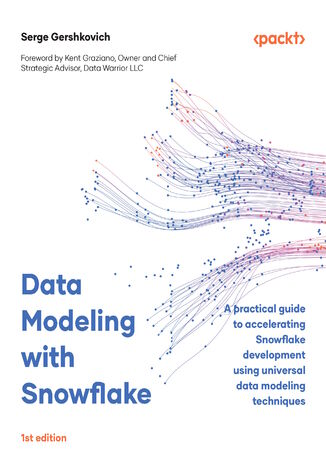
Serge Gershkovich, Kent Graziano
The Snowflake Data Cloud is one of the fastest-growing platforms for data warehousing and application workloads. Snowflake's scalable, cloud-native architecture and expansive set of features and objects enables you to deliver data solutions quicker than ever before.Yet, we must ensure that these solutions are developed using recommended design patterns and accompanied by documentation that’s easily accessible to everyone in the organization.This book will help you get familiar with simple and practical data modeling frameworks that accelerate agile design and evolve with the project from concept to code. These universal principles have helped guide database design for decades, and this book pairs them with unique Snowflake-native objects and examples like never before – giving you a two-for-one crash course in theory as well as direct application.By the end of this Snowflake book, you’ll have learned how to leverage Snowflake’s innovative features, such as time travel, zero-copy cloning, and change-data-capture, to create cost-effective, efficient designs through time-tested modeling principles that are easily digestible when coupled with real-world examples.
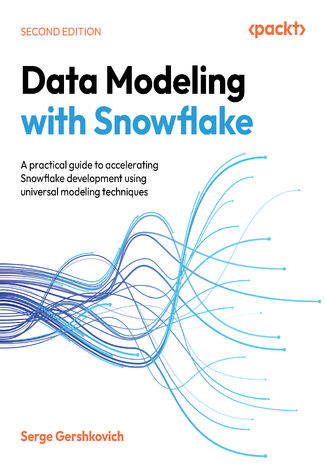
Serge Gershkovich, Joe Reis
Struggling with rising Snowflake costs and constant tuning? Poorly aligned data models can lead to bloated expenses, inefficient queries, and time-consuming rework. Data Modeling with Snowflake helps you harness the Snowflake Data Cloud’s scalable, cloud-native architecture and expansive feature set to deliver data solutions faster than ever.This book introduces simple, practical data modeling frameworks that accelerate agile design and evolve alongside your projects from concept to code. Rooted in decades of proven database design principles, these frameworks are paired, for the first time, with Snowflake-native objects and real-world examples, offering a two-in-one crash course in theory and direct application.Through real-world examples designed to make learning easy, you’ll leverage Snowflake’s innovative features like Time Travel, Zero-Copy Cloning, and Change Data Capture (CDC) to create cost-efficient solutions. Whether you're just starting out or refining your architecture, this book will guide you in designing smarter, scaling faster, and cutting costs by aligning timeless modeling principles with the power of Snowflake.*Email sign-up and proof of purchase required
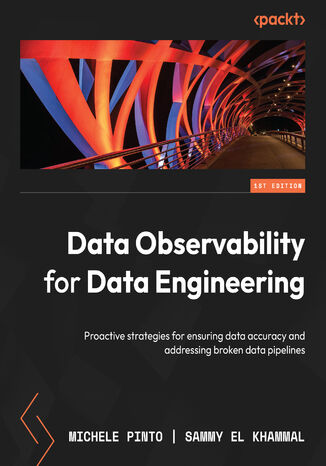
Michele Pinto, Sammy El Khammal
In the age of information, strategic management of data is critical to organizational success. The constant challenge lies in maintaining data accuracy and preventing data pipelines from breaking. Data Observability for Data Engineering is your definitive guide to implementing data observability successfully in your organization.This book unveils the power of data observability, a fusion of techniques and methods that allow you to monitor and validate the health of your data. You’ll see how it builds on data quality monitoring and understand its significance from the data engineering perspective. Once you're familiar with the techniques and elements of data observability, you'll get hands-on with a practical Python project to reinforce what you've learned. Toward the end of the book, you’ll apply your expertise to explore diverse use cases and experiment with projects to seamlessly implement data observability in your organization.Equipped with the mastery of data observability intricacies, you’ll be able to make your organization future-ready and resilient and never worry about the quality of your data pipelines again.
Dr. Argenis Leon , Luis Aguirre Contreras
Optimus is a Python library that works as a unified API for data cleaning, processing, and merging data. It can be used for handling small and big data on your local laptop or on remote clusters using CPUs or GPUs.The book begins by covering the internals of Optimus and how it works in tandem with the existing technologies to serve your data processing needs. You'll then learn how to use Optimus for loading and saving data from text data formats such as CSV and JSON files, exploring binary files such as Excel, and for columnar data processing with Parquet, Avro, and OCR. Next, you'll get to grips with the profiler and its data types - a unique feature of Optimus Dataframe that assists with data quality. You'll see how to use the plots available in Optimus such as histogram, frequency charts, and scatter and box plots, and understand how Optimus lets you connect to libraries such as Plotly and Altair. You'll also delve into advanced applications such as feature engineering, machine learning, cross-validation, and natural language processing functions and explore the advancements in Optimus. Finally, you'll learn how to create data cleaning and transformation functions and add a hypothetical new data processing engine with Optimus.By the end of this book, you'll be able to improve your data science workflow with Optimus easily.
Data Quality in the Age of AI. Building a foundation for AI strategy and data culture
Andrew Jones
As organizations worldwide seek to revamp their data strategies to leverage AI advancements and benefit from newfound capabilities, data quality emerges as the cornerstone for success. Without high-quality data, even the most advanced AI models falter. Enter Data Quality in the Age of AI, a detailed report that illuminates the crucial role of data quality in shaping effective data strategies.Packed with actionable insights, this report highlights the critical role of data quality in your overall data strategy. It equips teams and organizations with the knowledge and tools to thrive in the evolving AI landscape, serving as a roadmap for harnessing the power of data quality, enabling them to unlock their data's full potential, leading to improved performance, reduced costs, increased revenue, and informed strategic decisions.
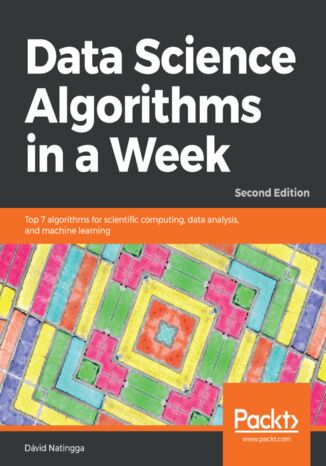
David Natingga
Machine learning applications are highly automated and self-modifying, and continue to improve over time with minimal human intervention, as they learn from the trained data. To address the complex nature of various real-world data problems, specialized machine learning algorithms have been developed. Through algorithmic and statistical analysis, these models can be leveraged to gain new knowledge from existing data as well.Data Science Algorithms in a Week addresses all problems related to accurate and efficient data classification and prediction. Over the course of seven days, you will be introduced to seven algorithms, along with exercises that will help you understand different aspects of machine learning. You will see how to pre-cluster your data to optimize and classify it for large datasets. This book also guides you in predicting data based on existing trends in your dataset. This book covers algorithms such as k-nearest neighbors, Naive Bayes, decision trees, random forest, k-means, regression, and time-series analysis.By the end of this book, you will understand how to choose machine learning algorithms for clustering, classification, and regression and know which is best suited for your problem