
Webmasterstwo
Amazon Redshift Cookbook. Recipes for building modern data warehousing solutions
Shruti Worlikar, Thiyagarajan Arumugam, Harshida Patel
Amazon Redshift is a fully managed, petabyte-scale AWS cloud data warehousing service. It enables you to build new data warehouse workloads on AWS and migrate on-premises traditional data warehousing platforms to Redshift.This book on Amazon Redshift starts by focusing on Redshift architecture, showing you how to perform database administration tasks on Redshift. You'll then learn how to optimize your data warehouse to quickly execute complex analytic queries against very large datasets. Because of the massive amount of data involved in data warehousing, designing your database for analytical processing lets you take full advantage of Redshift's columnar architecture and managed services. As you advance, you’ll discover how to deploy fully automated and highly scalable extract, transform, and load (ETL) processes, which help minimize the operational efforts that you have to invest in managing regular ETL pipelines and ensure the timely and accurate refreshing of your data warehouse. Finally, you'll gain a clear understanding of Redshift use cases, data ingestion, data management, security, and scaling so that you can build a scalable data warehouse platform.By the end of this Redshift book, you'll be able to implement a Redshift-based data analytics solution and have understood the best practice solutions to commonly faced problems.
Ruadhan O'Donoghue
Google introduced the Accelerated Mobile Pages (AMP) project to give mobile users lightning-fast response times when accessing web pages on mobile devices. AMP delivers great user experiences by providing a framework for optimizing web pages that otherwise would take much longer to load on a mobile platform.This book shows how to solve page performance issues using the mobile web technologies available today. You will learn how to build instant-loading web pages, and have them featured more prominently on Google searches. If you want your website to succeed on mobile, if you care about SEO, and if you want to stay competitive, then this book is for you! You will go on a mobile web development journey that demonstrates with concrete examples how to build lightning-fast pages that will keep your visitors on-site and happy. This journey begins by showing how to build a simple blog article-style web page using AMP. As new concepts are introduced this page is gradually refined until you will have the skills and confidence to build a variety of rich and interactive mobile web pages. These will include e-commerce product pages, interactive forms and menus, maps and commenting systems, and even Progressive Web Apps.
Marcotte
Design patterns are a set of solutions to many of the common problems occurring in software development. Knowledge of these design patterns helps developers and professionals to craft software solutions of any scale.ASP.NET Core 5 Design Patterns starts by exploring basic design patterns, architectural principles, dependency injection, and other ASP.NET Core mechanisms. You’ll explore the component scale as you discover patterns oriented toward small chunks of the software, and then move to application-scale patterns and techniques to understand higher-level patterns and how to structure the application as a whole. The book covers a range of significant GoF (Gangs of Four) design patterns such as strategy, singleton, decorator, facade, and composite. The chapters are organized based on scale and topics, allowing you to start small and build on a strong base, the same way that you would develop a program. With the help of use cases, the book will show you how to combine design patterns to display alternate usage and help you feel comfortable working with a variety of design patterns. Finally, you’ll advance to the client side to connect the dots and make ASP.NET Core a viable full-stack alternative.By the end of the book, you’ll be able to mix and match design patterns and have learned how to think about architecture and how it works.
Android. Tworzenie aplikacji w oparciu o HTML, CSS i JavaScript
Jonathan Stark, Brian Jepson
Twórz natywne aplikacje za pomocą standardowych technologii internetowych Jeśli znasz HTML, CSS i JavaScript, jesteś gotowy na tworzenie aplikacji dla Androida. Ten praktyczny podręcznik pomoże Ci wejść w świat aplikacji przeznaczonych dla platformy Android, tworzonych w oparciu o otwarte standardy internetowe - przede wszystkim HTML5 - oraz dodatkowe narzędzia, takie jak choćby PhoneGap. Dowiesz się, jak budować aplikacje internetowe i jak wykorzystać bezpłatny framework Adobe PhoneGap do przekonwertowania ich na natywne aplikacje dla Androida. Na własnej skórze przekonasz się, że tak tworzone aplikacje są przyszłością mobilnego świata. Dzięki tej książce będziesz tworzyć elastyczne rozwiązania dla szerokiego grona odbiorców. Z tą książką: nauczysz się wykorzystywać HTML5, CSS i JavaScript do tworzenia aplikacji mobilnych stworzysz dynamiczny, pełny animacji interfejs użytkownika rozwiążesz najczęstsze problemy dzięki PhoneGap opublikujesz aplikację w sklepie Google Play! Stwórz aplikację, opublikuj ją w Google Play i odnieś sukces!
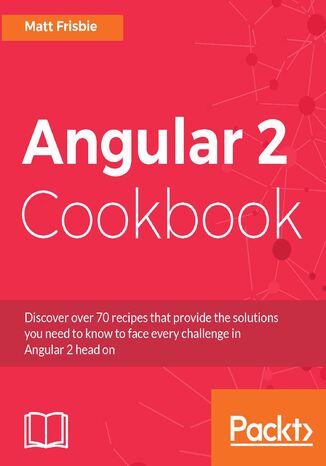
Matthew Frisbie
Angular 2 introduces an entirely new way to build applications. It wholly embraces all the newest concepts that are built into the next generation of browsers, and it cuts away all the fat and bloat from Angular 1. This book plunges directly into the heart of all the most important Angular 2 concepts for you to conquer. In addition to covering all the Angular 2 fundamentals, such as components, forms, and services, it demonstrates how the framework embraces a range of new web technologies such as ES6 and TypeScript syntax, Promises, Observables, and Web Workers, among many others.This book covers all the most complicated Angular concepts and at the same time introduces the best practices with which to wield these powerful tools. It also covers in detail all the concepts you'll need to get you building applications faster. Oft-neglected topics such as testing and performance optimization are widely covered as well. A developer that reads through all the content in this book will have a broad and deep understanding of all the major topics in the Angular 2 universe.
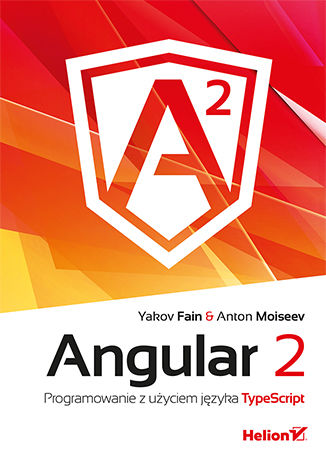
Angular 2. Programowanie z użyciem języka TypeScript
Yakov Fain, Anton Moiseev
Tworzenie aplikacji w języku TypeScript z wykorzystaniem frameworka Angular 2 jest dziś jednym z najwydajniejszych sposobów rozwijania średnich i dużych aplikacji internetowych. Takie aplikacje można bez problemu uruchamiać w każdej nowoczesnej przeglądarce, również na platformach mobilnych. Separacja kodu interfejsu od logiki aplikacji, prosta modularyzacja aplikacji, bezproblemowe przetwarzanie danych asynchronicznych, świetne narzędzia i nowoczesne komponenty interfejsu użytkownika — to tylko kilka z wielu zalet tandemu Angular 2 – TypeScript. Ta książka jest przeznaczona dla programistów, którzy korzystają z Angular JS lub pracują z innym frameworkiem i potrafią kodować w JavaScripcie. Przedstawiono tu zagadnienia związane z danymi i widokami, interakcjami użytkowników z formularzami i komunikacją z serwerami, a także sposoby testowania i wdrażania aplikacji napisanej w Angular 2. Wyjaśniono działanie routera Angular, techniki wstrzykiwania zależności, wiązania i potoki. Nie zabrakło szczegółowego opisu korzystania z formularzy oraz komunikacji z serwerami. Co istotne, autorzy położyli duży nacisk na stosowanie dobrych praktyk w programowaniu. Najważniejsze zagadnienia: Przegląd architektury Angular 2 i metodyka budowy aplikacji Składnia języka TypeScript i kompilacja kodu TypeScript na JavaScript (ECMAScript 5) Programowanie reaktywne z obserwowalnymi strumieniami Wzorzec projektowy Mediator i cykl życia komponentu Automatyzacja procesów kompilacji i wdrażania Narzędzia i biblioteki przydatne w pracy z Angular 2 Angular 2: nowoczesne narzędzie dla najlepszych projektantów! Yakov Fain — jest mistrzem Javy i autorem wielu książek o rozwijaniu oprogramowania. Jest również współzałożycielem dwóch firm: Farata Systems i SuranceBay. Fain chętnie prowadzi warsztaty, podczas których zdradza sekrety frameworku Angular i platformy Java. Anton Moiseev — jest głównym programistą w firmie SuranceBay. Od 10 lat tworzy aplikacje w technologiach Java i .NET. Koncentruje się na najlepszych praktykach technologii internetowych. Prowadził wiele sesji szkoleniowych dotyczących frameworków Angular JS i Angular 2.
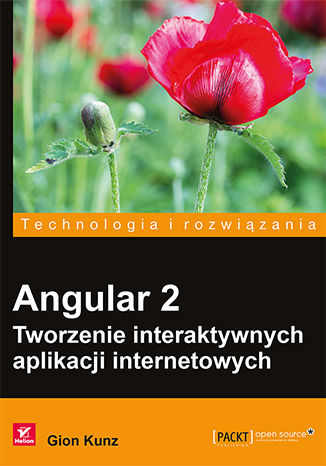
Angular 2. Tworzenie interaktywnych aplikacji internetowych
Gion Kunz
Wykorzystywanie komponentów do budowy aplikacji internetowych jest uważane za wyjątkowo ważny krok naprzód w tej dziedzinie. Szczególnie ciekawym pomysłem jest tworzenie interfejsów użytkownika bazujących na komponentach. Framework Angular 2 zmienia technologię tworzenia aplikacji: ułatwia pisanie współdzielonych bloków kodu HTML, które można bez problemu wielokrotnie wykorzystywać dzięki zastosowaniu mechanizmu shadow DOM. Jest to bardzo obiecująca perspektywa, jednakże pod warunkiem, że programista potrafi efektywnie wykorzystać architekturę komponentową. Niniejsza książka ma na celu nauczenie programistów tego nowego podejścia do programowania interaktywnych stron internetowych i równocześnie pokazanie najlepszych możliwości Angulara. Poza praktycznymi aspektami korzystania z tego frameworka największy nacisk położono na tworzenie interfejsów użytkownika bazujących na komponentach — wyjaśniono podstawowe koncepcje tego sposobu programowania i opisano, jak wykorzystać framework do tworzenia nowoczesnych, wydajnych i łatwych w utrzymaniu interfejsów użytkownika. Niektóre zagadnienia omówione w książce: podstawy tworzenia interfejsów z wykorzystaniem komponentów tworzenie komponentów wielokrotnego użytku w Angularze wykorzystanie komponentów do routingu, logowania i śledzenia czasu korzystanie z zewnętrznych bibliotek w Angularze zapewnienie rozszerzalności komponentów techniki testowania komponentów Angular 2 Architektura oparta na komponentach — najlepsza recepta na świetny interfejs! Gion Kunz od wielu lat pisze interaktywne interfejsy użytkownika w języku JavaScript. Bardzo chętnie korzysta z frameworka Angular 2. Często zabiera głos na konferencjach. Kunz jest również głównym instruktorem w SAE Institute w Zurichu. Jest osobą, która angażuje się na rzecz open source — napisał responsywną bibliotekę do rysowania wykresów Chartist. W wolnych chwilach zajmuje się muzyką, wędkowaniem lub po prostu spędza czas ze swoją ukochaną i milutkim, małym pieskiem.
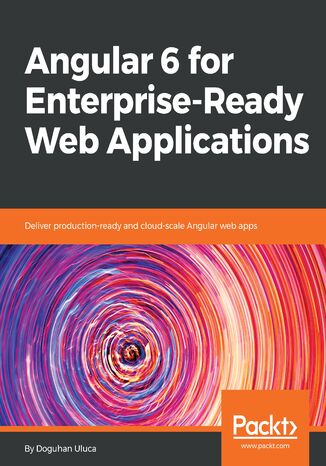
Doguhan Uluca
Angular 6 for Enterprise-Ready Web Applications follows a hands-on and minimalist approach demonstrating how to design and architect high quality apps.The first part of the book is about mastering the Angular platform using foundational technologies. You will use the Kanban method to focus on value delivery, communicate design ideas with mock-up tools and build great looking apps with Angular Material. You will become comfortable using CLI tools, understand reactive programming with RxJS, and deploy to the cloud using Docker.The second part of the book will introduce you to the router-first architecture, a seven-step approach to designing and developing mid-to-large line-of-business applications, along with popular recipes. You will learn how to design a solid authentication and authorization experience; explore unit testing, early integration with backend APIs using Swagger and continuous integration using CircleCI. In the concluding chapters, you will provision a highly available cloud infrastructure on AWS and then use Google Analytics to capture user behavior.By the end of this book, you will be familiar with the scope of web development using Angular, Swagger, and Docker, learning patterns and practices to be successful as an individual developer on the web or as a team in the Enterprise.