
Biznes IT
Czy myśleliście kiedyś, w jaki sposób rozpocząć swój biznes w branży IT? Może już prowadzicie własną firmę i Chcecie, aby zaistniała ona w sieci? W tej kategorii znajdziecie książki, w których zawarty jest know-how związany z wieloma rodzajami działalności prowadzonych poprzez internet, czy w inny sposób związanych z nowoczesnymi technologiami w biznesie.
Znajdziecie informacje o systemach zarządzania informacjami o Klientach - popularnych CRM'ach, o zarządzaniu projektami IT, wykorzystaniu potencjału popularnych teraz portali społecznościowych do promocji swojej działalności, czy też poradniki, które pomogą Wam rozwinąć umiejętności pozatechniczne - równie ważne dla Waszych przedsięwzięć.
Leif Larsen Henning Larsen
Microsoft has revamped its Project Oxford to launch the all new Cognitive Services platform-a set of 30 APIs to add speech, vision, language, and knowledge capabilities to apps.This book will introduce you to 24 of the APIs released as part of Cognitive Services platform and show you how to leverage their capabilities. More importantly, you'll see how the power of these APIs can be combined to build real-world apps that have cognitive capabilities. The book is split into three sections: computer vision, speech recognition and language processing, and knowledge and search.You will be taken through the vision APIs at first as this is very visual, and not too complex. The next part revolves around speech and language, which are somewhat connected. The last part is about adding real-world intelligence to apps by connecting them to Knowledge and Search APIs.By the end of this book, you will be in a position to understand what Microsoft Cognitive Service can offer and how to use the different APIs.
Leif Larsen
Microsoft Cognitive Services is a set of APIs for integrating artificial intelligence in your applications to solve logical business problems. If you’re new to developing applications with AI, Learning Microsoft Cognitive Services will give you a comprehensive introduction to Microsoft’s AI stack and get you up-to-speed in no time.The book introduces you to 24 APIs, including Emotion, Language, Vision, Speech, Knowledge, and Search. Using Visual Studio, you can develop applications with enhanced capabilities for image processing, speech recognition, text processing, and much more. Moving forward, you will work with datasets that enable your applications to process various data in the form of image, video, or text.By the end of the book, you’ll be able to confidently explore Cognitive Services APIs for building intelligent applications that can be deployed for real-world business uses.
Srikanth Shirodkar
Microsoft Project is one of the most popular project management tools for enterprises of all sizes thanks to its wide variety of features such as project scheduling, project budgeting, built-in templates, and reporting tools. Learning Microsoft Project 2019 will get you started with the basics and gradually guide you through the complete project life cycle.Starting with an overview of Microsoft Project 2019 and a brief introduction to project management concepts, this book will take you through the different phases of project management – initiation, planning, execution, control, and closure. You will then learn how to identify and handle problems related to scheduling, costing, resourcing, and work allocation. Understand how to use dynamic reports to create powerful, automated reports and dashboards at the click of a button. This Microsoft Project book highlights the pitfalls of overallocation and demonstrates how to avoid and resolve these issues using a wide spectrum of tools, techniques, and best practices. Finally, you will focus on executing Agile projects efficiently and get to grips with using Kanban and Scrum features.By the end of this book, you will be well-versed with Microsoft Project and have the skills you need to use it effectively in every stage of project management.
Jerome Baton, Rik Van Bruggen
Neo4j is a graph database that allows traversing huge amounts of data with ease. This book aims at quickly getting you started with the popular graph database Neo4j.Starting with a brief introduction to graph theory, this book will show you the advantages of using graph databases along with data modeling techniques for graph databases. You'll gain practical hands-on experience with commonly used and lesser known features for updating graph store with Neo4j's Cypher query language. Furthermore, you'll also learn to create awesome procedures using APOC and extend Neo4j's functionality, enabling integration, algorithmic analysis, and other advanced spatial operation capabilities on data.Through the course of the book you will come across implementation examples on the latest updates in Neo4j, such as in-graph indexes, scaling, performance improvements, visualization, data refactoring techniques, security enhancements, and much more. By the end of the book, you'll have gained the skills to design and implement modern spatial applications, from graphing data to unraveling business capabilities with the help of real-world use cases.
Ivan Idris
A step-by-step guide, packed with examples of practical numerical analysis that will give you a comprehensive, but concise overview of NumPy. This book is for programmers, scientists, or engineers, who have basic Python knowledge and would like to be able to do numerical computations with Python.
Dan Keeley, Diethard Steiner, María Carina Roldán,...
Pentaho Data Integration(PDI) is an intuitive and graphical environment packed with drag-and-drop design and powerful Extract-Tranform-Load (ETL) capabilities. This book shows and explains the new interactive features of Spoon, the revamped look and feel, and the newest features of the tool including transformations and jobs Executors and the invaluable Metadata Injection capability.We begin with the installation of PDI software and then move on to cover all the key PDI concepts. Each of the chapter introduces new features, enabling you to gradually get practicing with the tool. First, you will learn to do all kind of data manipulation and work with simple plain files. Then, the book teaches you how you can work with relational databases inside PDI. Moreover, you will be given a primer on data warehouse concepts and you will learn how to load data in a data warehouse. During the course of this book, you will be familiarized with its intuitive, graphical and drag-and-drop design environment.By the end of this book, you will learn everything you need to know in order to meet your data manipulation requirements. Besides, your will be given best practices and advises for designing and deploying your projects.
Salahaldin Juba, Andrey Volkov, Sheldon Strauch, Isabel...
PostgreSQL is one of the most popular open source databases in the world, supporting the most advanced features included in SQL standards. This book will familiarize you with the latest features released in PostgreSQL 10.We’ll start with a thorough introduction to PostgreSQL and the new features introduced in PostgreSQL 10. We’ll cover the Data Definition Language (DDL) with an emphasis on PostgreSQL, and the common DDL commands supported by ANSI SQL. You’ll learn to create tables, define integrity constraints, build indexes, and set up views and other schema objects. Moving on, we’ll cover the concepts of Data Manipulation Language (DML) and PostgreSQL server-side programming capabilities using PL/pgSQL. We’ll also explore the NoSQL capabilities of PostgreSQL and connect to your PostgreSQL database to manipulate data objects.By the end of this book, you’ll have a thorough understanding of the basics of PostgreSQL 10 and will have the necessary skills to build efficient database solutions.
PRASHANT VATS, Dr. Param Jeet
The role of a quantitative analyst is very challenging, yet lucrative, so there is a lot of competition for the role in top-tier organizations and investment banks. This book is your go-to resource if you want to equip yourself with the skills required to tackle any real-world problem in quantitative finance using the popular R programming language.You'll start by getting an understanding of the basics of R and its relevance in the field of quantitative finance. Once you've built this foundation, we'll dive into the practicalities of building financialmodels in R. This will help you have a fair understanding of the topics as well as their implementation, as the authors have presented some use cases along with examples that are easy to understand and correlate.We'll also look at risk management and optimization techniques for algorithmic trading. Finally, the book will explain some advanced concepts, such as trading using machine learning, optimizations, exotic options, and hedging.By the end of this book, you will have a firm grasp of the techniques required to implement basic quantitative finance models in R.
Rakesh Gupta
Learning Salesforce Visual Workflow is intended for those who want to use Flows to automate their business requirements by click not code. Salesforce maintains an incredibly user-friendly interface; no previous experience in computer coding or programming is required.
David Lai, Riaz Ahmed
The book starts with the basics of SAP Analytics Cloud (formerly known as SAP BusinessObjects Cloud) and exposes almost every significant feature a beginner needs to master. Packed with illustrations and short, essential, to-the-point descriptions, the book provides a unique learning experience. Your journey of exploration starts with a basic introduction to the SAP Analytics Cloud platform. You will then learn about different segments of the product, such as Models, Stories, Digital Boardroom, and so on. Then, you are introduced to the product's interface: the Home screen, the main menu, and more. Then comes the hands-on aspect of the book, which starts with model creation. Next, you learn how to utilize a model to prepare different types of stories(reports) with the help of charts, tables, Geo Maps, and more. In the final chapters of this book, you will learn about Digital Boardroom, Collaboration, and Administration.
Sergio J Rojas G, Erik Christensen, Francisco...
This book targets programmers and scientists who have basic Python knowledge and who are keen to perform scientific and numerical computations with SciPy.
Dipanjan Sarkar, Karthik Ganapathy, Raghav Bali, Tushar...
The Internet has truly become humongous, especially with the rise of various forms of social media in the last decade, which give users a platform to express themselves and also communicate and collaborate with each other. This book will help the reader to understand the current social media landscape and to learn how analytics can be leveraged to derive insights from it. This data can be analyzed to gain valuable insights into the behavior and engagement of users, organizations, businesses, and brands. It will help readers frame business problems and solve them using social data.The book will also cover several practical real-world use cases on social media using R and its advanced packages to utilize data science methodologies such as sentiment analysis, topic modeling, text summarization, recommendation systems, social network analysis, classification, and clustering. This will enable readers to learn different hands-on approaches to obtain data from diverse social media sources such as Twitter and Facebook. It will also show readers how to establish detailed workflows to process, visualize, and analyze data to transform social data into actionable insights.
Learning Spark SQL. Architect streaming analytics and machine learning solutions
Aurobindo Sarkar
In the past year, Apache Spark has been increasingly adopted for the development of distributed applications. Spark SQL APIs provide an optimized interface that helps developers build such applications quickly and easily. However, designing web-scale production applications using Spark SQL APIs can be a complex task. Hence, understanding the design and implementation best practices before you start your project will help you avoid these problems.This book gives an insight into the engineering practices used to design and build real-world, Spark-based applications. The book's hands-on examples will give you the required confidence to work on any future projects you encounter in Spark SQL.It starts by familiarizing you with data exploration and data munging tasks using Spark SQL and Scala. Extensive code examples will help you understand the methods used to implement typical use-cases for various types of applications. You will get a walkthrough of the key concepts and terms that are common to streaming, machine learning, and graph applications. You will also learn key performance-tuning details including Cost Based Optimization (Spark 2.2) in Spark SQL applications. Finally, you will move on to learning how such systems are architected and deployed for a successful delivery of your project.
Joshua N. Milligan
Learning Tableau strengthens your command on Tableau fundamentals and builds on advanced topics.The book starts by taking you through foundational principles of Tableau. We then demonstrate various types of connections and how to work with metadata. We teach you to use a wide variety of visualizations to analyze and communicate the data, and introduce you to calculations and parameters. We then take an in-depth look at level of detail (LOD) expressions and use them to solve complex data challenges. Up next, we show table calculations, how to extend and alter default visualizations, build an interactive dashboard, and master the art of telling stories with data.This Tableau book will introduce you to visual statistical analytics capabilities, create different types of visualizations and dynamic dashboards for rich user experiences. We then move on to maps and geospatial visualization, and the new Data Model capabilities introduced in Tableau 2020.2. You will further use Tableau Prep’s ability to clean and structure data and share the stories contained in your data.By the end of this book, you will be proficient in implementing the powerful features of Tableau 2020 for decision-making.
Legendarny osobomiesiąc. Opowieści o inżynierii oprogramowania. Wydanie II
Frederick P. Brooks Jr.
Rocznicowe wydanie kultowej książki o zarządzaniu projektami w IT - to już 20 lat obecności na rynku i setki tysięcy sprzedanych egzemplarzy na świecie! Zarządzanie procesem tworzenia oprogramowania bywa doświadczeniem bardzo pouczającym, a jednocześnie niezwykle frustrującym. Z jednej strony takie projekty są podobne do innych dużych przedsięwzięć, z drugiej - wymagają od kierownictwa sporo specjalistycznej wiedzy i specyficznego podejścia do zagadnień programistycznych. Oczywiście, wiedza na ten temat stale rośnie, pojawiają się też nowe koncepcje kierowania dużymi projektami. Jeśli brakuje Ci literatury, która potraktowałaby to zagadnienie kompleksowo, katalogowałaby poszczególne propozycje i opisywałaby je w przystępny i przydatny sposób - sięgnij po ten tytuł! Książka Legendarny osobomiesiąc zyskała już miano kultowej; jest niezmiennie aktualna i wciąż inspiruje programistów na całym świecie. Składa się z kilkunastu esejów, które zawierają informacje i inspiracje bezcenne dla każdego menedżera i programisty. Przy dużych projektach konieczne jest zachowanie ich spójności koncepcyjnej, co w przypadku dużych zadań stanowi warunek dość trudny do spełnienia, dlatego wiele obiecujących przedsięwzięć zakończyło się porażką. Trzeba też zdawać sobie sprawę, że złożone zadanie oznacza dla zespołu dobre i złe chwile. Autor w niezwykle interesujący i praktyczny sposób pokazuje, jak czerpać siły z chwil radości i skutecznie radzić sobie z problemami, aby zakończyć z sukcesem nawet najbardziej złożony projekt programistyczny. W tej książce znalazły się koncepcje obejmujące między innymi: podejmowanie decyzji zadania architekta skalowanie i zachowanie spójności projektu sporządzanie dokumentacji i specyfikacji zarządzanie komunikacją w wielkich projektach A także: retrospektywna analiza tych i innych koncepcji sprzed 20 lat Nie ma drugiej tak wpływowej i ponadczasowej książki dla twórców oprogramowania!
Jarrod Anderson
Nowoczesne organizacje muszą używać sztucznej inteligencji, aby realizować cele strategiczne i wprowadzać innowacje. W świecie napędzanym przez AI przetrwanie i rozwój wymagają inteligentnych systemów, modeli wspierających kluczowe decyzje i przełomowych aplikacji. Wizjonerskie przywództwo jednak powinno się harmonijnie łączyć z praktyką codziennego działania firmy. Ten podręcznik na nowo definiuje rolę lidera do spraw sztucznej inteligencji w środowisku, w którym używa się predykcyjnej, deterministycznej, generatywnej i agentowej AI do rozwiązywania złożonych problemów i wspierania innowacyjności. Autor przedstawia strategie realizacji transformacyjnych inicjatyw z obszaru AI, budowania skutecznych zespołów i zarządzania nimi. Dużo miejsca poświęca odpowiedzialnemu wdrażaniu AI i zachowaniu zgodności z regulacjami. Książka spełnia rolę mapy drogowej od projektowania przełomowych rozwiązań po osiąganie wymiernych rezultatów biznesowych. W książce: rozwój i realizacja strategii AI w zgodzie z regulacjami zarządzanie projektami z wykorzystaniem metodyk zwinnych przykłady zastosowania deterministycznej i probabilistycznej AI optymalizacja działania systemów autonomicznych zasady projektowania systemów AI skoncentrowanych na człowieku mechanizmy ochrony danych i prywatności modeli AI nie jest wyborem. To paradygmat przywództwa!

Lider wystarczająco dobry. 12 lekcji autentycznego przywództwa na czasy niepewności
Piotr Prokopowicz, Sebastian Drzewiecki
Pewny (siebie) menedżer w niepewnych (czegokolwiek) czasach Oto przewodnik przeznaczony dla liderów i menedżerów, którzy szukają recept na to, jak budować autentyczne relacje w swojej organizacji w czasach nacechowanych niepewnością, płynnością i rezygnacją z bezpośrednich kontaktów na rzecz spotkań online. Lider wystarczająco dobry łączy perspektywę naukową i praktyczną, oferuje szereg narzędzi i rozwiązań gotowych do tego, by od razu wdrożyć je we własnej firmie. W książce znajdziesz relacje z placu boju, doświadczenia organizacji, które zostały zmuszone do działania w sytuacji kryzysu i sobie z nim poradziły - dzięki konkretnym zachowaniom, odpowiednim sposobom komunikacji i skierowanemu we właściwą stronę myśleniu liderów. Autorzy, psycholog i socjolog organizacji oraz lider i dyrektor zarządzający, odsłonią przed Tobą kluczowe paradoksy biznesowego przywództwa i wskażą, jak się od nich uwolnić, by stać się liderem skutecznym. Wystarczająco dobrym w złych czasach niepewności. A to bardzo dużo. Uwaga! Wskazówki zawarte w poradniku można zastosować zarówno w małym biznesie, jak i w start-upach i międzynarodowych korporacjach! Zajrzyj na stronę książki! Posłuchaj audiobooka:
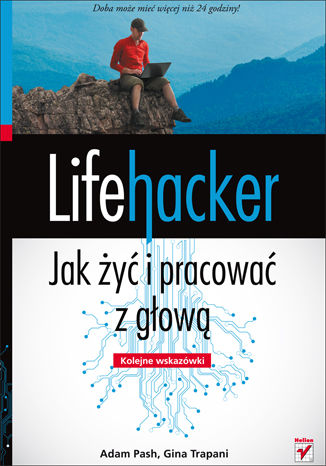
Lifehacker. Jak żyć i pracować z głową. Kolejne wskazówki
Adam Pash, Gina Trapani
Doba może mieć więcej niż 24 godziny! Co za czasy! Zewsząd słychać, że komputery wspomagają nas we wszelkich dziedzinach życia, na każdym kroku czekają nas ułatwienia, a my mimo wszystko pracujemy coraz więcej. Więcej? Nie należy mylić ilości z wydajnością! Jak sobie z tym poradzić? Jak zapanować nad natłokiem zadań i obowiązków? I - co najważniejsze - jak wykonać więcej (oraz lepiej) zadań w tym samym czasie? Myślisz, że to niemożliwe??? Z tą książką poprawa wydajności jest w zasięgu Twoich rąk! Druga część bestsellera Lifehacker. Jak żyć i pracować z głową zawiera niezwykle przydatne informacje na temat automatyzacji często wykonywanych czynności, dostępu do swoich danych z dowolnego urządzenia i miejsca na świecie oraz wydajnego korzystania z możliwości wyszukiwarek internetowych. Znajdziesz tu również dobre rady na temat pracy z urządzeniami mobilnymi oraz zarządzania wieloma komputerami. Jeżeli chcesz zaoszczędzić konkretną ilość czasu w każdym tygodniu, ta książka jest właśnie dla Ciebie! Dzięki tej książce zoptymalizujesz swoje działania i dowiesz się, jak: zautomatyzować najczęściej wykonywane zadania uzyskać dostęp do swoich danych z dowolnego miejsca i urządzenia wykorzystać potencjał wyszukiwarek do granic możliwości wydajniej korzystać ze swojego telefonu zaoszczędzić cenny czas Sięgnij po sprawdzone triki i sztuczki z komputerem, które ułatwią Ci życie!
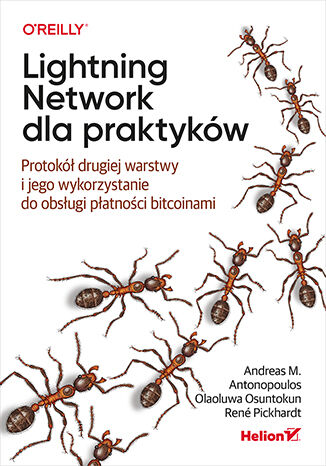
Andreas M. Antonopoulos, Olaoluwa Osuntokun, René Pickhardt
Potencjał blockchainu jest ogromny i zapewne wciąż nie znamy wszystkich jego możliwych zastosowań. Jest to dosyć nowa, dynamicznie rozwijająca się technologia, jednak już teraz dostrzegalne są pewne jej ograniczenia. Problemem jest na przykład skalowalność Bitcoina. Rozwiązaniem wydaje się Lightning Network (LN), protokół drugiej warstwy, który zapewnia niemal natychmiastowe transakcje w systemie Bitcoin. Umożliwia on również zwiększenie szybkości i prywatności zawieranych transakcji, pozwalając przy tym na zmniejszenie opłat. Ta książka jest przeznaczona dla osób, które chcą zrozumieć działanie Lightning Network i wykorzystać możliwości tej technologii we własnych aplikacjach. Z lektury tej pozycji skorzystają programiści, architekci systemowi i inżynierowie. Omówiono w niej podstawy funkcjonowania sieci LN i sposoby jej użycia w praktyce. Przedstawiono również zasady oprogramowywania węzłów Lightning, ich implementacji i konfiguracji, a także zagadnienia budowania kanałów płatności w systemie Bitcoin, obsługi kanałów i przekazywania płatności. Zaprezentowano też informacje dotyczące bezpieczeństwa i prywatności w sieci Lightning Network. Poszczególne zagadnienia zilustrowano praktycznymi przykładami kodu w językach Go, C++, Python oraz przy użyciu wiersza poleceń uniksowych systemów operacyjnych. W książce między innymi: technologia Lightning Network a skalowanie blockchainu standardy stosowane w Lightning Network warstwy zestawu protokołów Lightning Network portfele i węzły oraz ich obsługa kanały płatności Lightning, routing cebulowy i protokół plotkarski kanały płatności od nadawcy do odbiorcy w trybie off-chain Poznaj potencjał LN i zostań mistrzem technologii przyszłości!

Logo Design Love. Tworzenie genialnych logotypów. Nowa odsłona
David Airey
Twórz logotypy, które rzucają na kolana! Jak czerpać od najlepszych i zachować oryginalność? Gdzie szukać twórczych inspiracji? Jak negocjować z klientami? Logo to jeden z kluczowych elementów tożsamości wizualnej każdej marki. Może pomóc jej osiągnąć szczyt popularności albo zepchnąć ją w otchłań niebytu. Wszystko zależy od Ciebie. Dlatego zanim otworzysz jakikolwiek program graficzny lub weźmiesz do ręki ołówek, zobacz, jak robią to najlepsi, i zaczerpnij wiedzę całymi garściami. Powraca kultowa książka, którą pokochali wszyscy kreatywni projektanci! W wydaniu drugim, zaktualizowanym i rozszerzonym, autor otwiera przed Tobą fascynujący świat wizualnej identyfikacji marki. Pozwól mu przeprowadzić się bezpiecznie przez wszystkie etapy projektowania. Znajdziesz tu jeszcze więcej analiz przypadków, szkiców, logotypów, wskazówek dotyczących współpracy z klientami, anegdot oraz praktycznych informacji o tym, jak skutecznie zamknąć projekt - i zrobić to dobrze. Ta książka da także solidnego kopa Twojemu zmysłowi twórczemu i pomoże uniknąć zabójczej rutyny. Proces tworzenia logo - od ołówka do PDF-a. Zasady wyceniania projektów. Sztuka prowadzenia rozmów z klientami. Rozwiązywanie problemów z brakiem oryginalności. Analiza kultowych projektów. Unikanie zagrożeń związanych z rebrandingiem. Pomiary zwrotu z inwestycji w projekt. Tworzenie trwałych wizerunków marki w 31 praktycznych wskazówkach. Zrób logo, które stanie się kultowe! David Airey - niezależny projektant graficzny z Irlandii Północnej. Swoje umiejętności szlifował w Wielkiej Brytanii i Stanach Zjednoczonych, po czym podjął decyzję o wyspecjalizowaniu się w projektowaniu wizerunku marki. Poświęcone projektowaniu graficznemu blogi Davida - davidairey.com, logodesignlove.com oraz identitydesigned.com - każdego miesiąca odwiedza ponad 600 tysięcy internautów. Lista klientów Davida obejmuje wiele znanych firm, takich jak Yellow Pages, Asian Development Bank, blinkbox czy BBC.
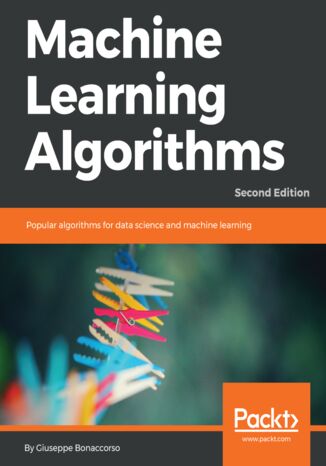
Giuseppe Bonaccorso
Machine learning has gained tremendous popularity for its powerful and fast predictions with large datasets. However, the true forces behind its powerful output are the complex algorithms involving substantial statistical analysis that churn large datasets and generate substantial insight.This second edition of Machine Learning Algorithms walks you through prominent development outcomes that have taken place relating to machine learning algorithms, which constitute major contributions to the machine learning process and help you to strengthen and master statistical interpretation across the areas of supervised, semi-supervised, and reinforcement learning. Once the core concepts of an algorithm have been covered, you’ll explore real-world examples based on the most diffused libraries, such as scikit-learn, NLTK, TensorFlow, and Keras. You will discover new topics such as principal component analysis (PCA), independent component analysis (ICA), Bayesian regression, discriminant analysis, advanced clustering, and gaussian mixture.By the end of this book, you will have studied machine learning algorithms and be able to put them into production to make your machine learning applications more innovative.
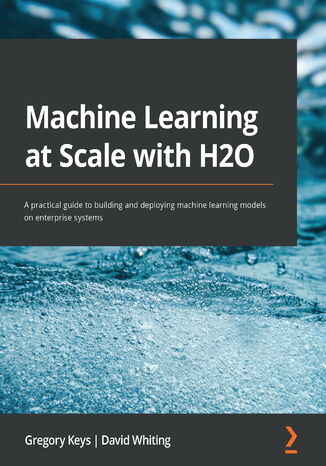
Gregory Keys, David Whiting
H2O is an open source, fast, and scalable machine learning framework that allows you to build models using big data and then easily productionalize them in diverse enterprise environments.Machine Learning at Scale with H2O begins with an overview of the challenges faced in building machine learning models on large enterprise systems, and then addresses how H2O helps you to overcome them. You’ll start by exploring H2O’s in-memory distributed architecture and find out how it enables you to build highly accurate and explainable models on massive datasets using your favorite ML algorithms, language, and IDE. You’ll also get to grips with the seamless integration of H2O model building and deployment with Spark using H2O Sparkling Water. You’ll then learn how to easily deploy models with H2O MOJO. Next, the book shows you how H2O Enterprise Steam handles admin configurations and user management, and then helps you to identify different stakeholder perspectives that a data scientist must understand in order to succeed in an enterprise setting. Finally, you’ll be introduced to the H2O AI Cloud platform and explore the entire machine learning life cycle using multiple advanced AI capabilities.By the end of this book, you’ll be able to build and deploy advanced, state-of-the-art machine learning models for your business needs.
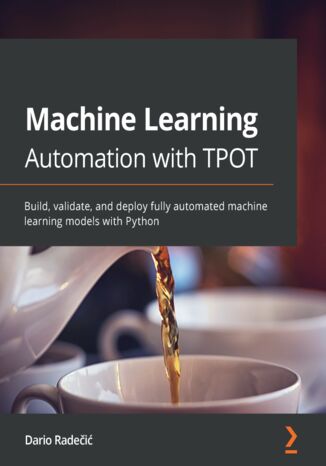
Dario Radečić
The automation of machine learning tasks allows developers more time to focus on the usability and reactivity of the software powered by machine learning models. TPOT is a Python automated machine learning tool used for optimizing machine learning pipelines using genetic programming. Automating machine learning with TPOT enables individuals and companies to develop production-ready machine learning models cheaper and faster than with traditional methods.With this practical guide to AutoML, developers working with Python on machine learning tasks will be able to put their knowledge to work and become productive quickly. You'll adopt a hands-on approach to learning the implementation of AutoML and associated methodologies. Complete with step-by-step explanations of essential concepts, practical examples, and self-assessment questions, this book will show you how to build automated classification and regression models and compare their performance to custom-built models. As you advance, you'll also develop state-of-the-art models using only a couple of lines of code and see how those models outperform all of your previous models on the same datasets.By the end of this book, you'll have gained the confidence to implement AutoML techniques in your organization on a production level.
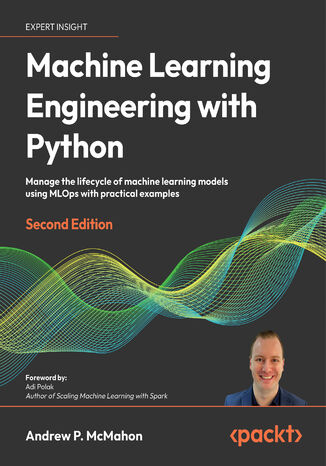
Andrew P. McMahon
The Second Edition of Machine Learning Engineering with Python is the practical guide that MLOps and ML engineers need to build solutions to real-world problems. It will provide you with the skills you need to stay ahead in this rapidly evolving field.The book takes an examples-based approach to help you develop your skills and covers the technical concepts, implementation patterns, and development methodologies you need. You'll explore the key steps of the ML development lifecycle and create your own standardized model factory for training and retraining of models. You'll learn to employ concepts like CI/CD and how to detect different types of drift.Get hands-on with the latest in deployment architectures and discover methods for scaling up your solutions. This edition goes deeper in all aspects of ML engineering and MLOps, with emphasis on the latest open-source and cloud-based technologies. This includes a completely revamped approach to advanced pipelining and orchestration techniques.With a new chapter on deep learning, generative AI, and LLMOps, you will learn to use tools like LangChain, PyTorch, and Hugging Face to leverage LLMs for supercharged analysis. You will explore AI assistants like GitHub Copilot to become more productive, then dive deep into the engineering considerations of working with deep learning.