
Aplikacje biurowe
Jak wykonać skomplikowane obliczenia w arkuszu kalkulacyjnym? Jak napisać i poprawnie sformatować urzędowe pismo w edytorze tekstu albo wykonać interesującą prezentację dla szefa? Tutaj znajdziecie odpowiedź.
Podręczniki w tym dziale pozwolą poznać tajniki najbardziej popularnych aplikacji biurowych jak pakiet MS Office czy Open Office, poczty elektronicznej jak Outlook, czy zagadnień języka programowania VBA oraz w pełni wykorzystać potencjał jaki te programy oferują. Nauczycie się jak aktywnie zarządzać budżetem w MS Project, tworzyć prezentację w PowerPoint slajd po slajdzie, oraz znajdziecie tu szereg wskazówek i porad jak usprawnić Waszą pracę z programami Excel czy Word.

Senior pracuje z edytorem tekstu
Aleksander Zieliński
Senior pracuje z edytorem tekstu to trzecia z czterech książek wprowadzających w tajniki pracy na komputerze. Część trzecia skupia się wokół ogólnie pojętego pisania tekstów. Z myślą o seniorach w książce zastosowano większe czcionki. Książka została dostosowana do czytelnika z różnym stopniem zaawansowania umiejętności związanych z edycją tekstów. Przedstawione zostały tutaj podstawowe pojęcia i nazwy związane z pracą podczas tworzenia jak i edycji tekstu za pomocą komputera. Dzięki książce każdy łatwo napisze tekst, ale przede wszystkim nada mu odpowiedni wygląd. Dostosuje do konkretnej tematyki, ubarwi ilustracjami i tabelami. Efekty swojej pracy bez kłopotu uda się przelać na papier za pomocą drukarki po odpowiednim poddaniu go korekcie językowej.
Ankush Agarwal
IT service management (ITSM) refers to the implementation and management of quality IT services that meet the needs of your business. ServiceDesk Plus is an integrated web-based helpdesk tool that assists you in planning, setting up, and achieving the timely execution of IT services efficiently.ServiceDesk Plus 8.x Essentials is a practical, hands-on guide that walks you through the features of ServiceDesk Plus 8.x to help you set up and manage day-to-day IT services. The book also helps you to understand and practice the ITIL methodologies while using the tool for daily operations.ServiceDesk Plus 8.x Essentials conceptualizes the ITIL framework and takes you through the core processes and their implementation in ServiceDesk Plus 8.x in an easy and practical manner.The book will also help you to learn the process flows and manage incidents, problems, assets, and configurations while understanding the scope and responsibilities of the helpdesk. It also takes you through controlling changes and releases and highlights the features of the tools. If you need a concise handbook for a complete understanding of the metrics, challenges and risks of ITSM, then you have found the right book.With ServiceDesk Plus 8.x Essentials, you will learn everything you need to know to administer and manage IT services using ServiceDesk Plus, while making ITIL concepts practical and fun.
ServiceNow Cookbook. Acquire key capabilities for the ServiceNow platform
Ashish Rudra Srivastava, Dustin Turner
ServiceNow is the ideal platform for you to create enterprise-level applications, giving borh requesters and fulfillers better visibility and access to a process. With this title we’ll guide you through the world of ServiceNow, letting you take on the best the platform offers you with the least amount of hassle.Starting with the core configuration and management tasks, this book will help you build data-driven apps and it will also explore development best practices. You will learn to set up email notifications for users and work with the database view for reporting. Next, the book will guide you through creating various tasks from the workflow and show you how to make the most of the workflow utilities available in ServiceNow. Finally, the book will drive you through the auditing and diagnosing aspects of ServiceNow.By the end of this book, you will acquire immediately applicable skills to rectify everyday problems encountered on the ServiceNow platform.
Roy Justus, David Zhao
ServiceNow is the leading enterprise service management platform that enables the effective management of services in a modern enterprise.In this book, you’ll learn how to avoid pitfalls that can challenge value realization, where to focus, how to balance tradeoffs, and how to get buy-in for complex decisions. You’ll understand the key drivers of value in ServiceNow implementation and how to structure your program for successful delivery. Moving ahead, you’ll get practical guidance on the methods and considerations in securely using ServiceNow. You’ll also learn how to set up a multi-instance environment including best practices, patterns and alternatives in the use and maintenance of a multi-instance pipeline. Later chapters cover methods and approaches to design processes that deliver optimal ROI. Further, you’ll receive tips for designing technical standards, designing for scale, ensuring maintainability, and building a supportable instance. Finally, you’ll focus on the innovative possibilities that can be unlocked in a ServiceNow journey which will help you to manage uncertainty and claim the value of being an early adopter.By the end of this book, you’ll be prepared to lead or support a ServiceNow implementation with confidence that you’re bringing not only a solution but also making an impact in your organization.
ServiceNow IT Operations Management. Demystifying IT Operations Management
Ajaykumar Guggilla, Andrew Pishchulin
ServiceNow ITOM enables infrastructure and processes to be managed in a highly automated manner. It contains various segments that ensure its applications and enterprise infrastructures are optimized for high performance and helps in creating a lean and agile organization through service?level visibility and automation.This book will be a comprehensive guide that will be based on Geneva release and will help you discover how IT activities can be connected to your business needs, rather than just focusing on internal IT process. It will take a service-centric approach to operations management and consolidate all your resource data into a single system IT record. You will learn about discovery, orchestration, MID server and cloud management, helping you take full advantage of ServiceNow IT Operations Management to improve the quality of service & increasing the service availability.By the end of the book, you will be able to achieve improved service availability, immediate visibility of vital business services and much more, all from the convenience of your single screen.
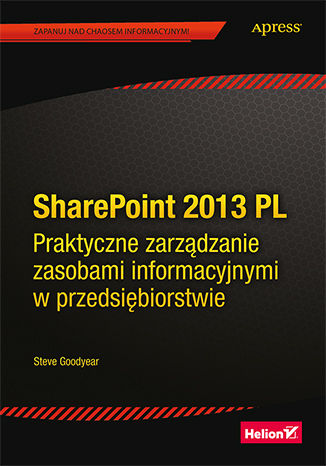
SharePoint 2013 PL. Praktyczne zarządzanie zasobami informacyjnymi w przedsiębiorstwie
Steve Goodyear
Zapanuj nad chaosem informacyjnym! SharePoint to platforma rozwijana przez firmę Microsoft, ułatwiająca zapanowanie nad ogromem informacji przetwarzanych w przedsiębiorstwie. Jest najczęściej wybierana przez średnie i duże organizacje. Pozwala pracownikom na błyskawiczne zlokalizowanie informacji istotnych w ich codziennej pracy. Ponadto pomaga tworzyć własne komponenty, dostosowane do specyficznych wymagań. SharePoint to duży i zaawansowany produkt, jednak dzięki tej książce szybko zdobędziesz wiedzę umożliwiającą skuteczne korzystanie z jego potencjału. W trakcie lektury poznasz cykl życia informacji, zaplanujesz strukturę archiwów, skonfigurujesz portal eDiscovery oraz dostosujesz system zabezpieczeń do własnych wymagań. Na kolejnych stronach znajdziesz ciekawe informacje na temat klasyfikowania i organizowania informacji, publikowania zawartości sieci Web oraz formularzy elektronicznych. Książka ta jest obowiązkową lekturą dla wszystkich osób odpowiedzialnych za organizowanie przechowywania informacji w SharePoint. Dowiesz się, jak: Zastosować model cyklu życia informacji w celu przeanalizowania i zrozumienia informacji wykorzystywanych w instytucji. Zaprojektować plan archiwów z zastosowaniem reguł routingu informacji w celu zorganizowania repozytorium rekordów programu SharePoint. Zaplanować i skonfigurować portal eDiscovery oraz zarządzać sprawami zbierania elektronicznych materiałów dowodowych. Zaprojektować rozwiązania niezbędne do stworzenia interfejsu z zewnętrznymi systemami zarządzania informacjami. Określić wymagania bezpieczeństwa informacji w instytucji. Zaprojektować typy zawartości i zaimplementować koncentrator typu zawartości przedsiębiorstwa w celu podziału na kategorie i zorganizowania informacji. Poznaj skuteczne sposoby zarządzania informacjami!
Patrick Tucker
After opening a toolbox full of tools, it can initially be hard to know which is the right one for the job – which tool works best and when. Showing you how to create an informed and purposeful plan for SharePoint Online in the context of the Microsoft 365 suite of tools is what this book is all about.SharePoint Architect's Planning Guide will help you understand all you can do with SharePoint. Whether the tools are new to you or you’ve used the older versions in the past, your journey will start by learning about the building blocks. This book is not a step-by-step guide; there are tons of online resources to give you that and to help you better keep up with the pace of change. This book is a planning guide, helping you with the context, capabilities, and considerations for implementing SharePoint Online in the most successful way possible. Whether you need to plan a new intranet, migrate files to a modern platform, or take advantage of tools such as Power Platform, Teams, and Planner, this guide will help you get to grips with the technology, ask the right questions to build your plan, and successfully implement it from the technical and user adoption perspectives.By the end of this Microsoft book, you’ll be able to perceive the toolbox as a whole and efficiently prepare a planning and governance document for use in your organization.
Mike Poole
This book takes you through the development of a SharePoint site for a wine business. The development involves adding features to the site using SharePoint Designer, and for each of these features you will find screenshots and easy to follow instructions. This book is ideal for people new to SharePoint Designer who need to put together a working SharePoint site as quickly as possible. No experience of SharePoint Designer is expected, and no skill with creating SharePoint sites is assumed.
Slajd:ologia. Nauka i sztuka tworzenia genialnych prezentacji
Nancy Duarte
Slajd:ologia jest książką równie piękną, jak mądrą — inspirującą, a praktyczną zarazem. Jeśli ją przeczytasz i przyswoisz sobie jej cenne rady, nauczysz się projektować i wygłaszać prezentacje, które odbiorcy zauważą i zapamiętają na długo. Być może uda Ci się nawet stworzyć prezentację, która zmieni cały świat. Garr Reynolds Od publikacji książki Nancy nie ma już wymówki dla długich, nudnych i bezużytecznych prezentacji. Guy Kawasaki Ta książka zapiera dech w piersiach! Nancy napisała od dawna upragniony fachowy przewodnik po sztuce i rzemiośle tworzenia prezentacji. Jeśli traktujesz tę tematykę poważnie, musisz zgłębić tę książkę, aby móc w ogóle marzyć o daniu z siebie wszystkiego. Przestudiuj ją, wykuj na pamięć i podziel się nią z innymi. Seth Godin Tę książkę należy sączyć jak szlachetne wino lub pierwszorzędny jazz. Po bezbolesnym wchłonięciu jej treści staniesz się lepszym prelegentem. Spodziewam się teraz ogólnego polepszenia jakości prezentacji, u którego podstaw legnie właśnie ta książka. Ric Bretschneider, Senior Program Manager, Microsoft Office PowerPoint Naucz się przemawiać obrazami i nie popełniaj slajdobójstwa! Ludzie w większości są wzrokowcami — najsilniej przemawiają do nas obrazy. Wiemy o tym, lecz przygotowując prezentację, zbyt często traktujemy obraz li tylko jako ozdobny dodatek do treści. Tymczasem umiejętność prowadzenia porywającej narracji wizualnej bywa nieodzowna w pracy, szczególnie na niektórych stanowiskach. Dyrektor, menedżer czy trener wiedzą, że od tego, co i jak przekażą słuchaczom, może zależeć ich stan konta, awans, a czasami nawet sytuacja rynkowa firmy, w imieniu której przemawiają! Prezentacje to dziś jedno z podstawowych narzędzi komunikacji biznesowej. Dobrze opracowana i przeprowadzona prezentacja niesie ze sobą nieodparcie atrakcyjną moc przekazu. Z tej książki dowiesz się, jak opracowywać koncepty, przekładać je na język obrazów, przekazywać treści w naturalny, właściwy dla Ciebie sposób. Znajdziesz tu także inspirujące projekty graficzne oraz omówienia przykładów wykorzystania prezentacji przez międzynarodowe firmy. Jak nawiązać kontakt z różnymi grupami odbiorców? Jak zrozumiale zilustrować abstrakcyjne myśli? Jak szkicować, kreślić i wzmacniać przekaz diagramów? Jak tworzyć grafikę, która ułatwi publiczności przyswajanie informacji? Jak wybierać odpowiednie środki do prezentacji danych? Jak przygotowywać prezentacje, które naprawdę inspirują? Jak skutecznie wykorzystywać oprogramowanie do prezentacji?
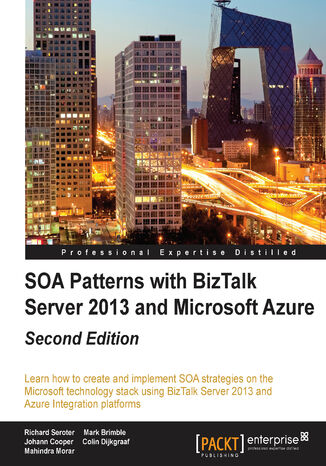
Richard Seroter, Mark Brimble, Johann Cooper, Mahindra...
If you are a developer who has been tasked with building service-oriented BizTalk Server solutions, this book is for you. It will help you to envision an enterprise solution and implement the software blueprint.
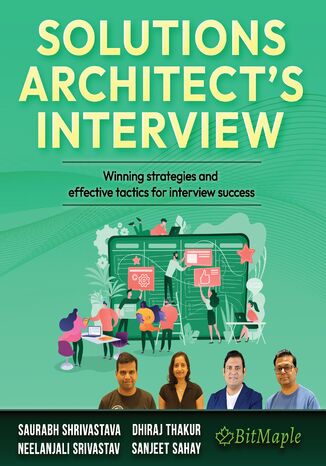
Solutions Architect's Interview. Winning strategies and effective tactics for interview success
Saurabh Shrivastava, Neelanjali Srivastav, Dhiraj Thakur, Sanjeet...
The Solutions Architect role sits at the intersection of technology, business strategy, and communication. Excelling in it takes more than technical expertise—it demands architectural thinking, leadership, and problem-solving skills. This book guides you in achieving this balance, walking you through every stage of becoming a Solutions Architect.It begins by unpacking what the role truly involves and then progresses into the nuances of interview preparation across multiple domains. You’ll learn how to structure your responses to scenario-based questions, highlight both your technical proficiency and soft skills, and position yourself as a strategic problem solver. Each chapter offers practical exercises, frameworks, and real interview examples that help you build the confidence and insight to stand out. The final chapter guides you through your first 90 days as a new Solutions Architect, aligning with business goals, understanding organizational architecture, and building credibility.By the end of this book, you’ll have the technical, behavioral, and strategic foundation to ace your interviews and thrive in any Solutions Architect role.
Josh Diakun, Yogesh Raheja, Thinknyx Technologies, Paul...
Splunk makes it easy for you to take control of your data, and with Splunk Operational Cookbook, you can be confident that you are taking advantage of the Big Data revolution and driving your business with the cutting edge of operational intelligence and business analytics.With more than 80 recipes that demonstrate all of Splunk’s features, not only will you find quick solutions to common problems, but you’ll also learn a wide range of strategies and uncover new ideas that will make you rethink what operational intelligence means to you and your organization.You’ll discover recipes on data processing, searching and reporting, dashboards, and visualizations to make data shareable, communicable, and most importantly meaningful. You’ll also find step-by-step demonstrations that walk you through building an operational intelligence application containing vital features essential to understanding data and to help you successfully integrate a data-driven way of thinking in your organization.Throughout the book, you’ll dive deeper into Splunk, explore data models and pivots to extend your intelligence capabilities, and perform advanced searching with machine learning to explore your data in even more sophisticated ways. Splunk is changing the business landscape, so make sure you’re taking advantage of it.
Anjana Mankale
Web applications are exposed to a variety of threats and vulnerabilities at the authentication, authorization, service, and domain object levels. Spring Security can help secure these applications against those threats.Spring Security is a popular application security solution for Java applications. It is widely used to secure standalone web applications, portlets, and increasingly REST applications. It is a powerful and highly customizable authentication and access-control framework. It is the de-facto standard for securing Spring-based applications and it is currently used to secure numerous demanding environments including government agencies, military applications, and central banks.Spring Security 3.x Cookbook is a repository of recipes to help you successfully secure web applications against threats and vulnerabilities at the authentication and session level layers using the Spring Security framework. We will not only explore Spring-based web applications, but also Java-based and Grails-based applications that can use Spring Security as their security framework. Apart from conventional web applications, we will also look at securing portlets, RESTful web service applications, and other non-web applications.This book will also take you through how to integrate Spring Security with other popular web frameworks/technologies such as Vaadin, EJB, and GWT. In addition to testing and debugging the implemented security measures, this book will also delve into finer aspects of Spring Security implementation such as how it deals with concurrency, multitenancy, and customization, and we will even show you how to disable it.This book gives you an overview of Spring Security and its implementation with various frameworks. It starts with container-based authentication before taking you on a tour of the main features of Spring Security. It demonstrates security concepts like BASIC, FORM, and DIGEST authentication and shows you how to integrate the Spring Security framework with various frameworks like JSF, struts2, Vaadin, and more.The book also demonstrates how to utilize container managed security without JAAS. Then, we move on to setting up a struts2 application before showing you how to integrate Spring Security with other frameworks like JSF, Groovy, Wicket, GWT, and Vaadin respectively.This book will serve as a highly practical guide and will give you confidence when it comes to applying security to your applications. It's packed with simple examples which show off each concept of Spring Security and which help you learn how it can be integrated with various frameworks.
Badr Nasslahsen
With experienced hackers constantly targeting apps, properly securing them becomes challenging when you integrate this factor with legacy code, new technologies, and other frameworks. Written by a Lead Cloud and Security Architect as well as CISSP, this book helps you easily secure your Java apps with Spring Security, a trusted and highly customizable authentication and access control framework.The book shows you how to implement different authentication mechanisms and properly restrict access to your app. You’ll learn to integrate Spring Security with popular web frameworks like Thymeleaf and Microservice and Cloud services like Zookeeper and Eureka, along with architecting solutions that leverage its full power while staying loosely coupled. You’ll also see how Spring Security defends against session fixation, moves into concurrency control, and how you can use session management for administrative functions. This fourth edition aligns with Java 17/21 and Spring Security 6, covering advanced security scenarios for RESTful web services and microservices. This ensures you fully understand the issues surrounding stateless authentication and discover a concise approach to solving those issues.By the end of this book, you’ll be able to integrate Spring Security 6 with GraalVM native images seamlessly, from start to finish.
Mick Knutson, Robert Winch, Peter Mularien
Knowing that experienced hackers are itching to test your skills makes security one of the most difficult and high-pressured concerns of creating an application. The complexity of properly securing an application is compounded when you must also integrate this factor with existing code, new technologies, and other frameworks. Use this book to easily secure your Java application with the tried and trusted Spring Security framework, a powerful and highly customizable authentication and access-control framework.The book starts by integrating a variety of authentication mechanisms. It then demonstrates how to properly restrict access to your application. It also covers tips on integrating with some of the more popular web frameworks. An example of how Spring Security defends against session fixation, moves into concurrency control, and how you can utilize session management for administrative functions is also included.It concludes with advanced security scenarios for RESTful webservices and microservices, detailing the issues surrounding stateless authentication, and demonstrates a concise, step-by-step approach to solving those issues. And, by the end of the book, readers can rest assured that integrating version 4.2 of Spring Security will be a seamless endeavor from start to finish.
SQL Server on Linux. Configuring and administering your SQL Server solution on Linux
Jasmin Azemovifá
Microsoft's launch of SQL Server on Linux has made SQL Server a truly versatile platform across different operating systems and data-types, both on-premise and on-cloud.This book is your handy guide to setting up and implementing your SQL Server solution on the open source Linux platform. You will start by understanding how SQL Server can be installed on supported and unsupported Linux distributions. Then you will brush up your SQL Server skills by creating and querying database objects and implementing basic administration tasks to support business continuity, including security and performance optimization. This book will also take you beyond the basics and highlight some advanced topics such as in-memory OLTP and temporal tables.By the end of this book, you will be able to recognize and utilize the full potential of setting up an efficient SQL Server database solution in your Linux environment.