
.NET - Programowanie
Ganesan Senthilvel, Ovais Mehboob Ahmed Khan, Habib...
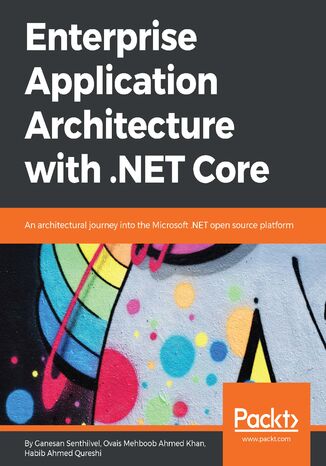
If you want to design and develop enterprise applications using .NET Core as the development framework and learn about industry-wide best practices and guidelines, then this book is for you. The book starts with a brief introduction to enterprise architecture, which will help you to understand what enterprise architecture is and what the key components are. It will then teach you about the types of patterns and the principles of software development, and explain the various aspects of distributed computing to keep your applications effective and scalable. These chapters act as a catalyst to start the practical implementation, and design and develop applications using different architectural approaches, such as layered architecture, service oriented architecture, microservices and cloud-specific solutions. Gradually, you will learn about the different approaches and models of the Security framework and explore various authentication models and authorization techniques, such as social media-based authentication and safe storage using app secrets. By the end of the book, you will get to know the concepts and usage of the emerging fields, such as DevOps, BigData, architectural practices, and Artificial Intelligence.
Ravindra Akella, Rishabh Verma, Arun Kumar Tamirisa...
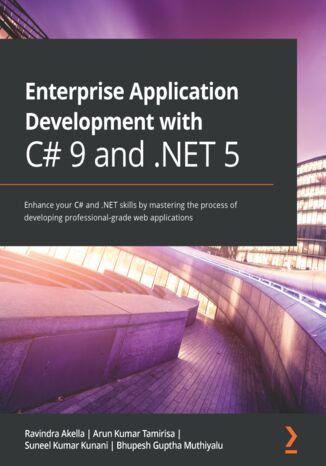
.NET Core is one of the most popular programming platforms in the world for an increasingly large community of developers thanks to its excellent cross-platform support. This book will show you how to confidently use the features of .NET 5 with C# 9 to build robust enterprise applications.Throughout the book, you'll work on creating an enterprise app and adding a key component to the app with each chapter, before ?nally getting it ready for testing and deployment. You'll learn concepts relating to advanced data structures, the Entity Framework Core, parallel programming, and dependency injection. As you progress, you'll cover various authentication and authorization schemes provided by .NET Core to make your apps and APIs secure. Next, you'll build web apps using ASP.NET Core 5 and deploy them on the cloud while working with various cloud components using Azure. The book then shows you how to use the latest Microsoft Visual Studio 2019 and C# 9 to simplify developer tasks, and also explores tips and tricks in Visual Studio 2019 to improve your productivity. Later, you'll discover various testing techniques such as unit testing and performance testing as well as di?erent methods to deploy enterprise apps.By the end of this book, you’ll be able to create enterprise apps using the powerful features of .NET 5 and deploy them on the cloud.
Excel at 40. The 40 Best Features in Excel as of September 2025
MrExcel's Holy Macro! Books, Bill Jelen
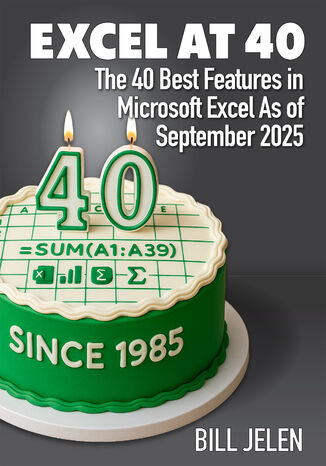
This book highlights 40 defining features that have made Excel indispensable since its creation. It opens with early innovations like AutoSum, Freeze Panes, and Pivot Tables before progressing to advanced tools such as Power Query, Dynamic Arrays, and the Copilot AI revolution. Each chapter presents history, context, and application, helping readers appreciate both legacy and cutting-edge updates.Through storytelling and expert insights, the book connects Excel’s past and present, offering a complete perspective on how the tool empowers business intelligence and everyday efficiency. Practical guidance throughout helps readers understand not only how to use each feature but why it matters in the evolution of data work.By exploring practical examples and future directions, readers gain deep appreciation and mastery of Excel’s evolving ecosystem. The combination of technical know-how, anecdotes, and forward-looking analysis makes this book a must-read for anyone invested in the future of productivity and data analysis.
Functional Programming with C#. Unlock coding brilliance with the power of functional magic
Alex Yagur
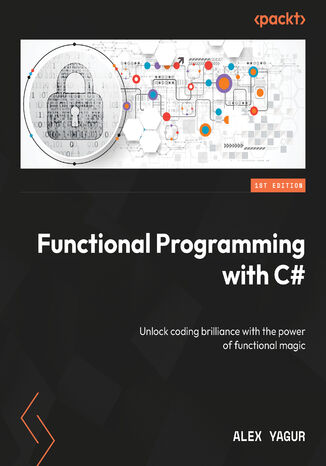
In an era where software complexity is increasing by the day, functional programming offers a paradigm that simplifies code maintenance and enhances reliability. Functional Programming with C# takes you on an exhaustive journey into functional programming within C#. The book familiarizes you with the core principles and benefits of functional programming, juxtaposing it with imperative and object-oriented paradigms. You’ll get to grips with the functional features of C# and learn to write expressive, modular code through expressions, pure functions, and higher-order functions. As you advance, you’ll explore advanced concepts such as error handling and asynchronous programming, which will equip you with the practical skills that you need to tackle real-world challenges. By comparing functional programming in C# with other languages and providing additional resources, this book ensures that you’re well-equipped to continue your journey toward mastery in functional programming. By the end of this book, you’ll have gained a thorough understanding of functional programming techniques, such as recursion, memoization, and composition, empowering you to write robust, maintainable code.
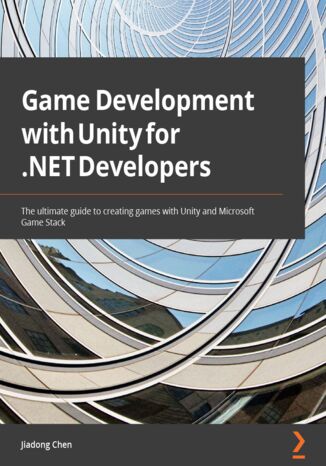
Jiadong Chen
Understand what makes Unity the world’s most widely used real-time 3D development platform and explore its powerful features for creating 3D and 2D games, as well as the Unity game engine and the Microsoft Game Dev, including the Microsoft Azure Cloud and Microsoft Azure PlayFab services, to create games.You will start by getting acquainted with the Unity editor and the basic concepts of Unity script programming with C#. You'll then learn how to use C# code to work with Unity's built-in modules, such as UI, animation, physics, video, and audio, and understand how to develop a game with Unity and C#. As you progress through the chapters, you'll cover advanced topics such as the math involved in computer graphics and how to create a custom render pipeline in Unity with the new Scriptable Render Pipeline, all while optimizing performance in Unity. Along the way, you'll be introduced to Microsoft Game Dev, Azure services, and Azure PlayFab, and using the Unity3D PlayFab SDK to access the PlayFab API.By the end of this Unity book, you'll have become familiar with the Unity engine and be ready to develop your own games while also addressing the performance issues that you could encounter in the development process.
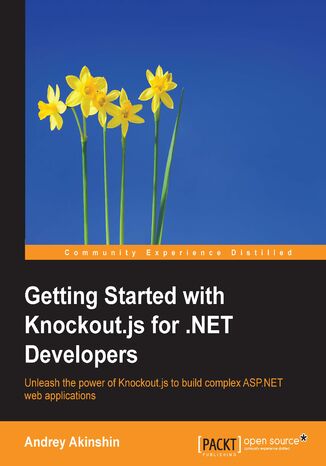
Andrey Ankshin
This book is intended for .NET developers who want to use the MVVM design pattern to create powerful client-side JavaScript linked to server-side C# logic. Basic experience with ASP.NET, Razor, and creating web applications is needed.
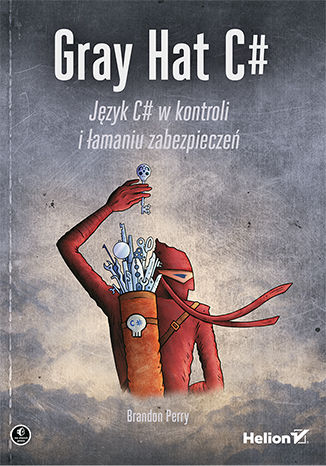
Gray Hat C#. Język C# w kontroli i łamaniu zabezpieczeń
Brandon Perry
C# to nowoczesny język programowania, który został od podstaw zaprojektowany jako obiektowy. Ta dojrzała technologia jest często wybierana przez twórców oprogramowania, również tego służącego do pokonywania zabezpieczeń systemów. Dzięki temu, że platforma .NET jest oprogramowaniem open source, w C# można pisać kod, który bez problemu będzie działał w każdym systemie operacyjnym. Co prawda język ten jest prosty i łatwy do nauczenia się, jednak dopiero gruntowna znajomość C# umożliwia efektywne tworzenie narzędzi związanych z bezpieczeństwem, służących choćby do wyszukiwania luk w infrastrukturze czy prowadzenia testów penetracyjnych. Ta książka jest przeznaczona dla specjalistów ds. bezpieczeństwa, którzy chcą korzystać z języka C# do takich zadań jak fuzzowanie, skanowanie w poszukiwaniu luk zabezpieczeń i analiza złośliwego oprogramowania. Opisano tu zarówno podstawy języka C#, jak i jego dość zaawansowane funkcje. Przedstawiono szereg bibliotek dostępnych dla tego języka. Pokazano, jak pisać kod wyszukujący luki w zabezpieczeniach i jak tworzyć eksploity. Przedstawiono sposoby korzystania z takich narzędzi jak Nessus, sqlmap i Cuckoo Sandbox. Dzięki technikom zaprezentowanym w książce administrator bezpieczeństwa bez problemu zautomatyzuje nawet najbardziej żmudne codzienne zadania! W tej książce między innymi: Podstawowe i zaawansowane funkcjonalności języka C# Generowanie kodu ładunków, również wieloplatformowych Skanery, w tym OpenVAS, Nessus i Nexpose Automatyczna identyfikacja luk umożliwiających wstrzyknięcie kodu SQL Tworzenie w C# narzędzi do inżynierii wstecznej C#. Sprawdź swój system zabezpieczeń! Brandon Perry jest programistą i gorącym zwolennikiem idei open source. Odkąd pojawiło się środowisko Mono, pisze aplikacje w języku C#. Tworzy też moduły dla frameworka Metasploit, analizuje pliki binarne i zarządza ciekawymi projektami (https://volatileminds.net/). Fascynuje się badaniami nad bezpieczeństwem systemów informatycznych. Chętnie dzieli się swoją wiedzą, pisze książki i pomaga innym w tworzeniu solidniejszego oprogramowania.
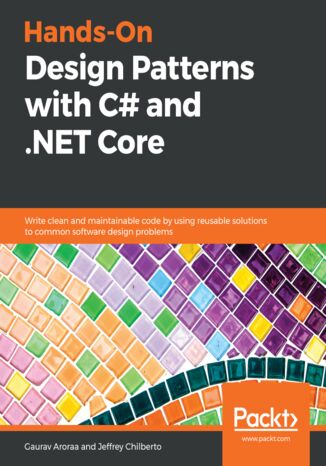
Gaurav Aroraa, Jeffrey Chilberto
Design patterns are essentially reusable solutions to common programming problems. When used correctly, they meet crucial software requirements with ease and reduce costs. This book will uncover effective ways to use design patterns and demonstrate their implementation with executable code specific to both C# and .NET Core.Hands-On Design Patterns with C# and .NET Core begins with an overview of object-oriented programming (OOP) and SOLID principles. It provides an in-depth explanation of the Gang of Four (GoF) design patterns, including creational, structural, and behavioral. The book then takes you through functional, reactive, and concurrent patterns, helping you write better code with streams, threads, and coroutines. Toward the end of the book, you’ll learn about the latest trends in architecture, exploring design patterns for microservices, serverless, and cloud native applications. You’ll even understand the considerations that need to be taken into account when choosing between different architectures such as microservices and MVC.By the end of the book, you will be able to write efficient and clear code and be comfortable working on scalable and maintainable projects of any size.