
Inne
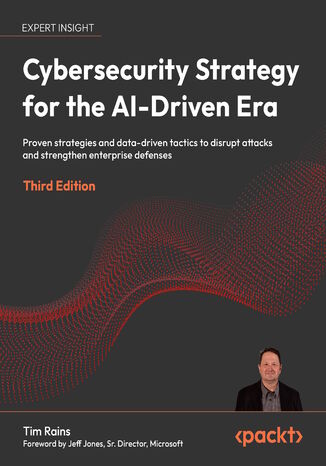
Tim Rains, Jeff Jones
Designing a cybersecurity strategy that actually works is difficult when threats evolve faster than budgets, teams, and tools. This book helps security leaders cut through noise by focusing on how organizations are compromised, which strategies succeed, and how to measure outcomes.Written by Tim Rains, a former Global Chief Security Advisor at Microsoft and senior security leader at AWS and Fortune-scale enterprises, this edition expands on the previous editions with major updates and new chapters. You will learn how threat intelligence, attack-centric security, intrusion kill chains, and MITRE ATT&CK can help defenders design stronger strategies.New and expanded content covers ransomware, API security, “living off the land” attacks, resilience as a cybersecurity strategy, and the security of AI systems alongside practical guidance on using AI to improve security outcomes. This book takes a practical, evidence-based approach to cybersecurity strategy, helping you assess trade-offs, avoid costly missteps, and communicate clearly with executives and boards.By the end of this book, you’ll be able to evaluate cybersecurity strategies more effectively, improve enterprise defenses, and communicate security priorities clearly to executives and boards.
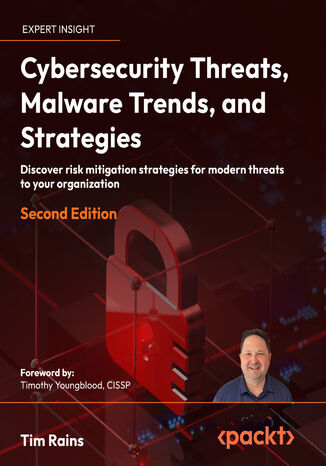
Tim Rains, Timothy Youngblood
Tim Rains is Microsoft's former Global Chief Security Advisor and Amazon Web Services’ former Global Security Leader for Worldwide Public Sector. He has spent the last two decades advising private and public sector organizations all over the world on cybersecurity strategies.Cybersecurity Threats, Malware Trends, and Strategies, Second Edition builds upon the success of the first edition that has helped so many aspiring CISOs, and cybersecurity professionals understand and develop effective data-driven cybersecurity strategies for their organizations. In this edition, you’ll examine long-term trends in vulnerability disclosures and exploitation, regional differences in malware infections and the socio-economic factors that underpin them, and how ransomware evolved from an obscure threat to the most feared threat in cybersecurity. You’ll also gain valuable insights into the roles that governments play in cybersecurity, including their role as threat actors, and how to mitigate government access to data. The book concludes with a deep dive into modern approaches to cybersecurity using the cloud.By the end of this book, you will have a better understanding of the threat landscape, how to recognize good Cyber Threat Intelligence, and how to measure the effectiveness of your organization's cybersecurity strategy.
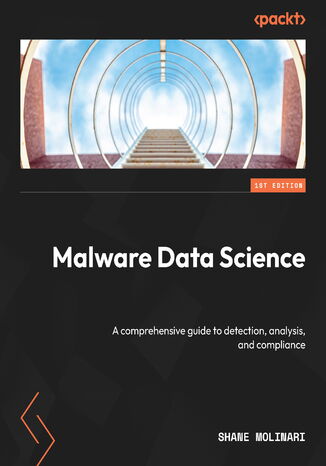
Shane Molinari, Jim Packer
In today's world full of online threats, the complexity of harmful software presents a significant challenge for detection and analysis. This insightful guide will teach you how to apply the principles of data science to online security, acting as both an educational resource and a practical manual for everyday use.Data Science for Malware Analysis starts by explaining the nuances of malware, from its lifecycle to its technological aspects before introducing you to the capabilities of data science in malware detection by leveraging machine learning, statistical analytics, and social network analysis. As you progress through the chapters, you’ll explore the analytical methods of reverse engineering, machine language, dynamic scrutiny, and behavioral assessments of malicious software. You’ll also develop an understanding of the evolving cybersecurity compliance landscape with regulations such as GDPR and CCPA, and gain insights into the global efforts in curbing cyber threats.By the end of this book, you’ll have a firm grasp on the modern malware lifecycle and how you can employ data science within cybersecurity to ward off new and evolving threats.
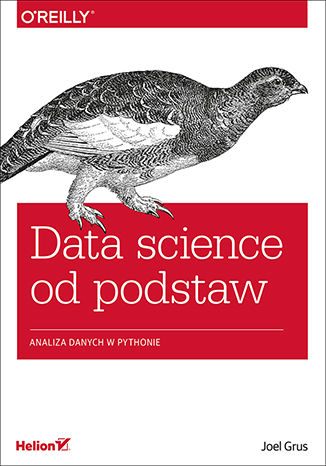
Data science od podstaw. Analiza danych w Pythonie
Joel Grus
Współczesne ogromne zbiory danych zawierają odpowiedzi na prawie każde pytanie. Równocześnie nauka o danych jest dziedziną, która cokolwiek onieśmiela. Znajduje się gdzieś pomiędzy subtelnymi umiejętnościami hakerskimi, twardą wiedzą z matematyki i statystyki a merytoryczną znajomością zagadnień z danej branży. Co więcej, dziedzina ta niezwykle dynamicznie się rozwija. Trud włożony w naukę o danych niewątpliwie się jednak opłaca: biegły analityk danych może liczyć na dobrze płatną, inspirującą i bardzo atrakcyjną pracę. Dzięki tej książce opanujesz najważniejsze zagadnienia związane z matematyką i statystyką, będziesz także rozwijać umiejętności hakerskie. W ten sposób zyskasz podstawy pozwalające na rozpoczęcie przygody z analizą danych. Gruntownie zapoznasz się z potrzebnymi narzędziami i algorytmami. Pozwoli Ci to lepiej zrozumieć ich działanie. Poszczególne przykłady, którymi zilustrowano omawiane zagadnienia, są przejrzyste, dobrze opisane i zrozumiałe. Podczas lektury książki poznasz biblioteki, które umożliwią zaimplementowanie omówionych technik podczas analizy dużych zbiorów danych. Szybko się przekonasz, że aby zostać analitykiem danych, wystarczy odrobina ciekawości, sporo chęci, mnóstwo ciężkiej pracy i... ta książka. Najważniejsze zagadnienia: Praktyczne wprowadzenie do Pythona Podstawy algebry liniowej, statystyki i rachunku prawdopodobieństwa w analizie danych Podstawy uczenia maszynowego Implementacje algorytmów modeli, w tym naiwny klasyfikator bayesowski, regresja liniowa, regresja logistyczna, drzewa decyzyjne, sieci neuronowe i grupowanie, MapReduce Systemy rekomendacji i mechanizmy przetwarzania języka naturalnego Korzystanie z mediów społecznościowych i baz danych. Python. Wyciśniesz z danych każdą kroplę wiedzy!
Data science od podstaw. Analiza danych w Pythonie. Wydanie II
Joel Grus
Analityka danych jest uważana za wyjątkowo obiecującą dziedzinę wiedzy. Rozwija się błyskawicznie i znajduje coraz to nowsze zastosowania. Profesjonaliści biegli w eksploracji danych i wydobywaniu z nich pożytecznych informacji mogą liczyć na interesującą pracę i bardzo atrakcyjne warunki zatrudnienia. Jednak aby zostać analitykiem danych, trzeba znać matematykę i statystykę, a także nauczyć się programowania. Umiejętności w zakresie uczenia maszynowego i uczenia głębokiego również są ważne. W przypadku tak specyficznej dziedziny, jaką jest nauka o danych, szczególnie istotne jest zdobycie gruntownych podstaw i dogłębne ich zrozumienie. W tym przewodniku opisano zagadnienia związane z podstawami nauki o danych. Wyjaśniono niezbędne elementy matematyki i statystyki. Przedstawiono także techniki budowy potrzebnych narzędzi i sposoby działania najistotniejszych algorytmów. Książka została skonstruowana tak, aby poszczególne implementacje były jak najbardziej przejrzyste i zrozumiałe. Zamieszczone tu przykłady napisano w Pythonie: jest to język dość łatwy do nauki, a pracę na danych ułatwia szereg przydatnych bibliotek Pythona. W drugim wydaniu znalazły się nowe tematy, takie jak uczenie głębokie, statystyka i przetwarzanie języka naturalnego, a także działania na ogromnych zbiorach danych. Zagadnienia te często pojawiają się w pracy współczesnego analityka danych. W książce między innymi: elementy algebry liniowej, statystyki i rachunku prawdopodobieństwa zbieranie, oczyszczanie i eksploracja danych algorytmy modeli analizy danych podstawy uczenia maszynowego systemy rekomendacji i przetwarzanie języka naturalnego analiza sieci społecznościowych i algorytm MapReduce Nauka o danych: bazuj na solidnych podstawach!
Digital Ethics in the Age of AI. Navigating the ethical frontier today and beyond
IT Governance Publishing, Dr. Julie E. Mehan
Digital Ethics in the Age of AI explores the profound ethical challenges posed by the rise of artificial intelligence and its integration into our daily lives. The book covers AI’s disruptive effects across various sectors, including misinformation, privacy, and job displacement, offering clear explanations and real-world examples. The author delves into the role of AI in spreading misinformation and disinformation, including the creation of deepfakes, and highlights the increasing risk of online disinhibition driven by AI-powered interactions. The book also addresses the cognitive biases embedded within AI systems and the growing concerns over privacy, data security, and surveillance in an age of ubiquitous AI technologies. Finally, the book explores the potential for AI-driven job displacement, particularly in the cognitive class, and the societal implications of such disruptions. It also covers intellectual property challenges in the age of AI and the complexities surrounding generative AI’s impact on privacy and digital ownership. Offering solutions for mitigating these risks, Digital Ethics in the Age of AI provides a roadmap for navigating the ethical and regulatory landscape of AI today and in the future.
Gerard Johansen
Embark on a journey into the forefront of cyber defense with Digital Forensics and Incident Response, 4th Edition. This guide is your gateway to mastering the sophisticated techniques and methodologies essential for tackling today’s cyber threats. Authored by leading cybersecurity expert Gerard Johansen, this book provides an insider's look at the cutting-edge tools and innovative strategies needed to prevent, detect, and respond to digital vulnerabilities. With its focus on practical applications and up-to-date examples, it equips you with the skills to develop and refine robust digital forensic capabilities within your organizationThe fourth edition goes beyond traditional approaches by integrating the latest advancements in cloud technology and machine learning, offering a comprehensive look at how these technologies can enhance forensic practices. Dive into the nuances of deploying scalable incident response strategies, using open-source tools for effective threat hunting, and applying ML/AI to uncover and counteract emerging cyber threats. Each chapter is designed to build your proficiency in handling real-world challenges, making you indispensable in your fieldBy the end of the book, you will be well-versed in the various tasks and techniques associated with incident response.
Disaster Recovery and Business Continuity. A quick guide for organisations and business managers
IT Governance Publishing, Thejendra B.S
This book delves into disaster recovery (DR) and business continuity (BC), offering practical strategies for organizations to prepare for and manage disruptions. It starts by defining core concepts of DR and BC, highlighting their role in crisis management. Early chapters explore business impact analysis, data protection, and risk assessment, while examining common IT and non-IT disasters like data loss, cyberattacks, and communication failures.Later sections focus on specific disaster scenarios, such as virus attacks, software failures, and data center risks, offering prevention methods and recovery plans. It also addresses human factors in DR, covering IT staff and contractor management, and the risks tied to outsourcing and project failures.In addition to IT risks, the book explores non-IT disasters, including health crises, financial challenges, and natural events, with strategies for mitigation. The final chapters provide guidance on creating and testing contingency plans, featuring checklists and mock run procedures. This book empowers readers to design, implement, and maintain effective DR and BC plans for their organization’s needs.

Jeremiah Ginn
The SASE concept was coined by Gartner after seeing a pattern emerge in cloud and SD-WAN projects where full security integration was needed. The market behavior lately has sparked something like a space race for all technology manufacturers and cloud service providers to offer a SASE solution. The current training available in the market is minimal and manufacturer-oriented, with new services being released every few weeks. Professional architects and engineers trying to implement SASE need to take a manufacturer-neutral approach.This guide provides a foundation for understanding SASE, but it also has a lasting impact because it not only addresses the problems that existed at the time of publication, but also provides a continual learning approach to successfully lead in a market that evolves every few weeks. Technology teams need a tool that provides a model to keep up with new information as it becomes available and stay ahead of market hype.With this book, you’ll learn about crucial models for SASE success in designing, building, deploying, and supporting operations to ensure the most positive user experience (UX). In addition to SASE, you’ll gain insight into SD-WAN design, DevOps, zero trust, and next-generation technical education methods.
Docker Deep Dive. Zero to Docker in a single book - Third Edition
Nigel Poulton
Embark on a transformative journey into the world of Docker and containers with this expertly crafted course. Starting with a high-level overview, you'll gain a solid understanding of containers and the significance of Docker in modern software development. Delve into Docker's core components, exploring essential standards, projects, and the intricacies of the Docker Engine, ensuring a robust foundation.As you progress, practical hands-on modules will guide you through working with images and containers, containerizing applications, and managing multi-container setups using Docker Compose. You'll learn to deploy applications efficiently with Docker Swarm and Docker Stacks, enhancing your ability to manage and scale containerized applications. The course also introduces Docker's integration with WebAssembly, offering a glimpse into cutting-edge container technologies.Concluding with advanced topics, you'll master Docker networking, including overlay networks and persistent data management with volumes. Emphasis on Docker security ensures you can safeguard your applications and data effectively. By the end of this course, you'll possess the skills and knowledge to leverage Docker's full capabilities, from development to deployment, ensuring you remain at the forefront of container technology.

Bartosz Danowski, Alicja Krupińska
Jak zabezpieczyć komputer i chronić dziecko przed przestępcami internetowymi? Jak wybrać odpowiedni program zabezpieczający przed szkodliwymi treściami? Gdzie szukać pomocy? To ważne, co Twoje dziecko robi w sieci. To, co ogląda, czyta, z kim rozmawia i ile czasu spędza w Internecie, ma duże znaczenie dla jego rozwoju, ale przede wszystkim dla jego bezpieczeństwa! Internet, który jest jedną z największych zdobyczy naszej cywilizacji, to cudowne okno na wielki świat -- na jego jasne, ale i ciemne strony... Twoje dziecko w każdej chwili może zetknąć się z pedofilią, pornografią, sektami, przemocą, a także zostać przestępcą, nielegalnie ściągając pliki. Rodzice często bywają tego nieświadomi, chociaż na co dzień bacznie strzegą swoich pociech przed podobnymi zagrożeniami. Co gorsza, zazwyczaj są mniej biegli w obsłudze komputera i Internetu niż ich własne dzieci, co utrudnia zabezpieczenie dostępu do szkodliwych treści. A Ty zastanawiałeś się nad tym, jak dyskretnie uchronić pociechę i jego wrażliwą psychikę przed złą stroną Internetu? Jak zapewnić mu bezpieczeństwo, nie rezygnując z dostępu do sieci? Ta książka powstała właśnie z myślą o Tobie i innych odpowiedzialnych rodzicach, często zagubionych w wirtualnym świecie, chcących kontrolować dziecko w sieci, nie krępując przy tym jego wolności. Autorzy pomogą Ci: poznać zagrożenia czyhające w sieci i ich skalę; odpowiednio skonfigurować komputer PC; wybrać i zainstalować odpowiednie programy kontrolne i filtry stron internetowych; poradzić sobie z problemem pirackiego ściągania plików; wybrać przydatne oprogramowanie dodatkowo chroniące dziecko i komputer; wskazując instytucje zajmujące się pomocą ofiarom i ściganiem przestępców internetowych; nauczyć się surfowania z dzieckiem po interesujących i bezpiecznych stronach.
Aaron Woody
Enterprise security redefined using a data-centric approach and trust models to transform information security into a business enablement process. It is a unique and forward thinking approach for deciding the best method to secure data in the enterprise, the cloud, and in BYOD environments.Enterprise Security: A Data-Centric Approach to Securing the Enterprise will guide you through redefining your security architecture to be more affective and turn information security into a business enablement process rather than a roadblock. This book will provide you with the areas where security must focus to ensure end-to-end security throughout the enterprise-supporting enterprise initiatives such as cloud and BYOD. Enterprise Security: A Data-Centric Approach to Securing the Enterprise will first introduce the reader to a new security architecture model and then explores the must have security methods and new tools that can used to secure the enterprise.This book will take a data-centric approach to securing the enterprise through the concept of Trust Models and building a layered security implementation focused on data. This is not your traditional security book focused on point solutions and the network aspect of security. This book combines best practice methods with new methods to approach enterprise security and how to remain agile as the enterprise demands more access to data from traditionally untrusted assets, hosted solutions, and third parties. Applied Information Security - A Data-Centric Approach to Securing the Enterprise will provide the reader an easy-to-follow flow from architecture to implementation, diagrams and recommended steps, and resources for further research and solution evaluation.This book is a reference and guide for all levels of enterprise security programs that have realized that non-data centric security is no longer practical and new methods must be used to secure the most critical assets in the enterprise.
James Leyte-Vidal
Whether you’re looking to crack passwords as part of a thorough security audit or aiming to recover vital information, this book will equip you with the skills to accomplish your goals. Written by a cybersecurity expert with over fifteen years of experience in penetration testing, Ethical Password Cracking offers a thorough understanding of password protection and the correct approach to retrieving password-protected data.As you progress through the chapters, you first familiarize yourself with how credentials are stored, delving briefly into the math behind password cracking. Then, the book will take you through various tools and techniques to help you recover desired passwords before focusing on common cracking use cases, hash recovery, and cracking. Real-life examples will prompt you to explore brute-force versus dictionary-based approaches and teach you how to apply them to various types of credential storage.By the end of this book, you'll understand how passwords are protected and how to crack the most common credential types with ease.
EU General Data Protection Regulation (GDPR). An implementation and compliance guide
IT Governance Publishing, IT Governance Privacy Team
This book provides a thorough exploration of the EU General Data Protection Regulation (GDPR). It starts with the core principles of GDPR, explaining its purpose, key concepts, and how it impacts data controllers and processors. The book covers essential features like data subject rights, data processing principles, and privacy compliance frameworks. It also explores the role of the Data Protection Officer (DPO) and the importance of conducting data protection impact assessments (DPIAs).Focusing on practical implementation, the book highlights the need for robust information security measures to meet GDPR standards. It provides actionable advice on best practices, including managing data breaches, ensuring lawful consent, and processing subject access requests. The guide also addresses the complexities of international data transfers in line with GDPR requirements.Finally, the book outlines GDPR enforcement mechanisms, detailing the powers of supervisory authorities and the steps to demonstrate compliance. This resource offers organizations a comprehensive roadmap to align with GDPR, laying the groundwork for effective data protection and compliance.
Jason Brown
Ransomware, phishing, and data breaches are major concerns affecting all organizations as a new cyber threat seems to emerge every day, making it paramount to protect the security of your organization and be prepared for potential cyberattacks. This book will ensure that you can build a reliable cybersecurity framework to keep your organization safe from cyberattacks.This Executive’s Cybersecurity Program Handbook explains the importance of executive buy-in, mission, and vision statement of the main pillars of security program (governance, defence, people and innovation). You’ll explore the different types of cybersecurity frameworks, how they differ from one another, and how to pick the right framework to minimize cyber risk. As you advance, you’ll perform an assessment against the NIST Cybersecurity Framework, which will help you evaluate threats to your organization by identifying both internal and external vulnerabilities. Toward the end, you’ll learn the importance of standard cybersecurity policies, along with concepts of governance, risk, and compliance, and become well-equipped to build an effective incident response team.By the end of this book, you’ll have gained a thorough understanding of how to build your security program from scratch as well as the importance of implementing administrative and technical security controls.

Gray Hat C#. Język C# w kontroli i łamaniu zabezpieczeń
Brandon Perry
C# to nowoczesny język programowania, który został od podstaw zaprojektowany jako obiektowy. Ta dojrzała technologia jest często wybierana przez twórców oprogramowania, również tego służącego do pokonywania zabezpieczeń systemów. Dzięki temu, że platforma .NET jest oprogramowaniem open source, w C# można pisać kod, który bez problemu będzie działał w każdym systemie operacyjnym. Co prawda język ten jest prosty i łatwy do nauczenia się, jednak dopiero gruntowna znajomość C# umożliwia efektywne tworzenie narzędzi związanych z bezpieczeństwem, służących choćby do wyszukiwania luk w infrastrukturze czy prowadzenia testów penetracyjnych. Ta książka jest przeznaczona dla specjalistów ds. bezpieczeństwa, którzy chcą korzystać z języka C# do takich zadań jak fuzzowanie, skanowanie w poszukiwaniu luk zabezpieczeń i analiza złośliwego oprogramowania. Opisano tu zarówno podstawy języka C#, jak i jego dość zaawansowane funkcje. Przedstawiono szereg bibliotek dostępnych dla tego języka. Pokazano, jak pisać kod wyszukujący luki w zabezpieczeniach i jak tworzyć eksploity. Przedstawiono sposoby korzystania z takich narzędzi jak Nessus, sqlmap i Cuckoo Sandbox. Dzięki technikom zaprezentowanym w książce administrator bezpieczeństwa bez problemu zautomatyzuje nawet najbardziej żmudne codzienne zadania! W tej książce między innymi: Podstawowe i zaawansowane funkcjonalności języka C# Generowanie kodu ładunków, również wieloplatformowych Skanery, w tym OpenVAS, Nessus i Nexpose Automatyczna identyfikacja luk umożliwiających wstrzyknięcie kodu SQL Tworzenie w C# narzędzi do inżynierii wstecznej C#. Sprawdź swój system zabezpieczeń! Brandon Perry jest programistą i gorącym zwolennikiem idei open source. Odkąd pojawiło się środowisko Mono, pisze aplikacje w języku C#. Tworzy też moduły dla frameworka Metasploit, analizuje pliki binarne i zarządza ciekawymi projektami (https://volatileminds.net/). Fascynuje się badaniami nad bezpieczeństwem systemów informatycznych. Chętnie dzieli się swoją wiedzą, pisze książki i pomaga innym w tworzeniu solidniejszego oprogramowania.