
Programowanie w chmurze
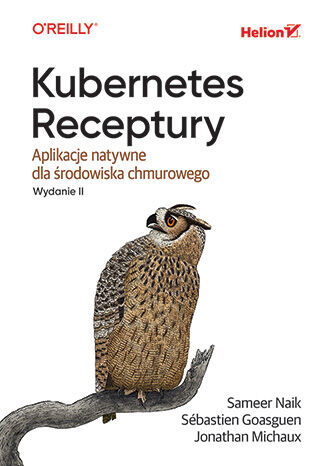
Kubernetes. Receptury. Aplikacje natywne dla środowiska chmurowego. Wydanie II
Sameer Naik, Sébastien Goasguen, Jonathan Michaux
Kubernetes stał się standardem orkiestracji kontenerów i zarządzania rozproszonymi aplikacjami. Obecnie pozwala na uzyskiwanie automatyzacji, rozszerzalności i przenośności na wysokim poziomie, a sama praca z nim jest efektywna i satysfakcjonująca. Niekiedy jednak tworzenie i wdrażanie aplikacji Kubernetes sprawia problemy nawet zaawansowanym użytkownikom. To książka przeznaczona dla osób pracujących z systemami Kubernetes. Poszczególne zagadnienia przedstawiono w niej w przejrzystym formacie problem - rozwiązanie - omówienie, dzięki czemu szybko znajdziesz rozwiązanie konkretnego problemu, a to z kolei pozwoli Ci na korzystanie ze wszystkich zalet tej platformy w codziennej pracy. Znalazło się tu ponad 100 praktycznych receptur obejmujących takie tematy jak konfigurowanie klastra, zarządzanie obciążeniem w kontenerach przy użyciu obiektów Kubernetes API, użycie pamięci masowej indeksowanej wartościami klucz-wartość, konfigurowanie zabezpieczeń i wiele innych. Każda receptura jest niezależna od innych, a materiał został zorganizowany w sposób maksymalnie ułatwiający szybkie odnalezienie interesującego Cię zagadnienia. W książce między innymi: tworzenie klastra i interfejs wiersza poleceń Kubernetes zarządzanie obciążeniami i usługami interfejs API Kubernetes skalowanie na poziomie klastra i aplikacji zabezpieczanie aplikacji i jej monitorowanie utrzymywanie systemów w środowisku chmury i rozwiązywanie problemów Kubernetes w praktyce. Znajdź szybkie rozwiązania dla każdego wyzwania!
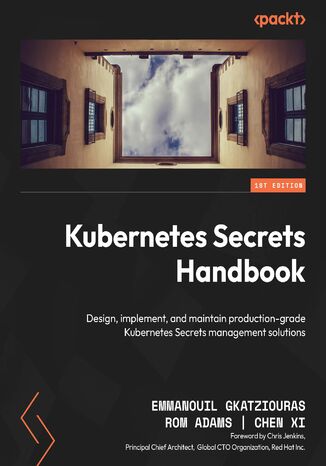
Emmanouil Gkatziouras, Chris Jenkins, Rom Adams, Chen...
Securing Secrets in containerized apps poses a significant challenge for Kubernetes IT professionals. This book tackles the critical task of safeguarding sensitive data, addressing the limitations of Kubernetes encryption, and establishing a robust Secrets management system for heightened security for Kubernetes.Starting with the fundamental Kubernetes architecture principles and how they apply to the design of Secrets management, this book delves into advanced Kubernetes concepts such as hands-on security, compliance, risk mitigation, disaster recovery, and backup strategies. With the help of practical, real-world guidance, you’ll learn how to mitigate risks and establish robust Secrets management as you explore different types of external secret stores, configure them in Kubernetes, and integrate them with existing Secrets management solutions.Further, you'll design, implement, and operate a secure method of managing sensitive payload by leveraging real use cases in an iterative process to enhance skills, practices, and analytical thinking, progressively strengthening the security posture with each solution.By the end of this book, you'll have a rock-solid Secrets management solution to run your business-critical applications in a hybrid multi-cloud scenario, addressing operational risks, compliance, and controls.
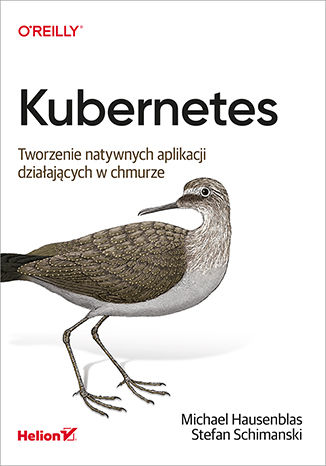
Kubernetes. Tworzenie natywnych aplikacji działających w chmurze
Michael Hausenblas, Stefan Schimanski
Mimo że w 2018 roku Kubernetes zyskał reputację standardowego narzędzia do zarządzania kontenerami, wciąż należy traktować tę technologię jako znajdującą się w dość wczesnej fazie rozwoju. Możliwości tej platformy z czasem rosną i stają się coraz ciekawsze. Standardowym działaniem jest uruchamianie klastrów w Kubernetesie, jednak o wiele bardziej interesujące wydaje się samodzielne rozszerzanie tej platformy o własne kontrolery i rozbudowa API Kubernetesa w celu dostosowania do swoich wymagań. W przypadku niektórych złożonych projektów programowanie potrzebnych komponentów jest jedynym racjonalnym rozwiązaniem. To książka przeznaczona dla programistów, którzy chcą maksymalnie wykorzystać możliwości Kubernetesa, również poprzez pisanie własnych zasobów. W praktyczny sposób pokazuje, jak rozwijać natywne, działające w chmurze aplikacje dla Kubernetesa. Wyjaśnia, w jaki sposób działa biblioteka API client-go i jak należy budować zasoby niestandardowe. Znalazło się tu obszerne i szczegółowe omówienie interfejsu programowania i działania platformy Kubernetes, a także pisania stabilnego oprogramowania w języku Go. Nie zabrakło szeregu wskazówek dotyczących samego pisania kodu oraz przeprowadzania testów. Dużo uwagi poświęcono niestandardowym zasobom, kontrolerom, webhookom i niestandardowym serwerom API oraz wzorcom rozszerzania Kubernetesa. W tej książce między innymi: zasady programowania dla Kubernetesa API Kubernetesa i client-go korzystanie z niestandardowych zasobów pisanie i udostępnianie operatorów tworzenie niestandardowych serwerów API Kubernetes: wykorzystaj w pełni jego potencjał!
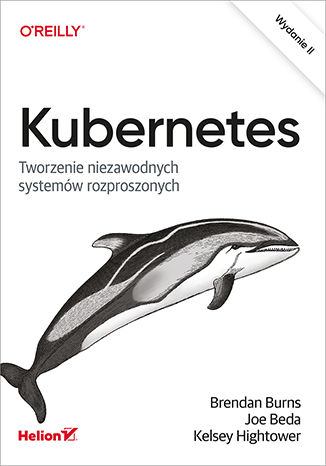
Kubernetes. Tworzenie niezawodnych systemów rozproszonych. Wydanie II
Brendan Burns, Joe Beda, Kelsey Hightower
Kubernetes jest czymś więcej niż platformą do orkiestracji kontenerów. W ciągu zaledwie kilku lat stał się najpopularniejszym i najbogatszym narzędziem do tworzenia, wdrażania i utrzymywania aplikacji w chmurze. Tak radykalna zmiana sposobu funkcjonowania systemów informatycznych wymaga przemodelowania podejścia i stylu pracy zespołów programistycznych. Jeśli jednak wypróbujesz Kubernetesa, przekonasz się, że bardzo upraszcza on tworzenie, wdrażanie i utrzymywanie systemów rozproszonych. Jego twórcy, bazując na własnych wieloletnich doświadczeniach, zaprojektowali go od podstaw, aby zapewnić inżynierom wydajną, efektywną i przyjemną pracę. Ta książka jest przeznaczona dla początkujących i zaawansowanych użytkowników Kubernetesa. Dzięki niej osiągniesz nowe poziomy prędkości, zwinności, niezawodności i wydajności budowanych systemów. Opisano tu, jak działa orkiestrator klastrów Kubernetes oraz jak wykorzystać jego narzędzia i interfejsy API do usprawnienia procesów rozwoju, dostarczania i utrzymywania rozproszonych aplikacji. Wyjaśniono niezbędne szczegóły dotyczące aplikacji kontenerowych, uruchamiania i obsługi klastrów oraz wdrażania aplikacji w Kubernetesie. Przedstawiono sposoby integracji magazynów danych i rozszerzania platformy. Przydatnym podsumowaniem treści zawartych w książce jest kilka praktycznych przykładów tworzenia i wdrażania rzeczywistych aplikacji w Kubernetesie, a także omówienie metod organizowania aplikacji w systemie kontroli źródła. Najciekawsze zagadnienia: tworzenie i uruchamianie klastrów Kubernetesa projektowanie aplikacji: kapsuły, usługi, narzędzia Ingress i obiekty ReplicaSet integracja magazynów danych z kontenerowymi mikrousługami obiekty specjalne: DaemonSet, Job, ConfigMap i tajne dane praktyczne przykłady tworzenia i wdrażania rzeczywistych aplikacji w Kubernetesie Kubernetes: systemy rozproszone mogą być skalowalne i niezawodne!
Kubernetes. Tworzenie niezawodnych systemów rozproszonych. Wydanie III
Brendan Burns, Joe Beda, Kelsey Hightower, Lachlan...
Kubernetes jest ważnym narzędziem do tworzenia, wdrażania i utrzymywania aplikacji w chmurze. Obecnie pozwala na uzyskiwanie prędkości, zwinności, niezawodności i wydajności na wysokim poziomie, a samo tworzenie i utrzymywanie systemów rozproszonych jest proste, efektywne i satysfakcjonujące. Trzeba tylko zrozumieć, na czym polega abstrakcja kontenerów i interfejsów API orkiestracji kontenerów i poświęcić trochę czasu na zapoznanie się z samym Kubernetesem. Oto podstawowe źródło wiedzy na temat systemu Kubernetes, okraszone przykładami, które umożliwiają samodzielne poznawanie tego produktu! Liz Rice To trzecie wydanie przewodnika autorstwa twórców Kubernetesa. Zostało starannie zaktualizowane i wzbogacone o tak ważne zagadnienia jak bezpieczeństwo, dostęp do Kubernetesa za pomocą kodu napisanego w różnych językach programowania czy tworzenie aplikacji wieloklastrowych. Dzięki książce poznasz podstawy funkcjonowania Kubernetesa, a naukę rozpoczniesz od budowy prostej aplikacji. Później dowiesz się, jak używać narzędzi i interfejsów API do automatyzacji skalowalnych systemów rozproszonych, w tym usług internetowych, aplikacji do uczenia maszynowego czy klastrów komputerów Raspberry Pi. Omówiono tu również zaawansowane zagadnienia, takie jak obiekty specjalne czy siatki usług i system kontroli źródła. Najciekawsze zagadnienia: budowa i działanie Kubernetesa na podstawie prostego przykładu specjalne obiekty, takie jak DaemonSet, Job, ConfigMap i tajne dane cykl życia kompletnej aplikacji rozproszonej zabezpieczanie wdrażanych aplikacji aplikacje wieloklastrowe i dostęp do Kubernetesa za pomocą własnego kodu Poznaj przyszłość infrastruktury!
Julien Simon
Amazon SageMaker enables you to quickly build, train, and deploy machine learning models at scale without managing any infrastructure. It helps you focus on the machine learning problem at hand and deploy high-quality models by eliminating the heavy lifting typically involved in each step of the ML process. This second edition will help data scientists and ML developers to explore new features such as SageMaker Data Wrangler, Pipelines, Clarify, Feature Store, and much more.You'll start by learning how to use various capabilities of SageMaker as a single toolset to solve ML challenges and progress to cover features such as AutoML, built-in algorithms and frameworks, and writing your own code and algorithms to build ML models. The book will then show you how to integrate Amazon SageMaker with popular deep learning libraries, such as TensorFlow and PyTorch, to extend the capabilities of existing models. You'll also see how automating your workflows can help you get to production faster with minimum effort and at a lower cost. Finally, you'll explore SageMaker Debugger and SageMaker Model Monitor to detect quality issues in training and production.By the end of this Amazon book, you'll be able to use Amazon SageMaker on the full spectrum of ML workflows, from experimentation, training, and monitoring to scaling, deployment, and automation.
Russ McKendrick
Are you tired of manually deploying and managing your infrastructure and looking for ways to streamline your deployments, introduce consistency and collaboration, and save time? If so, then Learn Ansible is for you. Written by a DevOps practitioner and system administrator with 30+ years of experience, this book will teach you how to automate repetitive tasks and effortlessly manage several resources from a single code base.From installing Ansible and writing your first playbook to deploying multi-tier applications across different cloud platforms, this book will take you on an exciting learning journey. By learning the art of defining highly available cloud infrastructure using code, you’ll find it easy to distribute configurations alongside your application. You’ll explore Ansible Galaxy, learn about community-contributed Ansible roles, and discover how to create and share your own roles. Later, the book delves into the capabilities of Ansible AWX and integrating Ansible with your CI/CD pipelines, using Azure DevOps and GitHub Actions. With real-world examples and hands-on tutorials, you’ll build a solid foundation to tackle any automation project.By the end of this book, you'll be able to confidently implement Ansible in your environment and day-to-day workflows, taking your deployments to the next level.

Learn Apache Mesos. A beginner's guide to scalable cluster management and deployment
Manuj Aggarwal
Apache Mesos is an open source cluster manager that provides efficient resource isolation and sharing across distributed applications or frameworks. This book will help you build a strong foundation of Mesos' capabilities along with practical examples to support the concepts explained throughout the book.Learn Apache Mesos dives straight into how Mesos works. You will be introduced to the distributed system and its challenges and then learn how you can use Mesos and its framework to solve data problems. You will also gain a full understanding of Mesos' internal mechanisms and get equipped to use Mesos and develop applications. Furthermore, this book lets you explore all the steps required to create highly available clusters and build your own Mesos frameworks. You will also cover application deployment and monitoring.By the end of this book, you will have learned how to use Mesos to make full use of machines and how to simplify data center maintenance.
Scott Patterson
Serverless computing is a way to run your code without having to provision or manage servers. Amazon Web Services provides serverless services that you can use to build and deploy cloud-native applications. Starting with the basics of AWS Lambda, this book takes you through combining Lambda with other services from AWS, such as Amazon API Gateway, Amazon DynamoDB, and Amazon Step Functions. You’ll learn how to write, run, and test Lambda functions using examples in Node.js, Java, Python, and C# before you move on to developing and deploying serverless APIs efficiently using the Serverless Framework. In the concluding chapters, you’ll discover tips and best practices for leveraging Serverless Framework to increase your development productivity. By the end of this book, you’ll have become well-versed in building, securing, and running serverless applications using Amazon API Gateway and AWS Lambda without having to manage any servers.
Kamil Mrzygłód
Microsoft Azure is one of the upcoming cloud platforms that provide cost-effective solutions and services to help businesses overcome complex infrastructure-related challenges. This book will help you scale your cloud administration skills with Microsoft Azure.Learn Azure Administration starts with an introduction to the management of Azure subscriptions, and then takes you through Azure resource management. Next, you'll configure and manage virtual networks and find out how to integrate them with a set of Azure services. You'll then handle the identity and security for users with the help of Azure Active Directory, and manage access from a single place using policies and defined roles. As you advance, you'll get to grips with receipts to manage a virtual machine. The next set of chapters will teach you how to solve advanced problems such as DDoS protection, load balancing, and networking for containers. You'll also learn how to set up file servers, along with managing and storing backups. Later, you'll review monitoring solutions and backup plans for a host of services. The last set of chapters will help you to integrate different services with Azure Event Grid, Azure Automation, and Azure Logic Apps, and teach you how to manage Azure DevOps.By the end of this Azure book, you'll be proficient enough to easily administer your Azure-based cloud environment.
Learn Microsoft Azure. Build, manage, and scale cloud applications using the Azure ecosystem
Mohamed Wali
Azure is one of the leading public cloud service providers. Thanks to a number of Azure service updates, it continues to make advances in the realm of cloud computing.Learn Microsoft Azure starts with the fundamentals of cloud computing. You will learn to configure and set up the Azure infrastructure. As you make your way through the book, you'll explore Azure services, along with working on virtual memory systems (VMS) and deployment models. You will understand various services in the Azure ecosystem, such as Azure IoT and Azure Analytics, among others. An easy-to-follow introduction to various cloud design patterns will also add to your efficiency in designing cloud solutions. In the concluding chapters, you'll secure your virtual networks using Network security groups and configure Azure Active Directory (Azure AD) to set a custom domain name and company profile.By the end of this book, you will have learned to secure and troubleshoot your Azure cloud environment and be fully aware of best practices for Azure cloud administration.
Learn OpenShift. Deploy, build, manage, and migrate applications with OpenShift Origin 3.9
Denis Zuev, Artemii Kropachev, Aleksey Usov
Docker containers transform application delivery technologies to make them faster and more reproducible, and to reduce the amount of time wasted on configuration. Managing Docker containers in the multi-node or multi-datacenter environment is a big challenge, which is why container management platforms are required. OpenShift is a new generation of container management platforms built on top of both Docker and Kubernetes. It brings additional functionality to the table, something that is lacking in Kubernetes. This new functionality significantly helps software development teams to bring software development processes to a whole new level.In this book, we’ll start by explaining the container architecture, Docker, and CRI-O overviews. Then, we'll look at container orchestration and Kubernetes. We’ll cover OpenShift installation, and its basic and advanced components. Moving on, we’ll deep dive into concepts such as deploying application OpenShift. You’ll learn how to set up an end-to-end delivery pipeline while working with applications in OpenShift as a developer or DevOps. Finally, you’ll discover how to properly design OpenShift in production environments.This book gives you hands-on experience of designing, building, and operating OpenShift Origin 3.9, as well as building new applications or migrating existing applications to OpenShift.
Aleksey Usov, Aleksandr Varlamov, Denis Zuev
OpenShift is a powerful enterprise Kubernetes platform that simplifies the development, deployment, and management of containerized applications. Learn OpenShift is a comprehensive, hands-on guide designed for architects, DevOps engineers, SREs, and system administrators who want to take OpenShift 4 from architecture to production deployment. Drawing on the experience of seasoned architects who’ve worked on some of the world’s largest OpenShift projects, this book covers both fundamentals and advanced scenarios rarely discussed elsewhere. You’ll explore OpenShift 4 internals, understand its architecture, master cluster installation and upgrades, and gain deep insights into managing applications, configuring security, application builds, observability, and service mesh. With practical examples and real-world guidance, you’ll confidently deploy OpenShift on bare metal, virtualization, and cloud environments, and learn how to extend, maintain, and operate clusters at scale. By the end of this book, you’ll be able to install, secure, and operate OpenShift 4 clusters in enterprise production environments, deploy containerized applications at scale, and troubleshoot real-world issues with confidence.
Learning AWS. Design, build, and deploy responsive applications using AWS cloud components
Aurobindo Sarkar, Amit Shah
With the increasing global interest in leveraging cloud infrastructure, AWS Cloud from Amazon offers a cutting-edge platform for architecting, building, and deploying web-scale cloud applications. The variety of features available within AWS can reduce overall infrastructure costs and accelerate the development process for both large enterprises and startups alike.Beginning with basic cloud concepts, you'll learn about the various cloud services models and the design implications of multi-tenant applications. You'll then design, implement, and deploy a multi-tier, scalable, highly-available and secure application on the AWS platform. At every step, we explain the key guiding principles driving real-world production-ready application architectures. Finally, you will learn how to automate your cloud infrastructure, set up operations, application monitoring, and DevOps pipeline.
Aurobindo Sarkar, Amit Shah
Amazon Web Services (AWS) is the most popular and widely-used cloud platform. Administering and deploying application on AWS makes the applications resilient and robust. The main focus of the book is to cover the basic concepts of cloud-based development followed by running solutions in AWS Cloud, which will help the solutions run at scale.This book not only guides you through the trade-offs and ideas behind efficient cloud applications, but is a comprehensive guide to getting the most out of AWS. In the first section, you will begin by looking at the key concepts of AWS, setting up your AWS account, and operating it. This guide also covers cloud service models, which will help you build highly scalable and secure applications on the AWS platform. We will then dive deep into concepts of cloud computing with S3 storage, RDS and EC2. Next, this book will walk you through VPC, building real-time serverless environments, and deploying serverless APIs with microservices. Finally, this book will teach you to monitor your applications, automate your infrastructure, and deploy with CloudFormation.By the end of this book, you will be well-versed with the various services that AWS provides and will be able to leverage AWS infrastructure to accelerate the development process.
Agus Kurniawan
The Internet of Things market increased a lot in the past few years and IoT development and its adoption have showed an upward trend. Analysis and predictions say that Enterprise IoT platforms are the future of IoT. AWS IoT is currently leading the market with its wide range of device support SDKs and versatile management console.This book initially introduces you to the IoT platforms, and how it makes our IoT development easy. It then covers the complete AWS IoT Suite and how it can be used to develop secure communication between internet-connected things such as sensors, actuators, embedded devices, smart applications, and so on. The book also covers the various modules of AWS: AWS Greengrass, AWS device SDKs, AWS IoT Platform, AWS Button, AWS Management consoles, AWS-related CLI, and API references, all with practical use cases.Near the end, the book supplies security-related best practices to make bi-directional communication more secure. When you've finished this book, you'll be up-and-running with the AWS IoT Suite, and building IoT projects.
Eduardo Sojo
Unlock the full potential of AI with Microsoft Foundry, Microsoft’s unified platform for building, orchestrating, and operating AI solutions at scale. This hands-on guide walks you through the full AI application lifecycle, from data preparation and model selection to deployment, monitoring, and continuous evaluation.Written by Eduardo Sojo, a former Microsoft consultant and current solutions architect at Databricks with over 15 years of experience, the book focuses on practical implementation using the latest Microsoft Foundry portal. You’ll learn to design intelligent workflows, build agents, and apply guardrails to ensure safe, reliable AI behavior in real-world scenarios.Rather than focusing only on models, the book shows how to connect workflows, agents, evaluations, and observability so solutions are not just functional, but production-ready.You’ll explore real-world use cases such as building copilots, integrating external systems like Databricks, and creating multi-agent architectures that work with enterprise data. By the end, you’ll be able to design, build, and operate secure, scalable, intelligent AI solutions using Microsoft Foundry.
Learning Azure Functions. Build scalable cloud systems with serverless architecture
Manisha Yadav, Mitesh Soni
Functions help you easily run small pieces of code in cloud with Azure functions without worrying about a whole application or the infrastructure to run it. With Azure functions, you can use triggers to execute your code and bindings to simplify the input and output of your code. This book will start with the basics of Azure Functions. You will learn the steps to set up the environment and the tools that we will be using in the further chapters. Once you have a better understanding of this, we will be creating our first hello world function app. Later you will be introduced to triggers, how they are used to activate a function, and how binding can be used to output results of a function.You will also explore the steps to create an assembly with complex functionality that can be used by functions. Next, this book will teach you to scale your functions and use them to process data, integrate systems, and build simple APIs and microservices. Finally, this book will cover some diagnostic techniques with Azure App services and best practices of working with Azure Functions. By the end of this book, you will be well-versed with the techniques of scaling your Azure functions and making the most of serverless architecture.
Nikhil Pathania
This updated edition of Learning Continuous Integration with Jenkins is your one-stop guide to implementing CI/CD with Jenkins, addressing crucial technologies such as cloud computing, containerization, Infrastructure as Code, and GitOps. Tailored to both beginners and seasoned developers, the book provides a practical path to mastering a production-grade, secure, resilient, and cost-effective CI/CD setup.Starting with a detailed introduction to the fundamental principles of CI, this book systematically takes you through setting up a CI environment using Jenkins and other pivotal DevOps tools within the CI/CD ecosystem. You’ll learn to write pipeline code with AI assistance and craft your own CI pipeline. With the help of hands-on tutorials, you’ll gain a profound understanding of the CI process and Jenkins’ robust capabilities. Additionally, the book teaches you how to expand your CI pipeline with automated testing and deployment, setting the stage for continuous deployment. To help you through the complete software delivery process, this book also covers methods to ensure that your CI/CD setup is maintainable across teams, secure, and performs optimally.By the end of the book, you’ll have become an expert in implementing and optimizing CI/CD setups across diverse teams.
Learning Einstein Analytics. Unlock critical insights with Salesforce Einstein Analytics
Santosh Tukaram Chitalkar
Salesforce Einstein analytics aka Wave Analytics is a cloud-based platform which connects data from the multiple sources and explores it to uncover insights. It empowers sales reps, marketers, and analysts with the insights to make customer interactions smarter, without building mathematical models. You will learn to create app, lenses, dashboards and share dashboards with other users.This book starts off with explaining you fundamental concepts like lenses, step, measures and sets you up with Einstein Analytics platform. We then move on to creating an app and here you will learn to create datasets, dashboards and different ways to import data into Analytics. Moving on we look at Einstein for sales, services, and marketing individually. Here you will learn to manage your pipeline, understand important business drivers and visualize trends. You will also learn features related to data monitoring tools and embedding dashboards with lightning, visualforce page and mobile devices. Further, you will learn advanced features pertaining to recent advancements in Einstein which include machine learning constructs and getting predictions for events. By the end of this book, you will become proficient in the Einstein analytics, getting insights faster and understanding your customer in a better way.
Vinicius R Apolinario
Learning Hyper-V is a practical, hands-on guide designed to help infrastructure engineers, system administrators, cloud professionals, and DevOps teams build, automate, secure, and manage modern Hyper-V environments using current Microsoft technologies and best practices. Starting with virtualization fundamentals and Hyper-V architecture, the book guides readers through deployment, storage, networking, clustering, high availability, disaster recovery, and performance optimization. Readers will then explore advanced enterprise topics such as Hyper-V automation with PowerShell and Infrastructure as Code, Windows containers and Kubernetes integration, Azure hybrid cloud connectivity, Azure Stack HCI, and virtualization security.By the end of the book, readers will be able to confidently deploy and operate production-grade Hyper-V infrastructures across on-premises, hybrid, and cloud-connected environments.
Geoff Webber Cross
If you are a developer interested in building systems for Microsoft Azure, with an understanding of efficient cloud-based application development, then this is the book for you.
Mohamed Waly
Microsoft Azure Storage is the bedrock of Microsoft's core storage solution offering in Azure. No matter what solution you are building for the cloud, you'll find a compelling use for Azure Storage. This book will help you get up-to-speed quickly on Microsoft Azure Storage by teaching you how to use the different storage services. You will be able to leverage secure design patterns based on real-world scenarios and develop a strong storage foundation for Azure virtual machines.You will start this book with an introduction to Microsoft Azure storage and how it can be used to build large-scale, real-world applications using Azure storage services such as blob, table, queue, and file. This book will also teach you about the different types of Azure Storage. You will then find out the best practices for designing your Azure VM storage, whether it is Windows based or Linux based and how to migrate your storage in different scenarios. You will learn also how to plan and implement your SQL database solution on Azure, and how to build your SQL database in different service models (IaaS/PaaS). Moreover, you will also learn best practices for dealing with Azure Backup, the role of Azure Site Recovery, and the solutions they offer in different scenarios. Finally, you will use StorSimple to unlock the maximum value from all of your data, and some tools that will help you manage your storage on-and off-premise (Azure), such as AzCopy and Storage Explorer. Monitoring your storage in no laughing matter, so you will learn to monitor, diagnose and troubleshoot it.
Leif Larsen
Microsoft Cognitive Services is a set of APIs for integrating artificial intelligence in your applications to solve logical business problems. If you’re new to developing applications with AI, Learning Microsoft Cognitive Services will give you a comprehensive introduction to Microsoft’s AI stack and get you up-to-speed in no time.The book introduces you to 24 APIs, including Emotion, Language, Vision, Speech, Knowledge, and Search. Using Visual Studio, you can develop applications with enhanced capabilities for image processing, speech recognition, text processing, and much more. Moving forward, you will work with datasets that enable your applications to process various data in the form of image, video, or text.By the end of the book, you’ll be able to confidently explore Cognitive Services APIs for building intelligent applications that can be deployed for real-world business uses.