
Programowanie w chmurze
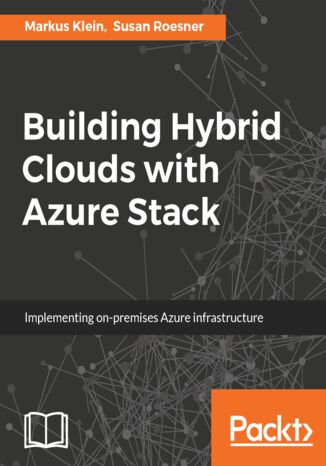
Building Hybrid Clouds with Azure Stack. Implementing on-premises Azure infrastructure
Markus Klein, Susan Roesner
Azure Stack is all about creating fewer gaps between on-premise and public cloud application deployment. Azure Stack is the logical progression of Microsoft Cloud Services to create a true hybrid cloud-ready application.This book provides an introduction to Azure Stack and the cloud-first approach. Starting with an introduction to the architecture of Azure Stack, the book will help you plan and deploy your Azure Stack. Next, you will learn about the network and storage options in Azure Stack and you'll create your own private cloud solution. Finally, you will understand how to integrate public cloud using the third-party resource provider. After reading the book, you will have a good understanding of the end-to-end process of designing, offering, and supporting cloud solutions for enterprises or service providers.
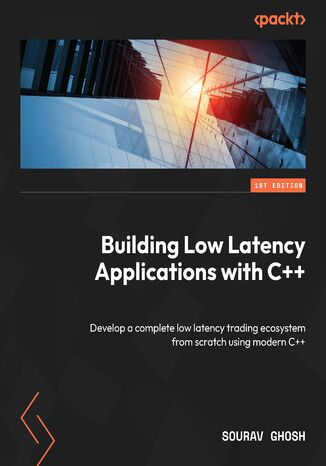
Sourav Ghosh
C++ is meticulously designed with efficiency, performance, and flexibility as its core objectives. However, real-time low latency applications demand a distinct set of requirements, particularly in terms of performance latencies.With this book, you’ll gain insights into the performance requirements for low latency applications and the C++ features critical to achieving the required performance latencies. You’ll also solidify your understanding of the C++ principles and techniques as you build a low latency system in C++ from scratch.You’ll understand the similarities between such applications, recognize the impact of performance latencies on business, and grasp the reasons behind the extensive efforts invested in minimizing latencies. Using a step-by-step approach, you’ll embark on a low latency app development journey by building an entire electronic trading system, encompassing a matching engine, market data handlers, order gateways, and trading algorithms, all in C++. Additionally, you’ll get to grips with measuring and optimizing the performance of your trading system.By the end of this book, you’ll have a comprehensive understanding of how to design and build low latency applications in C++ from the ground up, while effectively minimizing performance latencies.
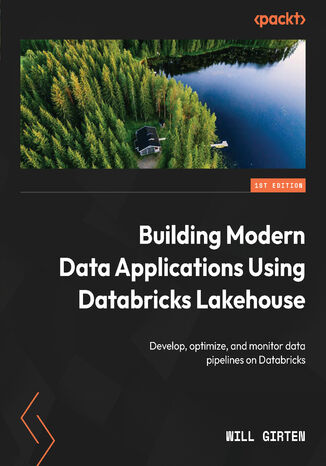
Will Girten
With so many tools to choose from in today’s data engineering development stack as well as operational complexity, this often overwhelms data engineers, causing them to spend less time gleaning value from their data and more time maintaining complex data pipelines. Guided by a lead specialist solutions architect at Databricks with 10+ years of experience in data and AI, this book shows you how the Delta Live Tables framework simplifies data pipeline development by allowing you to focus on defining input data sources, transformation logic, and output table destinations.This book gives you an overview of the Delta Lake format, the Databricks Data Intelligence Platform, and the Delta Live Tables framework. It teaches you how to apply data transformations by implementing the Databricks medallion architecture and continuously monitor the data quality of your pipelines. You’ll learn how to handle incoming data using the Databricks Auto Loader feature and automate real-time data processing using Databricks workflows. You’ll master how to recover from runtime errors automatically.By the end of this book, you’ll be able to build a real-time data pipeline from scratch using Delta Live Tables, leverage CI/CD tools to deploy data pipeline changes automatically across deployment environments, and monitor, control, and optimize cloud costs.
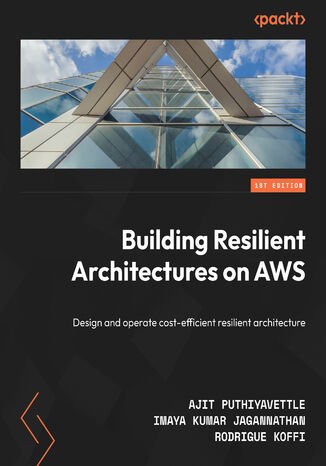
Ajit Puthiyavettle, Imaya Kumar Jagannathan, Rodrigue Koffi
Building systems that can withstand failure is key to running a successful business on the cloud. Learn from distinguished AWS experts—Ajit, Imaya, and Rodrigue—who bring over four decades of experience in architecting enterprise-scale solutions, speaking at major AWS conferences, and implementing resilience strategies across diverse industries, as they guide you through building highly available and fault-tolerant applications on AWS.This book explores resiliency, offering steps to design, build, and operate resilient architectures on AWS. You’ll master data security practices, backup strategies, and automation techniques, helping you build strong defenses and reliable recovery plans for resilience against disruptions. You’ll also learn how to apply AWS Well-Architected pillars to design applications with redundancy, loose coupling, graceful degradation, and fault isolation. With architecture examples, you’ll validate your design’s effectiveness through resilient patterns, performance monitoring, and chaos engineering.By the end of this book, you’ll be equipped with best practices for creating robust cloud infrastructures to ensure business continuity and success and become proficient at creating fault-tolerant systems, optimizing performance, and ensuring reliability across regions.
Raja CSP Raman, Ludovic Dewailly
REST is an architectural style that tackles the challenges of building scalable web services. In today's connected world, APIs have taken a central role on the web. APIs provide the fabric through which systems interact, and REST has become synonymous with APIs.The depth, breadth, and ease of use of Spring makes it one of the most attractive frameworks in the Java ecosystem. Marrying the two technologies is therefore a very natural choice.This book takes you through the design of RESTful web services and leverages the Spring Framework to implement these services. Starting from the basics of the philosophy behind REST, you'll go through the steps of designing and implementing an enterprise-grade RESTful web service. Taking a practical approach, each chapter provides code samples that you can apply to your own circumstances.This second edition brings forth the power of the latest Spring 5.0 release, working with MVC built-in as well as the front end framework. It then goes beyond the use of Spring to explores approaches to tackle resilience, security, and scalability concerns. Improve performance of your applications with the new HTTP 2.0 standards. You'll learn techniques to deal with security in Spring and discover how to implement unit and integration test strategies.Finally, the book ends by walking you through building a Java client for your RESTful web service, along with some scaling techniques using the new Spring Reactive libraries.
Abdulwahid Abdulhaque Barguzar
Serverless applications are becoming very popular these days, not just because they save developers the trouble of managing the servers, but also because they provide several other benefits such as cutting heavy costs and improving the overall performance of the application.This book will help you build serverless applications in a quick and efficient way. We begin with an introduction to AWS and the API gateway, the environment for serverless development, and Zappa. We then look at building, testing, and deploying apps in AWS with three different frameworks--Flask, Django, and Pyramid. Setting up a custom domain along with SSL certificates and configuring them with Zappa is also covered. A few advanced Zappa settings are also covered along with securing Zappa with AWS VPC.By the end of the book you will have mastered using three frameworks to build robust and cost-efficient serverless apps in Python.
Valentin Hamburger
VMware offers the industry-leading software-defined data center (SDDC) architecture that combines compute, storage, networking, and management offerings into a single unified platform. This book uses the most up-to-date, cutting-edge VMware products to help you deliver a complete unified hybrid cloud experience within your infrastructure. It will help you build a unified hybrid cloud based on SDDC architecture and practices to deliver a fully virtualized infrastructure with cost-effective IT outcomes. In the process, you will use some of the most advanced VMware products such as VSphere, VCloud, and NSX. You will learn how to use vSphere virtualization in a software-defined approach, which will help you to achieve a fully-virtualized infrastructure and to extend this infrastructure for compute, network, and storage-related data center services. You will also learn how to use EVO:RAIL. Next, you will see how to provision applications and IT services on private clouds or IaaS with seamless accessibility and mobility across the hybrid environment. This book will ensure you develop an SDDC approach for your datacenter that fulfills your organization's needs and tremendously boosts your agility and flexibility. It will also teach you how to draft, design, and deploy toolsets and software to automate your datacenter and speed up IT delivery to meet your lines of businesses demands. At the end, you will build unified hybrid clouds that dramatically boost your IT outcomes.
Karan Singh, Michael Hackett, Vikhyat Umrao
Ceph is a unified distributed storage system designed for reliability and scalability. This technology has been transforming the software-defined storage industry and is evolving rapidly as a leader with its wide range of support for popular cloud platforms such as OpenStack, and CloudStack, and also for virtualized platforms. Ceph is backed by Red Hat and has been developed by community of developers which has gained immense traction in recent years. This book will guide you right from the basics of Ceph , such as creating blocks, object storage, and filesystem access, to advanced concepts such as cloud integration solutions. The book will also cover practical and easy to implement recipes on CephFS, RGW, and RBD with respect to the major stable release of Ceph Jewel. Towards the end of the book, recipes based on troubleshooting and best practices will help you get to grips with managing Ceph storage in a production environment. By the end of this book, you will have practical, hands-on experience of using Ceph efficiently for your storage requirements.