
Inne
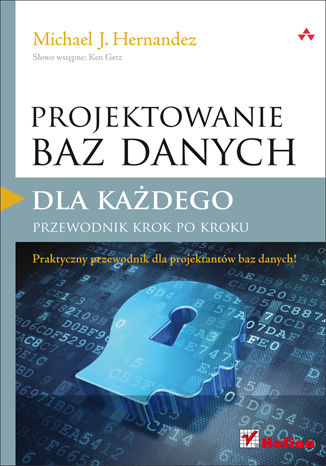
Projektowanie baz danych dla każdego. Przewodnik krok po kroku
Michael J. Hernandez
Praktyczny przewodnik dla projektantów baz danych! Dzisiejszy świat opiera się na bazach danych. Są one sercem każdego przedsięwzięcia, począwszy od działalności banku, a na zakupach internetowych skończywszy. Ich projektowanie wymaga nie lada kunsztu, a drobny błąd może doprowadzić do nieoczekiwanych konsekwencji. Dlatego od projektantów baz danych wymaga się ogromnej wiedzy i dokładności, a doświadczenie w tej dziedzinie zdobywa się latami. Dzięki tej książce będziesz w stanie zgłębić tajniki budowy baz danych, podane w przejrzysty, przystępny i rozsądny sposób. W trakcie lektury poznasz rodzaje baz, ich dostępne modele oraz cel ich projektowania. Kolejne rozdziały dotyczą procesu projektowania nowej bazy oraz analizowania baz istniejących. Ponadto dowiesz się z nich, jak istotne jest właściwe określenie kluczy i relacji oraz nałożenie więzów integralności. Szczególną uwagę powinieneś zwrócić na rozdział poświęcony najczęściej popełnianym błędom - jego dokładna lektura pozwoli Ci uniknąć wielu problemów. Książka ta jest obowiązkową lekturą dla wszystkich osób mających styczność z bazami danych w codziennej pracy. Dzięki tej książce: poznasz rodzaje baz danych zorganizujesz proces projektowania bazy nauczysz się analizować strukturę istniejącej bazy unikniesz pułapek poznasz tajniki baz danych Wiedza dotycząca baz danych w pigułce!

Projektowanie baz danych dla każdego. Przewodnik krok po kroku. Wydanie IV
Michael J. Hernandez
Mimo upływu lat relacyjne bazy danych wciąż mają się świetnie! Z każdym rokiem stają się coraz doskonalsze i radzą sobie z coraz większymi zbiorami danych. Wciąż jednak podstawą dobrej aplikacji bazodanowej jest dobry projekt samej bazy. Wielu osobom projektowanie poprawnych struktur bazodanowych wydaje się czymś z pogranicza wyższej matematyki i czarnej magii. Tymczasem zdobycie tej umiejętności jest możliwe bez lat studiowania skomplikowanych teorii matematycznych. Wystarczy przyswoić kluczowe podstawy i nauczyć się korzystać z kilku zdroworozsądkowych koncepcji i teorii. Ta książka jest rocznicowym, przejrzanym i zaktualizowanym wydaniem kultowego podręcznika do samodzielnej nauki projektowania relacyjnych baz danych. Zawarte w nim informacje można wykorzystywać niezależnie od zastosowanego oprogramowania. Przedstawiono tu, jak projektować nowoczesne bazy danych, które mają poprawną strukturę, są niezawodne i ułatwiają wprowadzanie zmian. Opisano wszystkie etapy projektowania: od planowania po definiowanie tabel, pól, kluczy, relacji między tabelami, reguł biznesowych i widoków. Dodatkowo znajdziemy tu praktyczne techniki zwiększania integralności danych, omówienie często popełnianych błędów i wskazówki, kiedy warto łamać zasady. Treść przewodnika wzbogacają pytania kontrolne i rysunki, które bardzo pomagają w jej skutecznym opanowaniu. W książce: typy baz danych, modele i cele projektowe tworzenie tabel i relacji, specyfikacje pól i widoki poziomy integralności danych tworzenie reguł biznesowych perspektywy relacyjnych baz danych Nie ma dobrej bazy danych bez dobrego projektu!

Prywatność danych w praktyce. Skuteczna ochrona prywatności i bezpieczeństwa danych
Katharine Jarmul
Chyba nikogo nie trzeba przekonywać, że ochrona danych i zabezpieczenie prywatności są kwestiami absolutnie kluczowymi w cyfrowym świecie. Na szczęście zdajemy sobie coraz lepiej sprawę, że incydenty naruszeń w dziedzinie bezpieczeństwa danych mogą nas narazić na realne szkody. Z drugiej strony niedopełnienie obowiązków wynikających z RODO okazuje się dla organizacji niezwykle kosztowne, a także naraża na szwank ich wizerunek. Zapewnienie należytej ochrony danych to wymagające wyzwanie. Z tego względu inżynieria prywatności z roku na rok staje się coraz ważniejszą dziedziną. Książka w przystępny sposób przedstawia głęboką perspektywę techniczną wraz z przeglądem najnowszych podejść i architektur technologicznych. Emily F. Gorcenski, główna analityczka danych, Thoughtworks Tę książkę docenią osoby, które w ramach codziennej pracy integrują tematy związane z prywatnością i bezpieczeństwem danych. To przewodnik dla pragmatyków, zapewniający gruntowną wiedzę o współczesnych elementach ochrony danych, takich jak prywatność różnicowa, uczenie federacyjne i obliczenia szyfrowane. Znajdziesz tu przydatne wskazówki, jak również najlepsze, wielokrotnie sprawdzone praktyki integracji przełomowych technologii, pozwalające skutecznie i na wysokim poziomie dbać o prywatność i bezpieczeństwo danych. Najważniejsze zagadnienia: Jak przepisy (RODO i CCPA) mają się do przepływów danych i przypadków ich użycia? Jak właściwie anonimizować dane? Czy szyfrowanie homomorficzne jest właściwym rozwiązaniem? Jak wybierać technologie i metody ochrony prywatności? Jak zapewnić bezpieczeństwo danych w projektach opartych na ich analizie? Jak odpowiednio wdrożyć wewnętrzne zasady ochrony prywatności danych? Wreszcie znalazłem książkę, którą mogę polecać wszystkim unikającym tematu prywatności danych! Vincent Warmerdam, twórca Calm Code, inżynier uczenia maszynowego, Explosion
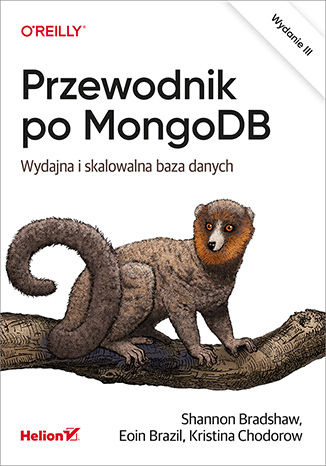
Przewodnik po MongoDB. Wydajna i skalowalna baza danych. Wydanie III
Shannon Bradshaw, Eoin Brazil, Kristina Chodorow
MongoDB jest wieloplatformowym, nierelacyjnym systemem do obsługi baz danych, napisanym w języku C++. Nie przypomina ściśle ustrukturyzowanych relacyjnych baz danych, zamiast tego korzysta z dokumentów w formacie BSON. Ułatwia to bardziej naturalne przetwarzanie informacji w aplikacjach, oczywiście przy zachowaniu możliwości tworzenia hierarchii oraz indeksowania. W ten sposób cały system zyskuje na wydajności, co jest szczególnie istotne przy przetwarzaniu bardzo dużych zbiorów danych. MongoDB umożliwia stosowanie elastycznych modeli danych, uzyskiwanie wysokiego poziomu dostępności i poziome skalowanie. Ten praktyczny przewodnik jest przeznaczony dla użytkowników bazy MongoDB w wersji 4.2. W przystępny i konkretny sposób opisuje zalety stosowania dokumentowych baz danych, równocześnie wskazuje zaawansowane metody konfiguracji systemu oraz możliwe zastosowania w różnych projektach. Książka zainteresuje zarówno użytkowników i administratorów MongoDB, jak i programistów tworzących złożone aplikacje. Przedstawia kwestie tworzenia zapytań, indeksów, agregacji, transakcji, zbiorów replik, zarządzania systemem, shardingu i administrowania danymi, trwałości danych, monitorowania systemu oraz jego zabezpieczenia. Znalazło się tu także wprowadzenie do pracy z MongoDB, omówiono też zasady pracy z klastrem shardów oraz administrowania aplikacją i serwerem bazy MongoDB. W książce między innymi: ogólne zasady pracy z MongoDB operacje zapisu i wyszukiwania oraz tworzenie złożonych zapytań indeksy w kolekcjach, agregowanie danych i transakcje lokalny zbiór replik i korzystanie z replikacji konfiguracja elementów klastra monitorowanie systemu, kopie bezpieczeństwa i odtwarzanie bazy MongoDB MongoDB - przekonaj się na własnym systemie!
Python Data Analysis Cookbook. Clean, scrape, analyze, and visualize data with the power of Python!
Ivan Idris
Data analysis is a rapidly evolving field and Python is a multi-paradigm programming language suitable for object-oriented application development and functional design patterns. As Python offers a range of tools and libraries for all purposes, it has slowly evolved as the primary language for data science, including topics on: data analysis, visualization, and machine learning.Python Data Analysis Cookbook focuses on reproducibility and creating production-ready systems. You will start with recipes that set the foundation for data analysis with libraries such as matplotlib, NumPy, and pandas. You will learn to create visualizations by choosing color maps and palettes then dive into statistical data analysis using distribution algorithms and correlations. You’ll then help you find your way around different data and numerical problems, get to grips with Spark and HDFS, and then set up migration scripts for web mining.In this book, you will dive deeper into recipes on spectral analysis, smoothing, and bootstrapping methods. Moving on, you will learn to rank stocks and check market efficiency, then work with metrics and clusters. You will achieve parallelism to improve system performance by using multiple threads and speeding up your code.By the end of the book, you will be capable of handling various data analysis techniques in Python and devising solutions for problem scenarios.
Martin Czygan, Phuong Vo.T.H, Ashish Kumar, Kirthi...
You will start the course with an introduction to the principles of data analysis and supported libraries, along with NumPy basics for statistics and data processing. Next, you will overview the Pandas package and use its powerful features to solve data-processing problems. Moving on, you will get a brief overview of the Matplotlib API .Next, you will learn to manipulate time and data structures, and load and store data in a file or database using Python packages. You will learn how to apply powerful packages in Python to process raw data into pure and helpful data using examples. You will also get a brief overview of machine learning algorithms, that is, applying data analysis results to make decisions or building helpful products such as recommendations and predictions using Scikit-learn. After this, you will move on to a data analytics specialization—predictive analytics. Social media and IOT have resulted in an avalanche of data. You will get started with predictive analytics using Python. You will see how to create predictive models from data. You will get balanced information on statistical and mathematical concepts, and implement them in Python using libraries such as Pandas, scikit-learn, and NumPy. You’ll learn more about the best predictive modeling algorithms such as Linear Regression, Decision Tree, and Logistic Regression. Finally, you will master best practices in predictive modeling.After this, you will get all the practical guidance you need to help you on the journey to effective data visualization. Starting with a chapter on data frameworks, which explains the transformation of data into information and eventually knowledge, this path subsequently cover the complete visualization process using the most popular Python libraries with working examplesThis Learning Path combines some of the best that Packt has to offer in one complete, curated package. It includes content from the following Packt products:? Getting Started with Python Data Analysis, Phuong Vo.T.H &Martin Czygan•Learning Predictive Analytics with Python, Ashish Kumar•Mastering Python Data Visualization, Kirthi Raman
Python Data Science Essentials. Learn the fundamentals of Data Science with Python - Second Edition
Luca Massaron, Alberto Boschetti
Fully expanded and upgraded, the second edition of Python Data Science Essentials takes you through all you need to know to suceed in data science using Python. Get modern insight into the core of Python data, including the latest versions of Jupyter notebooks, NumPy, pandas and scikit-learn. Look beyond the fundamentals with beautiful data visualizations with Seaborn and ggplot, web development with Bottle, and even the new frontiers of deep learning with Theano and TensorFlow. Dive into building your essential Python 3.5 data science toolbox, using a single-source approach that will allow to to work with Python 2.7 as well. Get to grips fast with data munging and preprocessing, and all the techniques you need to load, analyse, and process your data. Finally, get a complete overview of principal machine learning algorithms, graph analysis techniques, and all the visualization and deployment instruments that make it easier to present your results to an audience of both data science experts and business users.
Soledad Galli
Feature engineering, the process of transforming variables and creating features, albeit time-consuming, ensures that your machine learning models perform seamlessly. This second edition of Python Feature Engineering Cookbook will take the struggle out of feature engineering by showing you how to use open source Python libraries to accelerate the process via a plethora of practical, hands-on recipes.This updated edition begins by addressing fundamental data challenges such as missing data and categorical values, before moving on to strategies for dealing with skewed distributions and outliers. The concluding chapters show you how to develop new features from various types of data, including text, time series, and relational databases. With the help of numerous open source Python libraries, you'll learn how to implement each feature engineering method in a performant, reproducible, and elegant manner.By the end of this Python book, you will have the tools and expertise needed to confidently build end-to-end and reproducible feature engineering pipelines that can be deployed into production.