
Informatyka
Buildbox 2.x Game Development. Develop & Distribute video games with Buildbox, no coding necessary!
Ty Audronis
Buildbox is an “any skill level” development platform to develop video games with no coding experience. It also exports these games to be compiled for any platform (from Windows to Mac to iOS to Android and Blackberry) all using the same graphic user interface.Using an example as a tutorial, we will relate the driving principles and you’ll see how you can implement these principles to develop any games on the platform. We begin by setting expectations and providing a brief overview of the software. But it’s not long before you “dive in” to creating your first video game. You will actually have a playable level (“world”) by the end of the second chapter.Later on, you’ll learn everything from basic graphics creation to advanced world design while you refine your first game, called “Ramblin’ Rover.” All along the way, you will see how certain functions could be used in tandem to create other types of games; hoping to spark imagination. We will follow the principles and process of monetization through ads and in-game rewards.Lastly, we will go through the process of exporting, compiling, and preparing your storefront to sell the games you will eventually create.
Andreas J Reichel
If you are a programmer, scientist, or someone interested in modern computer technology that goes beyond the typical PC, then this book will show you the outstanding possibilities of cluster computing with modern embedded systems based on ARM architecture. Whether you need a high-speed or low-cost scalable cluster for simulations or want to try something new, this book is the right guide for you.
Building a Cyber Resilient Business. A cyber handbook for executives and boards
Dr. Magda Lilia Chelly , Shamane Tan,...
With cyberattacks on the rise, it has become essential for C-suite executives and board members to step up and collectively recognize cyber risk as a top priority business risk. However, non-cyber executives find it challenging to understand their role in increasing the business’s cyber resilience due to its complex nature and the lack of a clear return on investment.This book demystifies the perception that cybersecurity is a technical problem, drawing parallels between the key responsibilities of the C-suite roles to line up with the mission of the Chief Information Security Officer (CISO).The book equips you with all you need to know about cyber risks to run the business effectively. Each chapter provides a holistic overview of the dynamic priorities of the C-suite (from the CFO to the CIO, COO, CRO, and so on), and unpacks how cybersecurity must be embedded in every business function. The book also contains self-assessment questions, which are a helpful tool in evaluating any major cybersecurity initiatives and/or investment required.With this book, you’ll have a deeper appreciation of the various ways all executives can contribute to the organization’s cyber program, in close collaboration with the CISO and the security team, and achieve a cyber-resilient, profitable, and sustainable business.
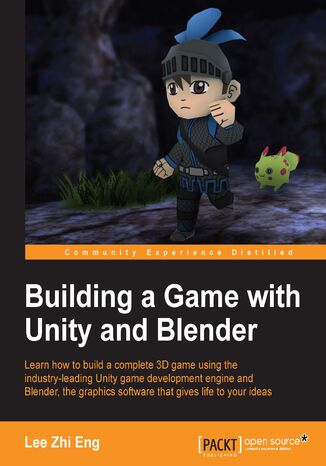
Lee Zhi Eng
In the wake of the indie game development scene, game development tools are no longer luxury items costing up to millions of dollars but are now affordable by smaller teams or even individual developers. Among these cutting-edge applications, Blender and Unity stand out from the crowd as a powerful combination that allows small-to-no budget indie developers or hobbyists alike to develop games that they have always dreamt of creating.Starting from the beginning, this book will cover designing the game concept, constructing the gameplay, creating the characters and environment, implementing game logic and basic artificial intelligence, and finally deploying the game for others to play. By sequentially working through the steps in each chapter, you will quickly master the skills required to develop your dream game from scratch.
Ludovic Dewailly
REST is an architectural style that tackles the challenges of building scalable web services. In today’s connected world, APIs have taken a central role on the web. APIs provide the fabric through which systems interact, and REST has become synonymous with APIs.The depth, breadth, and ease of use of Spring makes it one of the most attractive frameworks in the Java ecosystem. Marrying the two technologies is therefore a very natural choice.This book takes you through the design of RESTful web services and leverages the Spring Framework to implement these services. Starting from the basics of the philosophy behind REST, you’ll go through the steps of designing and implementing an enterprise-grade RESTful web service. Taking a practical approach, each chapter provides code samples that you can apply to your own circumstances.This book goes beyond the use of Spring and explores approaches to tackle resilience, security, and scalability concerns. You’ll learn techniques to deal with security in Spring and discover how to implement unit and integration test strategies.Finally, the book ends by walking you through building a Java client for your RESTful web service, along with some scaling techniques for it.
Sai S Sriparasa
This is a step-by-step, tutorial guide designed to help readers transition from beginners to more experienced developers using clear explanations. The variety of examples will help readers build, secure, and host real-time web applications. If you are a developer who wants to use PHP and MariaDB to build web applications, this book is ideal for you. Beginners can use this book to start with the basics and learn how to build and host web applications. Seasoned PHP Developers can use this book to get familiar with the new features of PHP 5.4 and 5.5, unit testing, caching, security, and performance optimization.
Anjanava Biswas, Wrick Talukdar, Matthew R. Scott,...
Gain unparalleled insights into the future of AI autonomy with this comprehensive guide to designing and deploying autonomous AI agents that leverage generative AI (GenAI) to plan, reason, and act. Written by industry-leading AI architects and recognized experts shaping global AI standards and building real-world enterprise AI solutions, it explores the fundamentals of agentic systems, detailing how AI agents operate independently, make decisions, and leverage tools to accomplish complex tasks.Starting with the foundations of GenAI and agentic architectures, you’ll explore decision-making frameworks, self-improvement mechanisms, and adaptability. The book covers advanced design techniques, such as multi-step planning, tool integration, and the coordinator, worker, and delegator approach for scalable AI agents.Beyond design, it addresses critical aspects of trust, safety, and ethics, ensuring AI systems align with human values and operate transparently. Real-world applications illustrate how agentic AI transforms industries such as automation, finance, and healthcare. With deep insights into AI frameworks, prompt engineering, and multi-agent collaboration, this book equips you to build next-generation adaptive, scalable AI agents that go beyond simple task execution and act with minimal human intervention.
Vasyl Zvarydchuk
Large language models can produce impressive demos, but turning them into reliable products takes more than better prompts. You need to understand model behavior, know when to use retrieval or fine-tuning, structure agents correctly, and evaluate systems before deployment.Building Agent-Powered Applications gives an end-to-end engineering perspective on creating production-ready generative AI solutions. Written by Microsoft Principal AI Engineer Vasyl Zvarydchuk, it helps software engineers, data scientists, and applied AI practitioners move from concept to implementation. You’ll begin with AI, NLP, embeddings, transformers, and LLM behavior, then progress to prompt engineering, summarization, classification, extraction, reasoning, RAG, and fine-tuning.The book shows how to design agentic workflows with tools, memory, planning, orchestration, and human-in-the-loop controls. You’ll learn to evaluate quality with offline and online testing, task-specific metrics, LLM-as-a-judge methods, and responsible AI checks. Rather than treating prompting, RAG, fine-tuning, and agents as separate topics, this book shows how they work together in practice. By the end, you’ll be able to make better architectural trade-offs, reduce failure modes, and build scalable, trustworthy AI applications.*Email sign-up and proof of purchase required