
Wydawca: Packt Publishing
Wanderson Xesquevixos, Ranga Rao Karanam, Magnus Larsson,...
Spring Boot 4 brings more than just the powerful ability to build secure web apps on top of a rock-solid database. It delivers Jackson integration, support for JSpecify, an enhanced retry mechanism, and updated actuator defaults, along with ways to squeeze out more efficient usage of existing resources.This fourth edition of the bestseller starts off by helping you build a simple app, and then shows you how to secure, test, bundle, and deploy it to production. Next, you’ll familiarize yourself with the ability to go “native” and release using the latest version of GraalVM. As you advance, you’ll explore reactive programming and get a taste of scalable web controllers and data operations.This edition covers three new topics on Virtual Threads and Concurrency, Observability and Building Intelligent Applications with Spring AI.. If you want to gain a thorough understanding of building robust, modern applications using the core functionality of Spring Boot, then this is the book for you.By the end you’ll be able to build an entire suite of web applications using Spring Boot and deploy them to any platform you need.
Gene Da Rocha
The ability to use SQLite with iOS provides a great opportunity to build amazing apps. Apple's iOS SDK provides native support for SQLite databases. This combination offers the potential to create powerful, data-persistent applications.This book starts with the architecture of SQLite database and introduces you to concepts in SQL . You will find yourself equipped to design your own database system, administer it, and maintain it. Further, you will learn how to operate your SQLite databases smoothly using SQL commands. You will be able to extend the functionality of SQLite by using its vast arsenal of C API calls to build some interesting, exciting, new, and intelligent data-driven applications. Understand how Xcode, HTML5, and Phonegap can be used to build a cross-platform modern app which can benefit from all these technologies - all through creating a complete, customizable application skeleton that you can build on for your own apps.
INNES BORKWOOD
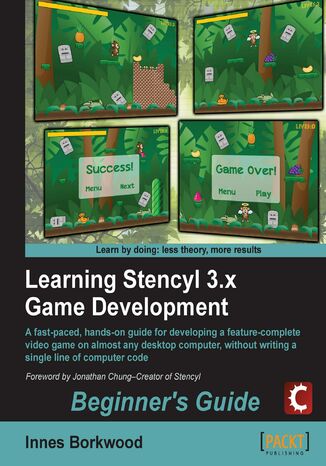
Creating video games has traditionally been a long and complicated process, requiring years of experience and a vast array of skills. However, with the introduction of comprehensive game-development toolkits such as Stencyl, the fun has returned to the art of game-creation – anyone who has the desire to create their own video game can now do so with almost any desktop computer and a free software download from the Internet!Learning Stencyl 3.x Game Development: Beginner's Guide will put you on the fast-track to learning the essentials of the powerful Stencyl game-development toolkit. You will develop a complete, ready-to-publish video game including in-game advertising, by following the clear, step-by-step tutorials, supported by numerous screenshots and practical examples.This book will guide you through all the important steps required to develop and publish your video game. Starting with the installation and testing of the Stencyl toolkit, you will very quickly advance to the fun and exciting process of creating a playable game. The step-by-step tutorials will guide you from a blank screen, right through to giving your game that final polish and sharing it with the rest of the world.Whilst developing your feature-complete video game, you will learn how to easily detect collisions in your game using Stencyl's built-in physics engine. You'll discover how to use the powerful animation tools included in Stencyl's toolkit, and you'll find out how to make your game shine with sounds and visual special effects. You will also discover how Stencyl makes it easy to utilize the touch-screen and accelerometer features of smartphones and tablet computers.You will learn all the essential skills required to develop a video game from scratch – right through to publishing a game on the Internet and testing games on the most popular mobile devices.
Andrew J Wagner
If you are looking to build iOS or OS X apps using the most modern technology, this book is ideal for you. You will find this book especially useful if you are new to programming or if you have yet to develop for iOS or OS X.
Andrew J Wagner
Swift is Apple’s new programming language and the future of iOS and OS X app development. It is a high-performance language that feels like a modern scripting language. On the surface, Swift is easy to jump into, but it has complex underpinnings that are critical to becoming proficient at turning an idea into reality.This book is an approachable, step-by-step introduction into programming with Swift for everyone. It begins by giving you an overview of the key features through practical examples and progresses to more advanced topics that help differentiate the proficient developers from the mediocre ones. It covers important concepts such as Variables, Optionals, Closures, Generics, and Memory Management. Mixed in with those concepts, it also helps you learn the art of programming such as maintainability, useful design patterns, and resources to further your knowledge. This all culminates in writing a basic iOS app that will get you well on your way to turning your own app ideas into reality.
Learning System Center App Controller. Design, implement, and manage System Center App Controller
Nasir Naeem
This book is intended for IT professionals working with Hyper-V, Azure cloud, VMM, and private cloud technologies who are looking for a quick way to get up and running with System Center 2012 R2 App Controller. To get the most out of this book, you should be familiar with Microsoft Hyper-V technology. Knowledge of Virtual Machine Manager is helpful but not mandatory.
Joshua N. Milligan
Tableau has for some time been one of the most popular Business Intelligence and data visualization tools available. Why? Because, quite simply, it’s a tool that’s responsive to the needs of modern businesses. But it’s most effective when you know how to get what you want from it – it might make your business intelligent, but it isn’t going to make you intelligent…We’ll make sure you’re well prepared to take full advantage of Tableau 10’s new features. Whether you’re an experienced data analyst that wants to explore 2016’s new Tableau, or you’re a beginner that wants to expand their skillset and bring a more professional and sharper approach to their organization, we’ve got you covered. Beginning with the fundamentals, such as data preparation, you’ll soon learn how to build and customize your own data visualizations and dashboards, essential for high-level visibility and effective data storytelling. You’ll also find out how to so trend analysis and forecasting using clustering and distribution models to inform your analytics. But it’s not just about you – when it comes to data it’s all about availability and access. That’s why we’ll show you how to share your Tableau visualizations. It’s only once insights are shared and communicated that you – and your organization – will start making smarter and informed decisions. And really, that’s exactly what this guide is for.
Joshua N. Milligan
Tableau is the gold standard of business intelligence and visual analytics tools in every industry. It enables rapid data visualization and interpretation with charts, graphs, dashboards, and much more. Updated with the latest features of Tableau, this book takes you from the foundations of the Tableau 2019 paradigm through to advanced topics.This third edition of the bestselling guide by Tableau Zen Master, Joshua Milligan, will help you come to grips with updated features, such as set actions and transparent views. Beginning with installation, you'll create your first visualizations with Tableau and then explore practical examples and advanced techniques. You'll create bar charts, tree maps, scatterplots, time series, and a variety of other visualizations. Next, you'll discover techniques to overcome challenges presented by data structure and quality and engage in effective data storytelling and decision making with business critical information. Finally, you'll be introduced to Tableau Prep, and learn how to use it to integrate and shape data for analysis.By the end of this book, you will be equipped to leverage the powerful features of Tableau 2019 for decision making.