
Techniki programowania
W kategorii Techniki programowania znajdziecie książki dobrane pod względem merytorycznym zarówno dla amatorów jak i profesjonalistów z dziedziny programowania.
Dowiecie się jak poprawnie napisać i udokumentować własny kod oraz przeczytacie o najskuteczniejszych metodach refaktoryzacji czyli w jaki sposób poprawiać i optymalizować kod napisany przez innych programistów. Poznacie sposoby optymalizacji algorytmów, analizy złożoności, kompresji danych czy elementy algorytmiki grafów. Zaznajomicie się nie tylko z najlepszymi wzorcami w wytwarzaniu oprogramowania ale także nauczycie się rozpoznawać najczęstsze błędy i czyhające na Was pułapki.
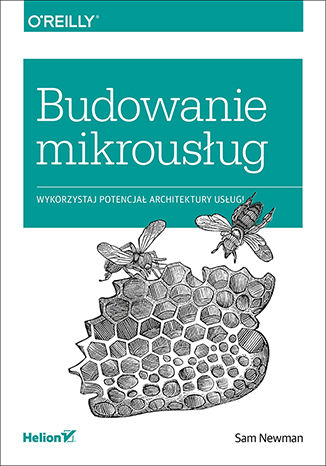
Sam Newman
Wykorzystaj potencjał architektury usług! Architektura mikrousług to sposób na odejście od dużych, monolitycznych aplikacji. Wyspecjalizowane usługi realizujące konkretne zadania i komunikujące się z otoczeniem pozwalają na lepsze zapanowanie nad kodem, są łatwiejsze do przetestowania oraz bardziej elastyczne. Jednak oprócz zalet mają też wady. Sięgnij po tę książkę i dowiedz się, jak najlepiej radzić sobie z architekturą mikrousług! Autor przedstawia w książce skuteczne techniki projektowania i korzystania z architektury mikrousług. W trakcie lektury kolejnych rozdziałów poznasz w szczegółach ideę mikrousług, korzyści ich stosowania, sposoby modelowania usług oraz skuteczne techniki dzielenia dużej aplikacji na mikrousługi. Ponadto zapoznasz się z możliwymi sposobami integracji: zdalne wywołanie procedur, REST i zdarzenia — to tylko niektóre z poruszanych kwestii. Na sam koniec zaznajomisz się z najlepszymi metodami testowania i monitorowania usług, zapewnisz im bezpieczeństwo dzięki kluczom API oraz innym technikom. Ta książka jest obowiązkową lekturą dla wszystkich osób chcących tworzyć nowoczesne systemy bazujące na architekturze mikrousług. Odkryj, jak można dostosować projekt systemu do celów Twojej organizacji stosując architekturę mikrousług Zapoznaj się z możliwościami integracji usług z pozostałą częścią systemu Zastosuj przyrostowe podejście do podziału monolitycznych baz kodu Wdrażaj pojedyncze mikrousługi korzystając z techniki ciągłej integracji Zbadaj złożoność testowania i monitorowania rozproszonych usług Zarządzaj zabezpieczeniami stosując modele użytkownik-usługa oraz usługa-usługa Zapoznaj się z wyzwaniami skalowania architektury mikrousług Przekonaj się, jak architektura mikrousług zmieni Twoje spojrzenie na aplikacje!
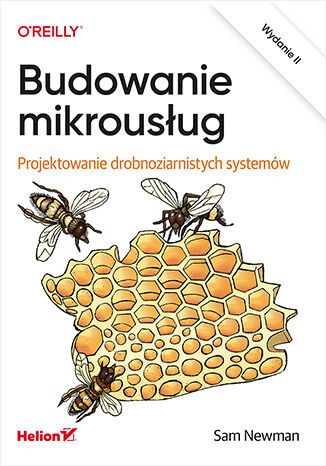
Budowanie mikrousług. Projektowanie drobnoziarnistych systemów. Wydanie II
Sam Newman
Mikrousługi są dla wielu organizacji wspaniałą alternatywą. Systemy rozproszone złożone ze współpracujących ze sobą mikrousług pozwalają na efektywne i elastyczne dostarczanie oprogramowania, które ściśle odpowiada na wymagania użytkowników. Dodatkową zaletą jest możliwość relatywnie szybkiego wprowadzania modyfikacji w systemie, co ułatwia płynne zaspokajanie zmieniających się potrzeb. Pewnym wyzwaniem dla programistów jednak może być złożoność powodowana przez właściwości architektury systemów rozproszonych, a także pojawiające się wciąż nowe technologie i metodyki, które znacząco zmieniają sposób korzystania z mikrousług. To drugie wydanie praktycznego przewodnika po projektowaniu, tworzeniu, wdrażaniu, skalowaniu i utrzymaniu systemów opartych na drobnoziarnistych mikrousługach. Publikacja została uzupełniona o informacje dotyczące najnowszych trendów i technologii związanych z mikrousługami. Sporo miejsca poświęcono na staranne przeanalizowanie przykładów dotyczących opisywanych koncepcji, a także pokazanie optymalnych sposobów rozwiązywania różnych problemów. Opisano również najnowsze rozwiązania dotyczące modelowania, integracji, testowania, wdrażania i monitorowania autonomicznych usług. Bardzo interesującą częścią są studia przypadków, w których przeanalizowano, jak organizacjom udaje się w praktyce w pełni wykorzystywać możliwości mikrousług. Dzięki książce dowiesz się, jak: przeprowadzać orkiestrację kontenerów i wdrażać rozwiązania bezserwerowe dostosowywać projekt systemu do potrzeb organizacji wybrać najlepszy sposób integracji usługi z systemem samodzielnie wdrażać mikrousługi skutecznie testować i monitorować usługi rozproszone zarządzać zabezpieczeniami dla rozszerzonej zawartości Architektura mikrousług: naucz się podejmować najlepsze decyzje projektowe!
Detrick DeBurr
Gamification involves the process of leveraging the features of real games into real life. A gamified website has the potential to increase user engagement, ROI, and learning. This book will help you build gamified websites with PHP and jQuery by making you understand the gamification design process to implement game mechanics in practical applications.Gamified websites are very popular amongst Internet users. The gamification of a web content draws users into action to empower them and help them develop new skills. Games engage user attention into the task and each task accomplished will mean the development and enhancement of new skills. This book will help you to apply the essence of games into real word applications such as business and education.Build Gamified Websites with PHP and jQuery aims at empowering and educating the users with an educational gamified website. The book walks through the process of developing a gamified website. Through the course of the book, you will learn gamification development process. The book emphasizes on the application of game mechanics to motivate the user. You will then use the Fogg behaviour model to influence the user behaviour. By the end of the book, you will see yourself building more engaging yet simple websites based on rational principles.
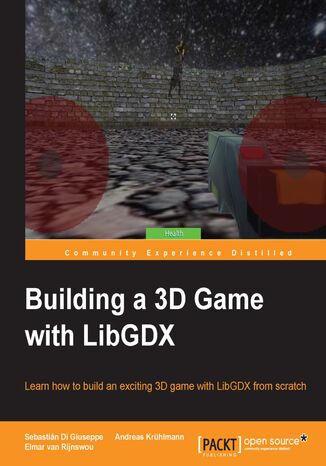
Building a 3D Game with LibGDX. Learn how to build an exciting 3D game with LibGDX from scratch
Sebastián Di Giuseppe, Andreas Krühlmann, Elmar van...
LibGDX is a hugely popular open source, cross-platform, Java-based game development framework built for the demands of cross-platform game development. This book will teach readers how the LibGDX framework uses its 3D rendering API with the OpenGL wrapper, in combination with Bullet Physics, 3D Particles, and Shaders to develop and deploy a game application to different platformsYou will start off with the basic Intellij environment, workflow and set up a LibGDX project with necessary APIs for 3D development. You will then go through LibGDX’s 3D rendering API main features and talk about the camera used for 3D. Our next step is to put everything together to build a basic 3D game with Shapes, including basic gameplay mechanics and basic UI. Next you will go through modeling, rigging, and animation in Blender. We will then talk about refining mechanics, new input implementations, implementing enemy 3D models, mechanics, and gameplay balancing. The later part of this title will help you to manage secondary resources like audio, music and add 3D particles in the game to make the game more realistic. You will finally test and deploy the app on a multitude of different platforms, ready to start developing your own titles how you want!
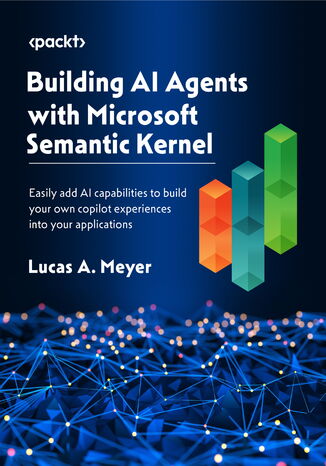
Lucas A. Meyer
In the fast-paced world of AI, developers are constantly seeking efficient ways to integrate AI capabilities into their apps. Microsoft Semantic Kernel simplifies this process by using the GenAI features from Microsoft and OpenAI.Written by Lucas A. Meyer, a Principal Research Scientist in Microsoft’s AI for Good Lab, this book helps you get hands on with Semantic Kernel. It begins by introducing you to different generative AI services such as GPT-3.5 and GPT-4, demonstrating their integration with Semantic Kernel. You’ll then learn to craft prompt templates for reuse across various AI services and variables. Next, you’ll learn how to add functionality to Semantic Kernel by creating your own plugins. The second part of the book shows you how to combine multiple plugins to execute complex actions, and how to let Semantic Kernel use its own AI to solve complex problems by calling plugins, including the ones made by you. The book concludes by teaching you how to use vector databases to expand the memory of your AI services and how to help AI remember the context of earlier requests. You’ll also be guided through several real-world examples of applications, such as RAG and custom GPT agents.By the end of this book, you'll have gained the knowledge you need to start using Semantic Kernel to add AI capabilities to your applications.
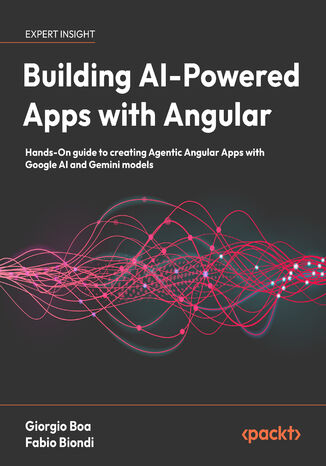
Giorgio Boa, Fabio Biondi
In Building AI-Powered Apps with Angular, you'll embark on an end-to-end journey to revolutionize web development with artificial intelligence. This hands-on guide shows you how to integrate cutting-edge AI capabilities, particularly Large Language Models (LLMs) like Google Gemini and multimodal agents, directly into your Angular applications.Starting with AI/ML fundamentals and an introduction to Google Gemini using Node.js, you’ll quickly progress to building sophisticated AI features within your Angular frontend. You’ll create dynamic content, design intelligent multi-turn chat interfaces, and harness multimodal AI to analyze and generate rich media such as images and videos.The journey extends beyond the frontend. You’ll build robust backends with Angular Server-Side Rendering and Genkit, enabling seamless communication with AI models. You’ll also implement advanced search capabilities using Retrieval Augmented Generation (RAG) and Firestore and learn how to deploy your AI-powered Angular app to the cloud.By the end of the book, you'll have the skills to design, develop, and deploy innovative and intelligent Angular applications that leverage the full potential of AI.
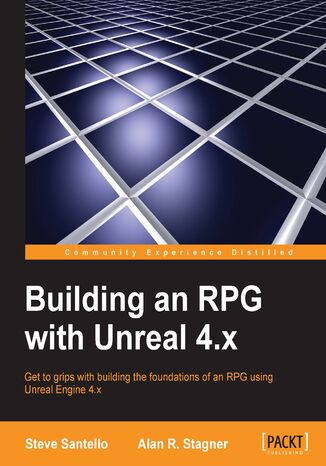
Alan R. Stagner, Steve Santello
Now that Unreal Engine 4 has become one of the most cutting edge game engines in the world, developers are looking for the best ways of creating games of any genre in the engine. This book will lay out the foundation of creating a turn-based RPG in Unreal Engine 4.12. The book starts by walking you through creating a turn-based battle system that can hold commands for party members and enemies. You’ll get your hands dirty by creating NPCs such as shop owners, and important mechanics, that make up every RPG such as a currency system, inventory, dialogue, and character statistics. Although this book specifically focuses on the creation of a turn-based RPG, there are a variety of topics that can be utilized when creating many other types of genres.By the end of the book, you will be able to build upon core RPG framework elements to create your own game experience.
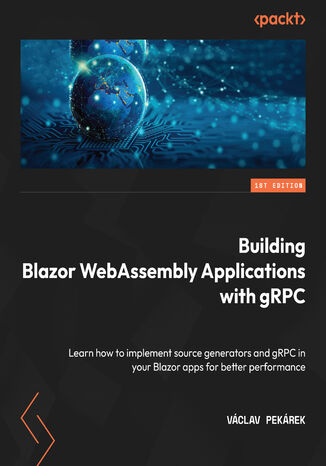
Václav Pekárek
Building Blazor WebAssembly Applications with gRPC will take you to the next level in your web development career. After working through all the essentials of gRPC, Blazor, and source generators, you will be far from a beginner C# developer and would qualify as a developer with intermediate knowledge of the Blazor ecosystem.After a quick primer on the basics of Blazor technology, REST, gRPC, and source generators, you’ll dive straight into building Blazor WASM applications. You’ll learn about everything from two-way bindings and Razor syntax to project setup. The practical emphasis continues throughout the book as you steam through creating data repositories, working with REST, and building and registering gRPC services. The chapters also cover how to manage source generators, C# and debugging best practices, and more. There is no shorter path than this book to solidify your gRPC-enabled web development knowledge.By the end of this book, your knowledge of building Blazor applications with one of the most modern and powerful frameworks around will equip you with a highly sought-after skill set that you can leverage in the best way possible.
Cody M. Sommer
Minecraft is a sandbox game that allows you to play it in any way you want. Coupled with a multiplayer server powered by Spigot, you can customize the game even more! Using the Bukkit API, anyone interested in learning how to program can control their Minecraft world by developing server plugins.This book is a great introduction to software development through the wonderful world of Minecraft. We start by instructing you through how to set up your home PC for Minecraft server development. This includes an IDE complete with the required libraries as well as a Spigot server to test on. You will be guided through writing code for several different plugins. Each chapter teaches you new skills to create plugins of increasing complexity, and each plugin adds a new concept of the Bukkit API By the end of the book, you will have all the knowledge you need about the API to successfully create any type of plugin. You can then practice and build your Java skills through developing more mods for their server.
Cody M. Sommer
If you have ever played Minecraft on a public server then the chances are that the server was powered by Bukkit. Bukkit plugins allow a server to be modified in more ways than you can imagine. Learning to program your own server mods will allow you to customize the game to your own liking.Building Minecraft Server Modifications is a complete guide that walks you through the creation of Minecraft server mods. From setting up a server, to testing your newly made plugins, this book teaches you everything you need to know. With the help of this book you can start practising for a career in software development or simply create something awesome to play with your friends.This book walks you through installing your own Minecraft server for you and your friends. Once your server is running, it will aid you in modifying the game by programming Bukkit plugins. You will learn how to program simple plugin features such as player commands and permissions. You will also learn more complex features including listening for events, creating a configurable plugin, and utilizing the Bukkit scheduler. All of this will be accomplished while writing your own server mods.You will become familiar with the most important aspects of the Bukkit API. Additional API features will become a breeze to learn after tackling these more complicated tasks.
Nishanth Nair
With the world becoming more mobile, there is a growing need for mobile websites and applications. Building these from scratch is not a simple process. Kendo UI Mobile makes building websites and applications easier than ever before. Build applications for phones and tablets in no time at all and provide your user with a native look and feel.Building Mobile Applications Using Kendo UI Mobile and ASP.NET Web API helps you to understand the concept of building mobile applications using HTML5 based frameworks, specifically Kendo UI Mobile. It teaches you in a simple step-by-step manner how to create a service backend layer using ASP.NET Web API and how to integrate it with your front end mobile application, which is the missing piece of the puzzle for most developers who are new to mobile applications development. Learn everything from the basics of HTML5 to design and development of a mobile application using Kendo UI Mobile and ASP.NET Web API. Integrate them in the right way using extensible and maintainable JavaScript code.Starting with the basics of the Kendo UI platform, learn how to build a real world mobile application from scratch. You will explore the Kendo UI framework elements and integrate the sample mobile application with the ASP.NET Web API service. One of the most important things that you will learn from this book is how to organize your code using the JavaScript Revealing Module Pattern. You will also take a journey through Kendo UI Mobile widgets with lots of code samples hosted in jsFiddle. At the end of this book, you will complete the integration of the sample application and master fixing real world problems utilizing your newly acquired professional techniques that will save you time and effort.Building Mobile Applications Using Kendo UI Mobile and ASP.NET Web API will help you improve your mobile application development skills using hands-on examples, and will help you address the common problems faced by beginners as well as experienced web programmers.
Andy Watt
There are several concepts that must be mastered to deliver functional and efficient SaaS applications. This book is perfect for developers and teams with experience in traditional application development looking to switch to SaaS and deliver slick and modern applications. You‘ll start with a general overview of SaaS as a concept and learn with the help of an example throughout the book to bring life to the technical descriptions. You’ll use the Microsoft .NET tech stack for development and C# as the programming language to develop your desired SaaS application.Delivering SaaS requires a deep understanding of all layers in the application stack. As you progress, you’ll learn how to approach the database layer, the API, and the UI to confidently approach application development using the SaaS model. Additionally, you’ll explore how to test, deploy, maintain, and upgrade each component of the application.By the end of this book, you will be well equipped to approach all aspects of delivering software using the SaaS paradigm.
Kartik Bhatnagar, Barry Hart
Big data is a trending concept that everyone wants to learn about. With its ability to process all kinds of data in real time, Storm is an important addition to your big data “bag of tricks.” At the same time, Python is one of the fastest-growing programming languages today. It has become a top choice for both data science and everyday application development. Together, Storm and Python enable you to build and deploy real-time big data applications quickly and easily.You will begin with some basic command tutorials to set up storm and learn about its configurations in detail. You will then go through the requirement scenarios to create a Storm cluster. Next, you’ll be provided with an overview of Petrel, followed by an example of Twitter topology and persistence using Redis and MongoDB. Finally, you will build a production-quality Storm topology using development best practices.
Gastón C. Hillar
Python is the language of choice for millions of developers worldwide, due to its gentle learning curve as well as its vast applications in day-to-day programming. It serves the purpose of building great web services in the RESTful architecture. This book will show you the best tools you can use to build your own web services.Learn how to develop RESTful APIs using the popular Python frameworks and all the necessary stacks with Python, Django, Flask, and Tornado, combined with related libraries and tools. We will dive deep into each of these frameworks to build various web services, and will provide use cases and best practices on when to use a particular framework to get the best results. We will show you everything required to successfully develop RESTful APIs with the four frameworks such as request handling, URL mapping, serialization, validation, authentication, authorization, versioning, ORMs, databases, custom code for models and views, and asynchronous callbacks. At the end of each framework, we will add authentication and security to the RESTful APIs and prepare tests for it.By the end of the book, you will have a deep understanding of the stacks needed to build RESTful web services.
Andros Fenollosa
The HTML over WebSockets approach simplifies single-page application (SPA) development and lets you bypass learning a JavaScript rendering framework such as React, Vue, or Angular, moving the logic to Python. This web application development book provides you with all the Django tools you need to simplify your developments with real-time results.You’ll learn state-of-the-art WebSocket techniques to realize real-time applications with minimal reliance on JavaScript. This book will also show you how to create a project with Docker from the ground up, test it, and deploy it on a server. You’ll learn how to create a project, add Docker, and discover development libraries, Django channels, and bidirectional communication, and from then, on you’ll create real projects of all kinds using HTML over WebSockets as a chat app or a blog with real-time comments. In addition, you’ll modernize your development techniques by moving from using an SSR model to creating web pages using WebSockets over HTML. With Django, you’ll be able to create SPAs with professional real-time projects where the logic is in Python.By the end of this Django book, you’ll be able to build real-time applications, as well as gaining a solid understanding of WebSockets with Django.
Yuguang Zhang
Until recently, writing applications using JavaScript and HTML was difficult, because developers had to make the user interface by themselves; however, this started changing with the introduction of JavaScript libraries such as jQuery, jQuery UI, and KnockoutJS. An extension of jQuery UI, Wijmo adds features and widgets on top of jQuery UI and makes it easier to add user interface widgets to HTML documents.Building UIs with Wijmo gives you a tour of what Wijmo offers at a glance. With code recipes and well-explained examples, you will be able to use Wijmo in no time. The book gives details on options not explained in the documentation and helps you avoid those that don't work. The examples only feature the necessary code, with recommendations and best practices.This book introduces Wijmo, grouping widgets by their common application area or usage. It walks the user through the features of the dialog widget with examples as an introduction to the library. Then, widgets for forms, images, tootips, and other topics are explored.Features only available in the Wijmo dialog widget compared to the jQuery UI widget are thoroughly explained with examples. Common form components such as checkboxes, dropdowns, and inputs have Wijmo counterparts which keep the theme consistent and add functionalities. When Wijmo is used with Knockout, the UI automatically refreshes when the data changes. This book takes it further with WebSockets for two way communication between the server and client. With Building UIs with Wijmo, you will learn all the common web development components in Wijmo. You will get started using Wijmo in no time.